
To manage app permissions on your phone for privacy, start by opening your Settings menu and steering to Privacy or App Permissions. Review which apps have access to sensitive data like location, microphone, camera, contacts, or storage. Disable permissions that aren’t necessary to limit data sharing and reduce security risks. Use toggle switches to easily turn permissions on or off for each app. If you want to learn specific steps for your device, more tips are just ahead.

Get the latest gadgets delivered free — and shop member deals
- Fast, free delivery on millions of items
- Access to Prime Big Deal Days deals on October 6–7
- Prime Video, Amazon Music and more included
Key Takeaways
- Access your device’s Settings menu and locate Privacy or App Permissions to review current app access.
- Evaluate each app’s permissions to ensure they align with its core functions, disabling unnecessary access.
- Use toggle switches to easily enable or revoke permissions for location, camera, microphone, contacts, and storage.
- Regularly revisit permission settings to prevent apps from retaining unnecessary access over time.
- Keep your device software updated and limit app permissions to enhance overall privacy and security.
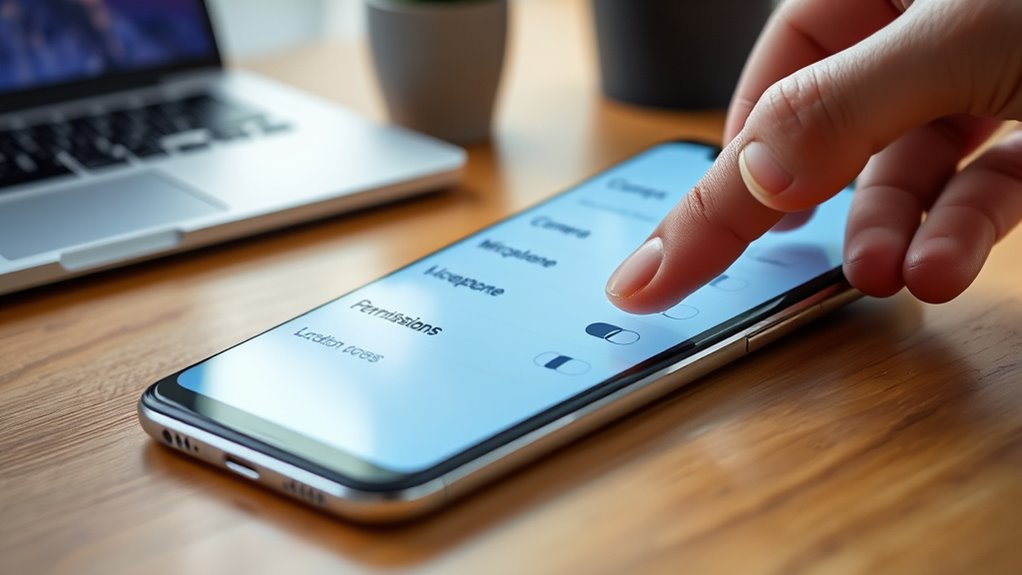
Have you ever wondered which apps have access to your location, camera, or contacts? You’re not alone. Many people overlook how much personal information apps can access once installed. Managing app permissions is a vital step in protecting your data privacy and maintaining control over your device. The key is understanding and adjusting permission settings to limit access only to what’s necessary. By doing so, you prevent apps from gathering more information than they need, reducing your vulnerability to data breaches, unauthorized tracking, or misuse of personal data.
Many apps access personal data; reviewing permissions helps protect your privacy and control your device.
Start by reviewing your current permission settings. On most smartphones, you can find this in the Settings menu under Privacy or App Permissions. Take a moment to see which apps have access to sensitive features like your location, microphone, camera, contacts, or storage. Many apps request permissions during installation or first use, but some may continue to have access even when you no longer use them. Regularly checking and updating permissions helps guarantee that apps don’t have access beyond what’s appropriate. Additionally, understanding the contrast ratio of your device’s display can help you optimize your viewing experience and protect your eyes during extended use.
When managing app permissions, consider whether each access is necessary for the app’s core function. For example, a weather app needs your location to give accurate forecasts, but a game might not require access to your contacts. If you notice an app has permission to access something it doesn’t need, disable that permission immediately. Most permission settings allow you to toggle access on or off easily. On iOS, you can do this in Settings > Privacy, selecting the specific permission type. On Android, navigate to Settings > Apps & Notifications > App Permissions, and review each category.
You should also be aware that some apps may ask for permissions that aren’t immediately necessary but could be exploited later. Be cautious when granting permissions, especially for features like camera, microphone, or location, which can be used to track or record you without your knowledge. Always prefer to grant permissions temporarily if possible, or revoke them once you’ve finished using a feature. This way, you limit the data collected and reduce the risk of misuse.
In addition to adjusting app permissions, keep your device’s software up to date. Updates often include security patches that protect your data privacy. Using strong, unique passwords and enabling two-factor authentication for your accounts adds extra layers of security. Remember, you’re in control of your personal information—taking a proactive approach to permission management helps keep your data safe and your privacy intact. Regularly review your settings to stay ahead of potential threats and guarantee your device only accesses what you’re comfortable sharing.
privacy screen protector for smartphones
As an affiliate, we earn on qualifying purchases.
As an affiliate, we earn on qualifying purchases.
Frequently Asked Questions
Can I Revoke Permissions After Granting Them?
Yes, you can revoke permissions after granting them. By accessing your privacy settings, you can easily perform permission revocation for specific apps. This process helps protect your privacy by limiting app access to your data and features. Regularly reviewing and adjusting app permissions ensures you maintain control over your information. Don’t hesitate to update permissions when you no longer trust an app or no longer need certain access rights.
Do App Permissions Affect Battery Life?
Yes, app permissions can affect battery life. When you grant certain permission settings, like access to your location or camera, it can increase battery consumption because the app uses additional resources. To conserve battery, review and adjust permission settings regularly, disabling permissions that aren’t necessary. This way, you minimize background activity and reduce battery drain, helping your phone last longer throughout the day.
How Do Permissions Differ Between Android and Iphone?
Imagine your phone’s permissions as gates guarded by different knights. Android’s permission system is like a castle with multiple gates, allowing you to grant or deny access at various levels, offering more control. iPhone’s system acts like a single, sturdy gate with clear, simplified choices. The permission differences reflect their OS security approaches—Android’s flexibility versus iPhone’s streamlined safety. You choose which gate to open, balancing privacy and functionality.
Are App Permissions Required for Updates?
App permissions are generally required for updates because of app permission policies that guarantee new features work securely. During the permission request process, apps may ask for additional access to improve functionality or fix bugs. You usually have to grant these permissions for the update to install correctly. Skipping permissions can lead to incomplete updates or limited app features, so it’s best to review and approve them when prompted.
Can Permissions Be Restored After Denial?
Think of permission management like Pandora’s box—you can close it, but reopening it’s possible. If you deny an app permission, you can usually restore it later through your phone’s privacy settings. Simply go to app permissions, find the app, and enable the needed permissions. This flexibility allows you to maintain control over your privacy while adjusting permissions as your comfort level evolves.
As an affiliate, we earn on qualifying purchases.
Conclusion
By regularly managing your app permissions, you take control of your privacy and diminish exposure to unnecessary risks. Think of your phone as a house—only give access to trusted guests, and keep the doors locked on sensitive information. Just like verifying a theory with evidence, reviewing permissions confirms your control over your data. Staying proactive ensures your digital life remains private and secure, empowering you to enjoy technology without compromising your personal space.
smartphone privacy protection kit
As an affiliate, we earn on qualifying purchases.
As an affiliate, we earn on qualifying purchases.
microphone and camera blocker for phones
As an affiliate, we earn on qualifying purchases.
As an affiliate, we earn on qualifying purchases.
Fall Picks
fall essentials
As an affiliate, we earn on qualifying purchases.