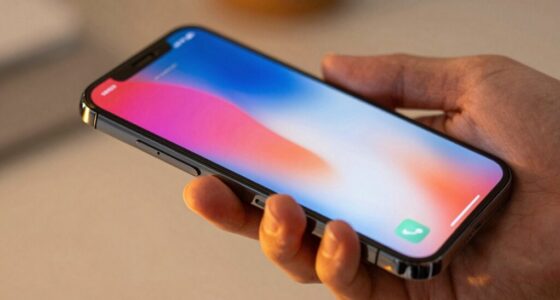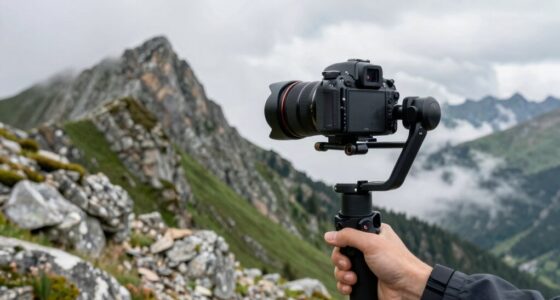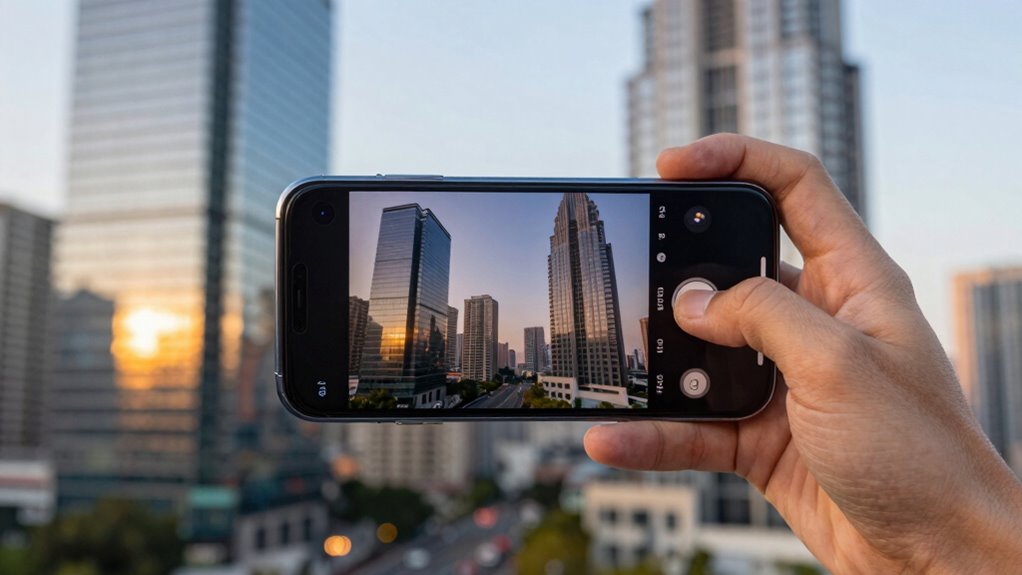

A phone camera you can trust consistently captures sharp, vibrant images even in tough conditions thanks to high-quality lenses and advanced stabilization. When the camera materials reduce distortions and glare, your photos stay true to what you saw. Seamless software features like scene recognition and adaptive stabilization make sure your shots stay clear without extra effort. If you keep exploring, you’ll discover how these elements come together to keep your photos reliable and stunning every time.

Get the latest gadgets delivered free with Prime
- Fast, free delivery on millions of items
- Prime Video, Amazon Music and more included
- Member-only deals all year
Key Takeaways
- High-quality lenses ensure sharp, accurate images with minimal distortions and consistent results.
- Advanced lens coatings improve light transmission and reduce glare, enhancing photo fidelity.
- Effective image stabilization minimizes blur caused by hand movements, even in low light or motion.
- Seamless software integration automates adjustments, delivering reliable images without user effort.
- Strong hardware and software synergy ensures authentic-looking photos across various scenarios.

In today’s world, trusting your phone camera means more than just expecting clear photos; it’s about reliability and authenticity. When you rely on your phone to capture important moments, you want images that truly represent what you saw. The quality of the lens plays a crucial role here. A high-quality lens ensures sharpness, accurate color reproduction, and minimal distortions. It’s the foundation for clear, crisp images, especially in challenging lighting conditions or when zooming in. If your lens is poorly made or scratches easily, your photos can look blurry or dull, making it harder to trust what you see. On the other hand, a well-crafted lens provides consistent results, giving you confidence that your pictures reflect reality. Understanding the mechanics of lens design can help you choose devices that perform reliably over time. Additionally, the materials used in lens manufacturing significantly influence durability and image quality, ensuring your camera remains trustworthy through daily use. Moreover, lens coatings can improve light transmission and reduce glare, further enhancing image fidelity and trustworthiness. As technology advances, some smartphones incorporate advanced optical elements, which help correct distortions and aberrations for even more accurate photographs.
Image stabilization is another critical factor that influences trust in your phone camera. Without it, even the steadiest hand can produce blurry images, especially in low light or when using zoom. Modern smartphones often feature optical image stabilization (OIS), which compensates for hand movements in real-time. This technology helps you capture sharp photos and smooth videos, even if you’re in motion. When your camera effectively stabilizes images, it reduces the need for multiple shots or editing, saving you time and effort. It also means you can shoot comfortably in dim environments or while walking, knowing your photos will come out clear. This consistency builds trust, as you don’t have to worry about whether the shot will turn out well.
Beyond hardware, trust also depends on software integration. When your phone’s camera app seamlessly utilizes lens quality and image stabilization tech, it delivers reliable results without complicated adjustments. Automated features like scene recognition and adaptive stabilization ensure that your camera adapts to different conditions, providing you with the best possible photo without fuss. When these elements work harmoniously, you feel more confident that your camera is dependable for everyday use and special moments alike.
Ultimately, a phone camera that combines superior lens quality with effective image stabilization gives you peace of mind. You know that your device can handle various scenarios, produce authentic-looking images, and do so consistently. This reliability makes it easier to trust your phone to document your life, whether it’s a quick snapshot or a cherished memory. When the hardware and software work together smoothly, you don’t have to second-guess the results; you can simply enjoy capturing and sharing your world with confidence.
Products Worth Considering

DJI Osmo Action 4 Essential Combo Waterproof 4K Action Camera

Amazon Kindle Paperwhite (2024, 16 GB) – 7-inch Glare-Free Display, Black

Logitech MX Ergo S Advanced Wireless Trackball Mouse USB-C – Graphite
As an affiliate, we earn on qualifying purchases.
Frequently Asked Questions
How Does Image Stabilization Improve Trust in Photos?
Image stabilization boosts trust in your photos by reducing blurriness caused by hand movement, ensuring clearer images. When you use manual focus, stabilization helps you capture sharp details without worry. Good lens quality also plays a role, as it works with stabilization to produce crisp images. Together, these features give you confidence that your photos will be sharp and reliable, making them more trustworthy for sharing or printing.
Do AI Enhancements Impact Photo Authenticity?
Sure, AI enhancements totally boost your photo’s “trustworthiness,” right? Not quite. AI filtering can make images look perfect, but it may distort authenticity. So, if you rely on AI for authenticity verification, be cautious—your “trustworthy” shot might just be a cleverly edited illusion. Remember, real trust in photos comes from transparency and verification, not just tech magic. Don’t let AI turn truth into a filter-fest!
Can Trusted Phone Cameras Handle Low-Light Situations Effectively?
Trusted phone cameras can handle low-light situations effectively if they feature high sensor quality and lens clarity. A better sensor captures more light, reducing graininess, while clear lenses ensure sharp, detailed images. When both elements are excellent, your camera performs well even in dim settings. This reliability builds confidence, knowing your photos will be clear and true to life, regardless of lighting conditions.
How Important Is Data Privacy in Camera Apps?
Your data privacy is vital, especially with camera apps. You don’t want to open a can of worms, so look for apps that prioritize data encryption and only ask for essential user permissions. When companies take these steps, they respect your privacy and build trust. Protecting your photos and personal info isn’t just a box to check — it’s a necessity for peace of mind in today’s digital age.
Do Updates Affect Camera Reliability Over Time?
Updates can improve your phone camera’s reliability over time, but they can also introduce software bugs that temporarily cause issues. Regular updates often include bug fixes and performance enhancements, making your camera more dependable. However, frequent updates may impact hardware durability if they push your device’s components too hard. Stay informed about update notes, and guarantee your phone’s hardware is well-maintained to keep your camera trustworthy and functioning smoothly.
Conclusion
Trusting your phone camera takes more than just tech; it’s about transparency, clarity, and consistency. When your camera consistently captures crisp, clear images without complications, confidence naturally grows. Remember, a dependable device delivers detailed photos under diverse conditions, building belief in its abilities. By choosing a camera that’s consistent and clear, you create a connection rooted in clarity and credibility. Ultimately, a trustworthy phone camera turns every shot into a story you can confidently share and cherish.