
To understand phone camera quality without chasing specs, focus on how well the hardware and software work together in real-world scenarios. Look beyond megapixels and consider lens durability, performance in different lighting, and how features like HDR and night modes improve photos. Good image processing can turn average hardware into impressive results. If you want to grasp the key factors that truly matter, keep exploring—you’ll find much more than just numbers.
Key Takeaways
- Focus on real-world photo performance in various lighting and movement conditions, not just megapixel numbers.
- Evaluate how well hardware and software work together to produce natural, detailed images.
- Prioritize camera features like HDR, night modes, and computational photography over hardware specs.
- Consider durability and sensor quality that maintain image clarity over time in different environments.
- Look for practical reviews and sample images demonstrating consistent performance across diverse scenarios.
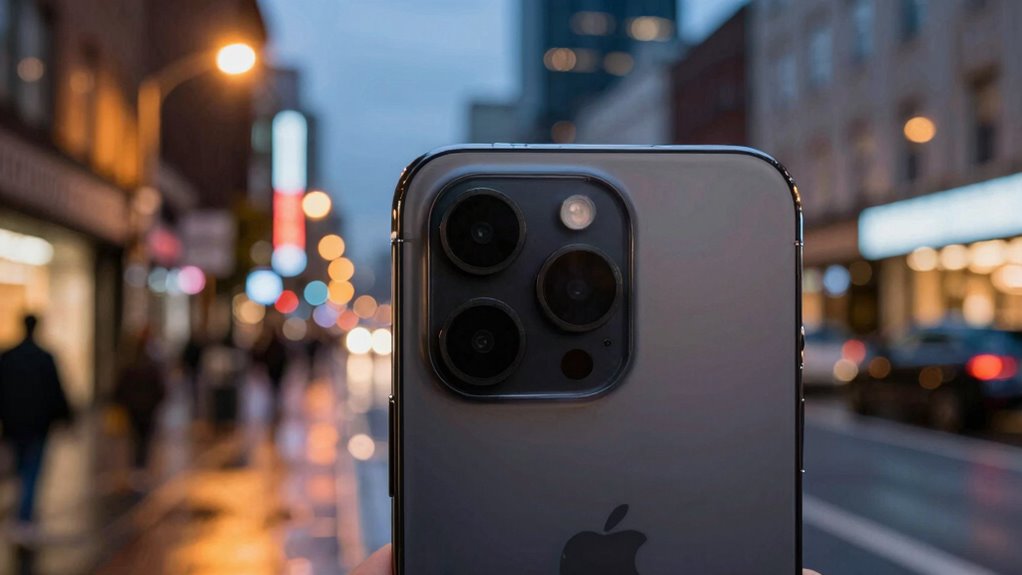
When evaluating phone camera quality, it’s important to look beyond megapixels and consider how well the camera captures images in real-world conditions. Megapixels alone don’t tell the full story. Instead, focus on how the lens performs in different environments. A lens with good durability means it can withstand scratches, dust, and accidental drops, ensuring consistent image quality over time. If the lens isn’t durable, even the most advanced sensor can be compromised, leading to blurry or distorted photos. Durability isn’t just about avoiding scratches; it’s about maintaining clarity and sharpness in various situations, whether you’re shooting outdoors in bright sunlight or in low-light conditions. Additionally, chewable snacks can support your dog’s dental hygiene, much like how durable lenses help preserve image quality over time.
Beyond hardware, image processing plays a crucial role in determining overall camera performance. Many phones now use sophisticated algorithms that enhance photos after capture. These algorithms help improve color accuracy, reduce noise in low-light photos, and create more natural-looking images. When you’re evaluating a phone, pay attention to how well the device handles different lighting scenarios. Does it preserve details? Are the colors vibrant without appearing unnatural? Good image processing can sometimes compensate for hardware limitations, giving you sharp, clear pictures even in less-than-ideal conditions. Moreover, advancements in computational photography have made it possible for even mid-range devices to produce professional-looking results, emphasizing software’s role in overall performance.
Effective image processing enhances photo quality, preserving details and natural colors across various lighting conditions.
It’s also helpful to consider how the camera’s software works in conjunction with the hardware. Some phones excel at HDR (High Dynamic Range) processing, balancing shadows and highlights to produce well-exposed images. Others might offer advanced computational photography features like night modes or portrait effects that rely heavily on image processing. These features can dramatically improve photo quality without requiring a camera with the highest specs. You should also think about how the camera performs in real-world situations, not just in controlled tests. Take note of how it handles movement, different lighting, and complex scenes. A durable lens combined with intelligent image processing often results in photos that look natural, detailed, and vibrant, regardless of the environment. Furthermore, understanding the importance of regulatory compliance can help ensure that your device meets safety and quality standards, contributing to consistent performance. Prioritizing hardware-software integration can significantly impact the overall user experience and the quality of your photos. Ultimately, the best camera isn’t necessarily the one with the highest megapixel count, but the one that consistently delivers high-quality images through well-designed hardware and smart software integration. Prioritize how the camera performs in everyday life, and you’ll make a better choice without obsessing over specs.
![Ailun 3 Pack Camera Lens Protector for iPhone 17 Pro Max,Tempered Glass,9H Hardness,Ultra HD,Anti-Scratch,Case Friendly,Does not Affect Night Shots[Not for iPhone 17/17 Pro/iPhone Air]](https://m.media-amazon.com/images/I/41J8GZ55tUL._SL500_.jpg)
Ailun 3 Pack Camera Lens Protector for iPhone 17 Pro Max,Tempered Glass,9H Hardness,Ultra HD,Anti-Scratch,Case Friendly,Does not Affect Night Shots[Not for iPhone 17/17 Pro/iPhone Air]
Works For iPhone 17 Pro Max 6.9 inch 2025 camera lens protector.Effectively protecting the lens,featuring maximum protection from…
As an affiliate, we earn on qualifying purchases.
As an affiliate, we earn on qualifying purchases.
Frequently Asked Questions
How Does Image Processing Affect Photo Quality?
Image processing considerably impacts your photo quality through image enhancement and processing algorithms. These techniques optimize details, improve color accuracy, and reduce noise, making your photos look more professional. When your phone uses smart processing algorithms, it can brighten dark scenes, sharpen images, and balance exposure seamlessly. So, even if the camera hardware isn’t top-tier, effective image processing can make your photos look much better and more vibrant.
Can Software Updates Improve Camera Performance?
Absolutely, software updates can improve your camera’s performance. Think of it like a modern-day upgrade that enhances software optimization, fixing bugs and boosting capabilities. These updates often refine image processing and auto-focus, directly impacting your user experience. Just as a vintage tech becomes more refined over time, your phone’s camera gets better with each update, helping you capture clearer, more vibrant photos without chasing specs.
What Role Does Lens Quality Play in Photos?
Lens quality directly impacts your photos by affecting lens clarity, which determines how sharp and detailed your images appear. A high-quality lens minimizes distortions and aberrations, giving you clearer pictures. Aperture size also plays a role; a larger aperture allows more light to enter, enhancing low-light performance and creating a pleasing background blur. Together, these factors influence the overall quality of your photos more than just megapixels.
Do Camera Sensors Really Matter if Megapixels Are High?
Yes, camera sensors matter even with high megapixels. Larger sensor size captures more light, improving photo quality, especially in low light. Higher pixel density means more detail, but if pixels are packed tightly, it can reduce noise. So, focus on sensor size and pixel density, not just megapixels. Bigger sensors and ideal pixel density deliver sharper, clearer images, regardless of the megapixel count.
How Important Is Low-Light Camera Performance?
Low-light camera performance is essential because it affects the clarity and detail of your photos in dark environments. You want a sensor size that captures more light, improving image quality. Optical zoom also helps by allowing you to get closer without losing detail. When choosing a phone, prioritize models with larger sensors and optical zoom capabilities, as they greatly enhance low-light shots, giving you clearer, more vibrant images even in challenging lighting.

Tapo TP-Link 2K Pan Tilt Security Camera for Baby Monitor, Dog Camera w/Motion Detection, 2-Way Audio Siren, Night Vision, Cloud &SD Card Storage (Up to 256 GB), Works with Alexa & Google Home (C210)
【2K (2304×1296) High Definition】Capture every detail inside your home with crystal-clear 2K high definition video with this indoor…
As an affiliate, we earn on qualifying purchases.
As an affiliate, we earn on qualifying purchases.
Conclusion
So, next time you’re eyeing the latest phone with all the shiny specs, remember that true camera quality isn’t about chasing specs like a modern-day Sir Lancelot chasing a dragon. Focus on how the photos actually look and feel, not just numbers. Trust your eyes, experiment with different lighting, and don’t be swayed by marketing hype. After all, a great shot beats a thousand specs—just like a good ol’ camera from the days of film.

Xenvo Pro Lens Kit for iPhone and Android, Macro and Wide Angle Lens with LED Light and Travel Case Black
✔ COMPATIBLE WITH ALL SMARTPHONES, TABLETS, and LAPTOPS including ALL iPhone models, Samsung Galaxy and Note, Google Pixel,…
As an affiliate, we earn on qualifying purchases.
As an affiliate, we earn on qualifying purchases.

The Ultimate Smartphone Photography Masterclass: From iPhone to Android Pro Techniques
As an affiliate, we earn on qualifying purchases.
As an affiliate, we earn on qualifying purchases.