
TL;DR

Get the latest gadgets delivered free with Prime
- Fast, free delivery on millions of items
- Prime Video, Amazon Music and more included
- Member-only deals all year
A home automation practitioner’s report argues that essential smart-home functions should keep working without an internet connection. His setup runs core automations on locally owned hardware, while cloud services such as Alexa remain optional ways to control devices.
Home automation practitioner Spencer Kittleson says the core functions in his house keep running when the internet is disconnected, after designing his system to rely on local hardware rather than vendor servers. His report and talks describe that approach as a practical safeguard against outages and companies changing or withdrawing the services their devices depend on.
Kittleson says his central rule is that essential home functions must work with the internet unplugged. His setup uses Tasmota software on ESP boards, an MQTT message broker and Node-RED running on a Raspberry Pi. Those components let devices and automations communicate within the home rather than requiring every action to pass through a company’s cloud.
Cloud services have not been removed entirely. Kittleson says he uses Alexa and some AWS services, but treats Alexa as one optional control method. If it becomes unavailable, he says, wall switches and a wall-mounted dashboard remain usable. His stated principle is not that every device must be disconnected from the internet, but that the internet should not be a single point of failure for core functions.
The examples in the report include a sprinkler controller, a garage-door setup and a cooling routine. The garage flow checks whether the door is closed, opens it, waits and turns on a fan; sensors also report status to a logging system. Kittleson describes past problems with a Nest integration that stopped working after Google changed its API, a Samsung refrigerator displaying a certificate error, and a grill controller that needed Wi-Fi to show its temperature. These are his reported experiences, not an independent assessment of those products.
Keeping Basic Controls Available
When a connected product depends on an outside service, an internet outage, a service interruption or a changed API can affect more than remote access. It may interfere with functions a household expects to use at home. Kittleson’s approach puts local control and ordinary physical controls ahead of convenience features that depend on a cloud connection.
The distinction matters for buyers because two devices marketed as “smart” can have different failure modes. A device may offer app or voice control while retaining a usable switch, or it may rely on an online account for a basic feature. Kittleson advises checking where a product’s control and configuration live before buying it. His account is a practitioner’s experience, not a controlled comparison of smart-home systems, but it shows why offline behavior is a useful purchase question.
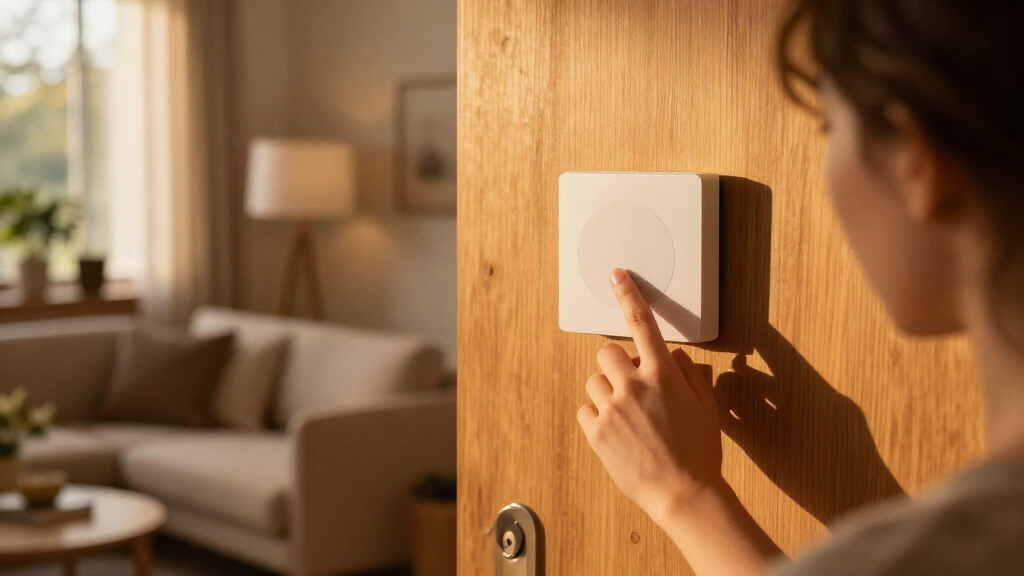
Local operation can also give residents more than one way to use a device. Kittleson lists apps, Alexa, QR codes, NFC tags and physical controls among possible entry points. He says new controls should not remove familiar ones: a smart bulb that requires someone to leave its wall switch permanently on can make a room less convenient if the old control stops working as expected.
Products Worth Considering

Amazon Kindle Scribe (3rd Generation), 64GB, 11-inch Display, Graphite, with Premium Pen

LG UltraGear 27-inch QHD OLED Gaming Monitor, 240Hz

Amazon Kindle Paperwhite (2024, 16 GB) – 7-inch Glare-Free Display, Black
As an affiliate, we earn on qualifying purchases.
From Cloud Integrations to Local Control
Kittleson traces his approach to a Nest integration that worked until Google changed its API. That episode shaped his concern that a product’s usefulness can depend on decisions made by its manufacturer. He says his house has followed the offline-first rule for about 10 years, while later rules were added as more people lived there and the system grew.
His other rules address maintenance as well as connectivity: keep configuration in one place, check automations for conflicts, use messaging that lets devices communicate without being tightly coupled, and avoid battery-powered sensors unless their batteries last at least a year. He says four scheduled triggers once affected the same garden pump, an example of how local automation still needs monitoring.
The report also makes clear that this approach involves trade-offs. Kittleson says a cloud camera can be inexpensive and easy to set up, while a switch he configures himself takes more work but can connect to other systems. His examples describe one household’s choices; they do not establish that local setups are always simpler, cheaper or more secure.
“No internet, no problem. Core stuff has to work with the internet unplugged.”
— Spencer Kittleson, describing his home automation rule
Limits of One Household’s Experience
The source is a first-person report about Kittleson’s own home and talks, not an independent test or a survey of smart-home products. It does not compare the reliability, cost, setup time or security of local and cloud-based systems across manufacturers. The reported Nest, refrigerator and grill issues are examples he gives; the material does not establish how widespread those problems are or whether they have since been resolved.
It is also not clear from the report how every device behaves during a power cut, a failure of the home network, or a fault in the Raspberry Pi or other local equipment. Working without internet access is not the same as working without electricity or a functioning local network. The material does not provide a full inventory of devices or independent verification of the system’s performance.
Check Device Dependencies Before Buying
Kittleson’s next steps are framed as ongoing household maintenance rather than a product launch or announced policy change. He says automations need periodic checks as rooms, residents and devices change, and that exceptions to his rules should be made for a reason he would still accept months later. The report does not identify a forthcoming product, deadline or industry response.
For readers considering connected devices, the practical next step is to check whether basic operation survives a lost internet connection, whether a physical control remains available, and what happens if a vendor’s service or API changes. The answer will vary by device and manufacturer; the source does not provide a universal compatibility list.
Key Questions
What does offline-first home automation mean?
It means core device controls and automations run inside the home and do not require an internet connection or a vendor’s server to function. Kittleson’s setup uses a Raspberry Pi, Node-RED, MQTT and Tasmota-equipped devices.
Does Kittleson avoid all cloud services?
No. He says he uses Alexa and some AWS services, but treats them as optional. His stated rule is that a cloud service should not be the only way to control something essential.
Will smart devices work during a power cut if they work offline?
Not necessarily. Offline operation addresses dependence on internet access; it does not by itself provide backup power. The source does not describe how Kittleson’s devices behave during a power outage.
What should buyers check before installing a smart device?
Ask whether the device’s basic functions work without internet access, whether it has a usable physical control, and whether it depends on an online account or vendor API. Kittleson also recommends checking how configuration and logs are handled.
Source: docodethatmatters.com