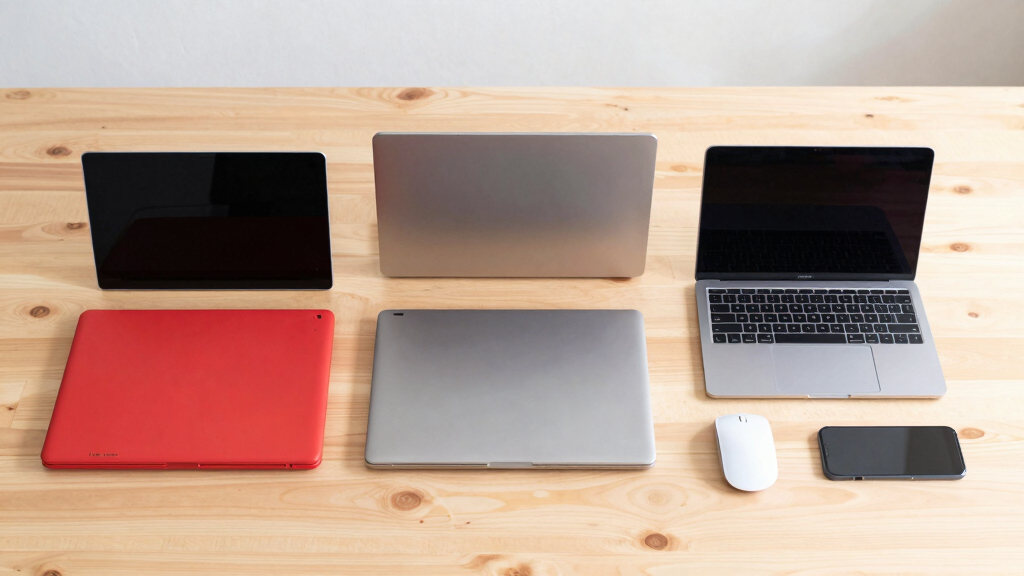

This guide helps students find a compact, portable laptop that meets their academic needs without sacrificing performance. It covers key features, selection criteria, and practical tips to ensure you choose the right device efficiently. Designed for beginners, this process takes about 30 to 60 minutes.
Open a free Amazon Business account
Business pricing, bulk buying and tax-exempt orders.
Create a free accountAs an affiliate, we earn on qualifying purchases.

Samsung 14" Galaxy Chromebook Go Laptop PC, Intel Celeron N4500, 4GB RAM, 64GB Storage, ChromeOS, Silver
- ✔ Processor: Intel Celeron N4500
- ✔ RAM: 4GB
- ✔ Storage: 64GB

HP 14-inch Ultra-Portable Laptop for Students and Business with Windows 11 Pro
- ✔ Processor: Intel N150 Quad-Core
- ✔ RAM: 4GB
- ✔ Storage: 128GB SSD + 500GB external

Lenovo IdeaPad Slim 3 Chromebook Laptop 2024, 14" HD Display, Waves MaxxAudio Speakers, 4GB RAM, 64GB Storage, MediaTek Kompanio…
- ✔ Processor: MediaTek Kompanio 520
- ✔ RAM: 4GB
- ✔ Storage: 64GB
Difficulty: Beginner | Time: 30-60 minutes
What You’ll Need
Tools & Materials:
- Internet access
- Notebook or device for note-taking
Knowledge:
- Basic understanding of laptop features and specifications

Samsung 14" Galaxy Chromebook Go Laptop PC Computer, Intel Celeron N4500 Processor, 4GB RAM, 64GB Storage, ChromeOS, XE340XDA-KA2US, Student Laptop, Silver
- Slim and Lightweight Design: Perfect for on-the-go use
- Durable Military-Grade Build: Resistant to drops and dings
- Long-Lasting Battery Life: Up to 12 hours of use
As an affiliate, we earn on qualifying purchases.
Samsung 14" Galaxy Chromebook Go Laptop PC, Intel Celeron N4500, 4GB RAM, 64GB Storage, ChromeOS, Silver
<p>The <strong>Samsung Galaxy Chromebook Go</strong> stands out for its exceptional portability, thanks to its ultra-lightweight, slim design, and durable build. With a <strong>12-hour battery life</strong>, it’s perfect for students who need to stay unplugged throughout the school day. Running ChromeOS, it offers seamless access to Google apps and cloud storage, making it ideal for basic tasks like browsing, document editing, and streaming. However, its <strong>limited storage (64GB)</strong> and modest processor mean it’s less suited for demanding software or large file storage. Compared with the HP, it sacrifices some power for portability and battery longevity, which makes it a top pick for students prioritizing mobility over raw performance.
Pros:
- Lightweight and slim for maximum portability
- Durable, military-grade construction
- Long-lasting 12-hour battery
- Fast Wi-Fi connectivity for efficient browsing
Cons:
- Limited storage capacity (64GB)
- Processor may struggle with intensive tasks
- No LTE connectivity at launch
Best for: Students who need a lightweight, durable device primarily for web-based tasks, note-taking, and casual media use.
Not ideal for: Students who require substantial local storage or run resource-heavy applications like coding environments or creative software.
Bottom line: A top choice for students prioritizing portability, durability, and all-day battery life, but less suited for storage-intensive tasks.
“A top choice for students prioritizing portability, durability, and all-day battery life, but less suited for storage-intensive tasks.”

HP 14” Laptop Ultra-Portable Computer 2026 Student Business, MS Office, Copilot AI, Intel 4-Core CPU, 4GB RAM, 628GB Storage (128GB UFS+500GB Ext), Long Battery, MaxsolAccessory, Win 11 Pro, Lavender
- Memory and Storage: 4GB RAM, 128GB SSD, 500GB external drive
- Processor: Intel N150 Quad-Core up to 3.6 GHz
- Display: 14-inch HD, bezel-free, wide viewing
As an affiliate, we earn on qualifying purchases.
HP 14-inch Ultra-Portable Laptop for Students and Business with Windows 11 Pro
<p>The <strong>HP 14-inch Windows laptop</strong> combines portability with more robust performance, featuring a <strong>quad-core Intel N150 processor</strong> and a sizable 128GB SSD plus an external drive, making it ideal for multitasking and productivity. Its high-definition display and included Office 2024 bundle enhance remote learning and remote work capabilities. Compared to the Chromebook options, this model offers a more traditional Windows environment and larger storage, but it’s slightly heavier and more expensive. Its 4GB RAM can be a limiting factor for heavy multitasking, and users should be prepared for some setup with the external drive. It’s best for students who need a versatile device that can handle a wider range of applications.
Pros:
- Lightweight and portable design
- Fast performance with quad-core processor and SSD
- Includes Office 2024 and useful accessories
- High-definition display suitable for remote learning
Cons:
- Limited 4GB RAM may affect multitasking
- External storage setup required
- No dedicated graphics card for gaming or intensive tasks
Best for: Students who want a portable Windows device capable of multitasking, productivity, and multimedia use.
Not ideal for: Students seeking a purely web-based or budget-friendly Chromebook experience, or those who prioritize ultra-lightweight design above all.
Bottom line: A versatile choice for students needing a balance of performance, storage, and portability, especially within Windows environments.
“A versatile choice for students needing a balance of performance, storage, and portability, especially within Windows environments.”
Lenovo IdeaPad Slim 3 Chromebook Laptop 2024, 14" HD Display, Waves MaxxAudio Speakers, 4GB RAM, 64GB Storage, MediaTek Kompanio…
<p>The <strong>Lenovo IdeaPad Slim 3 Chromebook</strong> makes a compelling case for students who prioritize all-day battery life and quality audio. Its <strong>up to 13.5 hours of battery life</strong> and sleek, lightweight <strong>2.87-pound frame</strong> make it easy to carry around campus or between classes. The device offers a good multimedia experience with Waves MaxxAudio speakers, and its MediaTek Kompanio 520 processor handles everyday tasks well, although it’s less suited for intensive multitasking. The lack of a touchscreen and limited storage (64GB) limit its versatility for some use cases, but privacy features like the built-in shutter add peace of mind. Compared to the other two, this Chromebook emphasizes media and battery life over raw processing power.
Pros:
- Exceptional battery life of up to 13.5 hours
- Lightweight and portable
- Good audio quality with Waves MaxxAudio
- Privacy shutter for security
Cons:
- Limited storage (64GB)
- Processor less powerful for intensive tasks
- No touchscreen display
Best for: Students looking for a budget-friendly, long-lasting device mainly for browsing, media, and lightweight tasks.
Not ideal for: Students needing high-performance computing or large local storage for files and applications.
Bottom line: Ideal for students prioritizing all-day battery life and multimedia use over processing power or extensive storage.
“Ideal for students prioritizing all-day battery life and multimedia use over processing power or extensive storage.”
As an Amazon Associate we earn from qualifying purchases.
Before You Start
Determine your main usage needs, such as writing, browsing, or light software. Be aware of common size constraints for portability (typically 13 inches or smaller). Keep your budget flexible but within a realistic range for quality devices.
Step-by-Step Instructions
Step 1: Define your primary usage needs
List the tasks you’ll perform most often, such as writing papers, browsing the internet, or using specific software. Prioritize portability if you need to carry the laptop frequently.Tip: Focus on essential features; avoid overpaying for high-end specs you won’t use.
Check: You have a clear list of tasks and features that your ideal laptop should support.
Step 2: Set a budget range
Decide on a realistic price range based on your financial situation, typically between $300 and $900 for quality compact laptops.Tip: Be flexible within your range, but avoid very cheap models that compromise quality or durability.
Check: Your budget is defined and written down, guiding your search.
Step 3: Research suitable laptop models
Visit reputable retailer websites and read reviews for compact laptops, focusing on models with screen sizes 13 inches or smaller. Pay attention to specs like processor, RAM, storage, and battery life.Tip: Filter options by size and price; look for models with positive user feedback on portability and performance.
Check: You have a shortlist of 3-5 models fitting your needs and budget.
Step 4: Compare specifications and features
Create a comparison table including processor type, RAM, storage capacity, weight, battery life, and price for each shortlisted model.Tip: Prioritize models with at least an Intel i3/i5 or AMD Ryzen 3/5, 8GB RAM, and SSD storage for better performance.
Check: You have a clear comparison chart that highlights the best value options.
Step 5: Check physical dimensions and weight
Verify the exact weight and dimensions from product listings or manufacturer specs to ensure portability meets your expectations.Tip: Aim for a weight under 3 pounds (1.36 kg) for easy carrying; check if the size fits your preferred bag or backpack.
Check: You confirm the selected models are compact and lightweight as needed.
Step 6: Assess battery life and build quality
Read user reviews and manufacturer info on battery longevity, aiming for at least 8 hours of usage. Check for sturdy build quality to withstand daily use.Tip: Battery life varies; prioritize models with verified long-lasting batteries and good durability reports.
Check: You have selected models with confirmed long battery life and solid build quality.
Step 7: Visit physical stores if possible
If feasible, test the shortlisted laptops in-store to assess weight, screen quality, keyboard comfort, and overall feel.Tip: Handling the device physically helps confirm comfort and portability, which specs alone can’t reveal.
Check: You have confirmed the physical feel and portability of your chosen models.
Step 8: Choose the best fit and purchase
Select the model that best balances your needs, features, and budget. Purchase from a reputable retailer with a good return policy.Tip: Keep receipts and warranty info for future reference; consider extended warranty if available.
Check: You have successfully acquired a compact student laptop that meets your criteria.
Common Mistakes to Avoid
- Choosing a laptop based solely on price without considering performance or build quality — Prioritize specifications and reviews over cost; ensure the device meets your core needs.
- Ignoring physical size and weight, resulting in a device that’s not truly portable — Always verify dimensions and weight before purchase; handle the device physically if possible.
- Overlooking battery life, leading to devices that don’t last through your typical school day — Read user reviews specifically about battery performance; choose models with verified long battery life.
Troubleshooting
Problem: Laptop is too heavy or bulky despite specifications indicating portability
Solution: Recheck the physical dimensions and weight in the product specs; test handling in-store if possible.
Problem: Laptop does not meet performance expectations for school tasks
Solution: Verify the processor and RAM meet minimum requirements; consider upgrading storage or closing background apps.
Problem: Battery drains quickly after purchase
Solution: Calibrate the battery by fully charging and discharging it once; reduce screen brightness and background activity.
What Success Looks Like
The selected laptop weighs under 3 pounds, fits comfortably in your bag, has a clear display, and performs tasks smoothly. You can carry it easily, turn it on, and run your essential applications without lag or battery issues.
Next Steps
Set up your new laptop by installing necessary software, updating drivers, and customizing settings. Keep the device protected with a case and regular maintenance. Revisit reviews periodically to stay informed about updates or replacements, and consider upgrading components if needed over time.
Frequently Asked Questions
What is the best screen size for a compact student laptop?
Most students find 13 inches or smaller ideal for portability without sacrificing too much screen space for studying and browsing.
How much RAM do I need for school tasks?
At least 8GB of RAM is recommended for smooth multitasking, especially if using multiple apps or browser tabs simultaneously.
Should I prioritize battery life over performance?
Balance both; aim for a device with at least 8 hours of battery life while ensuring it meets your performance needs for coursework.
Can I upgrade components like storage or RAM later?
Many compact laptops have soldered RAM and non-upgradable storage. Check the model specifications before purchase if future upgrades are important.
Labor Day sales Picks
labor day deals
As an affiliate, we earn on qualifying purchases.