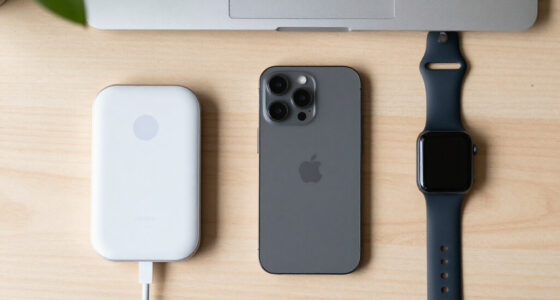
Eliminating the headphone jack reflects industry trends toward slimmer, water-resistant devices and wireless tech, offering benefits like more internal space and advanced features. While it boosts sales of wireless earbuds and accessories, it also raises concerns about audio quality, device longevity, and environmental impact. If you’re curious about whether this change truly benefits consumers or favors corporations, there’s more to contemplate that might surprise you.

Get the latest gadgets delivered free — and shop member deals
- Fast, free delivery on millions of items
- Access to Prime Big Deal Days deals on October 6–7
- Prime Video, Amazon Music and more included
Key Takeaways
- Eliminating the headphone jack frees internal space for larger batteries and water resistance, enhancing device durability and performance.
- The move encourages adoption of wireless earbuds, creating new revenue streams despite potential compromises in sound quality.
- Industry standards favor wireless technology, leading to innovation but potentially reducing wired accessory compatibility.
- Removing the jack increases e-waste due to shorter product lifespan and more frequent replacements of wireless earbuds.
- Overall, the shift aligns with consumer demand for convenience and portability, though it sparks debates over audio quality and sustainability.
As an affiliate, we earn on qualifying purchases.
Industry Shift and Adoption Trends

The industry has rapidly shifted toward removing the 3.5mm headphone jack, with major brands like Apple, Google, and Samsung leading the change since 2016. Apple kicked off this trend with the iPhone 7, sparking a domino effect across the market. Google followed in 2022, ditching the jack on its Pixel phones, while Samsung removed it from several Galaxy models. Today, most flagship smartphones no longer feature the traditional port. Instead, manufacturers focus on digital audio via USB-C or Lightning connectors and promote wireless options. This shift isn’t just about innovation; it’s driven by the desire to make devices slimmer, more water-resistant, and space-efficient. As a result, consumers now increasingly rely on wireless earbuds, with the industry fully embracing a wireless audio future. Additionally, the move aligns with the industry’s push towards high refresh rates and other advanced features that enhance user experience.
USB-C to 3.5mm headphone adapter
As an affiliate, we earn on qualifying purchases.
As an affiliate, we earn on qualifying purchases.
Motivations Behind Removing the Jack

Manufacturers have several strategic reasons for eliminating the headphone jack, aiming to improve device performance and design. Removing the port frees up internal space, allowing for larger batteries, better cameras, and enhanced cooling. It also boosts water and dust resistance by eliminating an exposed component. Shifting to digital audio via USB-C or Lightning connectors simplifies the hardware and supports higher-quality sound. Wireless technology adoption is a major motivator, with Bluetooth standards continuously improving. Additionally, slimming down devices makes them more attractive and easier to carry. Companies see removing the jack as a way to push users toward wireless earbuds, creating new revenue streams. Ultimately, these motivations focus on innovation, sleek design, and aligning with future tech trends, even if it means sacrificing traditional wired connectivity. Embracing wireless technology is part of a broader trend towards seamless, cable-free experiences.
noise-canceling wireless headphones
As an affiliate, we earn on qualifying purchases.
As an affiliate, we earn on qualifying purchases.
Impact on Consumers and Audiophiles

As the headphone jack disappears from most smartphones, many consumers and audiophiles notice a shift in convenience and sound quality. You might find wireless options more portable, but wired headphones often deliver better sound fidelity and lower latency, making them preferred for critical listening. Without a jack, you could face frustration with dongles that are easy to lose and add expense. The convenience of a reliable wired connection is lost for some, while others embrace the freedom of wireless tech. You might also worry about durability, as wireless earbuds tend to degrade faster due to battery wear. Additionally, audiophiles argue that digital audio doesn’t fully replicate the warmth and nuance of wired, analog signals. Overall, the impact varies based on your priorities—convenience versus sound quality. Vetted – wave and wind
water-resistant wireless earbuds
As an affiliate, we earn on qualifying purchases.
As an affiliate, we earn on qualifying purchases.
Financial Benefits and Market Dynamics

With the removal of the headphone jack, companies are tapping into new revenue streams through increased sales of wireless earbuds, dongles, and related accessories. You’ll notice that brands like Apple profit heavily from AirPods, which can cost up to $550, boosting their margins. The shift encourages consumers to spend more on wireless audio solutions and adapters, even if they find them inconvenient. While some manufacturers benefit from accessory sales, not all profit directly, but the overall market for wireless audio expands. This transition has created a lucrative ecosystem, fueling innovation and competition. As demand for wireless headphones rises, companies prioritize developing better, more integrated products to capture consumer spending, making the move financially advantageous for many in the industry. Additionally, the surge in wireless audio products has led to increased essential oils for respiratory health, as users seek comfort and relief during extended use or in stressful situations.
Environmental Implications of the Change

As you consider the shift away from the headphone jack, you should think about the environmental impact of this change. Wireless earbuds often need frequent replacements, increasing e-waste and waste disposal challenges. Additionally, the demand for rare earth minerals used in these devices raises concerns about mining’s environmental costs. Embracing energy-efficient cloud solutions can help offset some environmental impacts by reducing overall electronic waste and energy consumption.
E-waste Increase Concerns
Have you considered how the shift away from the headphone jack might be increasing electronic waste? Without the jack, many users discard their old wired headphones, which often still work but become incompatible. This leads to more waste, especially when combined with short-lived wireless earbuds.
- Wireless earbuds contain batteries that degrade over time, requiring replacements.
- New devices often come with adapters, which are easily lost or broken.
- Consumers replace entire devices more frequently, discarding still-functional components.
- Manufacturing new wireless accessories demands mining for rare minerals, adding to environmental harm.
This cycle accelerates e-waste, burdening landfills and ecosystems. While wireless tech advances, the environmental costs of discarded accessories and devices rise, challenging the industry’s sustainability claims.
Mining Environmental Costs
Did you know that removing the headphone jack contributes to significant environmental costs through increased mining? Without a headphone port, manufacturers rely more heavily on wireless technology, which requires rare earth minerals like neodymium, dysprosium, and terbium for magnets and batteries. Mining these materials is energy-intensive, often damaging ecosystems, polluting waterways, and depleting finite resources. As demand for wireless devices grows, so does the scale of mining operations, intensifying environmental degradation. Additionally, shorter-lived wireless earbuds lead to more frequent replacements, increasing the overall extraction of minerals. This cycle contributes to habitat destruction and increases carbon emissions. While removing the jack may seem like a small change, it fuels a rich culinary scene that poses serious environmental risks, contradicting claims of sustainability and responsible innovation.
Evaluating the Long-Term Effects

The long-term effects of removing the headphone jack are complex and will shape the future of mobile technology in multiple ways. You might notice increased device innovation, as manufacturers prioritize space for better batteries and new features. However, it could also lead to more e-waste, since wireless earbuds often need frequent replacement. You may benefit from improvements in water resistance and sleeker designs, but lose some audio fidelity and convenience. Consider these key impacts:
- Increased adoption of wireless audio, fostering innovation but reducing wired options
- Growth in accessory markets, generating new revenue streams for companies
- Environmental concerns due to shorter lifespan and more e-waste
- Shift toward digital audio, potentially improving sound quality but risking data loss during transmission
Furthermore, device compatibility could become more complicated as manufacturers adopt different standards and connectors for wireless technologies. Ultimately, these long-term effects will influence consumer choices, industry standards, and environmental sustainability.
Frequently Asked Questions
Will Wireless Headphones Ever Fully Replace Wired Audio Quality?
Wireless headphones may eventually match wired audio quality, but right now, they often fall short, especially for audiophiles. You might notice latency, compression, or less detail compared to wired options. As technology advances with better codecs and higher bandwidth, wireless sound improves. Still, for the highest fidelity, wired headphones remain the best choice. Expect gradual improvements, but full equivalence may take years or even decades.
How Do Headphone Jack Removals Affect Device Repairability?
Removing the headphone jack generally makes devices less repairable because it eliminates a accessible port, complicates replacing components, and often requires specialized tools. You’ll find that repairing or upgrading parts like audio ports becomes difficult or impossible, leading to higher repair costs or needing professional service. This trend pushes you toward replacing entire devices more often, reducing longevity and increasing electronic waste, which isn’t ideal for sustainability or your wallet.
Are There Health Concerns Linked to Wireless Headphone Radiation?
You might wonder if wireless headphones pose health risks due to radiation. Current research shows that the radiofrequency energy emitted by Bluetooth devices is very low and well within safety limits set by health authorities. While some people prefer wired headphones to avoid any exposure, most experts agree that using wireless headphones is unlikely to cause harm when used normally. If you’re concerned, limiting usage or opting for wired options can ease your worries.
What Alternatives Exist for High-Fidelity Audio Without a Headphone Jack?
Think of high-fidelity audio as a clear, flowing river—your best experience comes from quality sources. You can use USB-C or Lightning digital connections, which transmit pure sound without interference. High-end wireless options like Bluetooth 5.2 or aptX Adaptive provide impressive fidelity, resembling wired clarity. Audiophile-grade DACs and amplifiers in dongles or portable devices also deliver exceptional sound quality, ensuring you enjoy pristine audio even without a headphone jack.
How Will Future Regulations Influence Port and Wireless Technology?
Future regulations are likely to push manufacturers toward more sustainable and consumer-friendly options. You’ll see stricter standards for wireless tech, promoting better battery life and eco-friendly materials. Governments may also enforce port compatibility to reduce e-waste, encouraging universal standards like USB-C. As a user, you’ll benefit from safer, more efficient devices that balance innovation with environmental responsibility, making wireless and port options more accessible, reliable, and eco-conscious.
Conclusion
As you consider the shift away from headphone jacks, remember that over 75% of smartphone users now prefer wireless audio. While some audiophiles miss the classic jack, the move pushes innovation and reduces e-waste. Ultimately, the change aims to benefit the broader market, even if it feels inconvenient now. As technology evolves, embracing these updates can lead to better, more sustainable listening experiences in the long run.
Fall Picks
fall essentials
As an affiliate, we earn on qualifying purchases.