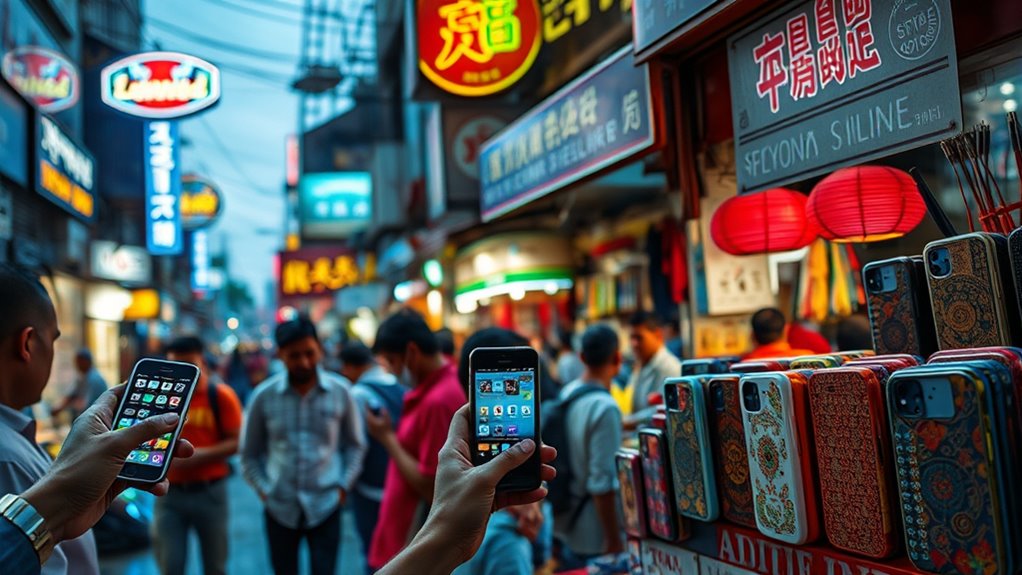

In emerging markets like India and China, phones are designed to be affordable, with features tailored to local needs, such as dual SIM slots, longer battery life, and regional apps. Brands focus on cultural preferences and everyday usability rather than high-end specs. In contrast, US devices prioritize sleek design, premium features, and brand prestige. To discover how these regional differences shape user experiences, keep exploring what makes these markets unique.

Get the latest gadgets delivered free with Prime
- Fast, free delivery on millions of items
- Prime Video, Amazon Music and more included
- Member-only deals all year
Key Takeaways
- Emerging market phones prioritize affordability, long battery life, and regional features, unlike US devices that emphasize premium design and high-end specs.
- Localized content, regional apps, and language support are integral to devices in India and China, tailored to cultural preferences.
- Budget brands in emerging markets release multiple regional variants with features like dual SIM and regional entertainment options.
- US phones focus on ecosystem integration, sleek aesthetics, and advanced hardware, reflecting consumer demand for premium experiences.
- Innovation in emerging markets often involves cost-effective features like durable builds and region-specific functionalities, contrasting US prioritization of high-end technology.
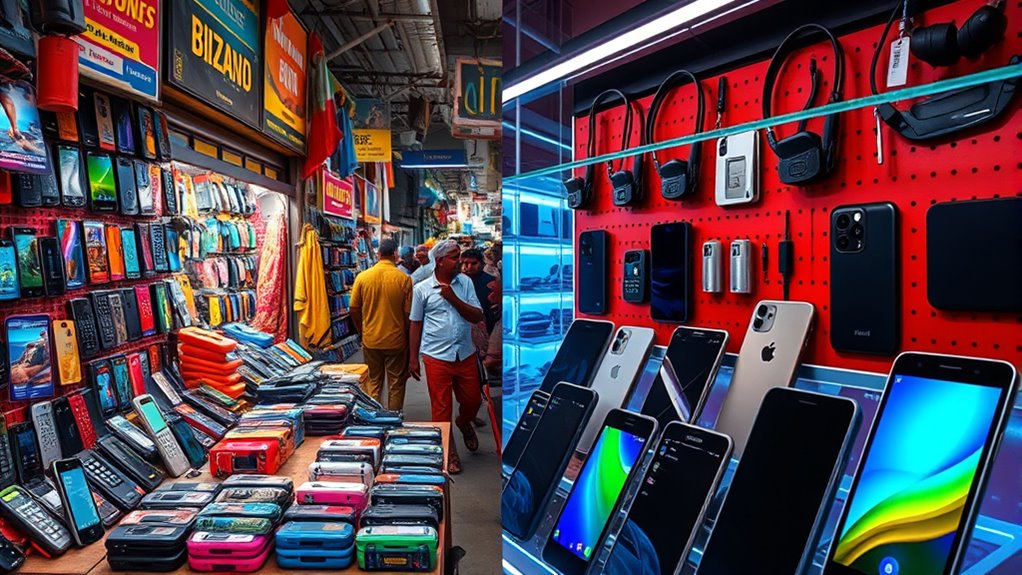
While the global smartphone market continues to evolve rapidly, emerging markets like India and China are driving much of the growth, offering affordable and feature-rich devices that cater to a vast population. In these regions, manufacturers focus on creating affordable alternatives that fit the economic realities of everyday consumers, ensuring that cutting-edge technology doesn’t have to come with a hefty price tag. They recognize that many users prioritize cost-effectiveness, battery life, and camera quality over high-end specs found in premium devices. To meet these needs, brands implement localization strategies—adapting their devices to suit local languages, cultural preferences, and usage habits. This might include pre-installing popular regional apps, incorporating local language options, or designing interfaces that resonate with local users’ daily routines.
In India and China, brands like Xiaomi, Realme, and Huawei have made significant strides by tailoring their phones to local tastes and economic conditions. These companies often release multiple versions of a device, each optimized for specific markets, with features that appeal directly to regional consumers. For example, they might emphasize long battery life due to inconsistent access to power, or include dual SIM slots to accommodate users who manage multiple numbers for work and personal use. This approach not only boosts sales but also fosters brand loyalty, as users feel understood and valued. Your experience with these phones might include discovering a device that seamlessly integrates local languages and content, making everyday tasks easier and more intuitive.
Furthermore, these manufacturers prioritize user-friendly interfaces designed with localization in mind. They often include region-specific features, such as local navigation apps, regional social media integrations, or even regionally popular games and entertainment options. The focus on affordability doesn’t mean sacrificing quality; instead, it encourages innovation within a constrained budget. As a result, you’ll find devices that combine durability, affordability, and regional customization—making them truly suited to local markets. Additionally, in these markets, the focus on free floating design elements allows for more flexible customization options that appeal to local tastes.
In contrast, phones in the US tend to emphasize premium features, with more focus on the latest technology, sleek design, and brand prestige. While US devices may incorporate some localization, the core strategy often revolves around high-end specifications and ecosystem integration. In emerging markets, however, brands understand that their success hinges on understanding the local context. By offering affordable alternatives with tailored features, they create devices that are not only accessible but also deeply relevant to the everyday lives of their users. This strategy allows them to stand out in crowded markets and build long-term loyalty among consumers who value devices that speak directly to their needs.
dual SIM smartphones India China
As an affiliate, we earn on qualifying purchases.
As an affiliate, we earn on qualifying purchases.
Frequently Asked Questions
How Do Regional Preferences Influence Phone Features in India and China?
You notice that regional preferences shape phone features in India and China through regional design and cultural influences. In India, you see phones with long battery life and affordable prices, catering to power outages and budget-conscious users. In China, you find advanced camera tech and integrated apps reflecting local culture. These features are tailored to meet local needs, making phones more appealing and functional for users in each region.
What Role Does Local Manufacturing Play in Device Availability?
Local manufacturing plays a vital role in device availability by streamlining supply chain dynamics and reducing import costs. When you buy phones assembled locally, it guarantees quicker delivery and better adaptation to regional demands. This local assembly boosts production efficiency, lowers prices, and keeps devices in stock longer. As a result, you experience more accessible, affordable smartphones, especially in markets like India and China where demand is high and supply chain complexities are significant.
How Do Software Updates Differ Across Markets?
You’ll notice software updates differ across markets with varying customization options and update frequency. In some regions, updates arrive more frequently, offering new features and security patches faster. Others might have more tailored updates to suit local preferences, including language support and app customization. These differences are driven by regional regulations, carrier partnerships, and user needs, ensuring your device remains optimized and relevant in your market.
What Are Common Security Concerns Specific to Emerging Markets?
You should be aware of cybersecurity challenges like malware and phishing attacks that are more prevalent in emerging markets. Privacy regulations may be less strict, making your data more vulnerable. You might face limited cybersecurity infrastructure or delayed software updates, increasing risks. Always use strong passwords, enable two-factor authentication, and stay cautious with app permissions. Protecting your personal information is vital to avoid falling victim to cyber threats specific to these markets.
How Do Carrier Restrictions Impact Phone Choices in These Regions?
Carrier restrictions are like fences keeping you from exploring all options. When your phone is carrier-locked, you can’t easily switch networks or use a different SIM, limiting your choices. Regional bans further restrict which phones you can buy or use, especially in emerging markets. These restrictions force you to buy specific models, affecting affordability and flexibility, and often pushing you toward local brands or locked devices that don’t meet your needs.
As an affiliate, we earn on qualifying purchases.
Conclusion
You now see how phones in India and China are like chameleons, adapting to local needs with innovative features, while US models stay more uniform. This vibrant diversity shapes a mobile landscape that’s as dynamic as a bustling marketplace. Embrace these differences, because they remind you that technology isn’t one-size-fits-all—it’s a colorful tapestry woven from unique cultural threads, making your choice of phone a reflection of your world.
As an affiliate, we earn on qualifying purchases.
affordable smartphones with regional apps
As an affiliate, we earn on qualifying purchases.
As an affiliate, we earn on qualifying purchases.
Halloween Picks
halloween
As an affiliate, we earn on qualifying purchases.