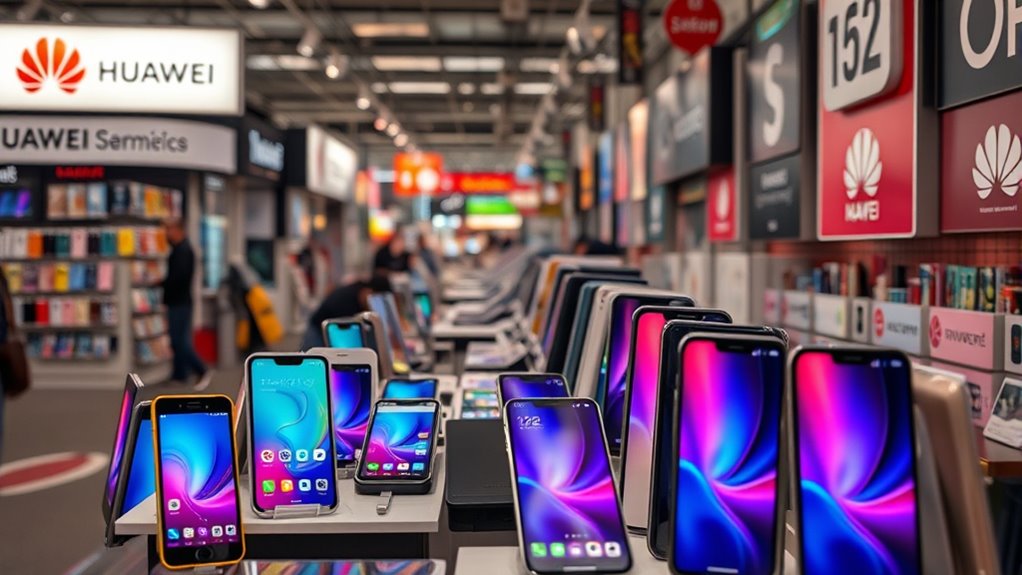

After five years, Huawei has adapted to the Google ban by developing its own ecosystem, including HarmonyOS and expanding AppGallery. While its global market share outside China has declined, Huawei is shifting focus to new markets and customer segments. The restrictions have spurred innovation but also created challenges in app compatibility and trust. To discover how Huawei’s strategies continue to evolve and influence the smartphone landscape, keep exploring further.

Get the latest gadgets delivered free with Prime
- Fast, free delivery on millions of items
- Prime Video, Amazon Music and more included
- Member-only deals all year
Key Takeaways
- Huawei has adapted by developing HarmonyOS and expanding AppGallery to replace Google services.
- The ban reduced Huawei’s global market share, especially outside China, impacting consumer preferences.
- Huawei’s focus on privacy and security efforts aimed to reassure users despite lacking Google ecosystem integration.
- The restrictions accelerated Huawei’s diversification into new markets and innovative operating systems.
- Overall, the ban has reshaped the global smartphone landscape, fostering new competitors and ecosystem alternatives.

Five years after the U.S. government blacklisted Huawei from accessing Google’s services, the Chinese tech giant has largely adapted to the restrictions. You’ve probably noticed how Huawei’s smartphones now operate without Google Play Services, which initially caused concern among consumers about privacy and security. While some worried that the absence of Google’s ecosystem might compromise privacy protections, Huawei has worked diligently to reassure users by developing its own app store and security features. Despite these efforts, there’s no denying that the ban has impacted Huawei’s market share, especially outside China. In many regions, consumers prefer devices with seamless access to Google apps, which has made it harder for Huawei to compete globally.
You might wonder how Huawei managed this shift. The company pivoted quickly, investing heavily in its HarmonyOS operating system and expanding its AppGallery to include more popular apps. This move aimed to reduce dependency on Google’s ecosystem and provide a more secure environment. However, the lack of Google services has led to privacy concerns among some users, who worry about data security and app compatibility. Huawei reassures its customers by emphasizing its rigorous security standards and privacy protections, but skepticism remains in markets where Google’s ecosystem is the norm. Additionally, the restrictions have accelerated Huawei’s market diversification, prompting the company to explore new regions and customer segments.
As an affiliate, we earn on qualifying purchases.
Frequently Asked Questions
How Has Huawei’s Market Share Evolved Post-Google Ban?
You’ll notice Huawei’s market share has fluctuated markedly post-Google ban. Initially, it dropped as consumers hesitated due to limited app access, but strong consumer loyalty helped it recover somewhat. In regions where Huawei offers compelling hardware and alternatives to Google services, its market share stabilizes or even grows. Overall, the ban caused instability, but Huawei’s focus on innovation and local markets keeps its presence alive despite ongoing challenges.
What Alternative App Stores Do Huawei Users Now Prefer?
Imagine a digital orchard where you pick from various apples; Huawei users now prefer third-party app stores like APKPure and Huawei’s AppGallery, which has grown into a bustling marketplace. These app store alternatives act as vibrant new avenues, offering a wide range of apps outside the traditional Google ecosystem. You tap into these third-party app stores to access essential apps, ensuring smooth navigation despite the absence of Google services.
How Has the Ban Impacted Huawei’s Global Brand Perception?
You might notice that Huawei’s brand reputation has taken a hit globally, leading to some consumers trusting their products less. The ban has made it harder for you to rely on Huawei for seamless integration with popular apps, which affects your perception of their innovation. Despite efforts to boost consumer trust through new features and app stores, some still see Huawei as less trustworthy compared to other brands.
Are There Ongoing Legal Challenges Related to the Ban?
Legal disputes still cast a shadow over Huawei, like a storm on the horizon. You’ll find ongoing legal challenges related to the ban, as policy shifts continue to shape the landscape. These disputes involve international trade laws and technology regulations, making the situation complex. While some legal battles are winding down, new ones emerge, keeping Huawei in a constant state of legal flux. The fight isn’t over yet, and it’s shaping the company’s future.
What Innovations Has Huawei Introduced Independently Due to the Ban?
You’ll notice Huawei has made significant independent innovations through dedicated software development, creating its own operating system, HarmonyOS, and developing alternative app ecosystems. These efforts let you enjoy a seamless experience without relying on Google services. Huawei’s focus on in-house software development showcases its resilience, allowing it to innovate independently and reduce dependence on external platforms, ultimately offering you a more autonomous and secure smartphone experience.
As an affiliate, we earn on qualifying purchases.
Conclusion
Five years on, the shadows cast by Huawei’s ban still linger, cloaking the future of smartphone innovation in uncertainty. As you watch brands scramble for alternatives and new technologies emerge from the darkness, you can’t help but wonder—what’s next for the global tech landscape? Will a new giant rise from the ashes, or will this chapter quietly fade into history? The answer remains hidden, waiting just beyond the horizon of tomorrow.
Huawei AppGallery compatible apps
As an affiliate, we earn on qualifying purchases.
As an affiliate, we earn on qualifying purchases.
smartphone privacy and security accessories
As an affiliate, we earn on qualifying purchases.
As an affiliate, we earn on qualifying purchases.
Halloween Picks
halloween
As an affiliate, we earn on qualifying purchases.