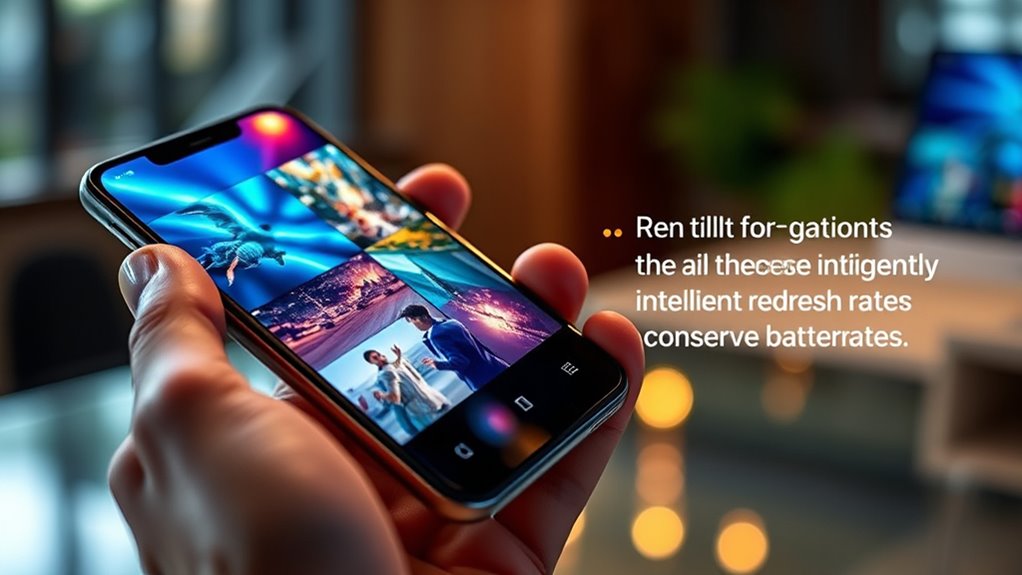

LTPO displays help your phone save battery by dynamically adjusting the refresh rate based on your activity. When you’re scrolling slowly or viewing static content, it lowers the refresh rate to as low as 1Hz or 10Hz, reducing power use. During gaming or videos, it switches to higher rates for smooth visuals. This smart adjustment balances performance with energy efficiency. Keep exploring to discover how this technology makes your device smarter and longer-lasting.

Get the latest gadgets delivered free — and shop member deals
- Fast, free delivery on millions of items
- Access to Prime Big Deal Days deals on October 6–7
- Prime Video, Amazon Music and more included
Key Takeaways
- LTPO displays dynamically adjust their refresh rate based on user activity, reducing power consumption during less demanding tasks.
- They switch seamlessly between high and low refresh rates, such as 120Hz for gaming and 10Hz or 1Hz for reading.
- This adaptive refresh technology conserves energy by lowering the refresh rate when full responsiveness isn’t needed.
- Lower refresh rates generate less heat and extend battery life, enhancing overall device longevity.
- LTPO’s intelligent algorithms ensure smooth visuals while optimizing power efficiency for a better user experience.
LTPO (Low-Temperature Polycrystalline Oxide) displays are a cutting-edge technology that enhances the efficiency and flexibility of modern screens. These displays are designed to dynamically adjust their refresh rates based on your usage, which means they can switch seamlessly between high and low refresh settings. This adaptive refresh capability allows your device to deliver smooth visuals when needed, like gaming or scrolling, while conserving power during less demanding tasks such as reading or browsing. By intelligently managing the refresh rate, LTPO screens help optimize power efficiency, extending your phone’s battery life without sacrificing performance.
When you’re scrolling through social media or reading an article, the display lowers its refresh rate to save energy. Instead of constantly refreshing at 120Hz or higher, it may drop down to 10Hz or 1Hz, considerably reducing power consumption. This adaptive refresh not only makes your device more energy-efficient but also reduces heat generation, which can contribute to longer device lifespan. You’ll notice that your phone stays charged longer, especially during extended periods of light use, because the display is actively working to minimize unnecessary power draw.
The key advantage of LTPO technology is its ability to balance performance and battery life seamlessly. Unlike traditional displays that run at a fixed refresh rate, LTPO screens intelligently adapt based on your activity. For example, when you’re watching videos or playing games, the refresh rate ramps up to deliver smooth, lag-free visuals. When you’re simply checking notifications or scrolling through menus, the refresh rate drops, saving power without compromising the user experience. This dynamic adjustment is made possible through sophisticated algorithms built into the display system, which continuously monitor your interactions and optimize accordingly. Battery optimization is a crucial benefit enabled by this adaptive technology.
In practical terms, this means your phone can last longer on a single charge, even with heavy usage. It also leads to less strain on your device’s battery, which can help prevent early wear and tear. Overall, LTPO displays are a smart innovation that puts you in control of your device’s power consumption. They provide a perfect blend of high performance when needed and energy efficiency during lighter tasks. As a user, you benefit from a more responsive, longer-lasting device without having to manually tweak settings or compromise on visual quality. This adaptive refresh technology is shaping the future of mobile screens, making devices smarter, more efficient, and better suited to your everyday needs.
As an affiliate, we earn on qualifying purchases.
Frequently Asked Questions
Do LTPO Displays Cause Any Noticeable Lag?
No, LTPO displays don’t cause noticeable lag because their adaptive flickering adjusts refresh rates seamlessly based on your activity. You might not even perceive any delay, as the technology aligns with your user perception, providing smooth shifts between different refresh rates. This dynamic adjustment ensures a responsive experience without sacrificing battery life, so your interactions feel natural and fluid without the lag you might expect from variable refresh rate screens.
How Do LTPO Displays Compare to OLED Screens?
Imagine a dance where LTPO displays glide seamlessly with OLED screens, each bringing unique strengths. You’ll notice LTPO’s power efficiency, like a whisper saving energy, thanks to dynamic refresh rates. Meanwhile, OLEDs offer rich colors and deep blacks, but often come with higher manufacturing costs. For you, LTPO’s adaptive tech means smoother performance and better battery life, making your device smarter without sacrificing visual appeal.
Are LTPO Displays More Expensive to Produce?
Yes, LTPO displays are more expensive to produce because their manufacturing costs are higher due to complex technology. This results in premium pricing for devices featuring LTPO screens. You might notice this cost reflected in higher phone prices, especially compared to standard OLED displays. The advanced refresh rate adjustment capabilities and energy efficiency benefits make LTPO displays a worthwhile investment, but they do come with a higher manufacturing cost.
Can LTPO Technology Be Used in Wearable Devices?
Yes, LTPO technology can be used in wearable devices. You benefit from its power efficiency, which extends battery life, making it ideal for wearables with limited power sources. Additionally, LTPO offers design flexibility, allowing manufacturers to create slimmer, more versatile devices. This technology’s ability to dynamically adjust refresh rates helps wearables deliver smooth visuals while conserving energy, making it a smart choice for enhancing user experience and device longevity.
What Are the Environmental Impacts of LTPO Displays?
You might worry about LTPO displays’ environmental impact, but they’re designed with sustainability in mind. While recyclability concerns and material sourcing are valid, manufacturers are working to reduce harmful substances and improve recycling methods. LTPO displays use less energy, reducing overall carbon footprint. By choosing devices with eco-friendly manufacturing processes, you help lower environmental harm and promote responsible material sourcing, making these displays a better choice for the planet.
adaptive refresh rate phone screen protector
As an affiliate, we earn on qualifying purchases.
As an affiliate, we earn on qualifying purchases.
Conclusion
Understanding LTPO displays is like revealing a secret weapon for your phone’s battery life. By dynamically adjusting refresh rates, your device conserves energy while delivering smooth visuals. Imagine your phone as a skilled dancer, gracefully changing steps to match the music—saving power without missing a beat. So, next time you notice your screen flickering between high and low refresh rates, remember, it’s working behind the scenes to keep your phone alive longer, like a silent hero in your pocket.
smartphone screen with variable refresh rate
As an affiliate, we earn on qualifying purchases.
As an affiliate, we earn on qualifying purchases.
As an affiliate, we earn on qualifying purchases.
Fall Picks
fall essentials
As an affiliate, we earn on qualifying purchases.