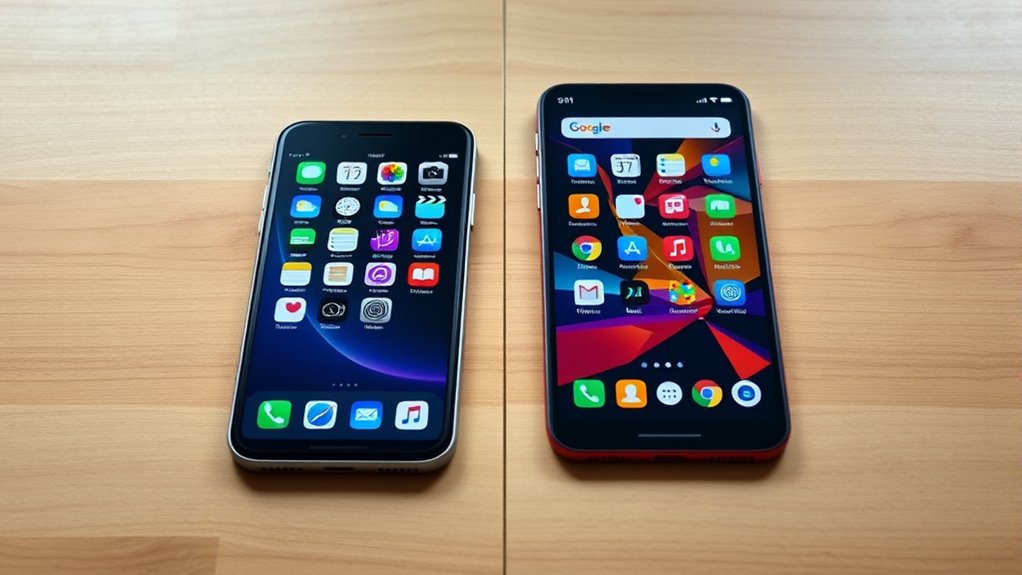

If you’re choosing between an iPhone and Android, know that iPhones offer better security, longer device lifespan, and seamless integration across Apple devices, but tend to be pricier. Android phones are more customizable, budget-friendly, and popular in emerging markets, though they may require more frequent upgrades and have varied security features. Your choice depends on your priorities—stick around to learn more about how each platform suits your needs.
Key Takeaways
- iPhones offer longer device longevity and seamless software updates, while Android devices have quicker upgrade cycles and more budget options.
- iOS provides a more secure environment with better data recovery options, whereas Android’s open system increases security risks.
- Android dominates emerging markets with lower costs and customization, while iPhones are preferred in North America and Western Europe for stability and brand loyalty.
- iPhone users tend to spend more on apps and in-app purchases, boosting monetization, compared to generally lower Android spending.
- The Apple ecosystem delivers integrated hardware and services for high user loyalty; Android offers extensive personalization and flexibility.
Market Share and Regional Preferences

Have you ever wondered how market share varies across regions between Android and iOS? You’ll find Android dominates globally, holding around 72.5% of the market in late 2025, mainly in emerging markets like India, Africa, and Southeast Asia. Meanwhile, iOS is stronger in North America and Western Europe, with about 27% share worldwide. In the US, iOS leads with 58%, making it the only major region where Apple’s system is in the majority. Android’s presence is growing, especially as it expanded from just 4% in 2009 to over 41% in the US. The gap between the two platforms stays within 5-7%, highlighting their persistent regional preferences and market dynamics. This regional split influences device availability, pricing, and user expectations worldwide. Additionally, understanding the market share distribution is essential for developers and manufacturers to tailor their strategies effectively.
User Demographics and Age Groups

When it comes to user demographics, age plays a significant role in smartphone preferences, with younger users showing a strong preference for iPhones. If you’re in the 18-29 age group, you’re more likely to choose iOS, with 44% favoring iPhones compared to 30% for Android. Conversely, older users tend to prefer Android devices, especially in the 39-49 age range, where iOS holds 48% and Android 43%. This trend highlights three key points:
- Younger users often seek the latest iPhone features and brand appeal.
- Older demographics prioritize affordability and customization, leading to higher Android adoption.
- Income and urban living influence preferences, with iPhone users typically earning more and living in cities.
Understanding these patterns helps clarify why different age groups lean toward specific platforms.
Device Lifespan and Upgrade Trends
Younger users often upgrade their devices more frequently, but overall, device longevity varies considerably between iPhones and Android phones. iPhones tend to last longer, with many users keeping theirs for two years or more before replacing them. This longevity is partly due to Apple’s consistent software updates, which keep older models secure and functional. In contrast, Android devices often have a faster turnover, with 57% retired within two years, driven by manufacturers releasing new models and software support ending sooner. You’ll find that iPhone users tend to hold onto their phones longer, appreciating the device’s durability and longer-term software support. Android users, on the other hand, frequently upgrade to access newer features and hardware improvements more quickly. Device lifespan and upgrade trends are also influenced by the availability of replacement parts and repair options, which can extend or shorten a device’s usable life.
App Usage, Spending, and In-App Purchases
You’ll notice that iPhone users tend to spend more time on their devices and make higher in-app purchase amounts compared to Android users. The Apple App Store generated nearly twice the revenue of Google Play in 2023, highlighting a significant spending gap. This trend shows that platform choice influences not just usage but also how much users are willing to spend on apps and in-game content. Additionally, proper app management can help users optimize their spending and improve their overall experience on each platform.
Spending Differences by Platform
Platform differences in spending reveal significant disparities in how users allocate their time and money on their devices. iPhone users tend to spend more time on their devices and are more willing to make in-app purchases, leading to higher overall revenue for Apple’s ecosystem. These behaviors are supported by the availability of innovative European Cloud Servers, which enable seamless and secure app experiences, encouraging user engagement and spending. This behavior impacts the app economy in three key ways:
- Higher revenue per user: iOS users spend nearly twice as much on app stores as Android users.
- Increased in-app purchases: iPhone users are more likely to buy apps and in-app content, boosting Apple’s earnings.
- Engagement differences: iOS users dedicate about 1.3 times more time on their devices, fueling more monetization opportunities.
Understanding these spending patterns helps you grasp why the platforms differ financially and how user behavior influences app development and marketing strategies.
In-App Purchase Trends
Despite differences in device popularity, iOS users consistently spend more on in-app purchases and app usage than Android users. You’ll notice that iPhone users dedicate 1.3 times more time to their devices, often engaging more with paid content. In 2023, consumers spent nearly twice as much on the Apple App Store ($87 billion) compared to Google Play ($48 billion). iOS users are more willing to pay for apps and in‑app features, boosting revenue and purchase frequency. Meanwhile, Android users tend to opt-in more for push notifications, but their overall in-app spending remains lower. This trend reflects iOS’s stronger focus on monetization strategies, making it clear that if you’re looking to maximize spending, the iOS platform offers more lucrative opportunities for developers and users alike. Additionally, the revenue models employed by iOS contribute significantly to these higher spending patterns.
Security Features and Data Recovery
You’re likely curious about how well your data can be recovered after a security breach, and which platform offers better protection. iPhones tend to have higher data loss recovery rates thanks to strict security protocols, while Android’s open ecosystem can expose you to more vulnerabilities. Understanding these differences helps you choose a device that balances security and data recovery capabilities. Additionally, device security features play a crucial role in preventing data loss in the first place.
Data Loss Recovery Rates
When it comes to recovering lost data after security breaches, iPhone users generally have a higher success rate than Android users. Apple’s closed ecosystem and integrated backup options make data recovery more straightforward. Consider these key points:
- Built-in backups: iCloud automatically backs up your data, increasing recovery chances after loss.
- System integration: iOS’s seamless design minimizes data corruption, aiding recovery efforts.
- Recovery tools: Apple’s proprietary tools and services are more effective at retrieving lost data compared to Android’s fragmented solutions.
- Security features: iPhones include security features that help protect and recover data more efficiently, especially when protecting your savings from potential threats.
While Android offers more customization, its open ecosystem can complicate data recovery, often reducing success rates. If data recovery is a priority, iOS’s streamlined approach provides a notable advantage.
Security Protocol Differences
Are security features the key difference between iOS and Android? Yes, and it impacts how your data is protected and recovered. iOS offers a closed, tightly controlled environment, which means security updates are consistent and rapid. This reduces vulnerabilities and makes data recovery more reliable—75% of iPhone users recover data after breaches. Android, on the other hand, provides more customization but at the cost of higher risks. Its open system can lead to fragmented updates, increasing exposure to security threats. Data recovery on Android is often less successful, with only 55% recovering data after breaches. While Android’s flexibility appeals to tech-savvy users, iOS’s strict security protocols prioritize safeguarding your information with streamlined recovery processes, giving you greater peace of mind. Vetted
Ecosystem Vulnerability Levels
The vulnerability levels of iOS and Android ecosystems differ considerably due to their security architectures. iOS’s closed environment minimizes exposure to malware and unauthorized access, making it more resistant to attacks. However, this also impacts data recovery and flexibility.
- iOS offers robust data recovery options through iCloud, allowing you to restore backups easily if your device is compromised.
- Android provides more customization, but its open system increases vulnerability, requiring you to rely on third-party tools for data recovery, which can be risky.
- While iOS’s strict security reduces malware threats, it can limit recovery options if data is lost without a recent backup, emphasizing the importance of regular cloud backups.
- The concept of Free Floating highlights how certain design philosophies can influence security and recovery options across ecosystems.
Understanding these differences helps you gauge the balance between security, data safety, and flexibility in each ecosystem.
Ecosystem, Customization, and User Loyalty
Apple’s tightly controlled ecosystem creates a seamless user experience that fosters strong loyalty among iPhone users. You benefit from integrated hardware, software, and services that work effortlessly together, making your device feel intuitive and reliable. While this limits customization options, it ensures stability and security, which many users value. In contrast, Android’s open ecosystem lets you personalize your device extensively—changing widgets, installing custom ROMs, and using third-party apps freely. However, this freedom can sometimes jeopardize security and stability. Despite these differences, user loyalty remains high for both platforms. iPhone users tend to stick with Apple’s ecosystem because of the consistent experience and premium quality, while Android fans appreciate the flexibility and variety. Your choice depends on whether you prioritize seamless integration or extensive customization. Additionally, user loyalty is often reinforced by the consistent quality and updates that both ecosystems strive to provide.
Cost and Ownership Considerations

When considering cost and ownership, Android devices generally offer a more budget-friendly option, making them attractive to price-conscious consumers. You’ll find Android phones at a wide range of prices, often with lower upfront costs. To understand ownership, think about:
- Initial Cost: Android phones typically cost less than iPhones, especially in mid-range and budget segments.
- Device Longevity: iPhones tend to last longer, with 70% of buyers owning phones over two years, while Android devices often have faster turnover.
- Upgrade Cycles: Android users upgrade more frequently, which can mean more spending over time, but also access to the latest features sooner.
- Screen technology differences can also influence the overall ownership experience, with some Android devices offering advanced displays at lower prices.
Frequently Asked Questions
How Do Hardware Specifications Compare Between Iphone and Android Devices?
You’ll find that iPhones generally feature high-quality, optimized hardware with powerful processors like the A16 Bionic chip, ensuring smooth performance. Android devices, however, offer a wider range of hardware options, from budget-friendly to premium models, often with customizable features like larger screens, higher refresh rates, and varied camera systems. While iPhones prioritize consistency and integration, Android phones provide more variety, allowing you to choose hardware that best fits your needs and budget.
Which Platform Offers Better Integration With Other Devices and Services?
You’ll find that iOS offers better integration with other Apple devices and services. If you own a Mac, iPad, or Apple Watch, syncing and sharing files, messages, and calls feels seamless. You can easily use Continuity, AirDrop, and Handoff to move between devices smoothly. Android, while customizable, doesn’t provide the same level of unified experience with other devices or services, making iOS more convenient if you’re invested in the Apple ecosystem.
How Do Software Update Policies Differ for Ios and Android?
You’ll find that iOS offers consistent, timely updates directly from Apple, ensuring all compatible devices get the latest features and security patches simultaneously. Android updates vary by device manufacturer and carrier, often causing delays or fragmentation. With Android, you might wait weeks or months for updates, or not receive them at all. So, if quick, uniform updates matter to you, iOS provides a clearer, more streamlined update process.
What Are the Privacy Differences Between Iphone and Android Platforms?
Imagine your personal data is like a treasure chest. On iPhone, Apple’s strict privacy policies act as a secure lock, limiting data sharing and tracking. On Android, the open ecosystem offers more customization but can expose you to higher security risks. You’ll find iOS generally prioritizes your privacy with features like App Tracking Transparency, whereas Android provides more control but less protection by default.
How Do Repair Costs and Service Options Vary Between Iphone and Android?
You’ll find repair costs for iPhones tend to be higher, especially for screens and batteries, due to Apple’s proprietary parts and service fees. Android repair costs vary widely depending on the brand, model, and whether you go through official service centers or third-party shops. Android devices often offer more flexible service options, including more affordable third-party repairs, while iPhone repairs usually require authorized technicians, which can be pricier.
Conclusion
Choosing between iPhone and Android is like picking your favorite star in the sky—each shines uniquely. Think about your needs, budget, and how much you value customization or security. Whether you ride the sleek waves of Apple’s ecosystem or explore the vast ocean of Android options, remember, it’s your journey. So, take the leap, and let your smartphone be the compass guiding you through your digital adventures.