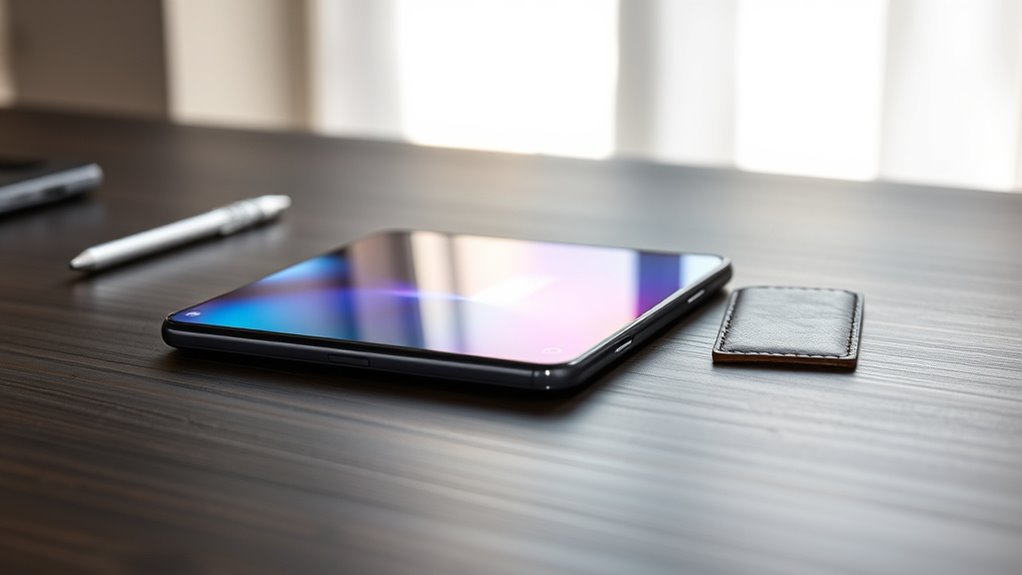

Foldable phones have gotten much more durable thanks to new materials like ultra-thin and graphene-infused glass, reinforced hinges, and nano-coatings. They undergo rigorous tests simulating drops, temperature changes, and dust exposure, which improve reliability. Still, issues like screen creasing, limited water resistance, and internal complexity remain. If you want to understand how industry leaders are pushing durability boundaries and what challenges still exist, there’s more to uncover.

Get the latest gadgets delivered free with Prime
- Fast, free delivery on millions of items
- Prime Video, Amazon Music and more included
- Member-only deals all year
Key Takeaways
- Modern foldable phones undergo extensive testing, simulating drops, temperature changes, and environmental exposure for durability assessment.
- Industry leaders like Samsung and Vertu achieve high fold cycle counts, indicating improved long-term durability.
- Persistent issues such as screen creasing and limited water resistance still affect overall device resilience.
- Advanced materials like ultra-thin glass, graphene, and nano-coatings enhance protection but aren’t foolproof.
- Complex internal structures and hinge vulnerabilities continue to pose challenges for repairability and sustained durability.
foldable phone screen protector ultra-thin glass
As an affiliate, we earn on qualifying purchases.
As an affiliate, we earn on qualifying purchases.
Advances in Material Science and Construction
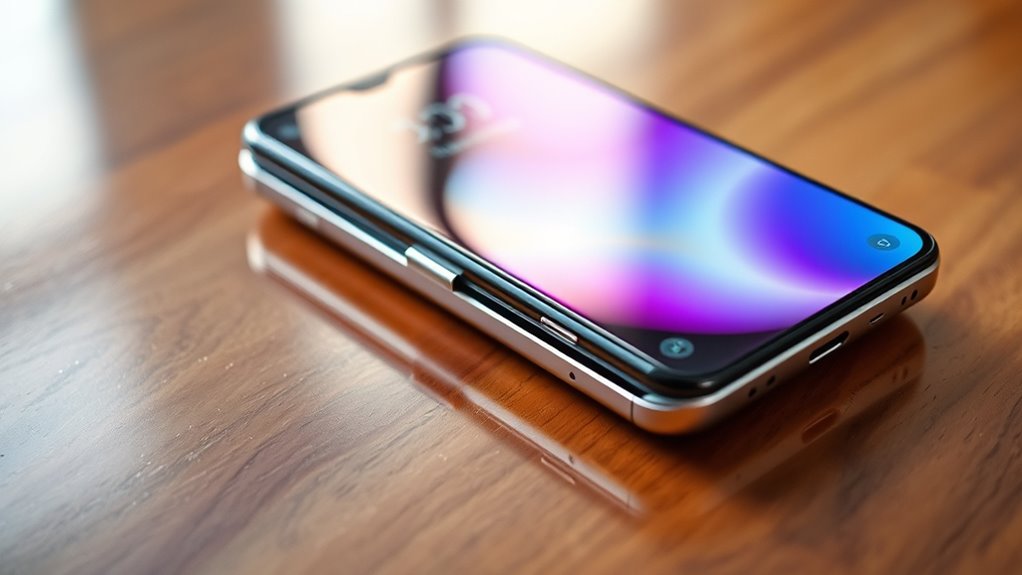
Recent advances in material science have considerably boosted the durability of foldable phones by replacing fragile components with more resilient alternatives. Ultra-thin glass (UTG) now protects flexible OLED displays, making screens less prone to cracking. Reinforced hinge mechanisms with stronger materials provide better support, reducing breakage risks. Researchers are developing graphene-infused flexible displays that promise greater durability and improved battery efficiency. Nano-coatings applied to screens offer anti-fingerprint and smudge-resistant properties, extending their lifespan. Additionally, the frames are becoming thinner and lighter without sacrificing strength, enhancing portability. These material upgrades address previous vulnerabilities, such as screen fragility and hinge failure. Moreover, the integration of innovative European cloud solutions allows for better data protection and device management, further enhancing the overall durability and reliability of foldable phones. Overall, these innovations allow foldables to withstand daily wear and tear better, ensuring they remain functional and reliable over extended use.
As an affiliate, we earn on qualifying purchases.
Performance Under Rigorous Testing Conditions

Performance under rigorous testing conditions reveals a foldable phone’s true resilience by pushing it beyond everyday use. Automated tests simulate extreme drops, temperature swings, and humidity to identify potential weak points. You’ll see devices exposed to impact from various heights, replicating accidental falls, while temperature cycles test their ability to withstand environmental stress. Dust and water exposure are simulated through pocket lint and spill scenarios, revealing how well seals hold up. Extended testing over months uncovers long-term durability issues, such as hinge wear and screen creasing. These tests ensure that foldables can handle real-world challenges. Additionally, material quality plays a crucial role in determining how well a device withstands these stresses over time. While some models pass with flying colors, others reveal vulnerabilities, highlighting the importance of rigorous evaluation before trusting a foldable for daily demanding use.
nano-coating foldable smartphone
As an affiliate, we earn on qualifying purchases.
As an affiliate, we earn on qualifying purchases.
Notable Failures and Persistent Design Challenges
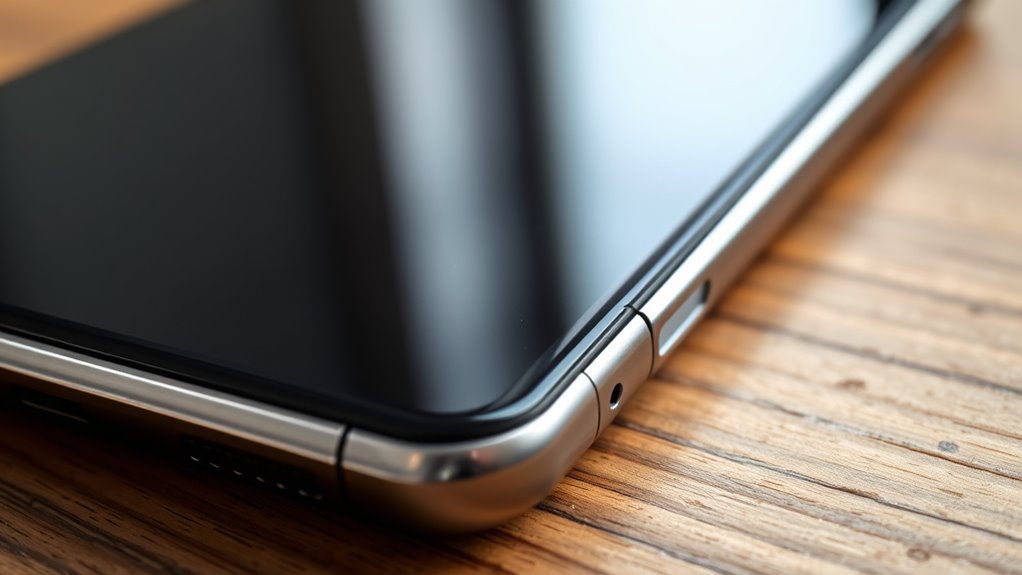
Despite advancements in foldable phone technology, several persistent design challenges continue to compromise long-term durability. You’ve seen devices like the Pixel 10 Pro Fold suffer catastrophic failures, such as battery thermal runaway during extreme tests. These failures often stem from weak points like hinge mechanisms or antenna lines near vulnerable areas. Despite rigorous testing, issues like screen creasing remain unresolved, affecting both usability and appearance over time. Limited water and dust resistance make foldables more susceptible to environmental damage, especially compared to traditional phones. Complex internal structures hinder repairs and increase maintenance costs, while battery efficiency still lags behind expectations. Hinge vulnerability and display sensitivity to repeated folding also demand cautious handling, highlighting that durability still isn’t entirely reliable for everyday use. long-term durability remains a significant concern, as ongoing wear and tear can accelerate device failure over time.
As an affiliate, we earn on qualifying purchases.
Industry Leaders and Their Durability Benchmarks
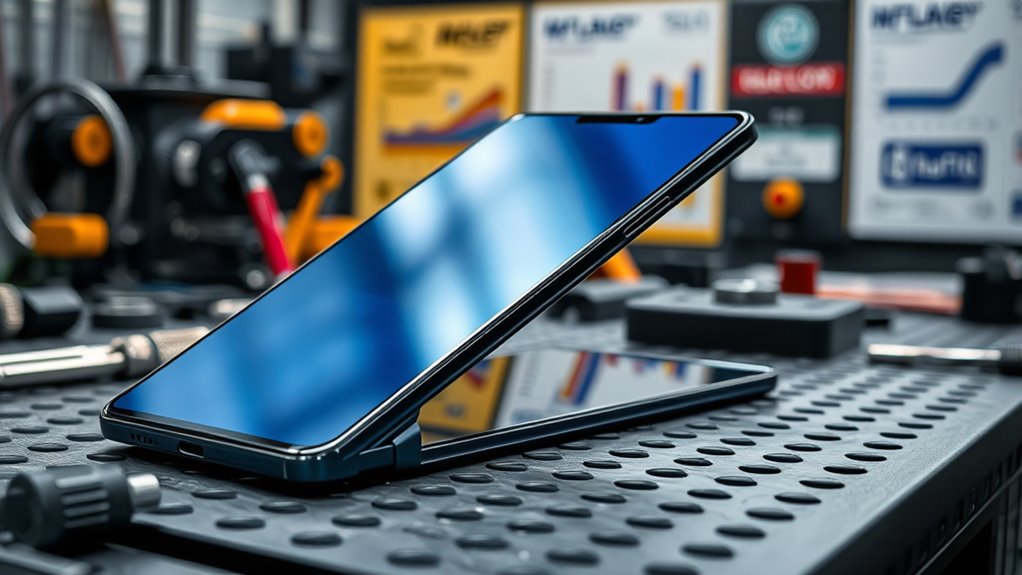
Leading the industry in foldable durability, Samsung’s Galaxy Z Fold6 sets a high standard by certifying over 200,000 fold cycles, equating to roughly a decade of use. This benchmark highlights their focus on hinge resilience and material strength. Other industry leaders also push boundaries:
| Brand | Durability Benchmark | Additional Features |
|---|---|---|
| Samsung Galaxy Z Fold6 | 200,000+ fold cycles | Shock-absorbing hinge |
| Vertu Quantum Flip | 650,000+ fold cycles | Ultra-thin glass, premium build |
| Google Pixel 10 Pro | IP68 water resistance | Advanced dust protection |
| Motorola Razr Ultra | Large battery, fast charging | Compact flip design |
These benchmarks demonstrate how top brands prioritize extensive testing, innovative materials, and durability-focused features. Additionally, ongoing research in material science continues to enhance the longevity and resilience of foldable devices.
Ongoing Challenges and Future Considerations
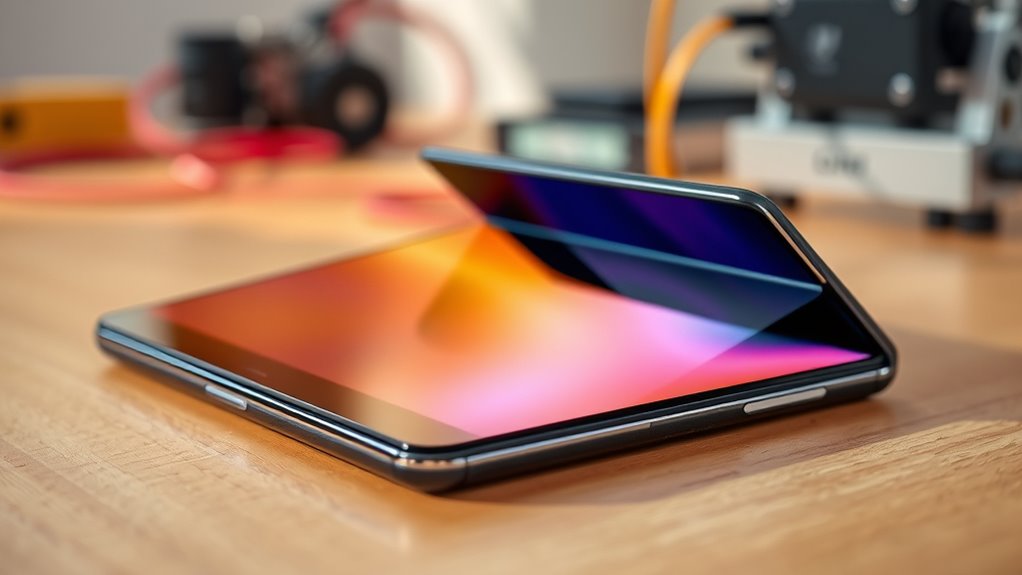
While advancements in foldable phone durability have made significant progress, several ongoing challenges still hinder their widespread adoption and long-term reliability. You’ll notice that screen creasing remains a persistent issue, affecting both usability and appearance over time. Limited dust and water resistance ratings make these devices more vulnerable to environmental damage, especially compared to traditional phones. The complex internal construction complicates repairs, increasing maintenance costs and limiting longevity. Battery efficiency still lags, despite innovations like dual batteries, which impacts daily performance. Additionally, hinge vulnerabilities and display sensitivity to repetitive folding cycles require careful handling. Future improvements will need to address these issues, balancing durability with portability, to make foldable phones a more reliable and mainstream choice for users like you. Glycolic acid, as used in skincare, demonstrates how ongoing innovation can address durability concerns through effective exfoliation with minimal irritation.
Frequently Asked Questions
How Do Foldable Phones Compare to Traditional Smartphones in Long-Term Durability?
Foldable phones generally aren’t as durable as traditional smartphones over the long term. You’ll find that hinges, flexible displays, and creasing issues tend to wear out faster with repeated folding. While advanced materials and testing improve durability, you still need to handle them carefully. Traditional phones often withstand daily wear better, but foldables are catching up with higher fold counts and better sealing. Just be aware of their unique vulnerabilities and treat them gently.
What Specific Materials Are Used to Enhance Hinge Longevity?
Imagine a hinge that withstands thousands of folds without loosening. You’ll find reinforced hinge mechanisms made from high-strength alloys like stainless steel or titanium, which provide increased structural support. These materials resist wear and tear, offering smoother, more durable folding. By integrating advanced hinge design and durable metals, manufacturers profoundly extend hinge longevity, ensuring your foldable stays reliable over countless daily uses.
Are Repair Options Affordable and Widely Available for Foldables?
Repair options for foldable phones are generally limited, and costs can be high. You might find authorized service centers, but repairs often involve specialized parts and expertise, making them expensive and less accessible. DIY repairs are risky due to delicate components. To avoid unexpected costs, consider investing in extended warranties or insurance plans, and handle your device carefully to reduce the need for repairs.
How Does User Handling Impact the Lifespan of Foldable Devices?
Your handling directly impacts your foldable device’s lifespan. If you’re careful—avoiding drops, excessive pressure, and sharp impacts—you prolong its durability. Be mindful when folding and unfolding, and keep the device free of debris and dust. Using protective cases and avoiding extreme temperatures also helps. With attentive handling, you’ll minimize wear and tear, ensuring your foldable stays functional and looking good for many years to come.
Will Future Innovations Eliminate Issues Like Screen Creasing?
Future innovations are likely to eliminate issues like screen creasing. You can expect improvements like advanced ultra-thin glass, reinforced hinge mechanisms, and nano-coatings that reduce wear and tear. Manufacturers are exploring graphene-infused displays and better foldable materials, making your device more durable over time. As these technologies mature, you’ll notice fewer creases and longer-lasting screens, giving you a more reliable foldable experience without sacrificing flexibility or aesthetics.
Conclusion
Now, you might be surprised to learn that over 60% of foldable phones still face durability issues after a year of use. While recent advances have improved their resilience, many devices can’t quite match traditional smartphones for longevity. As industry leaders push boundaries, you can expect better durability soon. For now, stay cautious—your foldable phone’s lifespan depends on how carefully you handle it, especially as technology continues to evolve rapidly.
Fall Picks
fall essentials
As an affiliate, we earn on qualifying purchases.