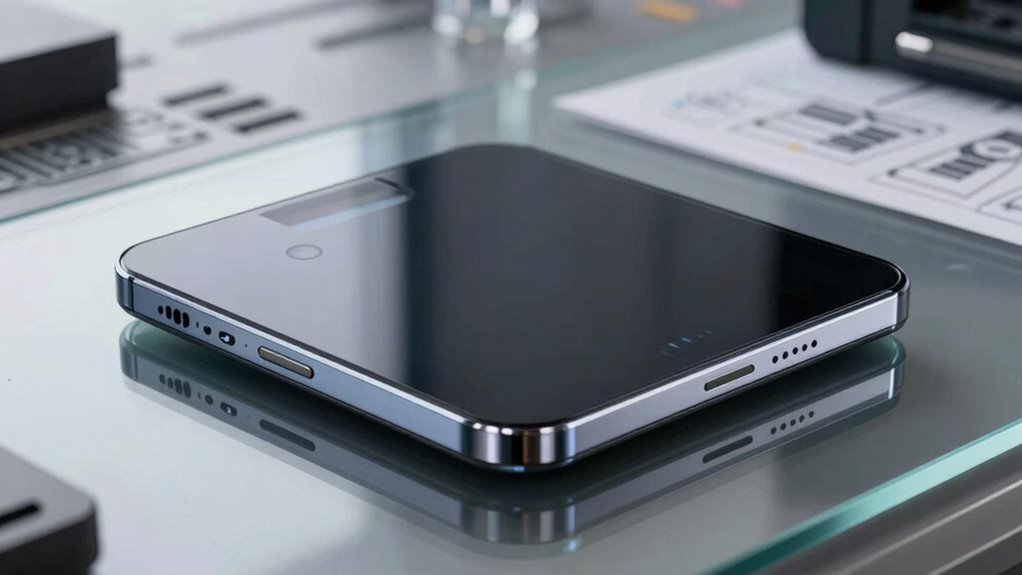

You’ll notice premium phones keep getting heavier each year because manufacturers add larger batteries, which boost battery life but also increase weight. They use durable materials like ceramic, reinforced glass, and metal alloys to improve durability, but these also add to the device’s mass. To make devices sleeker, companies include bigger screens and more features, which further contribute to weight. If you stay curious, you’ll discover exactly how these trends develop and what to expect next.
Key Takeaways
- Larger batteries are essential for longer battery life, adding weight and thickness to devices.
- Premium materials like ceramic and reinforced glass improve durability but increase overall mass.
- Slimmer designs often compensate with sturdier, heavier components to maintain strength and battery capacity.
- Advanced features such as multiple cameras and larger displays contribute to increased device weight.
- Technological enhancements and component density naturally lead to heavier, more feature-rich smartphones.
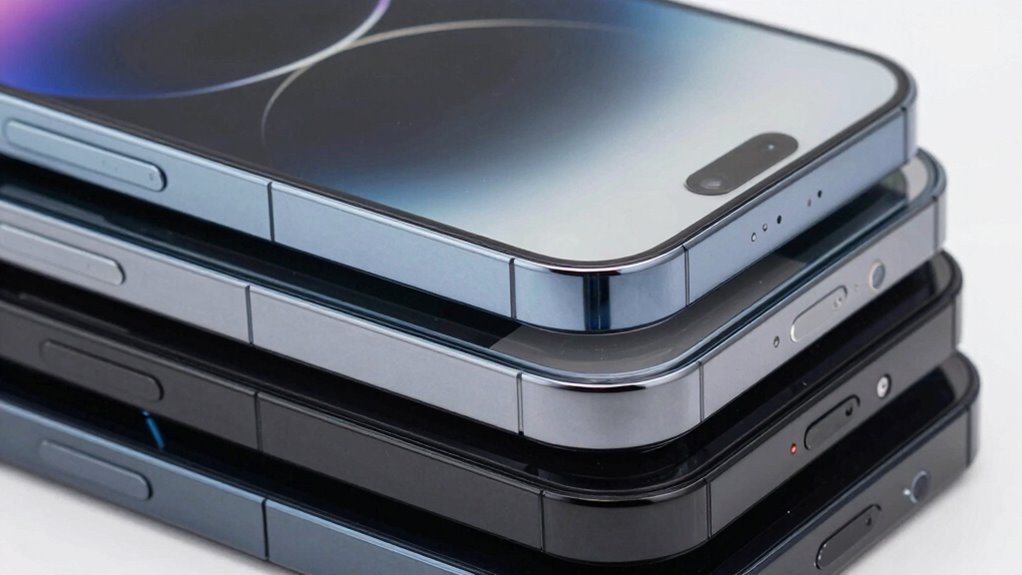
Every year, premium smartphones seem to be getting heavier, and it’s not just your imagination. As you pick up the latest flagship device, you notice its weight feels more substantial than previous models. This increase isn’t accidental; manufacturers are intentionally adding heft to improve performance, durability, and user experience. One key factor behind this trend is the larger battery size. You might not realize it, but a bigger battery allows your phone to last longer between charges, which is a huge selling point. However, to accommodate these larger batteries, manufacturers often need to use thicker, more robust materials in the phone’s construction. That leads directly to increased weight, as stronger materials tend to be denser and more durable.
Larger batteries and durable materials make premium smartphones heavier and more robust each year.
Material durability plays a significant role in the weight gain, especially since premium phones now incorporate materials like ceramic, reinforced glass, and metal alloys. These materials are chosen for their ability to withstand everyday wear and tear, including drops and scratches. While these materials make your phone more resilient, they also add to its overall weight. For example, ceramic offers excellent scratch resistance and a premium feel but is heavier than plastic or thinner glass. Reinforced glass provides extra strength but comes with a weight penalty. You benefit from a device that’s less prone to damage, but the trade-off is a heavier, more substantial phone in your hand.
The pursuit of a sleeker design has, paradoxically, led to heavier devices. Manufacturers push for thinner profiles, but as they do, they often compensate with thicker, heavier components—like larger batteries and sturdier materials—to ensure durability and battery life aren’t compromised. This balancing act between design and function results in phones that look slim but feel heavier. Additionally, many premium models now include more advanced features—like multiple camera modules, larger displays, and high-quality audio systems—all of which require more space and, consequently, more weight. An understanding of material composition can help explain why these devices are so much heavier despite their slim appearance.
Moreover, the integration of cutting-edge technology and components can also contribute to increased device weight, as component density plays a crucial role in the overall mass of modern smartphones.
In the end, what you’re experiencing is a combination of these design choices. The focus on bigger batteries and durable materials means your premium phone is built to last longer and perform better. But weight is a natural consequence of these improvements. As technology continues to evolve, expect more of the same: heavier, more powerful smartphones that prioritize longevity and resilience over feather-light portability.
large capacity smartphone batteries
As an affiliate, we earn on qualifying purchases.
As an affiliate, we earn on qualifying purchases.
Frequently Asked Questions
Are Heavier Phones More Durable Than Lighter Ones?
Heavier phones aren’t necessarily more durable than lighter ones. With design evolution, manufacturers often add stronger materials and features, which can increase weight. Market trends focus on balancing durability with portability, but weight alone doesn’t determine toughness. You should look for reinforced frames or specialized glass rather than just heavier weight. In the end, durability depends on build quality and material choice, not weight alone.
Do Heavier Phones Impact Daily Usability or Convenience?
Heavier phones can impact your daily usability and convenience, especially if you prefer lightweight devices for comfort. While some users find the added weight gives a premium feel aligned with fashion trends, others may find it cumbersome during extended use. Your preferences matter; if you prioritize sleekness and ease, a heavier phone might feel less practical. Ultimately, consider how the weight affects your comfort and style choices daily.
How Do Battery Sizes Influence Phone Weight?
Battery sizes directly influence phone weight because larger batteries, offering higher capacity, add more mass. This affects weight distribution, making the phone feel heavier or unbalanced if not designed properly. When manufacturers increase battery capacity for longer usage, they often need to reinforce the phone’s structure, which also adds weight. So, as battery capacity grows, expect your premium phone to weigh more, impacting overall portability and handling.
Are Premium Materials Significantly Contributing to Weight Increase?
Yes, premium materials like metal and glass considerably contribute to weight increase. Material innovation often prioritizes durability and luxury, which adds to the phone’s heft. You might perceive heavier phones as more solid and premium, but this weight perception can also make devices feel less portable. Manufacturers balance these factors, often opting for heavier, high-quality materials to enhance build quality, even if it means sacrificing some lightness in the process.
Will Future Phones Become Even Heavier or Lighter?
Like a relic from a bygone era, future phones might be lighter or even heavier, depending on design evolution and tech demands. You’ll notice that as manufacturers endeavor for durability, advanced features, and premium materials, weight perception shifts. While innovation aims for portability, added components could tip the scale. Ultimately, future phones will balance these factors, but the trend may lean toward smarter, sleeker designs that challenge your expectations of weight.
As an affiliate, we earn on qualifying purchases.
Conclusion
As you’ve seen, the trend of heavier premium phones reflects a constant push for better features and durability. While some might see this as a trade-off, remember that “you can’t have your cake and eat it too.” Ultimately, it’s about balancing innovation with practicality. When choosing your next device, consider what matters most—power, style, or portability—and weigh the costs against the benefits. After all, progress often comes with a little extra weight.
reinforced glass screen protectors
As an affiliate, we earn on qualifying purchases.
As an affiliate, we earn on qualifying purchases.
lightweight metal smartphone frames
As an affiliate, we earn on qualifying purchases.
As an affiliate, we earn on qualifying purchases.