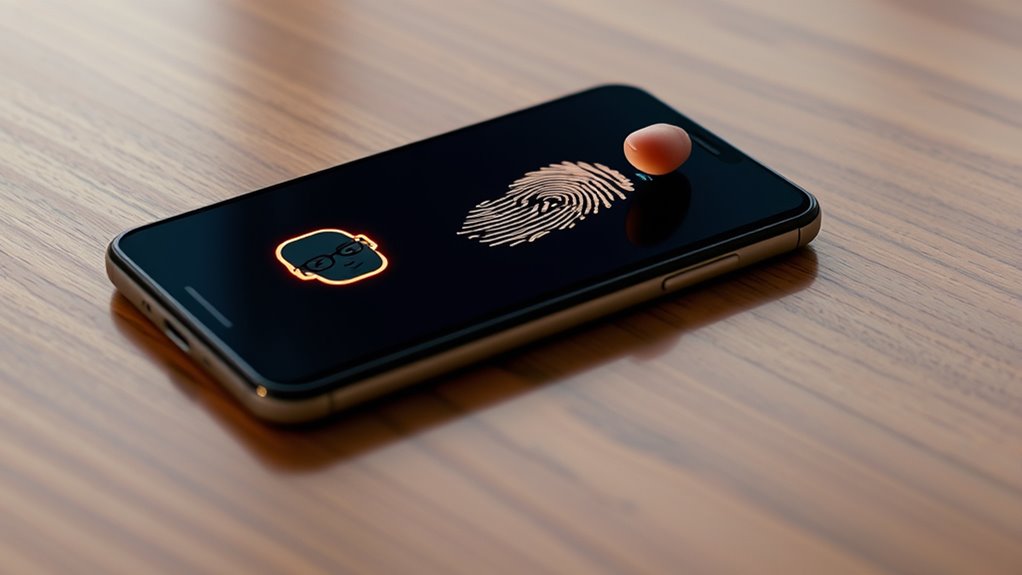

If you’re looking for the most secure biometric option, iris scans top the list because they’re hard to spoof and resistant to forgery, offering maximum security. Fingerprint recognition is reliable and balances privacy and safety well, while face *access* is the most convenient but vulnerable to photos or videos. Each method has its strengths and limitations; exploring these details will help you choose the right one for your needs.
Listen free for 30 days with Audible
Thousands of audiobooks and originals — cancel anytime.
As an affiliate, we earn on qualifying purchases.
Key Takeaways
- Iris scans offer the highest security due to their resistance to spoofing and difficulty to forge.
- Fingerprint recognition is reliable but can be hacked if device security is compromised.
- Face unlock can be fooled by photos or videos, reducing its security level.
- Iris scans require specialized hardware, making them less practical but more secure.
- Overall, iris scanning provides the most secure biometric method among the three.
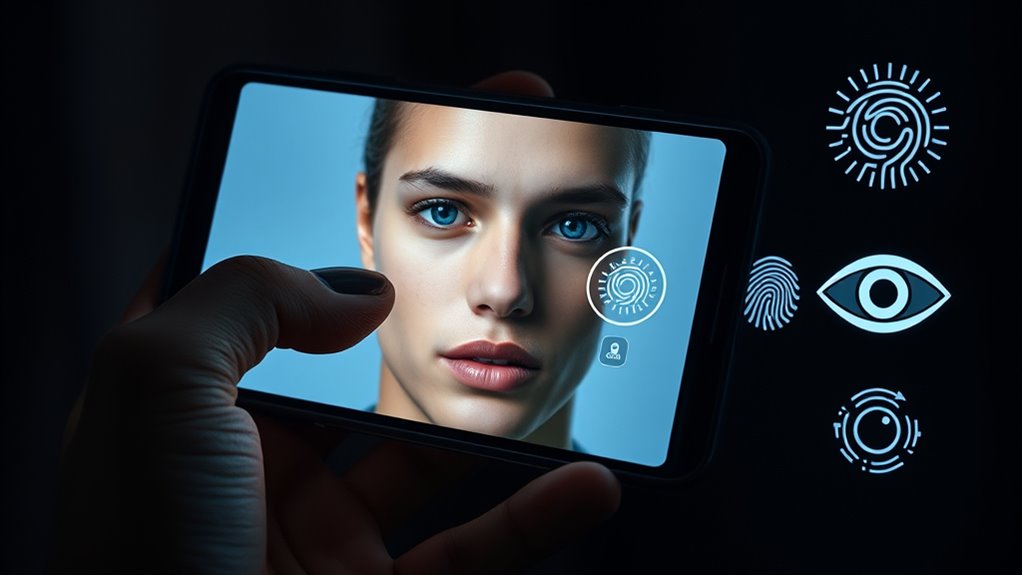
Face unlock is popular because it’s quick and easy. You just look at your phone, and it unlocks. This method offers high user convenience, especially when you’re in a hurry or your hands are full. However, privacy concerns come into play here. Facial recognition data is often stored locally on your device, but some systems upload data to cloud servers, raising worries about hacking or misuse. Also, face unlock can sometimes be fooled by photos or videos, which compromises security. It’s convenient but not always the most secure, especially if someone can mimic your face or if your face recognition system isn’t sophisticated enough. Furthermore, Vetted biometric data must be protected to prevent unauthorized access. Fingerprint scanning is another widely adopted biometric method. It strikes a balance between privacy and convenience. You physically touch a sensor, which reads your unique fingerprint patterns. This process is fast and reliable, making it highly user-friendly. From a privacy standpoint, fingerprint data is generally stored locally and encrypted, reducing the risk of exposure. Still, there are concerns about fingerprint theft or hacking, especially if your device’s security is compromised. Additionally, some users find fingerprint scanners less convenient if their fingers are dirty, wet, or injured, which can hinder the recognition process. Iris scans offer the highest level of security among these methods. The iris pattern is unique to each individual and difficult to forge. This makes iris scanning highly resistant to spoofing attempts. Privacy concerns are minimal because the iris data is stored securely on the device, and the scan is quick and non-intrusive. However, user convenience can suffer because iris scanning requires precise positioning of your eyes and sometimes additional lighting, which might not be as effortless as face or fingerprint recognition. Iris scanners tend to be more expensive and are less common on mainstream devices, making them less practical for everyday use. Ultimately, your choice depends on what you value most. If you prioritize speed and ease, face unlock might be your pick, despite some privacy concerns. If you want a reliable balance of security and convenience, fingerprint scanning is a solid choice. For maximum security and minimal privacy worries, iris scans are ideal but might sacrifice some user convenience. Weigh these factors carefully to secure your smartphone’s biometric security aligns with your personal priorities.
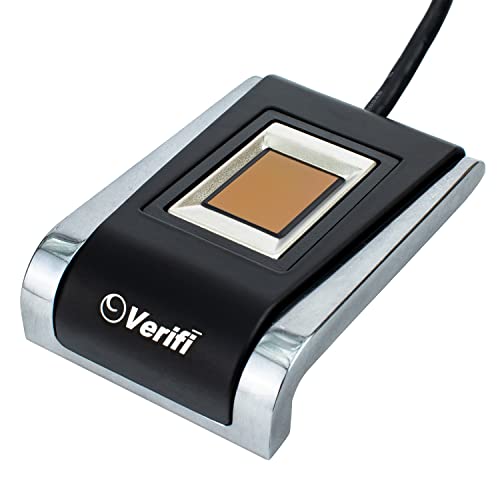
Used Verifi P5100 Biometric Fingerprint Sensor, Black/Silver
- Model: Verifi P5100 Biometric Sensor
- Connectivity: USB
- Compatibility: Windows Hello
As an affiliate, we earn on qualifying purchases.
As an affiliate, we earn on qualifying purchases.
Frequently Asked Questions
Can These Biometric Methods Be Fooled by Masks or Photos?
Yes, these biometric methods can be fooled by mask spoofing or photo risks. Masks, especially high-quality ones, can sometimes trick face access systems, while photos or videos may deceive some facial recognition tech. Fingerprint scanners might be fooled by fake fingerprints, and iris scans can be tricked with detailed eye images. Always stay aware of these vulnerabilities to protect your device’s security effectively.
How Do Environmental Conditions Affect Biometric Security?
Did you know that over 60% of biometric authentication failures are due to environmental interference? Environmental conditions like dirt, moisture, or poor lighting can affect sensor calibration, making biometric security less reliable. When conditions are unfavorable, sensors may struggle to accurately read your face, fingerprint, or iris, increasing the risk of false rejections or acceptances. Always guarantee your sensors are clean and properly calibrated for maximum security.
Are There Privacy Concerns With Storing Biometric Data?
You should be aware that storing biometric data raises privacy implications, as this sensitive information could be misused or leaked. To protect your data, devices often use data encryption, making it harder for unauthorized parties to access your biometric details. Still, it’s important to stay informed about how companies handle and secure your data, and to choose devices with strong security measures to safeguard your privacy.
Which Method Is Fastest for Unlocking Devices?
You’ll find face recognition is the fastest for unlatching devices, offering biometric speed that feels almost instant. No more fumbling for fingerprints or iris scans—just a quick glance, and your device unlocks. While some worry about accuracy, modern face recognition technology has improved remarkably, making it reliable and swift. This speed not only enhances convenience but also keeps you moving without delay, giving you seamless access whenever you need it most.
Can Biometric Data Be Hacked or Stolen?
Biometric data can be hacked or stolen, especially through data breach risks, so you should stay cautious. Many devices use biometric encryption to protect your data, but no system is completely foolproof. If hackers access your biometric info, it could be misused or cloned. To stay safe, verify your device has strong security measures and avoid sharing or storing biometric data insecurely.

Optical Fingerprint Reader Sensor AS608 Green Light Fingerprint Recognition Module for Arduino 51 AVR STM32 ESP8266
- Storage Capacity: Holds up to 240 fingerprints
- Control Method: Serial port or computer control
As an affiliate, we earn on qualifying purchases.
As an affiliate, we earn on qualifying purchases.
Conclusion
When it comes to security, no single method is the knight in shining armor. Face unlock, fingerprint, and iris scan each have their own strengths and vulnerabilities, like different keys to a fortress. Think of them as guardians, each with unique armor. Choose the one that fits your style and needs, but remember, the true key lies in staying vigilant. After all, in the game of security, you’re the ultimate gatekeeper—trust your instincts and stay alert.

Google Pixel 11 Pro – Unlocked Smartphone, Gemini – 256 GB – Obsidian
- Stunning Camera and Design: Latest Pixel camera with Gemini Intelligence
- Unlocked for Flexibility: Compatible with major carriers including Google Fi
- Smart Notifications: Face-down alerts for calls and messages
As an affiliate, we earn on qualifying purchases.
As an affiliate, we earn on qualifying purchases.
Flea & tick season Picks
flea and tick prevention
As an affiliate, we earn on qualifying purchases.