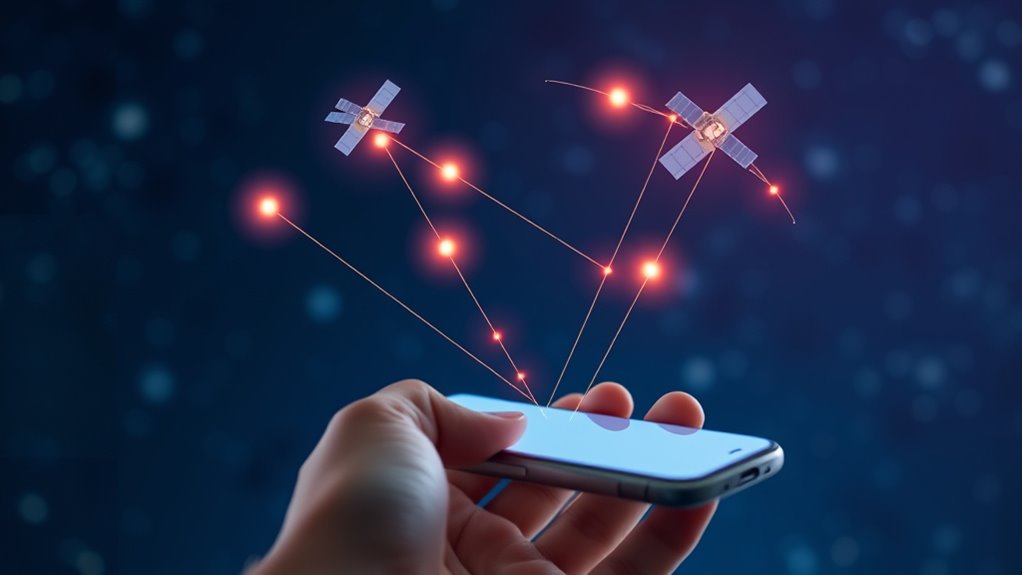

Satellite connectivity in smartphones works through specialized hardware like antennas and chipsets that link directly to orbiting satellites. These devices use specific frequency bands, such as the L band, to send and receive signals, bypassing traditional cell towers. Depending on the satellite’s orbit—GEO, MEO, or LEO—they offer coverage over remote areas, oceans, and mountains. To discover how this technology is transforming connectivity everywhere, keep exploring the details below.

Get the latest gadgets delivered free with Prime
- Fast, free delivery on millions of items
- Prime Video, Amazon Music and more included
- Member-only deals all year
Key Takeaways
- Smartphones connect to satellites via built-in antennas and specialized chipsets that transmit and receive radio signals in specific frequency bands.
- Satellite signals are relayed from the device to orbiting satellites, then to ground stations and terrestrial networks for data transfer.
- Technologies like LEO, GEO, and MEO satellites differ in altitude, coverage, and latency, affecting connectivity quality.
- Devices with satellite capabilities use advanced antennas and chipsets to enable direct satellite communication, especially in remote areas.
- Future innovations include miniaturized antennas and AI-driven systems to improve seamless, reliable satellite connectivity on smartphones.
As an affiliate, we earn on qualifying purchases.
How Smartphones Connect to Satellites

Have you ever wondered how your smartphone can connect directly to satellites in orbit? It all starts with specialized antennas and chipsets built into your device. These components allow your phone to send and receive radio signals on L band frequencies, which are used for satellite messaging and emergency services. When you send a message or make a call, the signal travels from your phone’s antenna to a satellite overhead. The satellite then relays the signal to a ground station before it reaches its final destination. Conversely, incoming signals follow the same path in reverse. This direct connection bypasses traditional cellular towers, enabling communication in remote areas like mountains, oceans, or deserts. Your phone essentially acts as a mini orbital transmitter and receiver, maintaining essential links even where ground networks fail. Innovative European cloud servers play a key role in enhancing the security and reliability of satellite data transmission for these devices.
satellite communication chipsets for smartphones
As an affiliate, we earn on qualifying purchases.
As an affiliate, we earn on qualifying purchases.
Core Hardware Components for Satellite Communication

To enable satellite communication in smartphones, the core hardware components must include advanced antennas and specialized chipsets that can handle orbital signals. These antennas are designed to achieve high efficiency and direct line-of-sight with satellites, often integrated into the device to avoid external attachments. The chipsets process satellite signals, converting them into data your phone can interpret and vice versa. For instance, flagship models like the Samsung Galaxy S25 use Snapdragon X80 modems, while some devices feature standalone chipsets for two-way communication. Modern smartphones also incorporate satellite modems functioning as orbital cell towers, enabling connectivity without external equipment. These components are essential for establishing reliable links to orbiting satellites, ensuring your device can send and receive messages, location data, and low-bandwidth information through satellite networks. Satellite communication hardware is specifically engineered to handle the unique signals and frequencies used in satellite networks, making the connection possible.
As an affiliate, we earn on qualifying purchases.
Frequency Bands and Signal Transmission
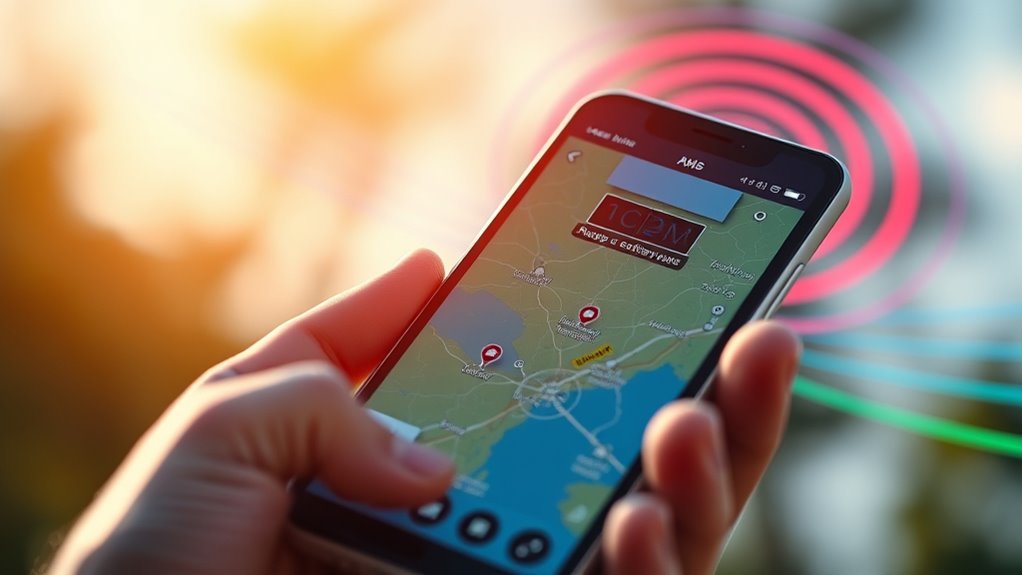
Smartphones utilize specific frequency bands, such as L band, to establish satellite communication links, enabling reliable messaging and emergency services. These bands are chosen for their ability to penetrate atmospheric conditions and provide stable connections over long distances. Signal transmission occurs when your device’s antenna sends radio waves at designated frequencies to orbiting satellites. The satellite then relays these signals either directly to ground stations or through other satellites, depending on the network architecture. Because different satellites operate on various frequency bands—like S band or X band—you need compatible hardware within your device to transmit and receive these signals effectively. frequency bands are carefully selected to optimize signal strength and minimize interference, ensuring consistent communication. Precise modulation and encoding techniques ensure your messages are accurately sent and received, even in remote or challenging environments where traditional cellular signals struggle to reach.
As an affiliate, we earn on qualifying purchases.
Types of Satellite Networks and Orbits

Different types of satellite networks operate in distinct orbits, each offering unique advantages for smartphone connectivity. You’ll find three main orbit types:
Satellite networks operate in various orbits, each offering unique benefits for smartphone connectivity.
- Geostationary Orbit (GEO): Satellites stay fixed above one spot at about 35,786 km, providing consistent coverage over large areas. Ideal for broad broadcast and emergency services.
- Low Earth Orbit (LEO): These satellites orbit between 640 and 1,120 km, offering lower latency and faster data transfer, making them perfect for real-time applications.
- Medium Earth Orbit (MEO): Positioned roughly between LEO and GEO, MEO satellites balance coverage and latency, often used for navigation and communication services. Understanding satellite orbit types helps explain how different networks optimize performance for specific needs.
Each orbit type suits different network needs, impacting signal quality, latency, and geographic reach.
Coverage Areas and Geographic Benefits

Satellite connectivity lets you access remote areas where traditional networks don’t reach, like mountains, oceans,, and deserts. It helps you overcome terrain barriers that block signals, ensuring you stay connected no matter where you are. With this technology, you gain coverage in places that once seemed impossible to reach. Modern network infrastructure plays a crucial role in enabling reliable satellite communication.
Remote Area Access
Remote areas often lack reliable cellular coverage, making satellite connectivity an essential solution for staying connected. With satellite technology, you can access remote locations like mountains, deserts, and open oceans where traditional networks fall short. This expands your reach in three key ways:
- Universal Coverage: Satellites blanket vast regions, including national parks and rural communities.
- Disaster Response: In emergencies, satellite links provide critical communication when ground infrastructure is damaged or nonexistent.
- Global Accessibility: You can stay connected across international waters and remote islands, where terrestrial networks don’t reach. Additionally, satellite technology often relies on specialized hardware like small form-factor terminals that enable portable and flexible connectivity options.
Overcoming Terrain Barriers
Overcoming terrain barriers is one of the key advantages of satellite connectivity, especially in areas where physical obstacles hinder traditional networks. Mountains, dense forests, deserts, and oceans can block cell signals, but satellites in orbit provide coverage beyond these obstacles. With satellite links, you can access communication services in remote locations like national parks, rural communities, and disaster-hit regions. Clear line-of-sight to overhead satellites is vital, but low Earth orbit satellites, positioned closer to Earth, improve connection reliability in challenging terrains. This technology bridges coverage gaps created by terrestrial network limitations, ensuring you stay connected regardless of terrain. Whether you’re steering through rugged mountains or crossing vast oceans, satellite connectivity extends the reach of your smartphone’s communication capabilities. Diverse perspectives from satellite technology experts emphasize the importance of orbit type and satellite positioning for optimal coverage in difficult terrains.
Capabilities Enabled by Satellite Connectivity
Satellite connectivity opens critical capabilities like emergency communication access, even in remote areas where cellular networks fail. It also enables remote data transmission for IoT devices and other applications, expanding how and where you stay connected. As a result, your smartphone can now serve as an essential link in situations and locations previously out of reach. simplifying complex vehicle tech
Emergency Communication Access
When cellular networks fail or are unavailable, satellite connectivity guarantees you can still reach emergency services and communicate critical information. This capability is essential in remote or disaster zones. Satellite communication allows you to:
- Send emergency messages to rescue services even when no cellular signal exists.
- Share your location instantly to facilitate faster assistance.
- Access basic voice and text communication for urgent situations.
- Enhance safety by providing reliable coverage regardless of your location.
With satellite connectivity, you’re not limited by terrestrial network coverage. You can initiate contact from mountains, oceans, deserts, or disaster-stricken areas. This ensures that, regardless of your location, emergency responders can find you and you can relay vital details, potentially saving lives and reducing response times during critical moments.
Remote Data Transmission
Remote data transmission is now possible even in the most isolated areas thanks to satellite connectivity. With your device’s integrated satellite modem, you can send and receive basic data, including texts, location info, and low-bandwidth files, without relying on cellular networks. This capability is vital for accessing cloud services, updating apps, or sharing information in remote regions. Specialized chipsets and antennas enable your smartphone to communicate directly with orbiting satellites, bypassing traditional infrastructure. Whether you’re in a desert, mountain, or ocean, satellite links ensure your device stays connected for essential data transfer. This technology supports not only emergency services but also routine communications, making remote data exchange seamless and reliable wherever you are. Secure communication solutions play a crucial role in protecting transmitted data from interception or tampering during these satellite-based exchanges.
Global Coverage Expansion
Thanks to satellite connectivity, your smartphone can now access areas that traditional networks can’t reach, effectively expanding global coverage. This means you can stay connected in remote regions like deserts, mountains, and oceans. Satellite networks help bridge gaps where terrestrial infrastructure is lacking. Here are three key benefits:
- Reach remote locations such as national parks and disaster zones.
- Enable communication across oceans and isolated islands.
- Provide reliable emergency services in areas without cellular coverage.
- Enhance connectivity standards to ensure seamless communication even in the most challenging environments.
This expanded coverage ensures you stay connected during outdoor adventures, emergencies, or in underserved regions. With satellite connectivity, your device can communicate beyond the limits of cellular towers, making global communication more accessible than ever. It’s a significant step toward truly universal coverage for smartphones worldwide.
Signal Path and Network Architecture
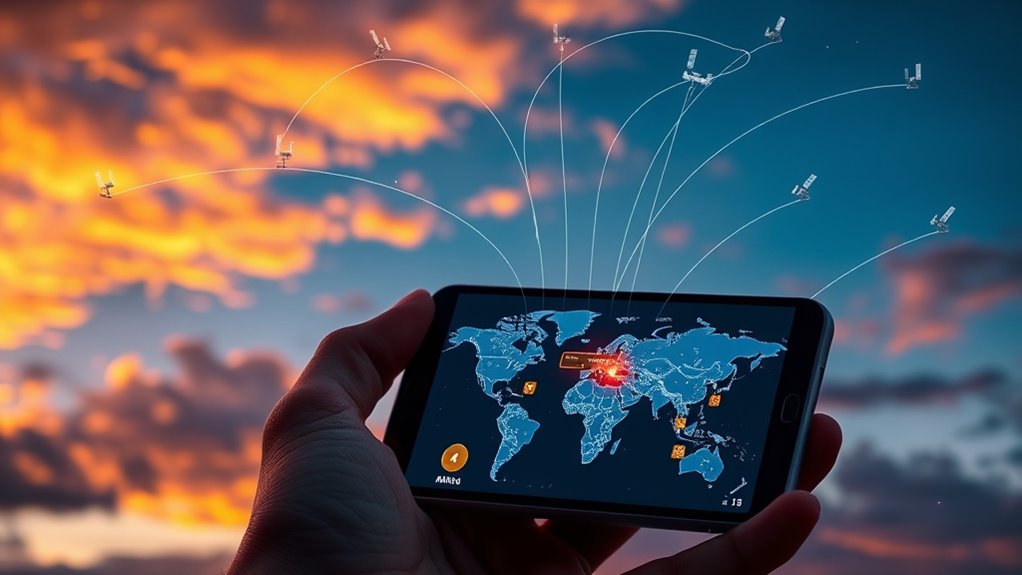
The signal path in satellite communication for smartphones involves a precise sequence of transmissions that guarantees data reaches its destination. When you send a message or request, your device transmits radio waves to an overhead satellite, which then relays the signals to a ground station. From there, the data enters terrestrial networks, reaching the intended recipient or service. Returning signals follow the same route in reverse, traveling from ground stations to satellites and finally to your device. Depending on the satellite type—geostationary or low Earth orbit—the path varies slightly, but the core architecture remains consistent. This architecture assures reliable communication even in remote or hard-to-reach areas, bridging gaps where traditional networks can’t reach. Additionally, responsible use and privacy considerations are essential to ensure user trust and security in satellite connectivity.
Current Devices Supporting Satellite Features

Modern smartphones are increasingly equipped with the hardware needed to support satellite connectivity, making satellite features accessible on a growing number of devices. Currently, several flagship models support these capabilities. For example:
- The iPhone 14 and later models include built-in satellite communication features, supported by partnerships with Globalstar.
- Samsung’s Galaxy S25 series is the first Android phones with narrowband satellite messaging capabilities.
- Google is working with T-Mobile to bring satellite connectivity to Android devices in upcoming releases.
These devices use advanced antennas and chipsets to enable direct satellite links. As technology progresses, more smartphones will incorporate these features, expanding satellite connectivity beyond specialized or niche devices.
Future Developments in Satellite Smartphone Technology
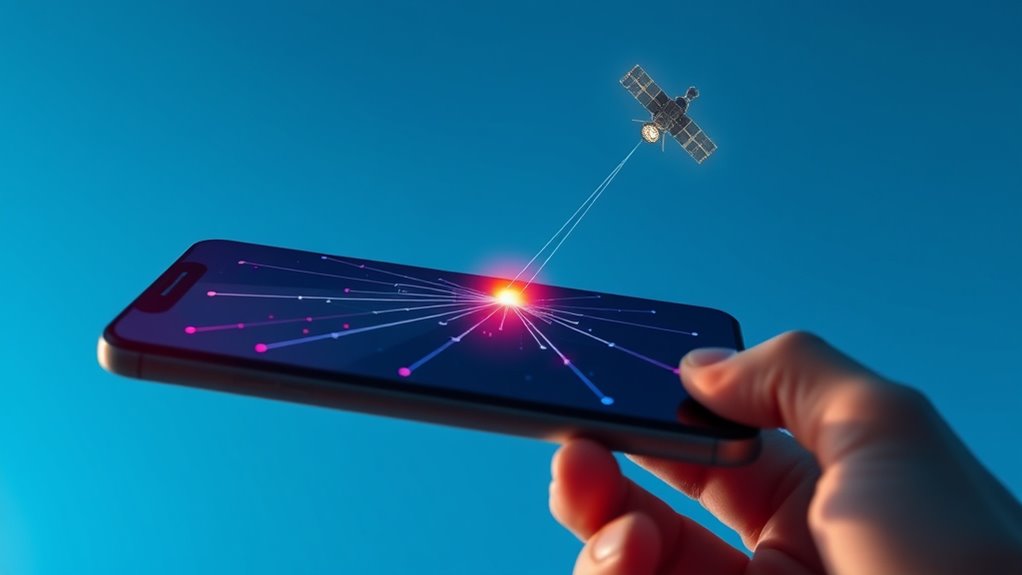
Advancements in satellite smartphone technology are poised to dramatically expand connectivity options, making satellite features more accessible and seamless for you. Future innovations include miniaturized, energy-efficient antenna designs, enabling integration into even slim devices. Satellite networks will likely incorporate low Earth orbit (LEO) satellites with lower latency and higher data speeds, improving real-time communication. AI-driven algorithms will optimize signal routing and connection stability, especially in challenging environments. Additionally, broader coverage and enhanced bandwidth will support more data-heavy applications like live streaming and high-resolution maps. As a result, you’ll experience reliable connectivity in remote areas, disaster zones, and across global mobility. Here’s a quick overview:
| Innovation | Impact |
|---|---|
| Miniaturized antennas | Slimmer devices, easier integration |
| LEO satellite networks | Faster, lower latency |
| AI signal management | More stable connections |
| Broader spectrum use | Higher data capacity |
| Enhanced device integration | Seamless user experience |
New advancements in digital asset management are also influencing how satellite connectivity and other technologies are integrated into modern devices, emphasizing the importance of secure and efficient systems.
Frequently Asked Questions
How Secure Are Satellite Connections Compared to Traditional Cellular Networks?
Satellite connections are generally less secure than traditional cellular networks because they can be more vulnerable to interception and hacking due to their wide coverage and less controlled environments. You should be cautious when transmitting sensitive data via satellite, as encryption standards may vary. While providers implement security measures, satellite signals are more exposed to potential breaches, so avoid sharing confidential information over satellite links unless you’re confident in the encryption used.
What Is the Latency Difference Between Satellite and Terrestrial Networks?
Think of satellite and terrestrial networks like racing horses—one’s on a smooth, straight track, the other takes a winding road. Satellite connections generally have higher latency, often 500 milliseconds or more, due to signal travel between your device, the satellite, and ground stations. Terrestrial networks like 4G or 5G are faster, with latency as low as 20-50 milliseconds, offering quicker responses suitable for real-time activities.
Can Satellite Connectivity Work Indoors or Behind Obstacles?
Satellite connectivity generally struggles indoors or behind obstacles because it relies on a clear line-of-sight to overhead satellites. When you’re inside buildings, in tunnels, or behind dense structures, signals can be blocked or weakened, making it hard to establish or maintain a connection. For peak performance, you need a direct, unobstructed view of the sky, which isn’t always possible in indoor or obstructed environments.
How Does Weather Affect Satellite Signal Quality and Reliability?
Weather can impact your satellite signal quality and reliability. Heavy rain, snow, or thick clouds can cause signal attenuation, making connections weaker or temporarily dropping out. Wind or storms might shift satellites or antennas slightly, disrupting the line-of-sight needed for a strong connection. To maintain a stable link, your device needs a clear view of the sky, so adverse weather can sometimes interfere with satellite communication.
Are There Data Privacy Concerns With Satellite Communication?
You should be deeply concerned about data privacy with satellite communication, as it’s like shouting your secrets into the vast universe. While satellite systems encrypt signals, the sheer scope of coverage means your data could be intercepted or misused if security isn’t foolproof. Governments, hackers, or corporations might access your info, making it vital to understand who controls this technology and demand strict protections to keep your privacy intact.
Conclusion
As satellite connectivity becomes more integrated into smartphones, you’ll gain reliable communication even in remote areas. Imagine you’re hiking off-grid, and your phone connects via satellite to call for help—saving lives in emergencies. With ongoing advancements, future devices will seamlessly switch between networks, offering worldwide coverage. This technology not only enhances safety but also opens new possibilities for global connectivity, transforming how you stay connected no matter where you are on the planet.
Halloween Picks
halloween
As an affiliate, we earn on qualifying purchases.