
Having five cameras on a phone offers impressive versatility, allowing you to capture wide landscapes, detailed close-ups, and everything in between. These multiple lenses provide creative options, improve image quality, and make editing easier by giving more raw material to work with. While you don’t need all five for everyday photos, they open up new possibilities and boost your photography skills. Keep exploring to discover how this trend can elevate your camera experience.

Get the latest gadgets delivered free with Prime
- Fast, free delivery on millions of items
- Prime Video, Amazon Music and more included
- Member-only deals all year
Key Takeaways
- Multiple cameras provide diverse lenses for creative framing, zoom, macro, and wide-angle shots, enhancing versatility.
- They enable richer raw material for editing, allowing for detailed enhancements and composite images.
- Advanced software automates lens switching and scene recognition, optimizing photo quality without manual adjustments.
- High-quality sensors ensure consistent image clarity and detail across all lenses, even in challenging lighting.
- The trend supports experimentation with perspectives and styles, elevating mobile photography without professional equipment.

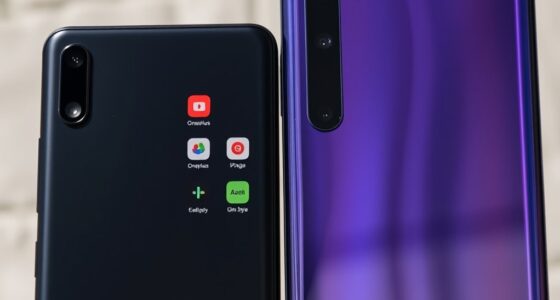
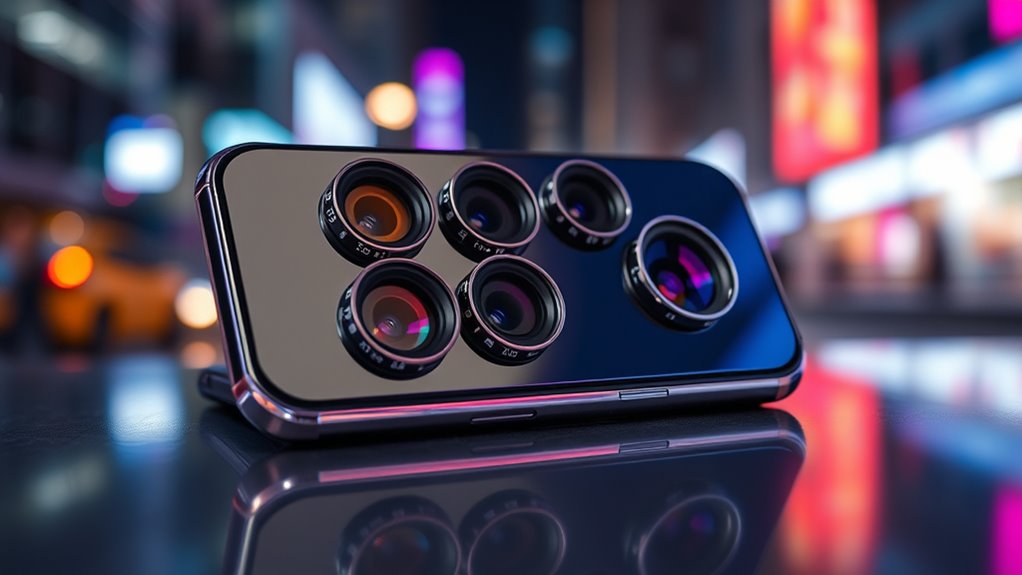
In recent years, multi-camera setups have become a standard feature in smartphones, transforming the way you capture photos and videos. These configurations often include wide-angle, ultra-wide, telephoto, and macro lenses, giving you a versatile toolkit to frame your shots creatively. The key to making the most of these cameras lies in thoughtful camera placement—how the lenses are arranged on your device. Manufacturers strategically position these cameras to maximize space, minimize obstructions, and ensure each lens captures its intended perspective without interference. This thoughtful placement allows you to switch seamlessly between lenses, whether you’re zooming in on distant subjects or capturing expansive landscapes.
Having multiple cameras means your phone can do more than just take good photos; it also opens up new possibilities for photo editing. After capturing your images, you can use editing tools to enhance details, adjust colors, or even combine shots from different lenses for a composite image. For example, you might take a wide shot and then zoom into a specific detail, then refine both images during editing to create a stunning final photo. The variety of lens options makes editing more flexible, giving you the ability to correct distortions or improve focus in ways that weren’t possible with single-camera phones.
Multiple cameras expand editing options, enhancing details, colors, and creative blending for stunning photos.
Additionally, multi-camera phones often come with intelligent software that automatically switches between lenses based on the scene or your preferences. This automation saves you time during editing, as the camera app pre-selects the best lens for the scenario. However, the real magic happens when you *embark* on photo editing afterward. You can fine-tune your images, enhance lighting, or even blend multiple shots to achieve a professional look. The multiple-camera setup essentially provides a richer raw material to work with, making editing more impactful and creative.
Furthermore, advanced sensor technology within these lenses ensures improved image quality across different lighting conditions, helping your photos look professional regardless of environment. You might wonder if all these features are necessary. Well, if you love capturing moments with clarity and detail, then having multiple cameras and the ability to edit your photos afterward adds a significant advantage. They enable you to experiment with different perspectives and styles, elevating your photography game. Ultimately, the combination of strategic camera placement and powerful editing tools empowers you to produce high-quality images without needing professional equipment. Whether you’re snapping quick shots or crafting detailed compositions, multi-camera phones give you the flexibility to create stunning visuals with ease.
smartphone multi-camera lens kit
As an affiliate, we earn on qualifying purchases.
As an affiliate, we earn on qualifying purchases.
Frequently Asked Questions
How Do Multi-Camera Setups Affect Phone Battery Life?
Multi-camera setups can increase battery drain because more sensors and lenses require extra power, especially when multiple cameras are active simultaneously. However, manufacturers improve power efficiency through software optimization and hardware design, helping to mitigate this effect. If you use multiple lenses often, expect some battery impact, but with efficient power management, you can enjoy the benefits of advanced camera features without markedly sacrificing your phone’s battery life.
Are Multi-Camera Phones More Durable Than Single-Camera Models?
Like a fortress with multiple battlements, multi-camera phones often boast enhanced durability due to their robust design. However, durability concerns arise from increased manufacturing complexities, which can introduce vulnerabilities if not carefully managed. While the extra lenses and sensors add layers of protection, they also demand precise assembly. Ultimately, a well-built multi-camera phone can be more resilient, but you should watch for quality to make certain it withstands daily wear and tear.
Can Multi-Camera Phones Improve Low-Light Photography?
Yes, multi-camera phones can improve low-light photography. They leverage sensor innovation to capture more light across different lenses, and advanced image processing combines these images for clearer, brighter photos. With multiple sensors working together, you get better detail and reduced noise in dim settings. So, if you love capturing low-light moments, a multi-camera phone enhances your shots markedly, making dark environments much more manageable.
Do Multi-Camera Phones Cost Significantly More Than Single-Camera Phones?
Multi-camera phones typically cost more than single-camera models due to the price difference driven by higher manufacturing costs. You might notice a moderate increase in price, as adding extra lenses and sensors raises production expenses. However, the overall cost varies based on brand and features. If you value advanced photography capabilities, the investment could be worth it, but if you’re budget-conscious, a single-camera phone could still meet your needs.
How Do Software Updates Impact Multi-Camera Features?
Software updates play a vital role in enhancing your multi-camera phone’s capabilities. They bring improvements like better multi-camera compatibility, guaranteeing different lenses work seamlessly together. Updates can also optimize image processing, boost stabilization, and add new features, giving you a better photography experience. Ignoring updates might limit your phone’s camera potential, so staying current guarantees you get the most out of your device’s multi-camera system.
mobile photography editing tools
As an affiliate, we earn on qualifying purchases.
As an affiliate, we earn on qualifying purchases.
Conclusion
So, do you really need five cameras on your phone? While it might seem like overkill, these multi-camera setups can boost your photos’ quality and versatility. But ultimately, it’s about how you use them—are you capturing moments or just chasing specs? Think about what matters most to you in a phone camera. After all, having many lenses is great, but the best camera is the one that helps you tell your story best.
As an affiliate, we earn on qualifying purchases.
As an affiliate, we earn on qualifying purchases.
Fall Picks
fall essentials
As an affiliate, we earn on qualifying purchases.