
It’s highly likely that Apple will release a foldable iPhone someday, as industry trends show them exploring foldable displays and innovative designs. The company is cautious, waiting for tech breakthroughs like crease-free OLED screens and durable hinges, but they’re clearly interested in blending smartphone portability with tablet-like versatility. If you want to know how Apple might shape the future of foldables and what features to expect, keep exploring the latest developments.
Key Takeaways
- Apple is exploring foldable display tech with a focus on crease-free OLED screens and durable hinges.
- Development is expected to start in late 2025, aiming for a launch around 2026.
- Apple carefully evaluates innovation timing, likely releasing foldables once technology is reliable.
- The company aims to blend phone and tablet features, positioning foldables as premium, high-end devices.
- Based on trends and patents, Apple may introduce a foldable iPhone, but only when it meets strict quality standards.

Ailun Privacy Screen Protector iPhone 17e/16e/14/13/13 Pro, 2 Pack
- Pack Size: Includes 2 privacy screen protectors
- Device Compatibility: Fits iPhone 17e, 16e, 14, 13, 13 Pro
- Protection Level: Resists scratches, scrapes, and bumps
As an affiliate, we earn on qualifying purchases.
As an affiliate, we earn on qualifying purchases.
The Evolution of Smartphone Design and the Rise of Foldables

Smartphone design has evolved rapidly over the past decade, moving from simple rectangular devices to more sophisticated, multi-functional gadgets. You’ve seen screens grow larger, while bezels shrink, making phones more immersive. Then, foldable phones emerged, blending phones and tablets into a single device. These foldables feature flexible displays that allow you to switch between compact and expanded modes. You’ve also noticed improvements like crease-free OLED tech and more durable hinges, addressing early durability concerns. This evolution reflects a push for versatility, portability, and enhanced user experience. As technology advances, companies are experimenting with new form factors to stand out and meet diverse needs. Foldables represent the next step in this journey, promising to redefine how you use and interact with your devices. Color accuracy and other display innovations continue to improve, making these devices more vibrant and true to life.

amFilm Auto-Alignment OneTouch for Nintendo Switch OLED Screen Protector
- Fast Auto-Alignment Installation: Install in 30 seconds with auto-alignment
- Ultra-Hard 9H Tempered Glass: Provides maximum impact and scratch resistance
- Anti-Fingerprint Coating: Resists fingerprints and oil stains
As an affiliate, we earn on qualifying purchases.
As an affiliate, we earn on qualifying purchases.
Apple’s Strategic Approach to New Technologies and Market Trends
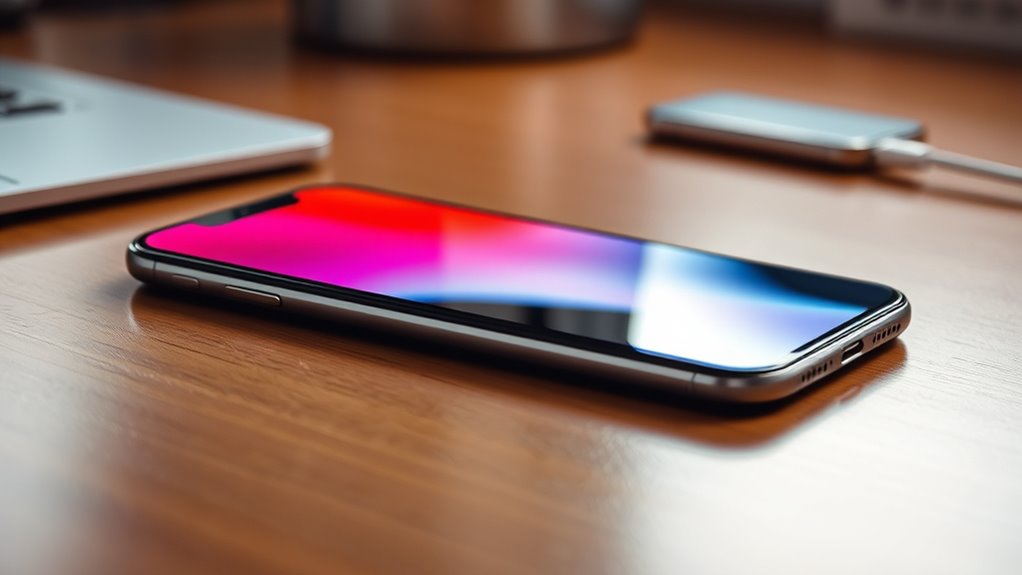
You can see that Apple carefully considers when and how to adopt new technologies, balancing innovation with reliability. By waiting for breakthroughs like crease-free displays, they make certain their products set industry standards rather than follow trends. This strategic approach helps Apple align with market trends while maintaining their reputation for premium quality and seamless user experiences. Additionally, their focus on responsible use and privacy ensures that new features are integrated thoughtfully to protect user data and build trust.
Innovation Adoption Strategies
Apple’s approach to adopting new technologies is characterized by a cautious yet strategic focus on quality and user experience. You recognize that rushing into foldable phones could compromise reliability, so Apple waits for breakthrough innovations like crease-free displays and durable hinges. They prioritize refining hardware and software integration before releasing. Apple often introduces features gradually, ensuring seamless performance and high standards. Additionally, they monitor innovative European cloud servers to stay ahead of sustainable and secure solutions that could influence their ecosystem. This deliberate approach helps Apple maintain its reputation for premium quality while gradually expanding into emerging markets.
Market Trend Alignment
Aligning with market trends, Apple takes a measured approach to integrating new technologies like foldable displays, ensuring they meet high standards before mass adoption. You can see this in their cautious development timeline, with production starting in late 2025 and a planned launch around 2026. Apple prioritizes design innovations, such as crease-free OLED screens and durable hinge mechanisms, to meet consumer expectations. They also position the foldable iPhone as a premium device, aligning with market demand for high-end, versatile gadgets. Apple evaluates evolving user needs, blending smartphone and tablet features into a seamless experience. This strategic patience allows Apple to refine the technology, avoid early adoption pitfalls, and maintain its reputation for quality, ultimately ensuring the product aligns with both market trends and consumer expectations.
![Kaiiecal for Samsung Galaxy Z-Fold-7 Case: Magnetic Shockproof Rugged [Dual-Stand] [Hinge Protection] [Fit for Magsafe] Durable Silicone Matte Armor Protective Cover for ZFold 7 5G 2025 (Black)](https://m.media-amazon.com/images/I/41WnUq8zDyL._SL500_.jpg)
Kaiiecal for Samsung Galaxy Z-Fold-7 Case: Magnetic Shockproof Rugged [Dual-Stand] [Hinge Protection] [Fit for Magsafe] Durable Silicone Matte Armor Protective Cover for ZFold 7 5G 2025 (Black)
- Strong Magnetic Lock: Compatible with MagSafe and accessories
- Dual Adjustable Kickstands: Supports hands-free viewing in multiple angles
- Foldable and Slim Design: Flat when not in use, minimal bulk
As an affiliate, we earn on qualifying purchases.
As an affiliate, we earn on qualifying purchases.
Technical Challenges and Innovations in Foldable Display Development

You need to overcome key technical challenges like developing crease-free OLED displays that look seamless when folded. Ensuring hinge mechanisms are durable enough for daily use is vital to prevent wear and tear. Innovations in in-cell display technology can help improve durability and image quality, making foldable screens more reliable for everyday use. Additionally, the integration of essential oils for device cooling can potentially help manage heat generated by flexible displays, enhancing overall device longevity.
Crease-Free OLED Technology
Developing crease-free OLED technology for foldable displays presents significant engineering challenges, primarily because traditional OLEDs tend to develop visible lines at bend points. To address this, researchers are exploring flexible, ultra-thin materials that can bend repeatedly without cracking or showing wear. Innovations include using foldable substrates and advanced encapsulation techniques to prevent moisture and oxygen ingress, which degrade OLED performance. In-cell technology is also being refined to improve durability and image quality, reducing the prominence of the fold line. Additionally, new manufacturing processes are being developed to produce seamless, hinge-free displays that maintain uniformity across folds. Achieving a truly crease-free OLED display requires balancing flexibility, durability, and visual clarity, pushing the boundaries of current display engineering. Free Floating
Durable Hinge Mechanisms
Creating a durable hinge mechanism for foldable displays involves overcoming significant engineering hurdles. You need a hinge that can withstand thousands of folds without loosening or breaking, all while maintaining smooth movement. Researchers are exploring innovative materials like ultra-strong alloys and composites to improve durability. You also face challenges in designing a hinge that minimizes wear on the display, preventing creases and damage over time. To address this, engineers develop complex locking and tension systems that distribute stress evenly. Additionally, sealing mechanisms are essential to keep dust and debris out, which can cause failure. You must balance flexibility with strength, ensuring the hinge remains reliable after extensive use. Continuous innovations aim to create a hinge that’s both resilient and discreet, making foldable devices practical for everyday use.
In-Cell Display Innovations
In-Cell display technology has become a focal point for innovation in foldable devices, as it directly impacts durability, image quality, and overall user experience. Traditional on-cell displays often suffer from creasing and reduced longevity when folded repeatedly. Apple is exploring in-cell OLED technology to address these issues, aiming for a crease-free, more durable screen that can handle frequent folding. This innovation involves integrating touch sensors directly into the display layers, reducing thickness and improving image clarity. Overcoming technical challenges like maintaining high contrast and color accuracy during folding is critical. By advancing in-cell technology, Apple hopes to deliver a seamless, resilient foldable display that feels natural, enhances visual performance, and withstands daily use, setting a new standard for foldable smartphones. Additionally, improvements in display durability are crucial for ensuring long-term usability of foldable screens.

ULAK Compatible with iPhone 13 Wallet Case for Women, Pink Flower
- Compatibility: Fits only iPhone 13 (6.1 inch) 2021
- Carrying Convenience: Includes wrist strap lanyard
- Full Protection: Premium PU leather with shockproof design
As an affiliate, we earn on qualifying purchases.
As an affiliate, we earn on qualifying purchases.
Expected Features and Specifications of the Foldable Iphone

The foldable iPhone is expected to feature a book-style fold, similar to Samsung’s Galaxy Z Fold, with a large 7.8-inch OLED display that opens to offer a tablet-like experience. When folded, you’ll have a smaller 5.5-inch cover display for quick interactions. Expect a crease-free OLED technology that improves durability and visual quality. The device will likely use a durable aluminum frame, with a massive 5,400–5,800 mAh battery to support dual screens. It may adopt an eSIM-only design, eliminating physical SIM slots. Software enhancements in iOS 27 will optimize multitasking and app scaling for the foldable form. Overall, you’ll see a premium device combining smartphone portability with tablet versatility, pushing the boundaries of Apple’s hardware and software capabilities. Deep‑sky imaging techniques can inspire innovative camera designs and sensor integration for future foldable devices.
Market Positioning and Consumer Expectations for a Foldable Apple Device

Apple’s move into foldable devices aims to redefine its market positioning by blending premium smartphone features with tablet-like versatility. You’ll likely see a device that appeals to high-end consumers seeking innovation and multitasking capabilities. The expected price point around $2,399 positions it as a luxury product, emphasizing exclusivity and advanced technology. Consumers will anticipate a seamless experience, with improved multitasking, dynamic app adjustments, and a user interface that bridges phone and tablet functionalities. The device’s premium materials, large internal display, and innovative display technology will set expectations for durability and elegance. Apple’s brand reputation for quality and ecosystem integration will amplify consumer demand. Overall, buyers will expect a device that not only pushes technological boundaries but also complements their premium lifestyle. Developing a relationship with that inner guidance can help consumers make authentic choices about adopting new technology.
Future Prospects: How Foldables Could Transform Apple’s Product Line

As foldable technology matures, it has the potential to radically reshape Apple’s product lineup by blurring the lines between smartphones and tablets. You could see Apple creating hybrid devices that offer the portability of a phone with the expanded screen of a tablet, opening new use cases and workflows. This shift might lead to a new product category, blending the best of both worlds and appealing to a broader audience. Apple’s focus on innovation could push the industry toward crease-free displays and more durable hinges, making foldables more reliable. Additionally, future foldables may introduce:
- Seamless multitasking with redesigned iOS features
- New hardware options, such as larger batteries and advanced materials
- A broader ecosystem of foldable accessories and peripherals
- The potential to replace traditional tablets or laptops in some scenarios
Frequently Asked Questions
Will the Foldable Iphone Support Apple Pencil or Stylus Input?
The foldable iPhone likely won’t support Apple Pencil or stylus input, as Apple hasn’t integrated stylus support into its iPhone lineup before. Instead, they focus on improving touch, gestures, and multi-touch capabilities with iOS updates. If Apple introduces a stylus, it’s more probable on an iPad or a future device explicitly designed for stylus use. Expect the foldable iPhone to prioritize seamless touch interactions and software enhancements over stylus support.
How Will Foldable Iphones Impact Apple’s Ecosystem and Accessory Lineup?
Imagine a foldable iPhone as the Swiss Army knife of Apple’s ecosystem—you’ll find it seamlessly integrates with your existing devices. It’ll likely support new accessories, like fold-specific cases and enhanced MagSafe options, expanding your ecosystem’s versatility. You’ll enjoy smoother multitasking, improved app experiences, and device continuity, making your Apple devices more interconnected than ever. This innovation could redefine how you use and accessorize your tech setup, blending portability with tablet-like power.
What Are the Long-Term Durability Expectations for Foldable Iphones?
You can expect foldable iPhones to become more durable over time, thanks to innovations like crease-free OLED displays and improved hinge designs. Apple is heavily focused on addressing issues like screen creasing and hinge wear, so durability will likely improve with each generation. While initial models may face some challenges, Apple’s reputation for quality suggests that future foldables will withstand daily use better, offering reliable performance and longevity.
Will Foldable Iphones Have Unique Software Features Exclusive to the Fold?
Foldable iPhones will have exclusive software features designed specifically for their unique foldable displays. You’ll see new multitasking gestures, optimized app scaling, and dynamic interfaces that adapt seamlessly whether the device is folded or unfolded. Apple aims to enhance productivity and user experience by developing features that leverage the foldable design, making your interactions more fluid and intuitive. These innovations will set the foldable iPhone apart from traditional models, offering a tailored experience.
How Does Apple Plan to Address Environmental Concerns With Foldable Device Production?
Aren’t environmental concerns vital in today’s tech world? Apple plans to minimize impact by using recycled materials, reducing harmful emissions during manufacturing, and designing for durability to extend device lifespan. They aim for eco-friendly packaging and energy-efficient processes, too. Do you think these efforts will make a real difference? By prioritizing sustainability, Apple hopes to lead the industry in responsible innovation, ensuring their foldable devices are as eco-conscious as they are cutting-edge.
Conclusion
Imagine holding a device that seamlessly transforms from a sleek phone into a spacious tablet, fitting perfectly in your hand. Apple’s potential foldable iPhone could redefine how you experience technology—blending innovation with elegance. While challenges remain, the future sparkles with promise, inviting you to envision a world where your device adapts effortlessly to your life. This isn’t just a phone; it’s a gateway to endless possibilities, waiting to unfold in your palm.