If you prefer a classic, compact style that easily fits in your pocket and is budget-friendly, a flip phone is a great choice. It offers a smaller form, durability, and enough screen space for daily tasks. On the other hand, if you want a more sophisticated, larger display for multitasking and media, a foldable phone suits you better. Keep exploring to find out which type aligns perfectly with your needs and lifestyle.
Key Takeaways
- Flip phones are more compact, lightweight, and ideal for quick, everyday use, fitting easily in pockets.
- Foldable phones offer larger screens suitable for multitasking, media, and productivity, but are bulkier when closed.
- Flip devices generally cost less, providing essential features with a nostalgic, classic design; fold phones are more expensive with advanced tech.
- Both types have durable builds, but foldable screens and hinges require careful handling due to fragility.
- Choose a flip if portability and affordability matter; opt for a fold if you prioritize a bigger display and multitasking capabilities.
Design and Style Preferences

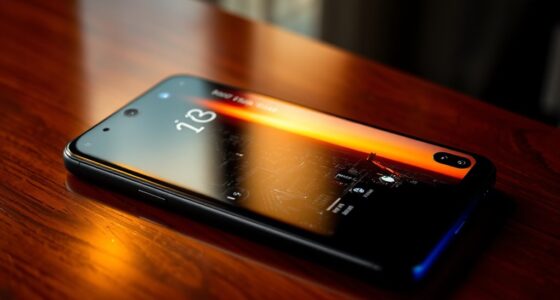
When it comes to design and style preferences, your choice between a flip and a foldable phone largely depends on your personal aesthetic and how much you value customization. Flip phones emphasize a classic, nostalgic look, folding horizontally with a compact size that fits easily in your hand or pocket. They come in vibrant colors and bold finishes, allowing you to express your personality through personalization. Foldable phones, on the other hand, have a more understated, professional appearance with sleek, minimalist designs in neutral tones like black, silver, or navy. They tend to focus on a slim profile when open, offering a sophisticated look. Ultimately, if you prefer a fun, fashion-forward device, a flip phone appeals more, whereas fold phones suit those who favor a sleek, modern aesthetic. Additionally, the design and style of these devices can influence how well they match your overall tech setup and wardrobe choices.
Portability and Pocket Fit

Flip phones excel in portability and pocket fit due to their compact, palm-sized closed form that easily slips into jean pockets and small bags. Their slim profile makes carrying them effortless, especially for one-handed use. You’ll appreciate how light they are, reducing strain when kept in your pocket all day. Unlike fold phones, which tend to be bulkier when closed, flip phones stay sleek and unobtrusive. Their minimal size means you won’t feel the bulk or worry about the device bulging out. This makes them ideal for quick, everyday carrying without fuss. Whether you’re commuting or running errands, flip phones offer a discreet, comfortable fit that keeps your device accessible without sacrificing pocket space or comfort. Portability benefits also contribute to their popularity among users who prioritize ease of transport and convenience.
Durability and Build Quality
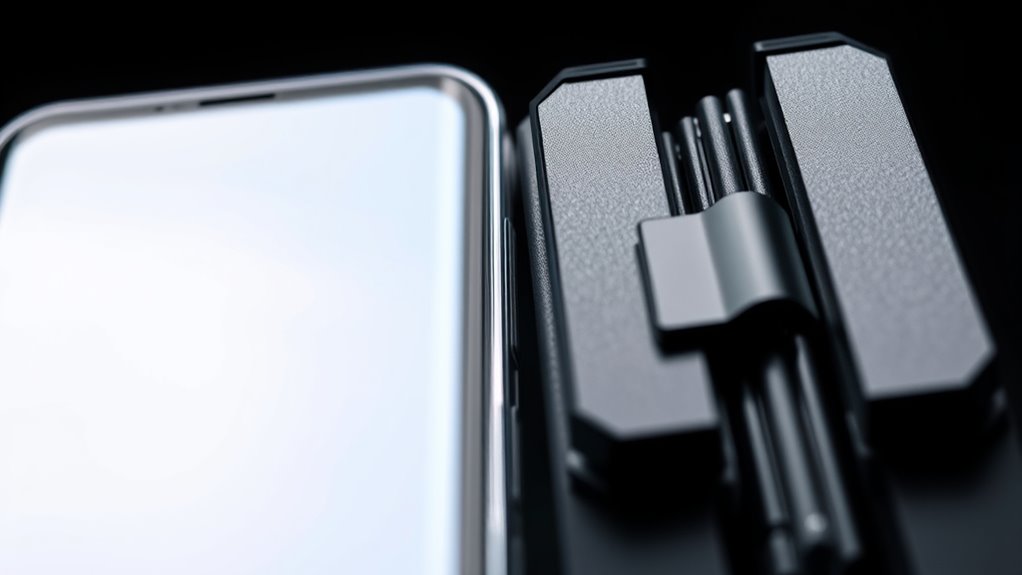
Both flip and fold phones are designed to withstand daily wear with water resistance ratings like IPX8, protecting against rain and moisture. Their hinges use advanced engineering, with newer models featuring stronger, more durable mechanisms that reduce gaps and dust intrusion. You’ll find Corning Gorilla Glass on both devices, which flexes thousands of times without breaking, enhancing durability. Flip phones, especially the latest models, show improved hinge strength and overall build quality, making them more resistant to everyday bumps and knocks. However, folding screens and hinges remain more fragile than traditional phone components, so handling with care is essential. While both types are built to last, their flexible screens and hinges require careful use to maintain long-term durability. European cloud innovation and sustainable manufacturing processes further contribute to the longevity and eco-friendliness of these devices.
Screen Size and Multitasking Features

The screen size and multitasking capabilities of foldable phones substantially influence how you use your device daily. With a 6.7-inch display, flip phones are great for standard tasks like browsing, messaging, and media playback, but they limit multitasking due to their narrower screens. Fold phones, offering a larger 7.6-inch display, provide a tablet-like experience, making them ideal for running multiple apps simultaneously or editing documents. They excel in media consumption, productivity, and multitasking, giving you more space to work and entertain. Understanding device capabilities can help you determine which type of foldable phone better aligns with your daily needs. Flip phones balance portability with enough screen real estate for everyday use, while fold phones prioritize productivity and media-rich activities. Your choice depends on whether you prefer a compact device or a larger screen for enhanced multitasking.
Cost and Value Considerations
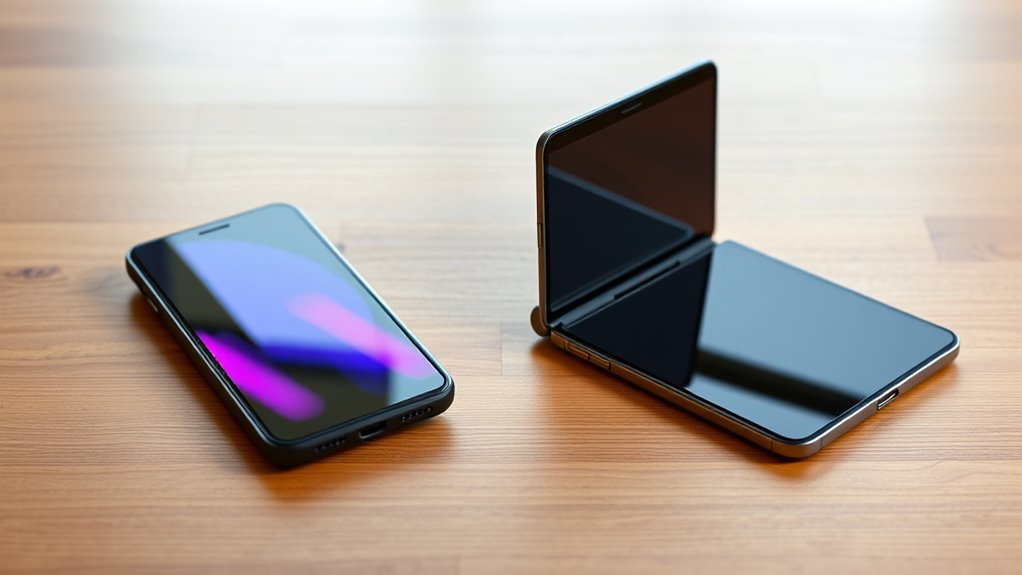
Are you wondering whether a foldable phone offers enough value to justify its premium price? If so, you’ll find that fold phones typically cost around $2,000, making them a significant investment. They come with advanced features like larger displays and enhanced multitasking, which appeal to power users and professionals. However, if your priority is affordability and portability, flip phones offer a more budget-friendly option, usually priced lower and providing essential smartphone functions. Flip phones excel in delivering foldable technology without the hefty price tag, making them ideal for everyday use and those who prefer lighter, more compact devices. Ultimately, your choice depends on whether you value the larger screen and multitasking capabilities enough to justify the higher cost of fold phones. Incorporating balanced designs can help create a seamless user experience, regardless of which type you choose.
User Types and Usage Scenarios

Your portability preferences and multitasking needs shape which foldable phone fits best. If you value compactness and easy one-handed use, a Flip phone might be ideal. But if you need a larger screen for productivity or media, a Fold phone offers the extra space you require. Consider also the essential oils for specific health needs, which can enhance your overall well-being and complement your device choice.
Portability Preferences
Wondering which foldable phone fits your on-the-go lifestyle? If portability is your top priority, a flip phone might be your best choice. Its compact, clamshell design easily slips into jean pockets and small bags, making it perfect for quick errands or daily commutes. It weighs less and feels comfortable in one hand, so you can use it effortlessly on the move. Fold phones, with their larger surface area when closed, tend to be bulkier and better suited for jacket pockets or bags. While they offer more screen real estate, they may feel less pocket-friendly for quick, casual carry. If keeping your device lightweight and pocketable is essential, a flip phone’s slim profile and small size make it an ideal fit. Additionally, empowering independent sellers can benefit from understanding these device features to better recommend suitable options to their customers.
Multitasking Needs
When it comes to multitasking, the choice between flip and fold phones depends largely on how you use your device throughout the day. If you’re juggling multiple apps or need a larger workspace, a fold phone might be better.
- For heavy multitasking, like editing documents or using multiple apps simultaneously, the 7.6-inch fold screen offers ample space.
- If you prefer quick access to notifications and basic functions without opening your device, newer flip models with advanced cover displays are ideal.
- For casual multitasking, such as messaging, browsing, or media, the compact flip phone balances usability with portability.
Your decision hinges on how much screen real estate and multitasking capability you require daily.
Frequently Asked Questions
How Do Foldable Phones Perform in Cold or Hot Weather Conditions?
Foldable phones generally perform well in hot or cold weather, but extreme temperatures can affect their hinges and screens. In cold weather, you might notice stiffness or reduced hinge flexibility, making opening and closing harder. Hot environments could cause overheating, impacting performance and battery life. To keep your device in good shape, avoid exposing it to severe temperatures for long periods, and handle it carefully during temperature fluctuations.
Are Foldable Phones Compatible With All Existing Apps and Accessories?
Foldable phones generally work with most existing apps and accessories, but compatibility can vary. You may find some issues with older accessories or apps optimized for standard screens, especially with hinge or folding mechanisms. To guarantee seamless use, check for software updates and accessory compatibility before purchasing. Keep in mind that newer foldable models tend to have better app support, making your experience smoother.
What Are the Repair Costs for Hinge or Screen Issues on Foldable Models?
Hinge or screen repairs on foldable models can be costly, often ranging from $300 to $800 depending on the issue and model. While some might worry about repair expenses, remember that newer models feature more durable hinges, reducing repair frequency. Investing in protection, like a sturdy case, can help prevent costly repairs. Overall, expect higher costs compared to traditional smartphones, but proper care extends your device’s lifespan.
Do Foldable Phones Support 5G and Other Latest Connectivity Features?
Yes, foldable phones support 5G and the latest connectivity features. You’ll enjoy faster download and upload speeds, smoother streaming, and improved overall network performance. Most models also include Wi-Fi 6 or Wi-Fi 6E, Bluetooth 5.x, and NFC for contactless payments. Staying connected is seamless, making these devices ideal if you want cutting-edge technology with high-speed connectivity for work, entertainment, or everyday use.
How Does Battery Life Compare Between Flip and Fold Foldable Smartphones?
You’ll find that battery life varies between flip and fold foldable smartphones, but generally, flip phones tend to have slightly better endurance. Their smaller screens and less demanding multitasking consume less power, making them more suitable for all-day use. Fold phones, with their larger screens and more intensive tasks, often require more frequent charging. Your choice depends on how much you prioritize battery longevity versus screen size and multitasking capabilities.
Conclusion
Ultimately, choosing between flip and fold comes down to your lifestyle. Picture slipping a sleek flip phone into your pocket, ready for quick calls and effortless style. Or imagine unfolding a spacious screen, perfect for multitasking on the go. Both offer unique experiences—so consider what fits your daily rhythm. Whichever you pick, you’ll hold a cutting-edge device that transforms how you connect and create every day.