
To boost your productivity with your smartphone, organize your apps into dedicated folders and limit access to distracting sites during work hours. Turn off non-essential notifications, set specific times to check messages, and use collaboration apps like Slack or Teams to stay connected. Create a clear work environment using time blocks and focus tools, and guarantee your device’s security with updates and VPNs. Keep exploring for more tips to optimize your mobile work setup effectively.

Get the latest gadgets delivered free with Prime
- Fast, free delivery on millions of items
- Prime Video, Amazon Music and more included
- Member-only deals all year
Key Takeaways
- Turn off non-essential notifications and set designated times to check messages to minimize distractions.
- Organize work apps and folders for quick access and create dedicated work zones on your device.
- Use productivity tools like calendar, task managers, and collaboration apps for efficient task management.
- Set clear boundaries for work hours, communicate them, and use device features to enforce them.
- Prioritize security by enabling multi-factor authentication, updating software, and using trusted VPNs for remote work.
smartphone productivity app organizer
As an affiliate, we earn on qualifying purchases.
As an affiliate, we earn on qualifying purchases.
Optimize Your Mobile Workspace for Efficiency

To maximize your mobile workspace’s efficiency, start by organizing your apps and tools to minimize distractions and streamline your workflow. Delete or hide non-essential apps to reduce temptation and clutter. Group your work-related apps into folders or use home screens dedicated solely to productivity, making it easier to access what you need quickly. Turn off notifications for non-work apps to stay focused and avoid constant interruptions. Set specific times to check emails and social media instead of reacting to every alert. Use features like do not disturb mode during deep work sessions. Keep your device updated to ensure smooth operation and security. A well-organized, distraction-free environment helps you concentrate, complete tasks faster, and maintain productivity throughout your workday. Creating calm and organized homes can also inspire an organized approach to your digital workspace.
As an affiliate, we earn on qualifying purchases.
Choose the Right Apps to Streamline Tasks

Organizing your workspace makes it easier to focus, but selecting the right apps takes your efficiency even further. Start by choosing apps that centralize your tasks, like project management tools such as Trello or Asana, to keep everything organized in one place. Use communication apps like Slack or Microsoft Teams for quick collaboration, and calendar apps like Google Calendar to schedule and prioritize your day. For document editing, opt for cloud-based tools like Google Workspace or Microsoft 365, which allow real-time collaboration. Productivity boosters like Todoist or Notion help you track tasks and set reminders. Limit the number of apps to avoid clutter, and focus on those that integrate seamlessly, so your workflow remains smooth and efficient. Incorporating color accuracy tools can further enhance your visual clarity when working with multimedia or visual content.
As an affiliate, we earn on qualifying purchases.
Manage Notifications to Minimize Distractions
Managing notifications effectively is essential for maintaining focus and productivity during work hours. Start by customizing your notification settings: turn off alerts from non-essential apps and enable only critical alerts. Use your device’s Do Not Disturb mode during focused work sessions to block distractions. Consider setting specific times to check notifications instead of reacting to every ping immediately. Prioritize notifications from colleagues and work-related apps to stay informed without interruption. Additionally, group similar notifications or set them to appear in batches, so you’re not constantly interrupted. Regularly review and adjust your notification preferences to guarantee they support your workflow. Understanding how cutting-edge technology integrates with your device can help you optimize notification management for a seamless work experience. By controlling when and how notifications appear, you create a distraction-free environment that keeps you engaged and productive throughout your workday.
task management app for Android/iPhone
As an affiliate, we earn on qualifying purchases.
As an affiliate, we earn on qualifying purchases.
Use Digital Collaboration Tools to Stay Connected

Digital collaboration tools have revolutionized the way you stay connected with your team, especially when working remotely or across different locations. These tools enable real-time communication, file sharing, and collaborative editing, keeping everyone on the same page without delays. Apps like Slack, Microsoft Teams, and Zoom facilitate instant messaging, video meetings, and seamless integration with other productivity platforms. By centralizing communication, you reduce email clutter and avoid miscommunication. Notifications alert you to updates instantly, so you can respond promptly. Using these tools effectively guarantees your team stays aligned, reduces misunderstandings, and accelerates project progress. Just remember to set boundaries—turn off non-essential notifications during focused work to avoid interruptions. Staying connected with digital collaboration tools maximizes your productivity and keeps your team moving forward. Incorporating effective communication practices helps ensure clarity and efficiency in your virtual teamwork.
Implement Security Measures for Safe Mobile Work
As mobile work becomes more prevalent, implementing robust security measures is essential to protect sensitive data and maintain organizational integrity. You must take proactive steps to stay safe. Here are three vital actions:
- Enable multi-factor authentication to add an extra layer of protection, making it harder for hackers to access your accounts.
- Regularly update your device’s software to patch vulnerabilities and defend against emerging threats.
- Use a trusted Virtual Private Network (VPN) whenever connecting to public Wi-Fi, ensuring your data remains encrypted and secure.
Leverage AI Tools to Enhance Productivity
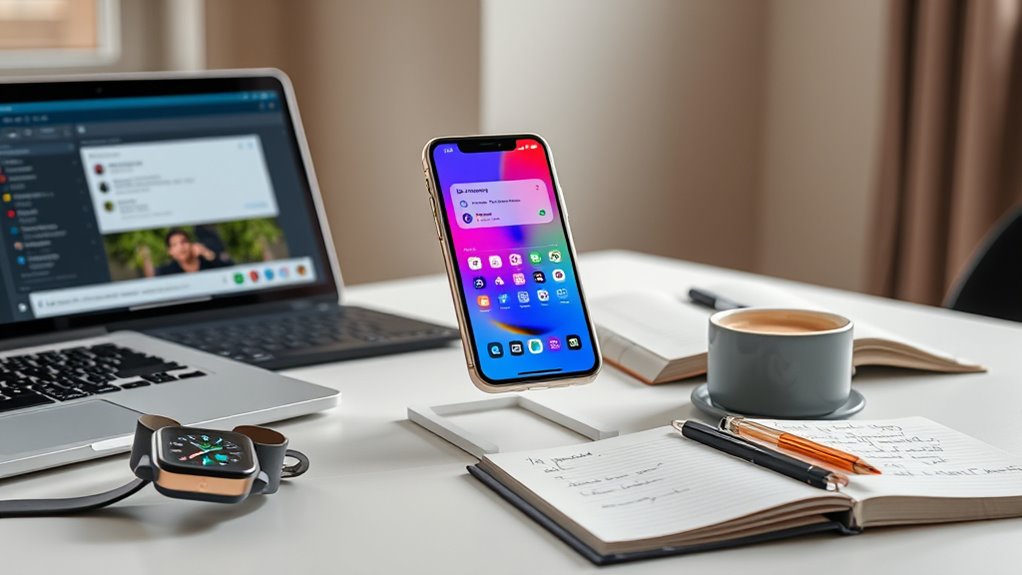
Have you tapped into the full potential of AI tools to boost your productivity? If not, now’s the time. AI can automatically summarize meetings, so you spend less time sifting through notes. Email sorting features help you prioritize important messages, reducing inbox overwhelm. AI-powered virtual assistants can schedule meetings, set reminders, and manage your to-do list efficiently. These tools free up your mental bandwidth, allowing you to focus on critical tasks. Many AI apps also suggest relevant content, optimize workflows, and detect patterns to improve decision-making. By integrating AI into your mobile workflow, you streamline routine tasks and enhance creativity. Additionally, understanding concepts like Free Floating can help you better grasp how AI adapts to your work environment. Just remember, the key is to choose the right AI tools that fit your work style and stay consistent in using them to maximize your productivity gains.
Establish Clear Boundaries to Balance Work and Personal Use

While AI tools can substantially boost your productivity by automating routine tasks, they also highlight the importance of setting boundaries to prevent work from spilling into personal time. Without clear limits, you risk burnout and decreased focus. To establish boundaries:
- Turn off work notifications after hours to reclaim personal space and reduce stress.
- Designate specific times for checking emails and messages, avoiding constant interruptions.
- Keep work and personal apps separate, using different screens or folders to avoid temptation.
Utilize Mobile Device Management Solutions
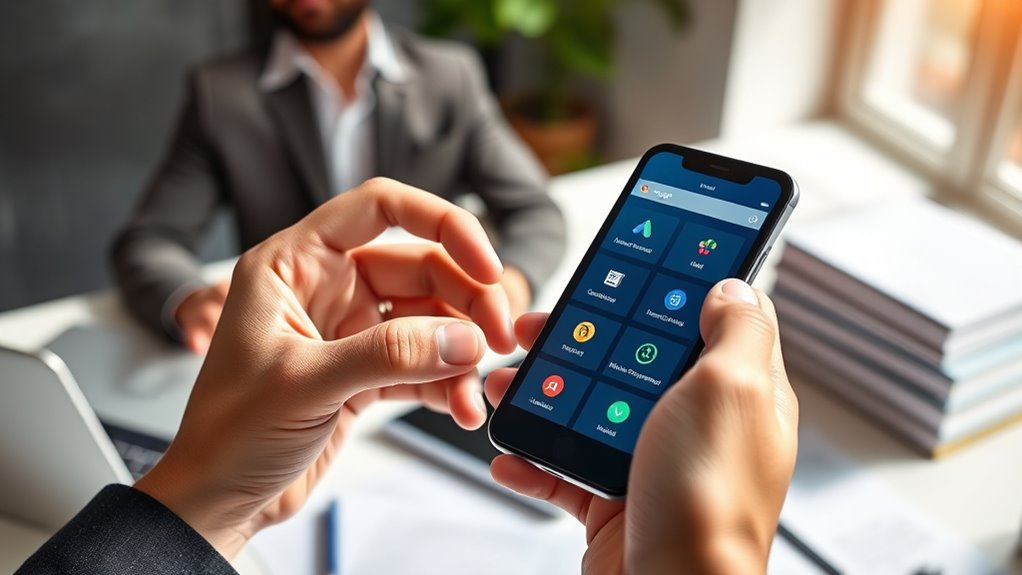
Implementing Mobile Device Management (MDM) solutions is essential for maintaining security and productivity when you use smartphones for work. MDM helps restrict access to non-essential apps, prevent data leaks, and enforce security policies. It guarantees your device remains a productive tool without risking sensitive information. Imagine the relief of knowing your work data is protected, even if your phone is lost or stolen. The use of Cappuccino Oracle can provide valuable insights for optimizing your device management strategies.
Incorporate Video Conferencing and Messaging Effectively
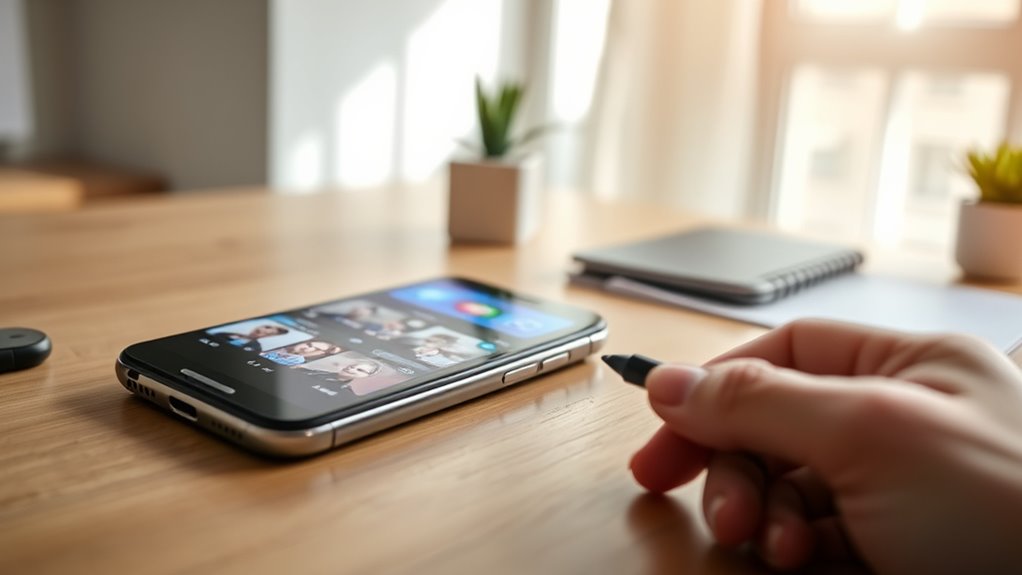
Effective use of video conferencing and messaging tools can substantially boost your remote collaboration, but it requires strategic integration to avoid common pitfalls. To do this, prioritize these steps:
- Set clear boundaries—use status indicators to signal availability and prevent burnout.
- Limit meeting time—stick to agendas and avoid unnecessary video calls that drain energy.
- Optimize notifications—turn off non-essential alerts during focused work to reduce distractions.
- Leverage modern technology—utilize smart communication tools designed to enhance remote teamwork and streamline interactions.
Foster a Focused Work Environment With Mobile Strategies

Creating a focused work environment with mobile strategies starts by minimizing distractions and optimizing device use. Turn off non-essential notifications and silence apps that aren’t related to your tasks. Use built-in features or third-party apps to restrict access to social media or entertainment during work hours. Organize your home screen to keep work apps within easy reach and hide distracting ones. Set specific times to check messages and emails rather than responding instantly to every alert. Consider using Mobile Device Management (MDM) tools to enforce policies that limit non-work activity. Establish clear boundaries, such as dedicated work zones on your device, to help maintain focus. By controlling your mobile environment, you create a space conducive to productivity and concentration. Transform Your Fitness Journey With Clear, Expert Guidance.
Frequently Asked Questions
How Can I Prevent Mobile Notifications From Interrupting My Work?
You can prevent mobile notifications from interrupting your work by turning off non-essential alerts, using Do Not Disturb mode during focused periods, and customizing notification settings for work apps. Consider scheduling specific times to check messages instead of constant monitoring. Using app management tools or Mobile Device Management (MDM) can restrict distractions. These steps help you stay focused, reduce stress, and maximize productivity throughout your workday.
What Are the Best Ways to Secure My Work Data on Personal Devices?
You should secure your work data on personal devices by enabling strong passwords and biometric locks. Use a reputable mobile device management (MDM) app to control access and enforce security policies. Keep your software updated regularly to patch vulnerabilities. Avoid connecting to unsecured Wi-Fi networks, and enable device encryption. Back up your data frequently, and be cautious when installing apps, only downloading from trusted sources to prevent data breaches.
How Do I Balance Mobile Device Use Between Work and Personal Life?
You can balance mobile device use by setting clear boundaries, like designated work hours and personal time. Turn off work notifications after hours and use different apps or profiles for work and personal tasks. Prioritize tasks to stay focused during work hours, and avoid checking work emails or messages during personal time. Regularly disconnect to recharge, ensuring you stay productive without sacrificing personal life.
Which AI Tools Are Most Effective for Enhancing Mobile Productivity?
You should prioritize AI tools like email summarizers, chatbots, and task automation apps that streamline your workflow. These tools help you focus on critical tasks, reduce time spent on routine activities, and manage your schedule efficiently. By integrating AI into your mobile devices, you enhance productivity, stay organized, and save time. Embrace AI solutions that fit your work style to maximize your mobile productivity and keep distractions at bay.
How Can I Troubleshoot App or Device Compatibility Issues Remotely?
You can troubleshoot app or device compatibility issues remotely by first checking for software updates, as they often fix bugs and improve performance. Restart your device to clear temporary glitches. Use remote management tools or support apps to access settings and diagnose problems. Contact your IT department if needed, and verify your apps are compatible with your device’s OS version. Keeping everything updated and using remote tools helps resolve issues efficiently.
Conclusion
By following these tips, you’ll turn your smartphone into a powerful work tool. Staying organized and focused can make all the difference, helping you work smarter, not harder. Remember, don’t let your device become a wolf in sheep’s clothing—set boundaries and use it wisely. With the right strategies in place, you’ll find it easier to stay productive and keep your work and personal life in harmony. The key is to make your phone work for you, not against you.
Fall Picks
fall essentials
As an affiliate, we earn on qualifying purchases.