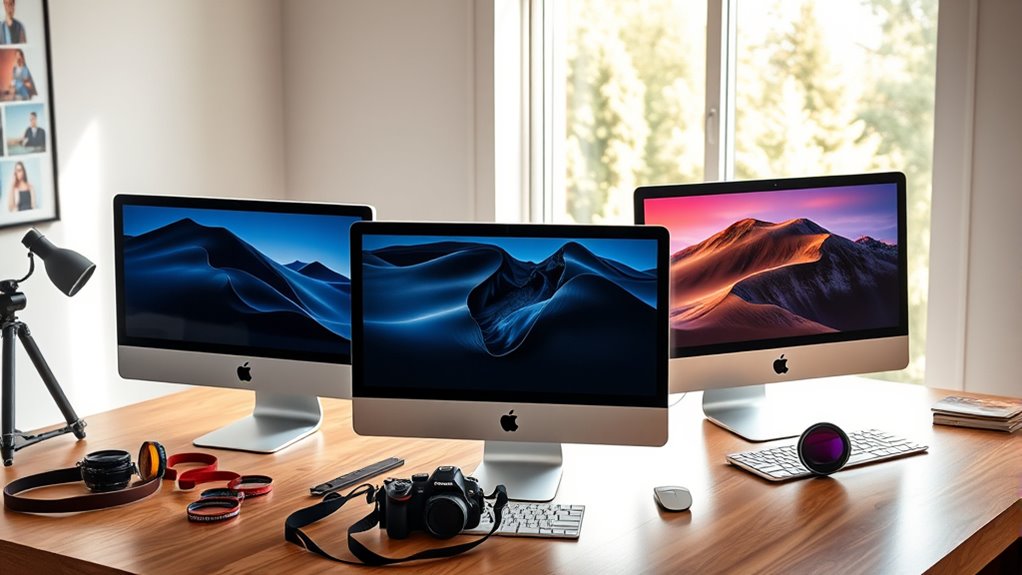

If you’re looking for the best Mac Studio models for streamlined photography workflows in 2025, I’d recommend the Apple 2024 Mac mini with the M4 Pro chip, the 2024 Mac mini with the M4 chip, and the 2024 Mac mini again with the M4 chip. These options deliver powerful performance and impressive display support while ensuring efficient connectivity. Keep exploring to discover more insights on selecting the ideal Mac for your photography needs!

Get the latest gadgets delivered free — and shop member deals
- Fast, free delivery on millions of items
- Access to Prime Big Deal Days deals on October 6–7
- Prime Video, Amazon Music and more included
Key Takeaways
- M4 Pro and M4 Processors: Opt for Mac Studio models featuring M4 Pro or M4 processors for superior performance in high-resolution image processing.
- Minimum 32GB RAM: Ensure at least 32GB of RAM to facilitate smooth multitasking and efficient handling of large image files and RAW libraries.
- Large SSD Storage: Choose models with 1TB or larger SSDs to minimize reliance on external drives and support high-res image storage needs.
- Comprehensive Connectivity: Look for multiple Thunderbolt 4/5 ports and HDMI outputs to connect up to three high-resolution displays for enhanced editing workflows.
- Software Compatibility: Confirm compatibility with key editing software like Adobe Photoshop and Lightroom, ensuring seamless integration with macOS updates and plugins.
Apple 2024 Mac mini Desktop Computer with M4 Pro chip
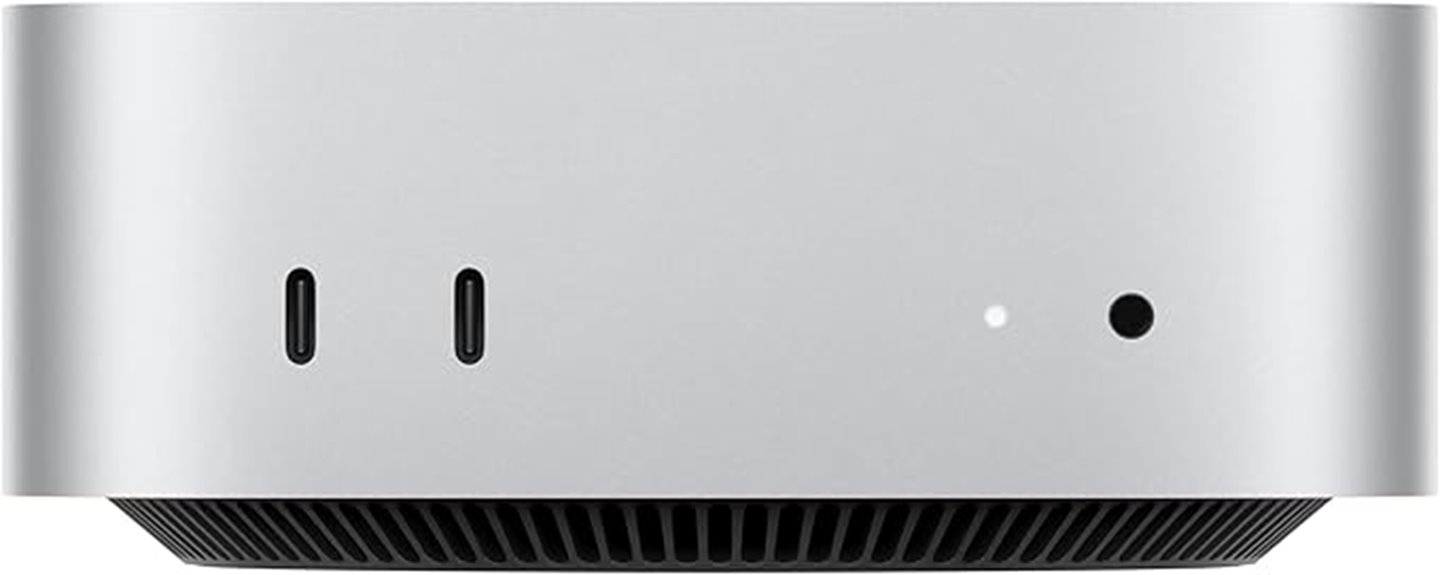
If you’re a creative professional or developer seeking powerful performance in a compact design, the Apple 2024 Mac mini Desktop Computer with the M4 Pro chip is an outstanding choice. Weighing just 1.6 pounds and measuring 5×5 inches, it fits seamlessly next to any monitor. The M4 Pro chip features a 12-core CPU and a 16-core GPU, making it perfect for demanding tasks like video editing or code compilation. Plus, its carbon-neutral design aligns with Apple’s sustainability goals. With support for up to three 6K displays and lightning-fast connectivity, it’s everything you need for a streamlined and efficient workflow.
Best For: Creative professionals and developers who require powerful performance in a compact design.
Pros:
- Powerful Performance: Equipped with a 12-core CPU and 16-core GPU, ideal for demanding tasks such as video editing and code compilation.
- Compact Design: Weighs only 1.6 pounds and measures 5×5 inches, making it easy to fit next to monitors and save desk space.
- Sustainability: Carbon-neutral design aligns with Apple’s 2030 sustainability goals.
Cons:
- Limited Upgrade Options: While configurable, the maximum memory and storage options may not meet the needs of some high-end users.
- Price Point: May be considered expensive compared to other compact desktops with similar specifications.
- Peripheral Dependency: Requires additional peripherals like monitors and keyboards, which are not included in the purchase.
Apple 2024 Mac mini Desktop Computer with M4 chip
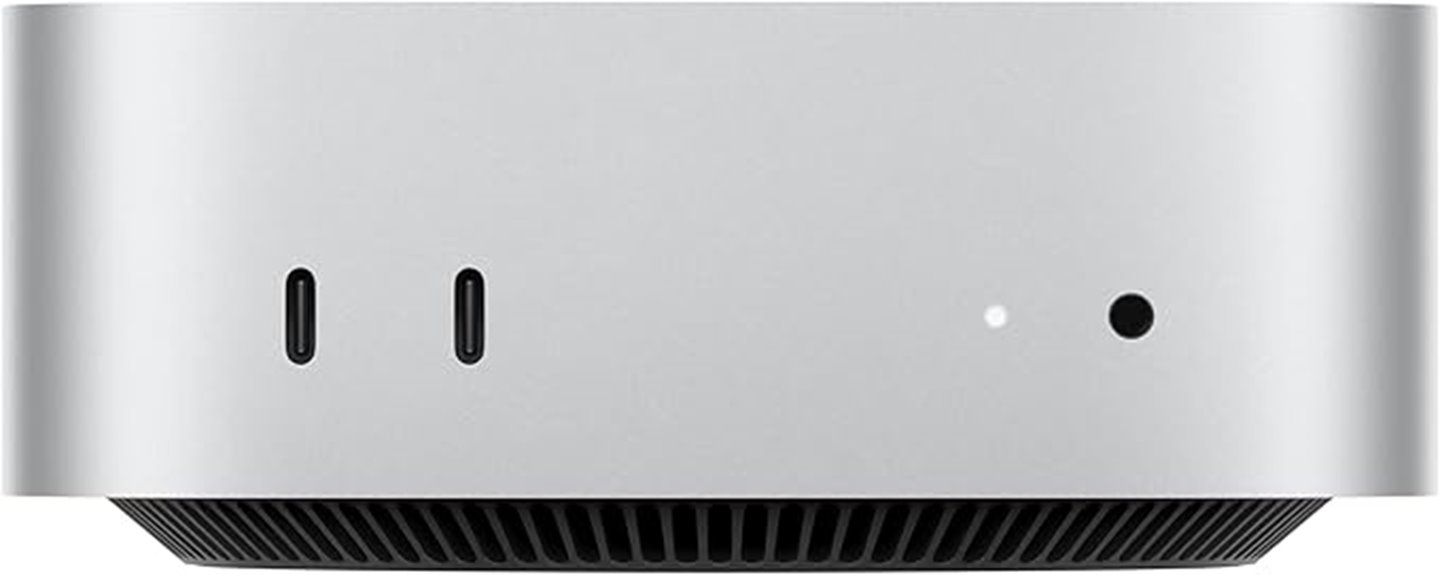
The Apple 2024 Mac mini Desktop Computer with the M4 chip is an excellent choice for anyone seeking powerful performance in a compact design. Weighing just 1.5 pounds and measuring 5×5 inches, it’s perfect for tight spaces. The M4 chip, with its 10-core CPU and GPU, ensures smooth operation for demanding applications like Adobe Creative Cloud. With support for up to three displays, you can expand your workspace effortlessly. Plus, it’s carbon neutral, reflecting Apple’s commitment to sustainability. Seamlessly integrating with the Apple ecosystem, this Mac mini is a fantastic option for photographers looking to enhance their workflow.
Best For: The Apple 2024 Mac mini Desktop Computer with M4 chip is best for professionals and creatives seeking a powerful, compact computing solution that integrates seamlessly with the Apple ecosystem.
Pros:
- Compact and lightweight design makes it easy to fit in any workspace.
- High-performance M4 chip supports demanding applications and multitasking.
- Carbon neutral and environmentally friendly, aligning with sustainable practices.
Cons:
- Limited upgrade options for memory and storage configurations post-purchase.
- May require additional adapters for certain peripherals not supported by Thunderbolt or USB-C.
- Higher price point compared to other desktop options without similar performance.
Apple 2024 Mac mini Desktop Computer with M4 Chip

Looking for a compact yet powerful desktop that seamlessly fits into any workspace? The Apple 2024 Mac mini with the M4 chip is perfect for you. Its five-by-five-inch design combines a sleek appearance with impressive performance. With a 10-core CPU and GPU, it handles tasks effortlessly. You’ll appreciate the 16GB unified memory and 512GB SSD for smooth multitasking. Plus, its array of ports, including Thunderbolt and USB-C, ensures you’re connected. It integrates flawlessly with your iPhone and iPad, enhancing your productivity. Best of all, it’s carbon neutral, reflecting Apple’s commitment to sustainability. This desktop truly delivers on all fronts!
Best For: Those seeking a powerful yet compact desktop that integrates seamlessly with Apple devices for enhanced productivity.
Pros:
- High-performance with a 10-core CPU and GPU, ensuring fast and fluid multitasking.
- Compact design makes it easy to fit in any workspace without sacrificing performance.
- Eco-friendly with a carbon-neutral footprint, aligning with sustainable practices.
Cons:
- Limited upgrade options due to the compact design and integrated components.
- Higher price point compared to other desktops with similar specifications.
- Compatibility issues may arise with non-Apple devices and software.
Factors to Consider When Choosing a Mac Studio for Photography Workflows
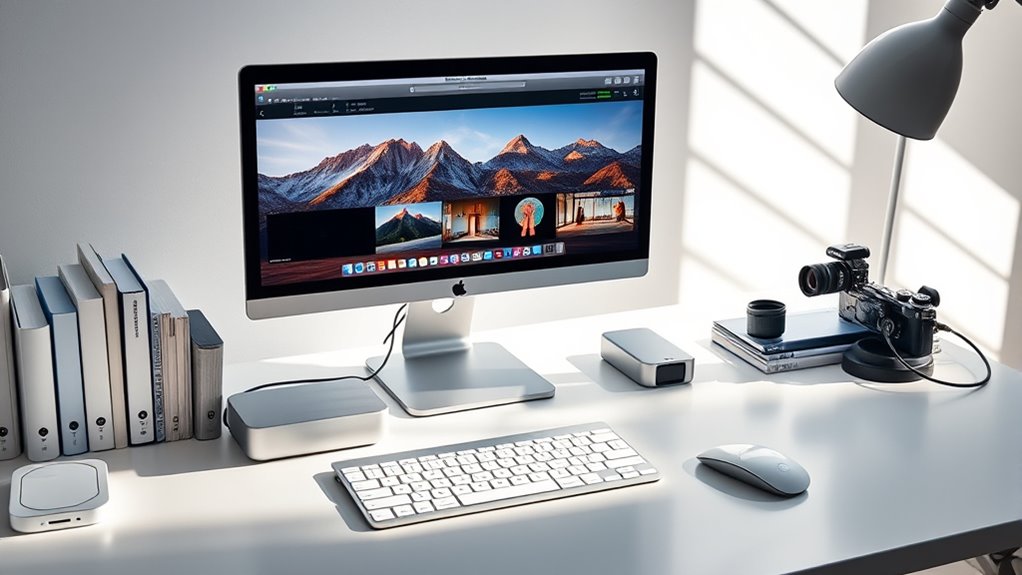
When I’m choosing a Mac Studio for my photography workflows, I focus on a few key factors. Performance requirements, display support options, and storage capacity are vital for handling large files and complex edits. I also consider connectivity and software compatibility to guarantee everything runs smoothly.
Performance Requirements
Choosing the right Mac Studio for photography workflows involves considering several key performance requirements. First, I recommend opting for a model with high-performance processors like the M4 Pro or M4, as they efficiently handle large RAW files and complex edits. You’ll also want at least 32GB of RAM to guarantee smooth multitasking with high-resolution images and multiple layers. Additionally, hardware-accelerated processing capabilities, such as those from the Neural Engine, can considerably cut down rendering and export times. Fast storage options, ideally SSDs up to 8TB, will help you access large media files quickly. Finally, ensure your Mac Studio has multiple high-resolution display outputs for detailed editing and accurate color management in your photography projects.
Display Support Options
Display support options are crucial for photographers who need to create an efficient and effective workspace. With the Mac Studio, you can connect up to three displays simultaneously, which is a game-changer for extensive editing tasks. You can hook up two stunning 6K displays via Thunderbolt and one 4K display through HDMI, giving you high-resolution visuals that let you focus on intricate details. The native DisplayPort 2.1 support over USB-C enhances compatibility with the latest high-res monitors, ensuring you’re always at the forefront of technology. Plus, with its support for various display resolutions and refresh rates, you get the flexibility to customize your workflow to suit your individual photography needs. It’s all about creating the perfect editing environment.
Storage Capacity Needs
Understanding your storage capacity needs is essential for optimizing your photography workflow with the Mac Studio. Adequate storage ensures I can keep high-resolution image files, RAW photo libraries, and large project files without constantly upgrading or relying on external drives. For those of us working with 4K or higher resolution images and videos, opting for larger SSD options—like 1TB or more—maintains a smooth workflow. It’s also wise to contemplate future storage needs, as ongoing projects and increasing file sizes can quickly add up. Having larger storage capacities allows me to simplify my workspace and access files faster. Plus, aligning my storage choice with my backup strategy ensures I can securely store and recover important photography data.
Connectivity and Ports
When evaluating the right Mac Studio for my photography workflow, the connectivity and port options play a essential role. I ensure the model I choose has multiple Thunderbolt 4 or Thunderbolt 5 ports; these are necessary for connecting high-speed external storage and peripherals. I also check for sufficient USB-C ports that support USB 3.0 or higher, perfect for my external drives and card readers. Additionally, I confirm the availability of HDMI or DisplayPort outputs, as I often work with multiple high-resolution monitors. Fast and reliable data transfer is critical, so I look for Gigabit Ethernet or even 10Gb Ethernet options. Finally, I consider the placement of ports to facilitate easy cable management, keeping my workspace clutter-free.
Software Compatibility
Choosing the right Mac Studio for my photography workflow hinges considerably on software compatibility, especially since I rely heavily on programs like Adobe Photoshop and Lightroom. It’s essential to verify that my Mac Studio can handle these applications, particularly since they’re optimized for Apple Silicon. I also need to confirm that the operating system supports the latest updates and plugins indispensable for my editing tasks. Hardware specifications like GPU and RAM are significant too, as they impact high-resolution image processing and batch editing. Additionally, I must validate that my setup supports color calibration tools for accurate editing and that my software integrates seamlessly with macOS, benefiting from hardware acceleration features for top performance.
Environmental Considerations
While I explore into selecting the right Mac Studio for my photography needs, environmental considerations play a crucial role in my decision-making process. I prioritize products that boast carbon neutrality, as this reduces their overall carbon footprint during manufacturing and use. Choosing energy-efficient hardware, like Apple Silicon chips, helps lower electricity consumption, aligning with my commitment to sustainability. The compact size of the Mac Studio not only minimizes material use but also makes transportation and disposal easier, which is a plus for the environment. I also look for environmentally friendly certifications to ensure the product meets sustainability standards. Ultimately, I appreciate recyclable materials and eco-conscious packaging, which further support responsible consumption and make me feel good about my purchase.
Future Upgrade Potential
Environmental considerations naturally lead me to think about how the Mac Studio can adapt to my evolving photography needs over time. When I choose a model, I focus on RAM and storage options to handle future software updates and expanding photo libraries. It’s essential to evaluate hardware upgrade potential, like adding RAM or external storage, to prolong the device’s life. I also consider the processor and graphics capabilities, ensuring they’ll support upcoming software with higher requirements. Additionally, I check the availability of ports for new peripherals or displays that might be necessary for advanced tasks. Ultimately, I look at the hardware architecture, making sure it’s compatible with future technologies that could enhance my photography workflow.
Frequently Asked Questions
Can I Upgrade the RAM in These Mac Studio Models?
No, you can’t upgrade the RAM in Mac Studio models. Apple designed these machines with soldered RAM, meaning it’s fixed and not user-replaceable. I know it’s frustrating if you need more memory later, but I recommend choosing the right configuration upfront based on your needs. It’s worth considering how much RAM you might need for your tasks before making a purchase, so you won’t regret it down the line.
What Is the Warranty Period for These Mac Studio Models?
I found out that the warranty period for Mac Studio models is typically one year, which I think is pretty standard for Apple products. However, I’ve also noticed that Apple offers an extended AppleCare+ plan, which can give you up to three years of coverage. It’s something I’d consider, especially if I’m investing in high-end equipment for my work. Protecting my gear feels essential, don’t you think?
Are These Models Compatible With External GPU Setups?
Yes, these Mac Studio models are compatible with external GPU setups, which I find immensely useful for boosting performance in demanding tasks. I’ve connected my eGPU without any issues, and it considerably enhances my workflow. Just make sure to check the specific requirements for your eGPU to ensure everything runs smoothly. If you’re looking to elevate your graphics capabilities, this feature makes a big difference in handling intensive applications.
How Do I Optimize Macos for Photography Tasks?
Imagine standing in a sunlit gallery, surrounded by your best work. To optimize macOS for photography tasks, I start by disabling unnecessary background applications and adjusting energy settings for performance. I use an external display for better color accuracy and enable the “Optimize Storage” feature to free up space. Additionally, I keep my software updated and utilize keyboard shortcuts to speed up my workflow. These tweaks have made my editing process much smoother!
What Software Is Recommended for Photography on These Macs?
For photography on my Mac, I recommend using Adobe Lightroom for organizing and editing photos, along with Photoshop for more advanced edits. Capture One is great for tethering and detailed color grading too. I also find Affinity Photo a solid alternative if I want a one-time purchase. Don’t forget to try out Pixelmator Pro for quick fixes. These tools really streamline my workflow and help me get the best results from my shots.
Conclusion
In my experience, choosing the right Mac Studio can truly make or break your photography workflow. With the power of the M4 and M4 Pro chips, these models give you the tools to unlock your creativity without a hitch. Remember, finding the perfect setup is like finding a needle in a haystack, but once you do, it’s worth every bit of effort. Investing in the right technology pays off, letting you focus on capturing those stunning moments.
Fall Picks
fall essentials
As an affiliate, we earn on qualifying purchases.