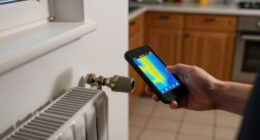
Smartphone thermal cameras turn a compatible phone into a tool for spotting temperature patterns in homes, vehicles, and electronics. I rank the TOPDON TC001 Max as the best overall for its dual-lens design, while the Thermal Master P3 stands out for high-resolution imaging and the Thermal Master P1 for a simpler, more accessible entry point. The main tradeoffs are image detail versus cost and complexity, plus phone compatibility, focus range, and the limits of estimating temperatures from a thermal image. A higher advertised resolution can help reveal smaller patterns, but it does not replace careful measurement or make every camera suitable for close-up work. Read on for the full comparison, buying advice, and picks for different needs.

Get the latest gadgets delivered free with Prime
- Fast, free delivery on millions of items
- Prime Video, Amazon Music and more included
- Member-only deals all year
Complete the kit



Key Takeaways
- The TOPDON TC001 Max leads for versatility: its dual-lens approach distinguishes it from simpler single-view models, though buyers should confirm device compatibility before ordering.
- 512×384-class options form the detail-oriented group: the Thermal Master P3, TOPDON TC001, VEVOR, AMPBANK M256, and VANTRUE POWER TS1 are the clearest candidates for buyers prioritizing image detail.
- Resolution alone does not settle the choice: the Thermal Master P3’s manual macro lens and VEVOR’s listed macro lens address close-up inspection in ways a resolution figure cannot.
- Mid-range resolution models can be a practical compromise: the RISION Magic and REVASRI 320×240 options balance image detail with features such as spot tracking or Super IR labeling.
- USB-C and platform wording deserve careful checking: products listed for iPhone and Android may still require a compatible USB-C port, supported operating system, or specific app.
| AMPBANK M192 Thermal Camera for USB-C iPhone & Android |  | Best for Resolution Flexibility | Thermal resolution: 192×192; super-resolution modes up to 384×384 | Temperature range: -4°F to 842°F (-20°C to 450°C) | Refresh rate: 25 Hz | VIEW LATEST PRICE | See Our Full Breakdown |
| TOPDON TC001 Max Dual-Lens Thermal Camera for USB-C, iPhone, iPad, Android |  | Best for Cross-Device Compatibility | Thermal resolution: 512×384 stated output; 256×192 IR resolution | Refresh rate: 25 Hz | Temperature range: -4°F to 1022°F (-20°C to 550°C) | VIEW LATEST PRICE | See Our Full Breakdown |
| RISION Magic Thermal Camera, 320×240 QuadIR, Hot/Cold Spot Track, Live Temp |  | Best for Diagnostic Controls | Resolution: 320×240 QuadIR | Temperature range: -4°F to 1112°F (-20°C to 600°C) | Refresh rate: 25 Hz | VIEW LATEST PRICE | See Our Full Breakdown |
| GOYOJO Thermal Imaging Camera for iOS and Android Devices, 192×192 IR Resolution |  | Best Compact Pick | IR resolution: 192×192 | Sensor pitch: 12 μm | Temperature range: -4°F to 752°F (-20°C to 400°C) | VIEW LATEST PRICE | See Our Full Breakdown |
| Thermal Master P3 Thermal Camera for iOS & Android, 512×384 X³IR Resolution |  | Best for Detailed Field Inspections | Resolution: 512×384 X³IR | Focus: Manual; 8 mm minimum focusing distance | Temperature range: -4°F to 1112°F (-20°C to 600°C) | VIEW LATEST PRICE | See Our Full Breakdown |
| TOPDON TC001 Thermal Imaging Camera for Android, 512×384 High Resolution |  | Best for Android Detail Work | Resolution: 512×384 | Temperature range: -4°F to 1022°F (-20°C to 550°C) | Accuracy: ±2% | VIEW LATEST PRICE | See Our Full Breakdown |
| REVASRI Thermal Imaging Camera, 320×240 Super IR Resolution |  | Best for Cross-Platform Basics | Resolution: 320×240 | Temperature range: -4°F to 842°F (-20°C to 450°C) | Refresh rate: 25Hz | VIEW LATEST PRICE | See Our Full Breakdown |
| Thermal Master P3 Thermal Camera for iPhone & Android, Manual Macro Lens |  | Best for Macro Inspections | Native thermal resolution: 256×192 | Enhanced output: 512×384 with X³ algorithms | Lens: Manual macro and mid-range focus | VIEW LATEST PRICE | See Our Full Breakdown |
| Thermal Master P1 Thermal Camera for USB-C Devices, 160×120 IR Resolution |  | Best Compact Pick | Native resolution: 160×120 IR | Enhanced resolution: 320×240 | Thermal sensitivity: 0.04°C | VIEW LATEST PRICE | See Our Full Breakdown |
| VEVOR Thermal Imaging Camera for USB-C Android & iOS, 512 x 384 Resolution, Macro Lens, 25Hz, Professional Infrared Thermal Camera for Industrial, Home, PCB Detection |  | Best High-Resolution Cross-Platform Pick | Resolution: 512×384 | Refresh rate: 25Hz | Thermal sensitivity: ≤40mK | VIEW LATEST PRICE | See Our Full Breakdown |
| AMPBANK M256 Thermal Imaging Camera for Android, 512×384 High Resolution |  | Best for Android Detail Work | Resolution: 512×384 | IR resolution: 256×192 | Temperature range: -4°F to 842°F | VIEW LATEST PRICE | See Our Full Breakdown |
| REVASRI Thermal Camera for iPhone and Android, 320×240 Super IR Resolution | 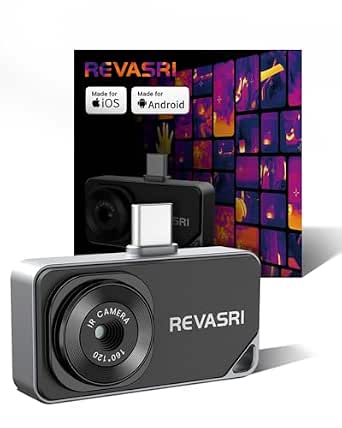 | Best for Cross-Platform Plug-and-Play Use | Resolution: 320×240 | Refresh rate: 25Hz | Thermal sensitivity: 40mK | VIEW LATEST PRICE | See Our Full Breakdown |
| Thermal Master P1 Thermal Camera for USB-C iOS/Android, 320×240 Resolution |  | Best for High-Temperature Inspections | Resolution: 320×240 | Temperature range: -4°F to 1112°F (-20°C to 600°C) | Accuracy: ±3.6°F | VIEW LATEST PRICE | See Our Full Breakdown |
| TOPDON TC002C Duo Thermal Imaging Camera for USB-C Devices | 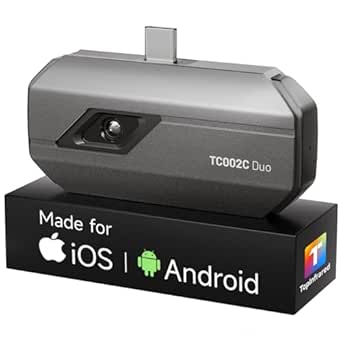 | Best for Mixed USB-C Device Setups | Compatibility: USB-C smartphones and tablets; iOS, Android, and Windows | Thermal resolution: 256×192 | Super-resolution mode: TISR 512×384 | VIEW LATEST PRICE | See Our Full Breakdown |
| VANTRUE POWER TS1 Thermal Camera for Android, 512×384 Resolution, Infrared Imaging, 25Hz, -4°F to 1022°F |  | Best Compact Android Pick | Resolution: 512×384 | Refresh rate: 25Hz | Temperature range: -4°F to 1022°F | VIEW LATEST PRICE | See Our Full Breakdown |
| smartphone thermal camera | Temperature range | Refresh rate | Resolution | Compatibility |
|---|---|---|---|---|
| AMPBANK M192 Thermal Camera fo | -4°F to 842°F (-20°C to 450°C) | 25 Hz | — | iOS, Android, and Windows; not Mac |
| TOPDON TC001 Max Dual-Lens The | -4°F to 1022°F (-20°C to 550°C) | 25 Hz | — | USB-C, Lightning, Android, and Windows devices |
| RISION Magic Thermal Camera | -4°F to 1112°F (-20°C to 600°C) | 25 Hz | 320×240 QuadIR | — |
| GOYOJO Thermal Imaging Camera | -4°F to 752°F (-20°C to 400°C) | — | — | iPhone 15/16/17 and Android devices |
| Thermal Master P3 Thermal Came | -4°F to 1112°F (-20°C to 600°C) | 25 Hz | 512×384 X³IR | — |
| TOPDON TC001 Thermal Imaging C | -4°F to 1022°F (-20°C to 550°C) | 25Hz | 512×384 | Android devices supporting OTG |
| REVASRI Thermal Imaging Camera | -4°F to 842°F (-20°C to 450°C) | 25Hz | 320×240 | iOS, Android, and Windows devices |
| Thermal Master P3 Thermal Came | -4°F to 1112°F (-20°C to 600°C) | — | — | — |
| Thermal Master P1 Thermal Came | -4°F to 1112°F (-20°C to 600°C) | — | — | — |
| VEVOR Thermal Imaging Camera f | -4°F to 1022°F | 25Hz | 512×384 | Android 8.0+ and iOS 12.0+ |
| AMPBANK M256 Thermal Imaging C | -4°F to 842°F | 25Hz | 512×384 | OTG-enabled Android devices and PCs |
| REVASRI Thermal Camera for iPh | -20°C to 450°C | 25Hz | 320×240 | — |
| Thermal Master P1 Thermal Came | -4°F to 1112°F (-20°C to 600°C) | 25Hz | 320×240 | — |
| TOPDON TC002C Duo Thermal Imag | -4°F to 1022°F | 25Hz | — | USB-C smartphones and tablets; iOS, Android, and Windows |
| VANTRUE POWER TS1 Thermal Came | -4°F to 1022°F | 25Hz | 512×384 | — |
More Details on Our Top Picks
AMPBANK M192 Thermal Camera for USB-C iPhone & Android
I’d choose the AMPBANK M192 when the option to upscale thermal images matters more than having the highest native sensor resolution. Its 192×192 base image can be processed up to 384×384, giving DIY inspectors more room to examine saved images than a basic 192×192 camera. The compact 1.05-ounce body is also easy to keep with a phone for checking insulation, HVAC issues, or vehicle components. Compared with the GOYOJO Thermal Imaging Camera, AMPBANK offers super-resolution modes and a higher stated maximum temperature, while GOYOJO lists accuracy and a 50° field of view. The tradeoffs are USB-C-only connectivity and no Mac support; buyers should also expect to install and set up its app. Upscaling adds image detail, but it does not change the native sensor resolution.
Pros:- Super-resolution modes provide output up to 384×384 from a 192×192 thermal sensor.
- Temperature range reaches 842°F for a variety of household and mechanical checks.
- Lightweight 1.05-ounce design is easy to carry with a smartphone.
- Works with USB-C iOS, Android, and Windows devices.
Cons:- USB-C-only connectivity excludes Lightning-only devices without a compatible connection.
- Not compatible with Mac computers.
- App download and setup are required, and upscaling is not native sensor resolution.
Best for: USB-C phone and tablet owners who want flexible image sizing for home, HVAC, or automotive checks.
Not ideal for: Mac users, Lightning-only iPhone owners, and buyers who need a camera with a higher native resolution rather than upscaled modes.
- Thermal resolution:192×192; super-resolution modes up to 384×384
- Temperature range:-4°F to 842°F (-20°C to 450°C)
- Refresh rate:25 Hz
- Sensitivity:40 mK
- Connectivity:USB-C
- Compatibility:iOS, Android, and Windows; not Mac
- Color palettes:10
- Dimensions and weight:2.76 × 1.73 × 0.55 in; 1.05 oz
Our verdict“I’d pick the AMPBANK M192 for portable USB-C inspections where flexible upscaled image output matters more than native resolution.”
TOPDON TC001 Max Dual-Lens Thermal Camera for USB-C, iPhone, iPad, Android
The TOPDON TC001 Max is the most adaptable pick here for buyers switching between phone types: it supports USB-C and offers Lightning adapters, with Windows compatibility also listed. Its 512×384 thermal resolution gives it a higher stated output than the AMPBANK M192, while a 25 Hz refresh rate suits live sweeps across walls, wiring, and machinery. The product data also lists a 256×192 IR resolution, so I would distinguish that sensor figure from the higher resolution claimed through TISR processing. Compared with the Thermal Master P3, the TC001 Max is a compelling cross-device alternative, but the P3 specifies manual focus, a broader temperature ceiling, and longer-use details. The TOPDON’s adapters add flexibility but can be easy to misplace, and it has no wireless connection for users who want a cable-free setup.
Pros:- USB-C and Lightning adapter support broadens phone compatibility.
- 512×384 stated thermal imaging output with TISR processing.
- 25 Hz refresh rate supports live inspection sweeps.
- Compact 33 g body is suited to portable field use.
Cons:- Adapters are required for some devices and add setup and storage hassle.
- No wireless connectivity option is listed.
- The stated 256×192 IR resolution is lower than the 512×384 processed thermal output.
Best for: Households or technicians who need one phone-connected thermal camera to work across USB-C and Lightning devices, plus Windows.
Not ideal for: Buyers who want wireless operation, a simple single-connector setup, or a clearly specified higher native IR resolution.
- Thermal resolution:512×384 stated output; 256×192 IR resolution
- Refresh rate:25 Hz
- Temperature range:-4°F to 1022°F (-20°C to 550°C)
- Sensitivity:40 mK NETD
- Connectivity:USB-C; Lightning adapters
- Compatibility:USB-C, Lightning, Android, and Windows devices
- Size and weight:7.1 × 4.2 cm; 33 g
Our verdict“I’d choose the TC001 Max when compatibility across USB-C and Lightning phones matters more than a wireless setup or clearly higher native IR resolution.”
RISION Magic Thermal Camera, 320×240 QuadIR, Hot/Cold Spot Track, Live Temp
I’d put the RISION Magic on the shortlist for buyers who want more than a thermal picture: its listed tools include hot/cold spot tracking, live temperature readings, and emissivity control. Those controls can make comparisons between surfaces more useful during electrical, automotive, or home inspections. The 320×240 QuadIR resolution sits between the AMPBANK M192’s 192×192 sensor and the much higher stated output of the Thermal Master P3, while its 600°C upper limit matches the P3’s listed range. RISION also lists a 52° × 39° view angle, useful for scanning a broader area at once. The tradeoffs are USB-C-only connectivity, no Mac support, and app registration for full functionality. Its diagnostic features may be more than casual users need, and the stated ±3.6°F accuracy deserves attention when temperature precision is central.
Pros:- Hot/cold spot tracking and live temperature readings add useful diagnostic context.
- Emissivity control supports comparisons across different surface materials.
- 600°C maximum range suits inspections involving hotter components.
- 52° × 39° view angle covers a broad scene.
Cons:- USB-C-only connection and no Mac support limit device choices.
- Full functionality requires app registration.
- Stated accuracy is ±3.6°F, which may not suit precision temperature work.
Best for: DIY troubleshooters and maintenance workers who want spot tracking and emissivity adjustment for comparative inspections.
Not ideal for: Mac users, casual buyers who only need simple heat spotting, and anyone requiring tighter stated temperature accuracy.
- Resolution:320×240 QuadIR
- Temperature range:-4°F to 1112°F (-20°C to 600°C)
- Refresh rate:25 Hz
- Accuracy:±3.6°F
- View angle:52° × 39°
- Emissivity control:Yes
- Connectivity and compatibility:USB-C; iOS, Android, and Windows; not Mac
Our verdict“I’d choose RISION Magic for USB-C users who value diagnostic controls and broad temperature coverage over beginner-friendly simplicity.”
GOYOJO Thermal Imaging Camera for iOS and Android Devices, 192×192 IR Resolution
The GOYOJO Thermal Imaging Camera is the smallest and lightest option in this group by its listed dimensions: it weighs just 0.48 ounces and measures 1.77 × 0.43 × 1.34 inches. That makes it appealing for quick checks around a home or workshop when carrying a larger accessory feels like overkill. Its 192×192 IR resolution is in the same base-resolution class as the AMPBANK M192, but GOYOJO lists ±2% accuracy and a 50° field of view; AMPBANK, by contrast, offers super-resolution modes and a higher maximum temperature. GOYOJO’s 400°C ceiling should cover many routine leak, insulation, and electrical checks, though not every hotter industrial task. Compatibility is described for recent iPhones and Android devices, so I’d verify the exact phone and connector before buying. App details are limited.
Pros:- Very light 0.48-ounce body is easy to carry with a phone.
- 192×192 IR resolution supports routine thermal inspections.
- 50° field of view helps scan wider areas without constant repositioning.
- Listed ±2% accuracy provides a stated measurement tolerance.
Cons:- Compatibility is limited to specified newer iPhones and Android devices.
- 400°C maximum temperature is lower than the AMPBANK M192 and several alternatives.
- The product data gives few details about app features or power requirements.
Best for: Phone owners who want a very light accessory for occasional home, plumbing, HVAC, or electrical checks.
Not ideal for: Users with older or unlisted phone models, buyers needing detailed app tools, or those inspecting temperatures above 752°F.
- IR resolution:192×192
- Sensor pitch:12 μm
- Temperature range:-4°F to 752°F (-20°C to 400°C)
- Accuracy:±2%
- Field of view:50°
- Dimensions and weight:1.77 × 0.43 × 1.34 in; 0.48 oz
- Compatibility:iPhone 15/16/17 and Android devices
Our verdict“I’d choose GOYOJO for occasional smartphone inspections where minimal weight matters more than advanced app controls or a high temperature ceiling.”
Thermal Master P3 Thermal Camera for iOS & Android, 512×384 X³IR Resolution
For buyers who want fine image detail and control over close-up focus, the Thermal Master P3 is the strongest specialist pick in this set. Its listed 512×384 X³IR resolution, manual focus down to 8 mm, and 15× digital zoom give inspectors more ways to examine small components than the RISION Magic’s 320×240 QuadIR camera. The P3 also reaches 600°C and lists high/low temperature alerts, picture-in-picture, and up to eight hours of operation, making it better suited to longer electronics or HVAC sessions than a basic pocket imager. The tradeoff is manual focus: it allows close inspection but can slow down scans of moving targets. It also depends on a phone for operation, and buyers should confirm their connector or adapter needs before a job.
Pros:- 512×384 X³IR output is suited to detailed inspection images.
- Manual focus supports close targets from an 8 mm minimum distance.
- Up to 8 hours of listed operation supports longer field sessions.
- Temperature alerts, picture-in-picture, and 15× digital zoom add inspection tools.
Cons:- Manual focus can slow inspections, especially when targets move.
- Requires a connected smartphone and cannot operate as a standalone camera.
- Lightning use requires an adapter, and a Windows extension cable is a separate connection consideration.
Best for: Electronics, HVAC, and electrical inspectors who need close-focus detail, zoom, and extended phone-powered field sessions.
Not ideal for: Buyers who want a standalone camera, a simple fixed-focus workflow, or fast scans of moving subjects.
- Resolution:512×384 X³IR
- Focus:Manual; 8 mm minimum focusing distance
- Temperature range:-4°F to 1112°F (-20°C to 600°C)
- Accuracy:±3.6°F (±2°C)
- Refresh rate:25 Hz
- Operation and power:Phone-powered; 0.3 W; up to 5–8 hours
- Connectivity:USB-C; Lightning adapter; Windows extension cable
- Dimensions and weight:2.32 × 1.06 × 0.68 in; 0.93 oz
- Additional tools:15× digital zoom, 12 color palettes, high/low temperature alerts, picture-in-picture
Our verdict“I’d pick the Thermal Master P3 for phone-based field work that calls for close-focus detail and extended operation, provided manual focus suits the inspection pace.”
TOPDON TC001 Thermal Imaging Camera for Android, 512×384 High Resolution
The TOPDON TC001 stands out for Android users who want a high-resolution thermal image in a particularly small attachment. Its 512×384 resolution gives more image detail than the REVASRI’s 320×240 sensor, which can help when tracing heat patterns across wiring, building surfaces, or equipment. It can also measure up to nine areas at once, making comparisons across a scene more useful than relying on a single spot reading. The tradeoff is platform reach: unlike the Thermal Master P3 and VEVOR camera, this model is limited to compatible Android devices with OTG support and does not work with iPhone. At just one ounce, it is easy to carry, but buyers who need iOS support or macro focus should choose another option.
Pros:- 512×384 resolution offers more image detail than the 320×240 REVASRI.
- Can measure temperatures in up to nine areas simultaneously.
- Compact one-ounce design is easy to carry with a phone.
- 25Hz refresh rate supports live thermal viewing.
Cons:- Works only with Android devices that support OTG.
- No iPhone or iOS compatibility.
- Its 40mK sensitivity is less suited to subtle temperature differences than the Thermal Master P3’s 35mK rating.
Best for: Android users with OTG-compatible phones who want detailed thermal images and multiple area readings for home or equipment checks.
Not ideal for: iPhone users and inspectors who need macro focusing, since this camera is Android-only and does not list a macro lens.
- Resolution:512×384
- Temperature range:-4°F to 1022°F (-20°C to 550°C)
- Accuracy:±2%
- Refresh rate:25Hz
- Thermal sensitivity:40mK NETD
- Compatibility:Android devices supporting OTG
- Dimensions:2.8 × 1.65 × 0.55 inches
- Weight:1 ounce (30 grams)
Our verdict“Choose the TC001 for high-resolution, multi-area thermal checks on a compatible Android phone, but skip it if you need iPhone support.”
REVASRI Thermal Imaging Camera, 320×240 Super IR Resolution
The REVASRI earns its place for buyers who need one thermal camera to work across iOS, Android, and Windows devices. Its 320×240 imaging sits below the 512×384 TOPDON TC001 and VEVOR cameras for fine image detail, but it brings useful inspection controls: temperature alarms, tracking, and zoom can help locate and monitor a hot or cold area without stepping up to a higher-resolution model. Nine color modes give users several ways to read a scene, while the 25Hz refresh rate supports live viewing. The main compromise is setup: it requires an app, and operation depends on a compatible connected device. I’d favor it over the Android-only TC001 for mixed-device households, but not for buyers prioritizing maximum resolution or specialized close-up work.
Pros:- Supports iOS, Android, and Windows devices via USB-C.
- Temperature alarms and tracking help identify and follow hot or cold spots.
- Nine color modes and zoom provide useful ways to inspect scenes.
- 25Hz refresh rate supports live thermal imaging.
Cons:- 320×240 resolution is lower than the TOPDON TC001 and VEVOR cameras’ 512×384.
- Requires an app download and setup before use.
- Needs a compatible connected device for operation.
Best for: Home inspectors, HVAC technicians, and mixed-device households that want a USB-C thermal camera with alarms and tracking features.
Not ideal for: Buyers who need the finest image detail for small components or want a camera that operates without a phone or computer.
- Resolution:320×240
- Temperature range:-4°F to 842°F (-20°C to 450°C)
- Refresh rate:25Hz
- Thermal sensitivity:40mK
- Color modes:9
- Connectivity:USB-C
- Power source:Connected device
- Compatibility:iOS, Android, and Windows devices
Our verdict“Pick the REVASRI if device compatibility and practical inspection tools matter more than maximum thermal resolution.”
Thermal Master P3 Thermal Camera for iPhone & Android, Manual Macro Lens
The Thermal Master P3 is the specialist pick for inspecting small targets, where its manual macro focus can make component-level heat patterns easier to examine than with the fixed-focus TOPDON TC001. Its listed native resolution is 256×192, with 512×384 output using X³ algorithms, so buyers should distinguish enhanced output from the VEVOR’s stated 512×384 resolution. The P3’s 35mK sensitivity is also the strongest listed here for detecting small temperature differences, and its 1112°F upper range exceeds the TC001’s. It connects to iPhone, Android, or Windows devices and adds IP54 protection, though it still relies on the connected device and manual focus can slow quick inspections. I’d choose it for detailed close work, not for effortless point-and-scan use.
Pros:- Manual macro focus supports close inspection of small components.
- 35mK NETD is the lowest listed sensitivity among these five products.
- Compatible with iPhone 15+, USB-C Android devices, and Windows.
- IP54 dust and water resistance and a 1-meter drop rating suit field use.
Cons:- Native thermal resolution is 256×192; 512×384 output uses X³ algorithms.
- Manual focus can slow inspections when moving between targets.
- Phone-powered operation is listed at 5–8 hours, with no standalone display.
Best for: Electronics repairers and inspectors who need to focus on small components and detect subtle heat differences across compatible phones or computers.
Not ideal for: People who need fast, one-handed scanning or a standalone thermal viewer, since focus is manual and the camera requires a connected device.
- Native thermal resolution:256×192
- Enhanced output:512×384 with X³ algorithms
- Lens:Manual macro and mid-range focus
- Thermal sensitivity:35mK NETD
- Temperature range:-4°F to 1112°F (-20°C to 600°C)
- Accuracy:±2%
- Frame rate:25Hz
- Protection:IP54; 1-meter drop test
Our verdict“Choose the P3 for close-up component work and subtle heat differences, but favor the VEVOR for a stated 512×384 sensor and simpler fixed-focus scanning.”
Thermal Master P1 Thermal Camera for USB-C Devices, 160×120 IR Resolution
The Thermal Master P1 is the smallest and lightest option in this group, at 0.6 ounces and 2.36 inches long. That makes it a practical attachment to keep with a USB-C phone for occasional household, electrical, or automotive checks. Its 160×120 native sensor is the clear compromise: software enhancement to 320×240 does not give it the same stated sensor resolution as the REVASRI, much less the TOPDON TC001 or VEVOR. The broad 52°×39° field of view helps cover more of a scene, and the included extension cable adds placement flexibility. It also reaches 1112°F, but the listed accuracy is ±2°C / ±3.6°F. Compared with the P3, it gives up macro focus and finer sensitivity in favor of a smaller, lighter form.
Pros:- At 0.6 ounces, it is the lightest camera in this group.
- 52°×39° field of view covers a broad area.
- USB-C connection draws power from the device, so no separate batteries are needed.
- Includes a 19-inch extension cable and lists a 1-meter drop protection rating.
Cons:- 160×120 native resolution is lower than the REVASRI’s 320×240 and the 512×384 options.
- ±2°C / ±3.6°F stated accuracy is less precise than the percentage-based ratings listed for some alternatives.
- Requires a compatible USB-C device to operate.
Best for: USB-C phone owners who want a pocketable thermal camera for occasional broad-area checks and do not need high native resolution.
Not ideal for: Inspectors analyzing tiny components or subtle temperature differences, since its native resolution is 160×120 and it lacks the P3’s macro lens.
- Native resolution:160×120 IR
- Enhanced resolution:320×240
- Thermal sensitivity:0.04°C
- Temperature range:-4°F to 1112°F (-20°C to 600°C)
- Accuracy:±2°C / ±3.6°F
- Field of view:52° × 39°
- Connectivity and power:USB-C; powered by connected device
- Dimensions and weight:2.36 × 1.18 × 0.39 inches; 0.6 ounces
Our verdict“Pick the P1 if minimal size and broad scans matter more than detailed imagery or close-up component analysis.”
VEVOR Thermal Imaging Camera for USB-C Android & iOS, 512 x 384 Resolution, Macro Lens, 25Hz, Professional Infrared Thermal Camera for Industrial, Home, PCB Detection
The VEVOR thermal camera is the strongest fit for buyers who want 512×384 resolution without the Android-only restriction of the TOPDON TC001. Its stated support for Android 8.0+ and iOS 12.0+ gives it broader phone compatibility, while the macro lens is useful for examining small objects such as PCB components. The 25Hz refresh rate suits live inspections, and the temperature range reaches 1022°F. Compared with the Thermal Master P3, VEVOR lists 512×384 as its resolution rather than a lower native resolution with algorithm-enhanced output; however, the P3 provides a stated 35mK sensitivity and IP54 protection, neither of which is specified here. VEVOR still depends on an app and connected device, so it is less appealing to anyone seeking a standalone tool.
Pros:- 512×384 resolution offers detailed thermal imagery.
- Supports Android 8.0+ and iOS 12.0+ through USB-C.
- Macro lens is suited to small components and PCB inspection.
- 25Hz refresh rate and temperature alarms support active inspection work.
Cons:- Requires a compatible device and app setup via QR code.
- No built-in display, so viewing depends on the connected phone.
- Thermal sensitivity and accuracy are not specified in the provided product data.
Best for: iPhone and Android users who need high-resolution thermal imaging plus macro inspection for electronics, home systems, or industrial checks.
Not ideal for: Buyers who want a standalone display, documented dust and water protection, or plug-and-play use without app setup.
- Resolution:512×384
- Refresh rate:25Hz
- Thermal sensitivity:≤40mK
- Temperature range:-4°F to 1022°F
- Compatibility:Android 8.0+ and iOS 12.0+
- Lens:Macro lens
- Dimensions:1.97 × 0.71 × 1.5 inches
- Weight:1.12 ounces
Our verdict“Choose VEVOR for high-resolution, macro-capable imaging across supported iOS and Android devices, but look elsewhere if standalone operation or published sensitivity figures matter.”
AMPBANK M256 Thermal Imaging Camera for Android, 512×384 High Resolution
The AMPBANK M256 suits Android users who want detailed thermal images without carrying a separate powered camera. Its listed 512×384 resolution and 25Hz refresh rate support a responsive view for checking building materials, equipment, or DIY projects. It draws power from the connected device, so there is no camera battery to charge; at just 30g, it is easy to keep in a tool bag. Compared with the TOPDON TC002C Duo, the M256 is more restrictive because it works with OTG-enabled Android devices and PCs rather than offering the Duo’s wider USB-C device compatibility. Its sub-40mK sensitivity, alerts, and palette options provide useful inspection tools, but buyers new to thermal imaging may need time to learn the software. Skip it if you use an iPhone or want a standalone display.
Pros:- Listed 512×384 resolution supports detailed thermal viewing.
- 25Hz refresh rate provides a responsive image.
- Draws power from the connected device, so it needs no separate battery.
- Compact 30g design with multiple palettes and smart alerts.
Cons:- Does not support iOS.
- Requires an OTG-enabled Android device for phone use.
- Thermal software features may take practice for first-time users.
Best for: Android users with OTG support who want a lightweight phone-connected camera for home maintenance, DIY, or routine equipment checks.
Not ideal for: iPhone owners and people who need a camera that works across multiple mobile operating systems; this model is limited to compatible Android devices and PCs.
- Resolution:512×384
- IR resolution:256×192
- Temperature range:-4°F to 842°F
- Thermal sensitivity:<40mK
- Refresh rate:25Hz
- Weight:0.07lb (30g)
- Power:USB-C; draws 0.35W from the connected device
- Compatibility:OTG-enabled Android devices and PCs
Our verdict“Choose the AMPBANK M256 if you want a compact, device-powered thermal camera for a compatible Android phone and do not need iPhone support.”
REVASRI Thermal Camera for iPhone and Android, 320×240 Super IR Resolution
The REVASRI is a flexible pick for households or technicians who switch between iPhone, Android, and Windows devices. Its 320×240 resolution, nine color modes, temperature alarms, zoom, and picture-in-picture offer more ways to inspect a hot spot than a bare-bones phone imager. It is also listed with one-meter drop protection and waterproofing, practical features for work around vehicles or utility areas. Compared with the Android-only AMPBANK M256, REVASRI gives up the M256’s listed 512×384 resolution in favor of broader operating-system compatibility. The tradeoff is reliance on a dedicated app, and buyers should check that their device’s USB-C connection is supported before ordering. Its stated temperature range also makes it a less suitable choice for applications exceeding 450°C.
Pros:- Works with supported iOS, Android, and Windows devices through USB-C.
- 320×240 resolution with nine color modes, zoom, alarms, and picture-in-picture.
- Device-powered operation avoids charging a separate camera battery.
- Listed waterproofing and one-meter drop protection suit field use.
Cons:- Requires a dedicated app to operate.
- Maximum temperature is limited to 450°C.
- USB-C connection requirements may exclude devices without a compatible port.
Best for: Home inspectors, DIYers, and vehicle owners who need one phone-connected imager that can work across supported iOS, Android, and Windows devices.
Not ideal for: Users inspecting very high-temperature equipment above 450°C or buyers who want the higher listed resolution of the AMPBANK M256.
- Resolution:320×240
- Refresh rate:25Hz
- Thermal sensitivity:40mK
- Temperature range:-20°C to 450°C
- Color modes:9
- Connectivity:USB-C
- Power:Powered by the connected device
- Drop protection:1 meter
- Length:10.2cm
Our verdict“Pick REVASRI if cross-platform compatibility and inspection tools matter more to you than the AMPBANK M256’s higher listed resolution.”
Thermal Master P1 Thermal Camera for USB-C iOS/Android, 320×240 Resolution
For buyers who need to read hotter targets, the Thermal Master P1 stands apart with a stated upper limit of 1112°F (600°C). Its 320×240 imaging and 25Hz refresh rate make it a practical phone-connected tool for HVAC, electrical, and automotive checks, while the listed ±3.6°F accuracy gives readings a clear reference point. Compared with the REVASRI, the P1 reaches a higher maximum temperature, but REVASRI lists broader platform support that includes Windows. The P1 is notably small at 17g and draws just 0.32W, though its listed 5–8-hour battery life and USB-C compatibility are details to verify against the exact version and setup. iPhones with Lightning ports need a separately sold adapter, and getting the most from its settings may take app familiarity.
Pros:- Temperature range extends to 600°C for hotter inspection targets.
- 320×240 resolution and 25Hz refresh rate support detailed, responsive viewing.
- Very light at 17g and draws 0.32W.
- Listed accuracy is ±3.6°F.
Cons:- Lightning-port iPhones require a separately sold adapter.
- USB-C compatibility may rule out older devices.
- App settings may take time to learn.
Best for: HVAC technicians, automotive troubleshooters, and maintenance workers who need a compact imager with a temperature ceiling higher than 450°C.
Not ideal for: Owners of Lightning-port iPhones who do not want to buy an adapter, or buyers seeking the widest device compatibility in the group.
- Resolution:320×240
- Temperature range:-4°F to 1112°F (-20°C to 600°C)
- Accuracy:±3.6°F
- Refresh rate:25Hz
- Power consumption:0.32W
- Dimensions:2.32×1.06×0.68 inches
- Weight:0.62oz (17g)
- App compatibility:Thermal Master app
- Listed battery life:5–8 hours
Our verdict“Choose the Thermal Master P1 for compact inspections that can exceed the REVASRI’s 450°C limit, provided your device has a compatible connection.”
TOPDON TC002C Duo Thermal Imaging Camera for USB-C Devices
The TOPDON TC002C Duo is the lineup’s adaptable choice for people who want to move a thermal camera between supported USB-C phones and tablets. Its compatibility listing spans iOS, Android, and Windows, while a 25Hz feed and a temperature range up to 1022°F suit general building, vehicle, and equipment checks. The camera’s 256×192 thermal resolution is paired with a listed TISR 512×384 mode, giving buyers a higher-resolution processing option without changing the native sensor figure. Compared with the Android-focused VANTRUE POWER TS1, the TC002C Duo offers wider stated platform support, but its listed accuracy is ±2°C or 2%, and control requires the TopInfrared app. The USB-C requirement still excludes Lightning-only devices, and Mac compatibility is specifically not supported.
Pros:- Listed support for USB-C iOS, Android, and Windows devices.
- TISR mode provides 512×384 super-resolution from a 256×192 thermal resolution.
- Temperature range reaches 1022°F, with 25Hz refresh.
- Compact 30g body supports portable inspections.
Cons:- Not compatible with Mac devices.
- Requires the TopInfrared app for control.
- USB-C-only connectivity excludes Lightning-only devices.
Best for: Inspectors and technicians who want to share one thermal camera across compatible USB-C iOS, Android, or Windows phones and tablets.
Not ideal for: Mac users, Lightning-only iPhone owners, or buyers who want a thermal camera with a native 512×384 sensor rather than a TISR mode.
- Compatibility:USB-C smartphones and tablets; iOS, Android, and Windows
- Thermal resolution:256×192
- Super-resolution mode:TISR 512×384
- Refresh rate:25Hz
- Temperature range:-4°F to 1022°F
- Thermal sensitivity:40mK
- Error margin:±2°C or 2%
- Measurement distance:Up to 16.4ft (5m)
- Weight:1.1oz (30g)
Our verdict“Choose the TC002C Duo if you need a portable imager for several supported USB-C platforms and can work within its app and compatibility limits.”
VANTRUE POWER TS1 Thermal Camera for Android, 512×384 Resolution, Infrared Imaging, 25Hz, -4°F to 1022°F
The VANTRUE POWER TS1 packs a stated 512×384 resolution and a temperature range reaching 1022°F into a particularly small plug-in camera. That combination makes it appealing for Android users who want detailed views of electrical components, vehicle parts, or heat loss without carrying a larger inspection instrument. Its 25Hz refresh rate supports live scanning, and the 40° horizontal field of view covers a useful area at once. Compared with the AMPBANK M256, the TS1 reaches a higher stated maximum temperature, while both are Android-oriented and draw operating power from the connected device. The TS1 is less flexible than the TOPDON TC002C Duo for mixed-device households, since it requires a compatible Android device. It also lacks a visible-light camera, so thermal images alone may not identify what a hot spot belongs to.
Pros:- Listed 512×384 resolution supports detailed thermal imaging.
- Temperature range reaches 1022°F.
- 25Hz refresh rate and 40° horizontal field of view suit live inspection.
- Very small body weighs 0.02lb and draws 0.33W.
Cons:- Requires a compatible Android device or tablet.
- No visible-light camera is listed for context alongside thermal images.
- Operating time depends on the connected device’s battery.
Best for: Android users who need a very small thermal imager for vehicle maintenance, electrical checks, or home inspection at higher temperatures.
Not ideal for: iPhone users, people who need a visible-light reference image, or buyers who want one camera shared across several operating systems.
- Resolution:512×384
- Refresh rate:25Hz
- Temperature range:-4°F to 1022°F
- Detector pixel size:12μm
- Field of view:40° horizontal × 30.2° vertical
- Dimensions:1.22×0.82×0.38 inches
- Weight:0.02lb
- Power consumption:0.33W
Our verdict“Choose the VANTRUE POWER TS1 for a tiny Android-only camera with a high stated temperature ceiling, but skip it if you need cross-platform use or visible-light context.”
How We Picked
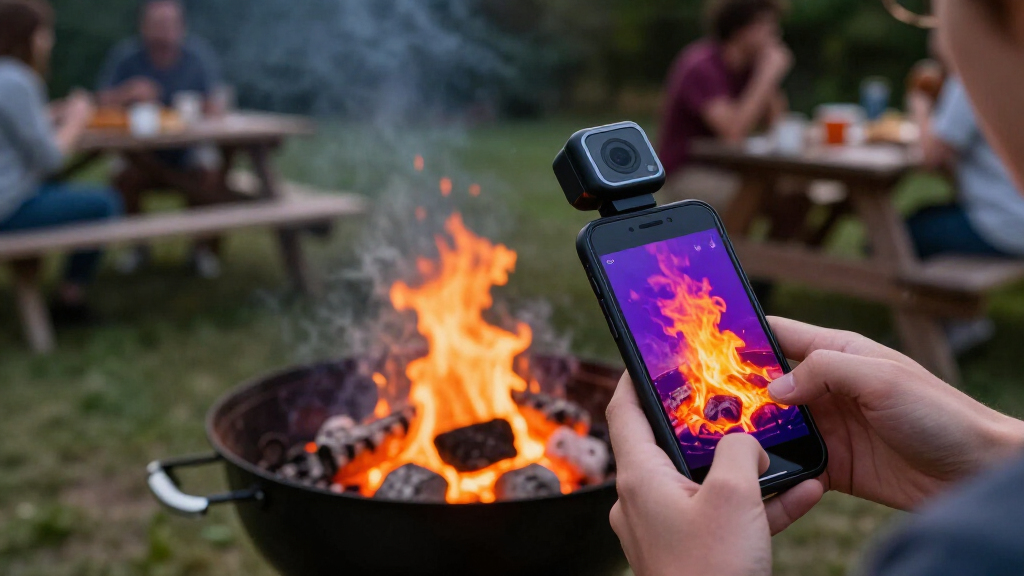
I compared the 15 listed smartphone thermal cameras using buyer-facing factors: stated infrared resolution, compatibility claims, lens and focus features, temperature-reading tools, frame-rate information where provided, and the likely fit for home, HVAC, electrical, automotive, or electronics inspection. I gave more weight to useful combinations than to a single headline specification. For example, high resolution can support finer image detail, while a macro lens can matter more when examining a small circuit board.
The order favors options with a stronger balance of capability and practical flexibility, then separates specialized or simpler choices by their likely audience. The TOPDON TC001 Max ranks first for its dual-lens design; high-resolution models follow when their specifications suit detail-focused work. Models with less stated resolution or fewer distinguishing features rank lower, but can still make sense for occasional checks or narrower tasks. Product names and feature claims are taken from the supplied listings; buyers should verify current phone, connector, and app support before purchase.
Factors to Consider When Choosing Smartphone Thermal Cameras
Choosing a phone thermal camera is less about finding the biggest number and more about matching the camera to the distance, target size, and phone you plan to use. I would settle compatibility and measurement needs before comparing resolution claims.
Match Resolution to the Size of the Target
Resolution affects how much spatial detail appears in the thermal image, but it does not directly promise a particular measurement accuracy. A broad wall, pipe, or engine bay may be readable with less resolution than a small connector or component. Before paying for a higher-resolution model, ask whether you need to locate a general hot or cold area or distinguish several nearby parts. Also check the camera’s field of view and stated focus range, since those shape how much of a scene fits in the image. A common mistake is treating a sharper-looking image as proof that the temperature reading is more precise. For tiny targets, prioritize close-focus or macro capability alongside resolution.
Check Phone, Port, and App Support Before Buying
A camera that plugs into USB-C is not automatically compatible with every USB-C phone or tablet. Operating-system support, connector orientation, app availability, and device permissions can all affect whether it works as expected. iPhone listings deserve particular scrutiny because connector and compatibility requirements vary by device generation. Check the maker’s current supported-device list and app details rather than relying only on a broad “iOS and Android” label. If you use a protective case, confirm that the connector can reach the port or that an approved extension is supported. Compatibility is a better first filter than image specifications because an unsupported camera cannot serve its intended role.
Choose Lens and Focus Features for Your Working Distance
Thermal cameras are not interchangeable across close-up electronics work and room-scale inspection. A macro lens can help fill the image with a small circuit board, while a wider scene view may be more convenient for checking insulation or scanning a room. Manual focus can give the user more control at a chosen distance, but it adds a step and may feel less convenient for quick checks. Consider the smallest target you expect to inspect and how close you can safely get to it. Buyers often overlook focus, then find that a high-resolution image still fails to separate nearby details. Choose lens features around real working distances, not just the most advanced-sounding listing.
Understand What Temperature Readings Can and Cannot Tell You
Thermal cameras show infrared patterns and estimate surface temperature; they do not see through walls or directly reveal the condition inside an object. Reflective surfaces, emissivity settings, distance, and environmental conditions can affect readings. Hot and cold spot tracking can speed up scanning, but a marked spot is still a prompt for investigation rather than a diagnosis. For electrical or HVAC work, use thermal findings alongside safe inspection practices and appropriate test equipment. If you need repeatable measurements, check whether the app offers adjustable emissivity, temperature ranges, and saved or exportable images. Avoid choosing on the basis of a wide temperature range alone, since range does not describe measurement accuracy.
Prioritize the Features You Will Use Repeatedly
Features such as a 25Hz frame rate, image capture tools, tracking, and macro lenses matter only when they support the task at hand. A higher frame rate can make it easier to follow changing heat patterns or scan moving equipment, while occasional household checks may not call for it. Spot tracking can reduce the effort of finding the hottest or coldest point, but app controls and image handling affect everyday usability too. Think about whether you need to document findings, compare images over time, or share reports. Paying for unused features adds complexity without improving the job. Make a short list of recurring tasks before deciding which extras merit attention.
Balance Portability Against a Dedicated Tool
A phone-connected camera can be easier to carry than a separate handheld imager, especially for occasional inspections. It also depends on the phone for display, power, software, and often image storage, so the combined setup may be less convenient in gloves, awkward spaces, or harsh conditions. Check the camera’s physical connector design and how securely it sits in your phone, particularly if you work overhead or around machinery. A compact entry-level model may be enough for household troubleshooting, while frequent professional work can justify a more capable sensor and a dependable workflow. Do not assume that attaching a camera to a phone makes the setup as rugged or self-contained as dedicated equipment.
Frequently Asked Questions
Will any USB-C smartphone work with these thermal cameras?
No. A USB-C connector is only one part of compatibility; the phone’s operating system, hardware support, and the camera maker’s app requirements also matter. Some listings name both iPhone and Android devices, but that does not guarantee support for every model or operating-system version. I would check the manufacturer’s supported-device list and app requirements for the exact phone before ordering. Also account for a thick case or port layout that could block the camera from seating properly.
Should I choose a 512×384 camera over a 320×240 model?
Choose the higher-resolution class when you regularly need to distinguish smaller or closely spaced thermal features. For broad scans of walls, pipes, or larger equipment, a 320×240 option may provide enough detail for locating areas that need further investigation. Resolution does not by itself establish accuracy, focus quality, or ease of use, so compare those factors too. If your work involves tiny targets, a macro lens or close-focus capability may matter as much as moving up in resolution. Match the sensor to the target rather than buying the largest specification by default.
Can I use a smartphone thermal camera to find a water leak behind a wall?
A thermal camera can help identify surface temperature patterns that may be consistent with moisture or a leak, but it cannot see water directly through a wall. Insulation, airflow, sunlight, and other temperature differences can produce similar patterns. Use the image to guide further checking, not as proof of a leak or its exact location. For consequential repairs, confirm findings with suitable moisture-detection methods or a qualified professional. Models listing water-leak detection are still reading surface infrared patterns.
Is a macro-lens model necessary for inspecting circuit boards?
It can be helpful when the heat source is a small component and you need that area to occupy more of the image. The Thermal Master P3 manual macro-lens version and VEVOR model list macro-focused features, making them relevant candidates for close-up electronics work. A macro lens does not guarantee that every component will be measurable; focus distance, resolution, and the component’s size still matter. For general checks on larger electronics, a standard lens may be simpler. Confirm the actual close-focus range and intended working distance before choosing a model.
When should I buy a dedicated thermal imager instead of a phone attachment?
A phone attachment is a practical fit when you want a compact tool for periodic inspections and already carry a compatible phone. A dedicated imager may suit frequent fieldwork better if you need a self-contained device, rugged handling, or a workflow that does not depend on phone compatibility and app support. Think about gloves, battery management, connector exposure, and how you will save and share reports. If the camera supports safety-critical decisions, confirm that its measurement specifications and intended use meet the job’s requirements. The convenience of a phone display does not make an attachment a substitute for every professional instrument.
Conclusion
For most buyers seeking a balanced phone-connected option, I would start with the TOPDON TC001 Max as best overall, especially if its dual-lens design suits the work and the phone is supported. For best premium detail, compare the Thermal Master P3 and TOPDON TC001, both listed at 512×384-class resolution; choose the P3 macro version when close-up inspection is central. The best value direction is a simpler model such as the Thermal Master P1, particularly for occasional household checks, while the RISION Magic is a stronger fit for buyers who want spot tracking. For beginners, favor the camera with the clearest phone support and easiest app workflow over the most complex specification list. For circuit boards, look closely at the macro-equipped P3 or VEVOR; for general home or HVAC scans, prioritize compatibility and usable scene coverage. Verify the exact device and app support before making the final choice.
Halloween Picks
halloween
As an affiliate, we earn on qualifying purchases.