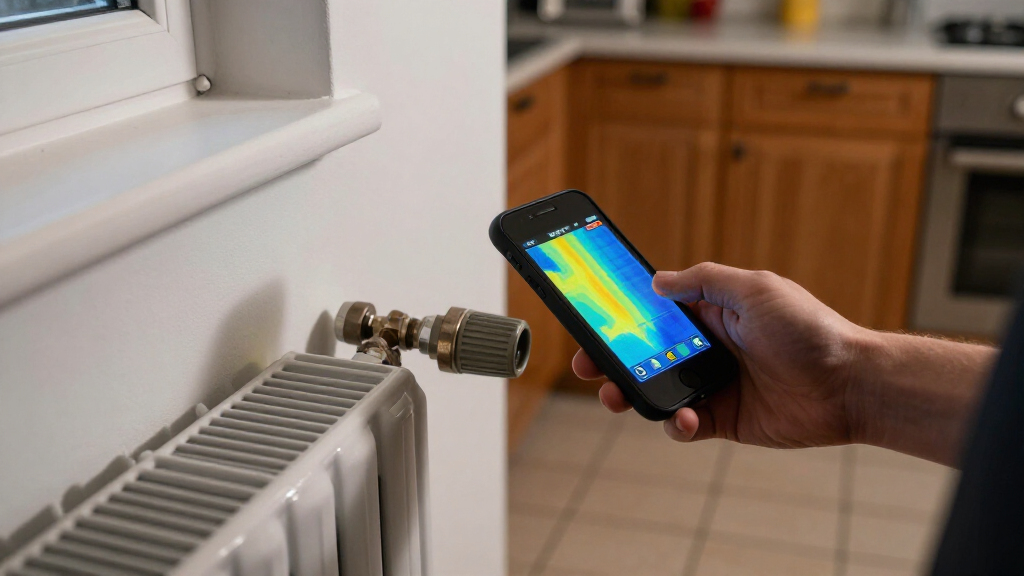
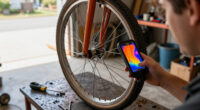
Smartphone thermal imagers turn a compatible phone into a tool for spotting heat patterns, checking insulation, or troubleshooting equipment. My best overall pick is the TOPDON TC002 for iOS, which pairs high-resolution thermal imaging with recording features; the TOPDON TC001 Mini stands out for its 384 × 384 resolution, while the Fluke iSee TC01A is a strong Android option with a 25 Hz refresh rate. The main tradeoffs are phone compatibility, image detail, refresh rate, temperature range, and ease of use, and the most impressive specification is not always the most useful one for a particular task. Read on for the full breakdown of 15 options and practical guidance on choosing a camera that fits your phone and work.

Get the latest gadgets delivered free with Prime
- Fast, free delivery on millions of items
- Prime Video, Amazon Music and more included
- Member-only deals all year
Complete the kit



Key Takeaways
- The TOPDON TC002 for iOS leads on detail. Its 256 × 192 IR resolution and 512 × 384 Super Resolution make it the standout choice for iPhone and iPad users who prioritize image clarity and recording.
- The TOPDON TC001 Mini makes a strong resolution case. Its listed 384 × 384 resolution gives detail-focused buyers an alternative, but check device and app compatibility before choosing it over the iOS-specific TC002.
- Fluke’s 25 Hz models target moving scenes. The Android TC01A and iOS TC01C are the clearest picks for buyers who value a faster refresh rate and need the version that matches their phone.
- Resolution varies widely across the lineup. The 160 × 120 Thermal Master P1 is a simpler entry point, while the 192 × 192 GOYOJO GW192A and 320 × 240 P1 models sit between it and higher-detail options.
- Connector and platform fit can outweigh sensor specs. Several picks are USB-C, but the lineup also includes iOS-specific models, so buyers should verify their phone, operating system, and app support before prioritizing resolution.
| Thermal Master P1 Thermal Camera for USB‑C iPhone & Android, 160×120 IR |  | Best for Rugged Field Inspections | Native resolution: 160 × 120 IR | Enhanced resolution: 320 × 240 via software | Thermal sensitivity: 0.04°C NETD | VIEW LATEST PRICE | See Our Full Breakdown |
| Fluke iSee Mobile Thermal Camera for Android Phones (USB-C) |  | Best for Android Analysis Tools | Infrared resolution: 256 × 192 pixels | Temperature range: -10°C to 550°C | Accuracy: ±2% or ±2°C | VIEW LATEST PRICE | See Our Full Breakdown |
| Thermal Master P1 USB-C Thermal Camera for iOS and Android, 320 × 240 Resolution |  | Best for Higher-Detail P1 Imaging | Resolution: 320 × 240 | Refresh rate: 25 Hz | Temperature range: -20°C to 600°C (-4°F to 1112°F) | VIEW LATEST PRICE | See Our Full Breakdown |
| Klein Tools TI223 Mobile Thermal Imaging Camera for iOS and Android | 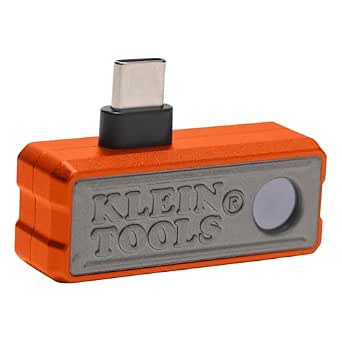 | Best for Cross-Platform Documentation | Resolution: 19,200 pixels | Temperature range: -4°F to 752°F (-20°C to 400°C) | Compatibility: iOS and Android | VIEW LATEST PRICE | See Our Full Breakdown |
| TOPDON TC002C Duo USB-C Thermal Imaging Camera | 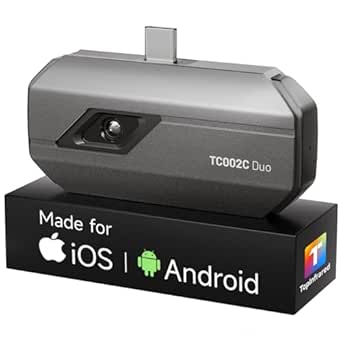 | Best for Multi-Platform Flexibility | Thermal resolution: 256 × 192 | TISR super resolution: 512 × 384 | Refresh rate: 25 Hz | VIEW LATEST PRICE | See Our Full Breakdown |
| FLIR ONE Pro Thermal Imaging Camera for iPhone 15 and Newer (USB-C) |  | Best for Detailed Guided Inspections | Compatibility: iPhone 15 and newer with USB-C | Native infrared resolution: 160 × 120 | Super resolution: 480 × 360 | VIEW LATEST PRICE | See Our Full Breakdown |
| FLIR ONE Thermal Imaging Camera for iPhone 15 and Newer with USB-C |  | Best for Guided Inspection Beginners | Compatibility: iPhone 15 and newer with USB-C | Native infrared resolution: 80 × 60 | Super resolution: 240 × 180 | VIEW LATEST PRICE | See Our Full Breakdown |
| Fluke TC01A 25Hz iSee Mobile Thermal Camera for Android Smartphones – Up to 1022°F |  | Best for High-Temperature Android Inspections | Compatibility: Android smartphones | Thermal resolution: 256 × 192 pixels | Frame rate: 25 Hz | VIEW LATEST PRICE | See Our Full Breakdown |
| GOYOJO GW192A Smartphone Thermal Imaging Camera, 192×192 IR Resolution, USB-C |  | Best Compact Cross-Platform Pick | Model: GW192A | Compatibility: iPhone 15/16/17 series; Android compatibility stated | Infrared resolution: 192 × 192 | VIEW LATEST PRICE | See Our Full Breakdown |
| RISIÓN Magic Thermal Camera, 320×240 QuadIR |  | Best for Broad Temperature Coverage | Model: AF01 | Compatibility: USB-C devices running iOS, Android, or Windows; Mac not supported | Thermal resolution: 320 × 240 QuadIR, upscaled from native 160 × 120 | VIEW LATEST PRICE | See Our Full Breakdown |
| TOPDON TC001 Mini 384×384 Thermal Imaging Camera for iPhone Android iPad |  | Best for Broad Device Compatibility | IR sensor resolution: 96×96; 384×384 output | Thermal sensitivity: ≤40 mK | Refresh rate: 25 Hz | VIEW LATEST PRICE | See Our Full Breakdown |
| Thermal Master P1 USB-C Thermal Camera for Phones | 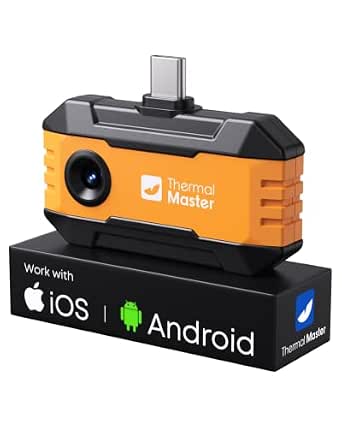 | Best for Wide-Area Scanning | Native IR resolution: 160×120 | Enhanced resolution: 320×240 | Thermal sensitivity: 0.04°C NETD | VIEW LATEST PRICE | See Our Full Breakdown |
| Thermal Master P3 Thermal Camera for iPhone and Android with Manual Macro Lens |  | Best for Close-Up Circuit Work | Thermal resolution: 256×192 native; 512×384 enhanced | Thermal sensitivity: ≤35 mK | Temperature range: -4°F to 1112°F (-20°C to 600°C) | VIEW LATEST PRICE | See Our Full Breakdown |
| TOPDON TC002 Thermal Camera for iOS (iPhone & iPad), 512 x 384 Super Resolution, 256 x 192 IR High Resolution, Thermal Imager, Thermal Imaging Camera, -4°F~1022°F Temp Range, Support Video Recording |  | Best for Lightning-Port iPhones and iPads | IR resolution: 256×192 | Super-resolution output: 512×384 | Refresh rate: 25 Hz | VIEW LATEST PRICE | See Our Full Breakdown |
| Fluke iSee TC01C 25 Hz Mobile Thermal Camera for iOS Smartphones |  | Best for Professional iOS Inspections | Thermal resolution: 256×192 pixels | Frame rate: 25 Hz | Temperature range: Up to 550°C (1022°F) | VIEW LATEST PRICE | See Our Full Breakdown |
| smartphone thermal imager | Temperature range | Compatibility | Thermal sensitivity |
|---|---|---|---|
| Thermal Master P1 Thermal Came | -4°F to 1112°F (-20°C to 600°C) | — | 0.04°C NETD |
| Fluke iSee Mobile Thermal Came | -10°C to 550°C | Android smartphones with USB-C | — |
| Thermal Master P1 USB-C Therma | -20°C to 600°C (-4°F to 1112°F) | USB-C smartphones and computers; Lightning iPhones need a separate adapter | 0.04°C |
| Klein Tools TI223 Mobile Therm | -4°F to 752°F (-20°C to 400°C) | iOS and Android | — |
| TOPDON TC002C Duo USB-C Therma | -4°F to 1022°F | USB-C iOS, Android, and Windows; temporarily incompatible with Mac and Android 16 | 40 mK |
| FLIR ONE Pro Thermal Imaging C | — | iPhone 15 and newer with USB-C | — |
| FLIR ONE Thermal Imaging Camer | — | iPhone 15 and newer with USB-C | — |
| Fluke TC01A 25Hz iSee Mobile T | — | Android smartphones | — |
| GOYOJO GW192A Smartphone Therm | -4°F to 752°F (-20°C to 400°C) | iPhone 15/16/17 series; Android compatibility stated | — |
| RISIÓN Magic Thermal Camera | -4°F to 1112°F (-20°C to 600°C) | USB-C devices running iOS, Android, or Windows; Mac not supported | 40 mK |
| TOPDON TC001 Mini 384×384 Ther | -4°F to 1022°F (-20°C to 550°C) | iOS, Android, and Windows devices | ≤40 mK |
| Thermal Master P1 USB-C Therma | -4°F to 1112°F | — | 0.04°C NETD |
| Thermal Master P3 Thermal Came | -4°F to 1112°F (-20°C to 600°C) | — | ≤35 mK |
| TOPDON TC002 Thermal Camera fo | -4°F to 1022°F | iPhone 7 and newer and Lightning-port iPads | 40 mK |
| Fluke iSee TC01C 25 Hz Mobile | Up to 550°C (1022°F) | — | — |
More Details on Our Top Picks
Thermal Master P1 Thermal Camera for USB‑C iPhone & Android, 160×120 IR
The USB-C P1 makes the most sense for buyers who need a compact thermal tool that can handle varied inspection work, rather than the sharpest native image in this group. Its 160 × 120 native resolution is lower than the Fluke iSee’s 256 × 192, but software-enhanced imaging, 0.04°C sensitivity, and a broad -4°F to 1112°F range help it locate subtle temperature differences across home, HVAC, and vehicle checks. The IP54 protection and 1-meter drop rating make it a more field-ready choice than a basic phone add-on. It also runs from the connected device, avoiding a separate battery. The tradeoff is that it needs a USB-C phone and companion app, and enhanced resolution is software processing rather than native sensor detail.
Pros:- Broad -4°F to 1112°F measurement range covers both ordinary inspections and hotter equipment checks.
- 0.04°C thermal sensitivity helps reveal small temperature differences.
- IP54 protection and a 1-meter drop rating suit field use.
- Device-powered design avoids carrying or charging a separate camera battery.
Cons:- 160 × 120 native resolution is lower than the Fluke iSee’s 256 × 192 sensor resolution.
- USB-C-only connection excludes phones without a compatible port.
- Enhanced resolution relies on software and does not add native sensor detail.
Best for: USB-C phone owners who want a lightweight thermal imager for home maintenance, HVAC checks, and occasional outdoor or automotive inspections.
Not ideal for: Buyers who need higher native image detail or use a phone without USB-C; the Fluke iSee offers 256 × 192 native resolution, while this model is limited to 160 × 120.
- Native resolution:160 × 120 IR
- Enhanced resolution:320 × 240 via software
- Thermal sensitivity:0.04°C NETD
- Temperature range:-4°F to 1112°F (-20°C to 600°C)
- Accuracy:±2°C / ±3.6°F
- Refresh rate:25 Hz
- Field of view:52° × 39°
- Protection:IP54; 1-meter drop rating
Our verdict“Choose this P1 for rugged, wide-range inspections from a USB-C phone, but pick the Fluke iSee if native image resolution matters more.”
Fluke iSee Mobile Thermal Camera for Android Phones (USB-C)
The Fluke iSee is the clearest fit for Android users who want more than a thermal snapshot: its app adds temperature analysis, alarms, recording, and sharing in a small camera body. Its 256 × 192 resolution gives it more native pixels than the 160 × 120 Thermal Master P1, which can make heat patterns easier to distinguish without relying on software enhancement. More than 10 standard and custom palettes also provide flexibility for interpreting different scenes. The aluminum housing, IP54 protection, and 1-meter drop test support portable inspection work. The main limitation is strict platform compatibility: this version is listed for USB-C Android phones, unlike the Klein TI223, which supports both iOS and Android. Accuracy is specified as ±2% or ±2°C, so measurement uncertainty should be part of the decision.
Pros:- 256 × 192 infrared resolution exceeds the 160 × 120 native resolution of the Thermal Master P1.
- App includes analysis, alarms, recording, and image sharing.
- More than 10 standard and custom palettes help adapt views to different inspection scenes.
- Compact aluminum body with IP54 protection and a 1-meter drop test.
Cons:- Compatibility is limited to Android smartphones with USB-C.
- Accuracy is specified as ±2% or ±2°C, which may be less straightforward to interpret than a single tolerance.
- Does not match the Thermal Master P1’s stated maximum temperature of 1112°F.
Best for: Android users who regularly document inspections and want in-app analysis, alarms, recording, and image sharing alongside thermal imaging.
Not ideal for: iPhone owners or buyers seeking a cross-platform camera; this model is specified for USB-C Android phones, while the Klein TI223 supports iOS and Android.
- Infrared resolution:256 × 192 pixels
- Temperature range:-10°C to 550°C
- Accuracy:±2% or ±2°C
- Temperature resolution:0.05°C
- Frame rate:25 Hz
- Color palettes:Over 10 standard and custom palettes
- Compatibility:Android smartphones with USB-C
- Durability:IP54; 1-meter drop test
Our verdict“Pick the Fluke iSee if you use an Android USB-C phone and value built-in analysis and documentation more than maximum heat range.”
Thermal Master P1 USB-C Thermal Camera for iOS and Android, 320 × 240 Resolution
This P1 is the better choice for buyers who want more displayed detail from a compact Thermal Master camera. Its stated 320 × 240 resolution gives it a stronger image-detail proposition than the 160 × 120 P1, while retaining a 25 Hz refresh rate, 0.04°C sensitivity, and a temperature range up to 1112°F. That combination suits checks around electrical panels, vehicles, and HVAC equipment, where both temperature coverage and readable patterns matter. It is also extremely light at 0.62 ounces and includes a 50 cm extension cable for positioning the phone away from the inspection point. Compared with the TOPDON TC002C Duo, it lists a higher image resolution but lacks that model’s stated multi-platform Windows support. Lightning iPhone owners need a separate adapter, and the listed accuracy is ±3.6°F.
Pros:- Stated 320 × 240 resolution offers more image detail than the 160 × 120 Thermal Master P1.
- 0.04°C sensitivity and a temperature range up to 1112°F suit varied inspection tasks.
- Very light camera body and included 50 cm extension cable aid portable use.
- 25 Hz refresh rate supports a fluid view while scanning scenes.
Cons:- Lightning iPhones require a separately purchased adapter.
- Temperature accuracy is listed as ±3.6°F.
- The listed package weight is 3.84 ounces, higher than the camera’s stated 0.62-ounce weight.
Best for: USB-C phone or computer users who want a lightweight thermal imager with 320 × 240 stated resolution for home, electrical, HVAC, and vehicle inspections.
Not ideal for: Lightning iPhone owners who want a ready-to-connect kit, or buyers who need broad platform support without adapters; this model requires a separate adapter for Lightning iPhones.
- Resolution:320 × 240
- Refresh rate:25 Hz
- Temperature range:-20°C to 600°C (-4°F to 1112°F)
- Temperature accuracy:±3.6°F
- Thermal sensitivity:0.04°C
- Digital zoom:Up to 15×
- Compatibility:USB-C smartphones and computers; Lightning iPhones need a separate adapter
- Camera weight:0.62 oz (17 g)
Our verdict“Choose this P1 for higher stated image resolution and a light USB-C setup, but look elsewhere if you need native Lightning compatibility or broader platform flexibility.”
Klein Tools TI223 Mobile Thermal Imaging Camera for iOS and Android
The Klein TI223 stands out for buyers whose priority is a straightforward thermal camera that can work across iOS and Android, rather than the highest resolution in this group. Its listed 19,200-pixel image resolution is below the 256 × 192 Fluke iSee and the 320 × 240 Thermal Master P1, so it is less suited to fine image detail. In return, it offers spot, high/low, and differential temperature modes, plus thermal photos, video, and time-lapse recording for documenting changes over time. That makes it a practical match for maintenance notes or showing a developing heat issue to someone else. The 752°F upper limit is lower than the Thermal Master P1’s 1112°F range, and the USB-C connection has a physical catch: phone cases thicker than 1/5 inch may prevent a fit.
Pros:- Supports both iOS and Android devices.
- Thermal video and time-lapse help document changes rather than isolated readings.
- Spot, high/low, and differential modes provide several ways to inspect temperature patterns.
- Small body weighs 1.12 ounces.
Cons:- 19,200-pixel resolution is lower than the Fluke iSee’s 256 × 192 and the 320 × 240 Thermal Master P1.
- Maximum temperature of 752°F is below the Thermal Master P1’s 1112°F limit.
- Cases thicker than 1/5 inch may interfere with the USB-C connection.
Best for: iOS and Android users who need thermal photos, video, and time-lapse records for maintenance reports or repeat inspections.
Not ideal for: Buyers who need fine thermal image detail, temperatures above 752°F, or a thick protective phone case that exceeds the stated connection clearance.
- Resolution:19,200 pixels
- Temperature range:-4°F to 752°F (-20°C to 400°C)
- Compatibility:iOS and Android
- Connection:USB-C
- Temperature modes:Spot, high/low, and differential
- Color palettes:Ironbow, rainbow, and grayscale
- Video feature:Time-lapse
- Maximum phone case thickness:1/5 inch
Our verdict“Choose the TI223 for cross-platform thermal video and time-lapse documentation, not for the highest image resolution or hottest measurement range.”
TOPDON TC002C Duo USB-C Thermal Imaging Camera
The TC002C Duo is the most flexible pick here for users who move between supported USB-C phones, tablets, and Windows devices. Its 256 × 192 thermal sensor is sharper on paper than the Klein TI223’s 19,200-pixel image, while TISR processing produces a stated 512 × 384 super-resolution view. A 25 Hz refresh rate and photo and video recording make it suitable for scanning equipment and keeping a record of findings. The -4°F to 1022°F range covers more heat than the Klein, though it falls short of the Thermal Master P1’s 1112°F ceiling. The tradeoff is compatibility uncertainty: the listing reports temporary incompatibility with Mac and Android 16, so buyers should check their setup before choosing it. Its 1.1-ounce camera is portable, but the stated 40 mK sensitivity is less specific than the P1’s 0.04°C figure.
Pros:- 256 × 192 sensor resolution with TISR processing to 512 × 384.
- Supports USB-C iOS, Android, and Windows phones and tablets, subject to listed compatibility exceptions.
- 25 Hz refresh rate and photo and video recording support inspection documentation.
- Temperature range reaches 1022°F, exceeding the Klein TI223’s 752°F maximum.
Cons:- Temporarily incompatible with Mac and Android 16 devices, according to the product data.
- Maximum temperature is lower than the Thermal Master P1’s 1112°F range.
- The listed package weight of 8.1 ounces is much higher than the camera’s 1.1-ounce product weight.
Best for: USB-C users who inspect with supported iOS, Android, or Windows devices and want a compact camera with recording and processed higher-resolution views.
Not ideal for: Mac users and Android 16 users until the listed temporary incompatibility is resolved, or buyers who need the widest temperature ceiling in this group.
- Thermal resolution:256 × 192
- TISR super resolution:512 × 384
- Refresh rate:25 Hz
- Thermal sensitivity:40 mK
- Temperature range:-4°F to 1022°F
- Temperature accuracy:±2°C or 2%
- Compatibility:USB-C iOS, Android, and Windows; temporarily incompatible with Mac and Android 16
- Product weight:1.1 oz (30 g)
Our verdict“Choose the TC002C Duo for a portable, multi-platform USB-C setup with TISR imaging, provided your device is not among the listed incompatibilities.”
FLIR ONE Pro Thermal Imaging Camera for iPhone 15 and Newer (USB-C)
The FLIR ONE Pro is the stronger of these two iPhone-specific FLIR picks for readers who want clearer thermal imagery and help interpreting what they see. Its 160 × 120 native sensor is higher resolution than the standard FLIR ONE’s 80 × 60 sensor, and Vivid IR scales the image to 480 × 360. MSX adds visible edges to the thermal view, making a suspected air leak or damp patch easier to locate on the scene. The app’s guided inspection workflows also give it an advantage for homeowners who want a step-by-step starting point. The tradeoffs are its iPhone 15-and-newer USB-C limitation and the fact that its enhanced output does not change the native sensor resolution. Android users should look to options such as the Fluke TC01A instead.
Pros:- Higher 160 × 120 native resolution than the standard FLIR ONE
- Vivid IR scales images to 480 × 360
- MSX overlays visual detail, while the app offers guided inspection workflows
- Rated to withstand drops from 1.5 meters
Cons:- Works only with iPhone 15 and newer models that have USB-C
- 480 × 360 is upscaled from a 160 × 120 thermal sensor
- Temperature accuracy is specified only under stated unit and scene conditions
Best for: iPhone 15 or newer owners who want guided home inspections and more native thermal detail than the standard FLIR ONE provides.
Not ideal for: Android users, owners of older or Lightning-equipped iPhones, and buyers who need a higher native resolution than 160 × 120.
- Compatibility:iPhone 15 and newer with USB-C
- Native infrared resolution:160 × 120
- Super resolution:480 × 360
- Temperature accuracy:±3°C or ±5%
- Accuracy conditions:Unit: 15°C–35°C; scene: 5°C–120°C
- Dimensions:2.6 × 1.3 × 0.6 inches
- Weight:1.29 ounces
- Battery:1 included AA battery
Our verdict“Choose the FLIR ONE Pro if you have a compatible iPhone and want guided inspections with more native detail than the standard FLIR ONE.”
FLIR ONE Thermal Imaging Camera for iPhone 15 and Newer with USB-C
The standard FLIR ONE keeps the useful parts of the FLIR app experience—MSX image overlays and guided checks for issues such as moisture or air leaks—in a simpler-resolution option. That makes it a reasonable fit for occasional household troubleshooting, where locating a temperature pattern may matter more than seeing fine thermal detail. Its 80 × 60 native sensor is half the Pro’s resolution in each dimension, and the 240 × 180 output is upscaled, so it is less suited to small targets or closely spaced temperature differences. Like the FLIR ONE Pro, it is limited to newer USB-C iPhones and carries a 1.5-meter drop rating. Buyers who need broader phone compatibility or more thermal pixels should compare it with the Android-oriented Fluke TC01A.
Pros:- App includes guided inspection steps for air leaks and moisture
- MSX adds visible scene details to thermal images
- Upscaled output reaches 240 × 180
- Rated to withstand drops from 1.5 meters
Cons:- 80 × 60 native resolution offers less detail than the FLIR ONE Pro
- Works only with iPhone 15 and newer models that have USB-C
- Upscaling does not add native thermal information
Best for: iPhone 15-or-newer owners who are new to thermal inspection and mainly need guided checks for common household issues.
Not ideal for: Professionals inspecting small components or buyers who want higher native resolution, Android support, or compatibility with older iPhones.
- Compatibility:iPhone 15 and newer with USB-C
- Native infrared resolution:80 × 60
- Super resolution:240 × 180
- Temperature accuracy:±3°C or ±5% under specified conditions
- Dimensions:2.6 × 1.3 × 0.6 inches
- Weight:1.28 ounces
- Battery:1 included AA battery
- Model number:435-0010-03
Our verdict“Pick this FLIR ONE for guided, occasional home checks on a compatible iPhone, but choose the Pro for finer thermal detail.”
Fluke TC01A 25Hz iSee Mobile Thermal Camera for Android Smartphones – Up to 1022°F
The Fluke TC01A is the clearest fit here for Android users who inspect equipment that may run hot. Its 256 × 192 sensor has more native pixels than either FLIR ONE model, and its stated upper range of 1022°F extends well beyond the FLIR models’ supplied temperature specifications. A 25 Hz refresh rate helps the image keep up as the phone moves across electrical panels, HVAC equipment, or heated floors. Unlike the GOYOJO GW192A, which lists a broad range but gives less detail about real-time video, the TC01A explicitly specifies 25 Hz capture and USB-powered operation. The main compromises are Android-only compatibility and no built-in screen: the phone is both the display and the connection point. It is less convenient for iPhone households than the FLIR ONE Pro.
Pros:- 256 × 192 thermal resolution exceeds the native resolution of both FLIR ONE models
- Temperature range reaches 1022°F
- 25 Hz video supports scanning moving across inspection targets
- Compact 22 g body draws power through USB
Cons:- Requires a compatible Android phone
- No built-in display; operation depends on the connected smartphone
- Resolution remains below higher-resolution standalone thermal imagers
Best for: Android-based electricians, HVAC technicians, and installers who need to scan hot equipment with a 25 Hz thermal feed.
Not ideal for: iPhone owners, users seeking a standalone imager with its own display, or buyers who need resolution beyond 256 × 192.
- Compatibility:Android smartphones
- Thermal resolution:256 × 192 pixels
- Frame rate:25 Hz
- Upper temperature range:1022°F (550°C)
- Response time:40 ms
- Connectivity:USB
- Power source:USB
- Weight:22 g
Our verdict“Choose the TC01A for Android inspections involving high temperatures and moving scans, provided you are comfortable using your phone as the display.”
GOYOJO GW192A Smartphone Thermal Imaging Camera, 192×192 IR Resolution, USB-C
The GOYOJO GW192A makes the most sense for buyers who want a very small USB-C attachment and a straightforward mix of phone compatibility and temperature coverage. Its 192 × 192 sensor provides more native pixels than either FLIR ONE model, while its 50° field of view can cover a useful section of a wall, vehicle, or electrical area without requiring a built-in display. The listed range of -4°F to 752°F spans many home, plumbing, automotive, and HVAC checks, though it falls short of the Fluke TC01A at the high end and the RISIÓN Magic for maximum temperature range. At just 0.48 ounces, it is the lightest option in this group. One uncertainty is Android support: compatibility is stated, but specific phone models are not listed, so buyers should verify their device before choosing it.
Pros:- 192 × 192 native infrared resolution exceeds both FLIR ONE models
- Broad -4°F to 752°F temperature range for common inspection tasks
- Very light at 0.48 ounces
- 50° field of view covers a useful area during phone-based checks
Cons:- Requires a compatible USB-C smartphone
- Android phone models are not specified in the product details
- Maximum temperature is lower than the Fluke TC01A and RISIÓN Magic
Best for: Phone-based home and vehicle troubleshooters who want a lightweight USB-C imager with a square 192 × 192 sensor and broad stated temperature coverage.
Not ideal for: Android buyers who need a confirmed compatibility list, or professionals inspecting targets hotter than 752°F.
- Model:GW192A
- Compatibility:iPhone 15/16/17 series; Android compatibility stated
- Infrared resolution:192 × 192
- Pixel pitch:12 μm
- Field of view:50°
- Temperature range:-4°F to 752°F (-20°C to 400°C)
- Accuracy:±2%
- Dimensions and weight:1.77 × 0.43 × 1.34 inches; 0.48 ounces
Our verdict“Choose the GW192A if a light, compact attachment matters most and your phone’s USB-C compatibility is confirmed.”
RISIÓN Magic Thermal Camera, 320×240 QuadIR
The RISIÓN Magic stands out for buyers who need a USB-C thermal imager spanning both cooler household checks and very hot targets. Its stated range tops out at 1112°F, higher than the Fluke TC01A and GOYOJO GW192A, while the 25 Hz refresh rate supports a more fluid view during sweeps across equipment. The advertised 320 × 240 QuadIR image is upscaled from a native 160 × 120 sensor, so it should not be read as having the same native detail as a sensor with 320 × 240 pixels. Even so, image fusion, adjustable emissivity, and app analysis tools give it a broader inspection toolkit than the simpler FLIR ONE models. It supports USB-C iOS, Android, and Windows devices, but not Mac, and its broad compatibility still depends on having a supported host device.
Pros:- Temperature range reaches 1112°F, exceeding the other listed models in this batch
- 25 Hz refresh rate supports smoother scanning
- Image fusion and adjustable emissivity support more tailored analysis
- USB-C compatibility includes iOS, Android, and Windows devices
Cons:- 320 × 240 QuadIR output is upscaled from a native 160 × 120 sensor
- Mac devices are not supported
- Requires a compatible host device to view and analyze images
Best for: USB-C device owners who inspect varied targets, including high-temperature equipment, and want app-based image analysis and adjustable emissivity.
Not ideal for: Mac users or buyers who prioritize native 320 × 240 thermal detail over upscaled resolution.
- Model:AF01
- Compatibility:USB-C devices running iOS, Android, or Windows; Mac not supported
- Thermal resolution:320 × 240 QuadIR, upscaled from native 160 × 120
- Temperature range:-4°F to 1112°F (-20°C to 600°C)
- Accuracy:±3.6°F
- Thermal sensitivity:40 mK
- Refresh rate:25 Hz
- Field of view and weight:52° × 39°; 0.8 ounces
Our verdict“Choose the RISIÓN Magic if maximum stated temperature range and app analysis tools matter more than native 320 × 240 resolution or Mac support.”
TOPDON TC001 Mini 384×384 Thermal Imaging Camera for iPhone Android iPad
The TC001 Mini stands out for pairing a claimed 384×384 output with compatibility across iOS, Android, and Windows devices. That makes it a more flexible choice than the iOS-only TOPDON TC002, especially for households or technicians who switch between platforms. Its 25 Hz refresh rate helps moving inspections look smoother, while the wide temperature span covers both cold-weather checks and hot equipment. AI analysis tools and inspection guides may also help users interpret findings without building a workflow from scratch. The tradeoff is that the listed sensor is 96×96 native resolution, so the higher output figure should not be mistaken for native sensor detail. It also draws on a connected device rather than operating independently, making phone compatibility and battery availability part of every inspection.
Pros:- Works with compatible iOS, Android, and Windows devices
- 25 Hz imaging supports smoother viewing of changing heat patterns
- Broad -4°F to 1022°F measurement range suits varied inspection tasks
- AI analysis tools and guides can help structure basic diagnostics
Cons:- 96×96 listed native sensor resolution is lower than the 384×384 output figure suggests
- Requires a connected compatible device and has no independent battery
- Accuracy is specified as ±2%, which may not suit users needing tighter measurement tolerances
Best for: Technicians and homeowners who want one thermal imager that can connect to compatible iOS, Android, and Windows devices.
Not ideal for: Buyers who need a standalone imager or prioritize high native sensor resolution over enhanced output.
- IR sensor resolution:96×96; 384×384 output
- Thermal sensitivity:≤40 mK
- Refresh rate:25 Hz
- Temperature range:-4°F to 1022°F (-20°C to 550°C)
- Accuracy:±2%
- Compatibility:iOS, Android, and Windows devices
- Weight:8.8 ounces
Our verdict“Choose the TC001 Mini if cross-platform flexibility and guided analysis matter more to you than standalone operation or higher native resolution.”
Thermal Master P1 USB-C Thermal Camera for Phones
The Thermal Master P1 is a practical pick for scanning larger areas, with a 52°×39° field of view that captures more of a room or panel at once than the narrower-view P3. Its native 160×120 sensor is enhanced to 320×240, and 15× digital zoom helps inspect a distant detail without changing position. A 25 Hz frame rate supports smooth live viewing, while the temperature range reaches 1112°F—higher than the TOPDON TC001 Mini’s listed ceiling. The extension cable and case add flexibility when the phone is awkward to hold near the target. The main compromise is that the P3 offers higher native resolution and manual macro focus for close circuit work. The P1 also draws power from the connected USB-C device, so long sessions affect phone endurance.
Pros:- Wide 52°×39° field of view captures broad scenes
- 160×120 native resolution with 320×240 enhanced output
- 15× zoom and 25 Hz imaging support detailed live inspection
- Includes a 19-inch extension cable and protective case
Cons:- Powered by the connected device rather than a separate battery
- Native resolution is lower than the Thermal Master P3’s 256×192 sensor
- Compatibility depends on having a supported USB-C device
Best for: Building inspectors and maintenance workers who scan rooms, equipment, or broad surfaces using a compatible USB-C phone, tablet, or Windows device.
Not ideal for: Circuit-board specialists who need close manual focus or buyers whose phones lack compatible USB-C connectivity.
- Native IR resolution:160×120
- Enhanced resolution:320×240
- Thermal sensitivity:0.04°C NETD
- Frame rate:25 Hz
- Temperature range:-4°F to 1112°F
- Field of view:52°×39°
- Digital zoom:1–15×
- Protection:IP54; 1-meter drop protection
- Weight:0.6 ounces
Our verdict“Pick the P1 for broad, phone-powered inspections where its wide field of view and extension cable matter more than macro detail.”
Thermal Master P3 Thermal Camera for iPhone and Android with Manual Macro Lens
For inspecting small components, the Thermal Master P3 has a clear advantage over the wider-view Thermal Master P1: its manual macro focus reaches an 8 mm focus distance, making it better suited to circuit boards and compact electrical parts. The 256×192 native sensor also provides more underlying image detail than the P1’s 160×120 sensor, with enhanced output listed at 512×384. A 40°×30° field of view keeps attention on the target, while app tools for alarms, recording, and reports support a more organized inspection. This compact unit can connect to Android, newer USB-C iPhones, older iPhones through the included adapter, and Windows computers. Its focus adjustment takes more attention than a fixed-focus camera, and like the P1, it uses the connected device for power rather than running on its own battery.
Pros:- 8 mm macro focus supports close inspection of circuit boards
- 256×192 native resolution exceeds the Thermal Master P1’s 160×120 sensor
- Alarm, recording, and reporting features support inspection documentation
- IP54 protection and 1-meter drop testing add practical durability
Cons:- Manual focus needs adjustment as inspection distance changes
- Draws power from the connected phone or computer
- Older iPhones require the included Lightning adapter
Best for: Electricians, electronics repairers, and inspectors who need to examine small components at close range and document findings.
Not ideal for: Users who want a wide overview with little setup, or anyone who needs a thermal imager that works independently of a phone or computer.
- Thermal resolution:256×192 native; 512×384 enhanced
- Thermal sensitivity:≤35 mK
- Temperature range:-4°F to 1112°F (-20°C to 600°C)
- Accuracy:±3.6°F / ±2%
- Field of view:40°×30°
- Frame rate:25 Hz
- Macro focus distance:8 mm
- Protection:IP54; 1-meter drop-tested
- Weight:1.3 ounces
Our verdict“Choose the P3 for close component inspections and reporting, but favor the P1 if broad scene coverage is your priority.”
TOPDON TC002 Thermal Camera for iOS (iPhone & iPad), 512 x 384 Super Resolution, 256 x 192 IR High Resolution, Thermal Imager, Thermal Imaging Camera, -4°F~1022°F Temp Range, Support Video Recording
The TOPDON TC002 is the clearest fit here for users committed to Lightning-port iPhones and iPads: it plugs directly into those devices and pairs a 256×192 IR sensor with 512×384 super-resolution output. Point, line, and surface measurements give more ways to inspect a heat pattern than a simple spot reading, while picture-in-picture combines thermal and visible views to help locate a problem. Its 25 Hz refresh rate supports smoother live checks, and the small 1.1-ounce body is easy to carry. Unlike the cross-platform TC001 Mini, though, this model is Lightning-only and the listing says newer iPhones with USB-C need a different version. Its temperature ceiling is also lower than the Thermal Master P3’s, so high-heat users should compare ranges before choosing.
Pros:- 256×192 IR sensor with 512×384 super-resolution output
- Point, line, and surface temperature measurement options
- Picture-in-picture combines thermal and visible imagery
- Compact 1.1-ounce design with 25 Hz refresh rate
Cons:- Limited to compatible Lightning-port iOS devices
- Temperature range tops out at 1022°F, below the Thermal Master P3’s 1112°F limit
- Requires a connected iPhone or iPad for operation
Best for: Owners of Lightning-port iPhones or iPads who want a compact plug-in imager with multiple measurement modes and video recording.
Not ideal for: People using USB-C iPhones, Android devices, or Windows computers, and buyers needing a range above 1022°F.
- IR resolution:256×192
- Super-resolution output:512×384
- Refresh rate:25 Hz
- Temperature range:-4°F to 1022°F
- Thermal sensitivity:40 mK
- Temperature resolution:0.1°F
- Compatibility:iPhone 7 and newer and Lightning-port iPads
- Operating time:6–8 hours with a fully charged iPhone; 8–10 hours with a fully charged iPad
- Dimensions and weight:2.8×1.7×0.55 inches; 1.1 ounces
Our verdict“The TC002 suits Lightning-device owners who want compact, feature-rich inspections, while USB-C and cross-platform users should choose another model.”
Fluke iSee TC01C 25 Hz Mobile Thermal Camera for iOS Smartphones
The Fluke iSee TC01C is aimed at iOS users who want a straightforward 256×192 thermal imager for professional inspection tasks, with spot, line, and area analysis for comparing temperatures across a component or surface. Its 25 Hz capture rate matches the TOPDON TC002, while the listed temperature ceiling of 1022°F covers common electrical, HVAC, and underfloor-heating checks. The Fluke name and stated two-year warranty may appeal to buyers prioritizing an established inspection-tool brand. But the supplied details are less extensive than the TOPDON TC002’s: there is no listed sensitivity, accuracy, field of view, or water protection, and the TC01C is not water resistant. Compatibility is also restricted to iOS smartphones using USB-C, so Android users and owners of Lightning-only phones should look to a different option.
Pros:- 256×192 thermal resolution with 25 Hz capture
- Spot, line, and area temperature analysis
- Temperature range reaches 1022°F
- Compact USB-C design and stated two-year warranty
Cons:- Compatible with iOS smartphones only
- Not water resistant
- Supplied specifications do not state accuracy, sensitivity, or field of view
Best for: iOS technicians who want a compact USB-C thermal camera for electrical, HVAC, or underfloor-heating checks and value Fluke branding.
Not ideal for: Android users, Lightning-only iPhone owners, and inspectors working in wet environments or needing published sensitivity and accuracy figures.
- Thermal resolution:256×192 pixels
- Frame rate:25 Hz
- Temperature range:Up to 550°C (1022°F)
- Connectivity:USB-C
- Compatible devices:iOS smartphones
- Temperature analysis:Spot, line, and area
- Water resistance:Not water resistant
- Warranty:2 years
Our verdict“Choose the TC01C if you use a compatible USB-C iPhone and want Fluke-branded inspection tools, but skip it for wet sites or Android phones.”
How We Picked
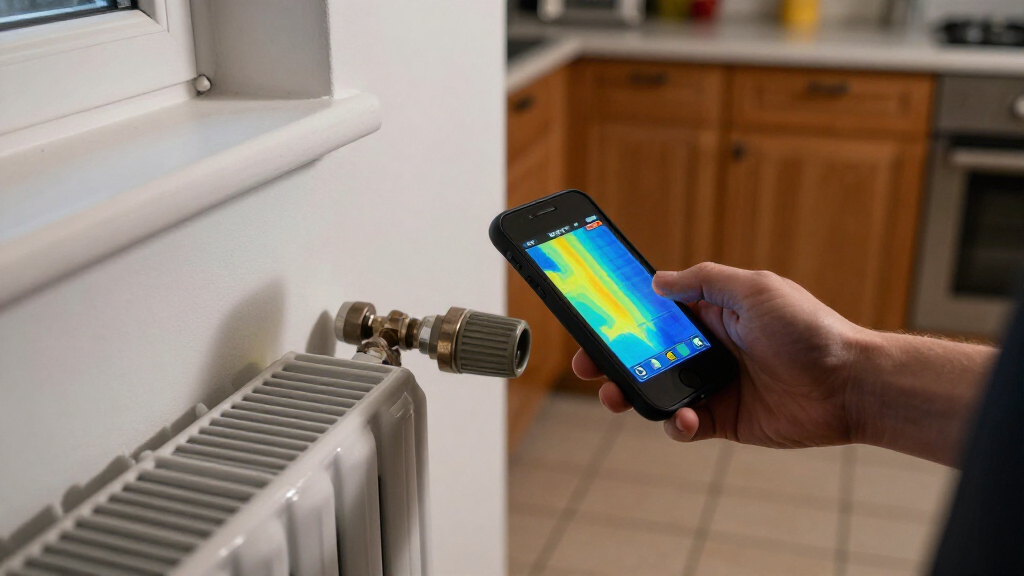
I ranked these smartphone thermal imagers by the practical factors that shape a useful purchase: listed IR resolution, refresh rate where specified, temperature range, phone and connector compatibility, and features such as recording or a manual macro lens. Resolution matters for distinguishing smaller heat patterns, while refresh rate can make moving scenes easier to follow. I also considered whether the product’s stated platform fit is clear enough for a buyer to match it to an iPhone, Android phone, or tablet.
The order reflects how much capability each model offers for its likely buyer, not a claim that one camera suits every task. The TOPDON TC002 for iOS ranks first for its stated resolution and recording support; the TC001 Mini follows for its high listed resolution, and Fluke’s 25 Hz cameras earn a place for buyers who value smoother viewing. Lower-resolution or narrower-platform options can still be better fits for basic inspections or a specific phone. Where the supplied product information does not establish a detail, I avoid treating it as a proven advantage.
Factors to Consider When Choosing Smartphone Thermal Imagers
Before choosing a thermal imager, match the camera to the job and the phone you already own. A headline resolution or temperature limit can look decisive, but compatibility, scene type, and workflow determine whether that specification helps in practice.
Match the connector and software to your exact phone
Start with the phone model, operating system, and physical connector, then check the manufacturer’s compatibility list and app requirements. A USB-C plug alone does not guarantee that a camera will work with every USB-C phone, and iOS-specific models are not interchangeable with Android options. Phone cases can also block a connector or stop the camera from seating securely. If you use a tablet as well as a phone, confirm support for both rather than assuming a shared port means shared compatibility. A small compatibility mismatch can matter more than a large resolution difference because it can prevent the camera from working at all.
Choose resolution for the size of the heat source
Higher IR resolution can help separate small or closely spaced hot and cold areas, especially when inspecting components from a distance. For broad checks of a wall, floor, or pipe, a lower-resolution image may still reveal the pattern you need. Do not treat a software-enhanced or super-resolution figure as identical to the native sensor resolution; check both figures and what the manufacturer means by them. A dense sensor can be less useful than good access and a suitable viewing angle if the target is hidden or too far away. Buy for the smallest feature you need to distinguish, not for a large number on a spec sheet.
Think about movement and refresh rate
Refresh rate affects how fluid a thermal view looks as you move the phone or scan a moving target. A faster rate, such as the 25 Hz listed for the Fluke TC01A and TC01C, can make live inspection feel easier to follow than a slower feed. For static insulation checks, a high refresh rate may matter less than image detail, compatibility, or the ability to save images. If you plan to inspect rotating machinery or follow changing temperatures, verify the stated rate and any regional or app limits before buying. Avoid paying attention to refresh rate in isolation; it cannot compensate for insufficient resolution or a camera that does not suit the task.
Check temperature range against the actual work
A wide stated temperature range can be useful for varied electrical, mechanical, or workshop tasks, but it does not automatically mean the camera is more accurate across that entire span. Compare the range with the surfaces you expect to inspect and check the manufacturer’s accuracy and measurement conditions. For home energy checks, an unusually high maximum temperature is often less relevant than reliable contrast at ordinary indoor temperatures. Surface material, distance, angle, and reflected heat can all affect readings, so do not treat a thermal image as a standalone diagnosis. If measurements will guide repairs or safety decisions, confirm the camera’s measurement limits and follow-up requirements.
Consider how you will save and share findings
Think beyond the live image: decide whether you need still photos, video, annotations, or files that can be shared with a client or another technician. Recording support can help document an intermittent issue, while a simpler camera may be enough for a quick check at home. Check which features live in the app and whether they depend on a subscription, account, or phone operating system; do not assume every model offers the same export options. Also consider whether the phone can remain connected while you work, especially if you need to take notes or use other tools. A camera that fits your reporting routine may save more time than one with a higher sensor specification.
Decide when specialized optics are worth it
A manual macro lens, such as the one listed with the Thermal Master P3, addresses close-up inspection rather than general-purpose coverage. That can help when small components are the target, but a close-focus accessory is less useful for scanning a room or checking a roofline. Before choosing a specialized lens, confirm the working distance and whether the camera can also serve your everyday inspection needs. Buyers who only need occasional home checks may get more value from a straightforward model with broader phone compatibility. Pay for specialized optics when the work repeatedly demands them, not merely because they sound advanced.
Frequently Asked Questions
Will a USB-C thermal camera work with any USB-C phone?
No. USB-C describes the connector, not full compatibility with every phone, operating system, or app. Check the maker’s supported phone list and software requirements for the exact model you own, including whether your phone permits the needed connection or app functions. Cases and unusual port placement can also interfere with fitting the camera. If compatibility is unclear, confirm it before choosing based on resolution or temperature range.
Is a 384 × 384 camera always better than a 256 × 192 model?
Not for every job. A higher listed resolution can reveal finer thermal patterns, but usefulness also depends on focus, distance, field of view, image processing, and the size of the target. For broad home inspections, a lower-resolution camera may show enough to identify a problem area. Also distinguish native IR resolution from enhanced or super-resolution output. Choose the camera that can resolve the details your work requires, rather than treating the largest number as a universal winner.
Should I choose a 25 Hz model for home inspections?
A 25 Hz feed can make it easier to follow the image while moving the camera, but it is not a requirement for every home inspection. If you mainly scan stationary walls, windows, or plumbing, compatibility and image detail may matter more. A faster refresh rate is more compelling when checking moving equipment or tracking a changing scene. Compare the listed refresh rate alongside resolution and your typical pace of work, rather than buying on that feature alone.
Can a smartphone thermal imager diagnose an electrical or building problem by itself?
No. A thermal image can show temperature patterns that help locate a possible issue, but it does not identify the cause on its own. Reflections, surface materials, distance, airflow, and viewing angle can change what appears on screen. Use thermal findings as a lead for further inspection, not as proof that a component is safe or defective. For electrical hazards or consequential building repairs, follow appropriate safety procedures and consult a qualified professional.
When does it make sense to pay for a premium smartphone thermal camera?
Paying more can make sense when higher detail, smoother live viewing, recording, or a specialized lens directly supports repeated work. A professional who documents inspections may gain more from recording and image quality than someone checking occasional drafts at home. First identify the task that a basic camera cannot handle, then verify that the premium model works with your phone and supports the workflow you need. If the extra capability will rarely be used, a simpler option may be the more sensible fit. Premium specifications are valuable only when they change what you can see or do.
Conclusion
For most buyers whose phone is supported, I recommend the TOPDON TC002 for iOS as the best overall choice for its high stated resolution and recording support. The Thermal Master P1 160 × 120 is the best value-style pick for straightforward inspections where basic thermal patterns are enough, while the TOPDON TC001 Mini is the premium-leaning choice for buyers who prioritize its high listed resolution. Beginners should start by matching a simple option such as the GOYOJO GW192A or a P1 variant to their phone and task before paying for extra capability. For Android users who follow moving scenes, choose the Fluke iSee TC01A; for close-up component work, look at the Thermal Master P3 with its manual macro lens. The right choice comes down to the details you need to see and whether the camera fits your phone and workflow.
Fall Picks
fall essentials
As an affiliate, we earn on qualifying purchases.