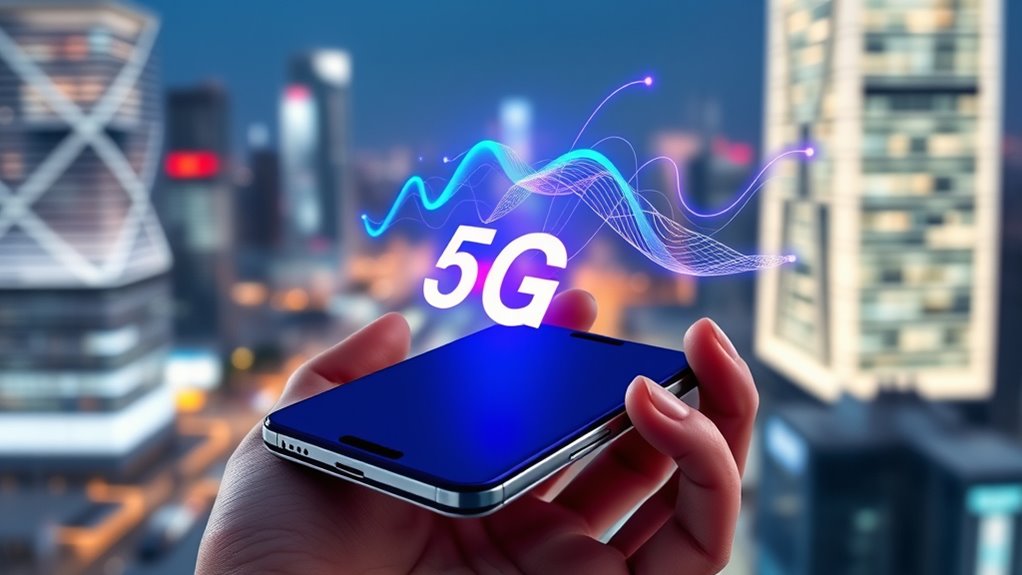

5G has dramatically boosted the smartphone industry by increasing device offerings, accelerating growth, and expanding consumer access worldwide. It drives innovations like AI-enabled models and enhances network speeds, making smartphones more efficient and versatile. Regions like North America lead adoption, while emerging markets expand access through affordable devices. This technological leap also creates millions of jobs and contributes trillions to the global economy. To discover how these changes shape your tech future, keep exploring this evolving landscape.
Key Takeaways
- 5G has significantly expanded smartphone adoption, with over 1.2 billion shipments in 2024, boosting market size and consumer usage.
- The technology enables advanced features like AI-enabled devices and enhanced network capabilities, improving user experience.
- Growing 5G infrastructure and device availability have accelerated regional adoption, especially in North America and emerging markets.
- The industry has created over 1.8 million jobs globally, driven by 5G deployment, device manufacturing, and related services.
- Innovation and strategic investments have led to a surge in patent filings and technological breakthroughs, shaping future network and device evolution.
Market Expansion and Growth Trends

The 5G smartphone market is experiencing rapid expansion, driven by increasing consumer demand and technological advancements. You’ll notice the market grew from $31.8 billion in 2024 to an estimated $233.6 billion by 2034, with a CAGR of around 22.1%. The global volume of 5G smartphones hit 1.2 billion units in 2024 and is projected to reach 2 billion by 2028. As 5G’s share of mobile data traffic climbed from 34% at the end of 2024 to 43% in 2025, it’s clear adoption is accelerating. Consumer access is broadening, supported by more affordable devices, and manufacturers are expanding into emerging markets, especially in Asia and Africa. This growth signals a transformative shift in how people connect and use mobile technology worldwide. Additionally, the push for energy-efficient infrastructure in telecommunications is aligning with the expansion of 5G networks, emphasizing sustainability alongside innovation.
Shifts in Device Segments and Consumer Access

As 5G technology advances, you’ll notice a shift toward broader consumer access, especially with more affordable smartphones entering the market. While premium devices still lead in market share, mid-range and entry-level models are expanding rapidly to reach more people. This trend guarantees that a wider audience can benefit from the high-speed connectivity and innovative features 5G offers. Additionally, improvements in device affordability are making 5G-enabled smartphones accessible to a larger demographic.
Premium Dominates Market
Despite the growing popularity of mid-range and entry-level 5G smartphones, premium devices continue to command a dominant 45% share of the market. This dominance reflects consumer demand for advanced features, superior build quality, and brand prestige associated with flagship models from Apple, Samsung, and other top manufacturers. You’ll notice that these premium devices often set the pace for technological innovation, integrating the latest 5G capabilities, high-resolution displays, and cutting-edge camera systems. Additionally, the Free Floating nature of premium smartphones allows for seamless integration of hardware and software, enhancing user experience. While mid-range options are gaining ground due to affordability, many consumers still prioritize premium smartphones for their performance, longevity, and status appeal. As 5G adoption accelerates, this segment remains essential, shaping market trends and pushing manufacturers to deliver increasingly sophisticated and powerful devices.
Broader Consumer Access
The increasing availability of affordable 5G smartphones is opening access to faster connectivity for a broader consumer base. You can now find mid-range and entry-level devices equipped with 5G at lower prices, making high-speed networks more accessible. This shift enables more people in emerging markets, like Asia and Africa, to benefit from advanced mobile technology. As a result, consumer access isn’t limited to premium models anymore. Manufacturers are expanding their offerings to include a wider range of devices, supporting diverse budgets. This broadening access accelerates adoption, allowing users to enjoy improved streaming, gaming, and remote work experiences. With more affordable options, ’s not just the early adopters but everyday consumers who are increasingly connected through 5G. Additionally, the increased device diversity supports a more inclusive digital environment, bridging gaps in technology access across different socioeconomic groups.
Industry Development and Employment Opportunities
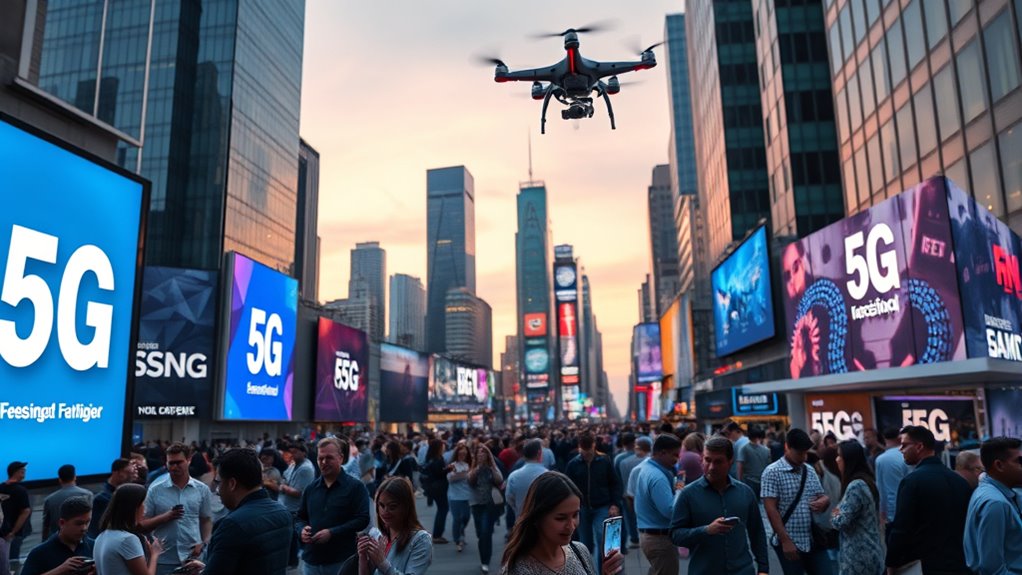
The rapid development of the 5G industry has created a surge in employment opportunities across multiple sectors. You now have access to a growing job market in engineering, manufacturing, and research, as companies race to innovate and expand their offerings. With over 1.8 million people working in the sector, including 102,800 new hires last year, employment continues to rise. Key countries like the USA, China, and India are leading job creation, especially in hubs such as Shenzhen, Beijing, and Bengaluru. Skill development initiatives are also increasing, aiming for a workforce of at least 8 million by 2025. As 5G infrastructure expands, expect more roles in network deployment, software development, and technical support, driving economic growth and technological progress worldwide. Best Modern Toilet
Regional Adoption and Consumer Behavior

You’re likely to notice regional differences in how quickly 5G adoption spreads and how consumers use new devices. In North America, for example, a high percentage of people are already on 5G networks, driving demand for advanced smartphones. Meanwhile, in emerging markets, affordability and infrastructure are shaping different usage patterns and adoption rates. Additionally, the at‑home technology market is evolving alongside these trends, influencing consumer preferences worldwide.
Adoption Rates in Regions
How quickly regions adopt 5G technology varies markedly, influenced by infrastructure, economic factors, and consumer behavior. North America leads with around 60% of its population using 5G, driven by advanced networks and high smartphone penetration. The United States alone had nearly 216 million active 5G devices by the end of 2023, showing rapid growth. In contrast, parts of Asia and Europe are catching up, but adoption rates lag due to limited infrastructure or affordability issues. Emerging markets like Africa and parts of Southeast Asia face slower rollout, hindered by economic constraints. Consumer demand for high-speed connectivity and streaming services fuels adoption, but tariffs, inflation, and macroeconomic challenges can slow progress. Additionally, home décor inspiration plays a role in shaping consumer preferences for modern, connected devices. Overall, regional disparities shape how quickly 5G becomes mainstream in different parts of the world.
Consumer Usage Patterns
Consumer usage patterns across regions reveal significant differences in 5G adoption driven by infrastructure, economic conditions, and consumer preferences. In North America, you’ll notice high adoption rates, with about 60% of connected users utilizing 5G, fueled by widespread coverage and strong device availability. In contrast, parts of Asia and Europe show varied adoption levels based on infrastructure investments and affordability. Your behavior also reflects regional trends: streaming, gaming, and remote work are primary drivers for embracing 5G, especially where high-speed connectivity enhances these activities. Economic factors influence your spending, with some regions prioritizing mid-range and affordable 5G devices to access faster networks without overspending. Additionally, energetic alignment with technology and community goals can influence your openness to adopting new networks and devices. Overall, your 5G usage patterns are shaped by local infrastructure, economic realities, and your specific digital needs.
Technological Innovations and Key Players

Technological innovation is driving the rapid evolution of 5G networks and smartphones, with key players leading the charge through extensive patent filings and cutting-edge research. Huawei, Qualcomm, and Ericsson dominate the patent landscape, more than doubling their declared 5G patent families from 25,000 in 2021 to over 57,000 in 2024. Breakthroughs like beamforming, small cells, and metamaterials are fueling network advancements. Samsung is consolidating its market leadership by launching devices like the Galaxy A36 and A56, featuring AI-enabled capabilities that enhance user experience. Xiaomi and Oppo are expanding aggressively in emerging markets, offering diverse, affordable smartphones. These innovations and strategic moves are shaping the future of 5G, making it more accessible, efficient, and integrated into everyday life.
Economic Contributions and Future Outlook

The expansion of 5G technology is expected to notably boost the global economy, with mobile technologies and services currently contributing around 5.8% of worldwide GDP, or approximately $6.5 trillion in economic value added. As 5G adoption accelerates, this contribution is projected to increase considerably, reaching nearly $11 trillion by 2030, or about 8.4% of global GDP. You’ll see substantial benefits from innovations in IoT, autonomous vehicles, and smart cities, which will further stimulate economic growth. Strategic partnerships and mergers between telecom providers and smartphone manufacturers will reshape market dynamics, creating new opportunities. Governments worldwide are supporting digital infrastructure investments, helping to speed up 5G deployment. Overall, 5G’s economic influence is set to expand, fostering sustained growth and technological transformation across industries. Enhanced connectivity will play a crucial role in unlocking these economic opportunities.
Challenges and Strategic Developments
Despite the rapid growth and promising future of 5G, the industry faces significant challenges that could hinder its widespread adoption and development. High deployment costs, spectrum allocation issues, and infrastructure gaps pose barriers to reaching all regions. Consumer concerns about data privacy and device affordability also slow progress. To adapt, companies focus on strategic innovations like network slicing, AI integration, and partnerships to overcome these obstacles. These efforts aim to accelerate rollouts and enhance user experiences, but uncertainties remain.
| Challenge | Strategic Response |
|---|---|
| Infrastructure costs | Public-private partnerships |
| Spectrum availability | Regulatory reforms |
| Device affordability | Focus on mid-range, affordable phones |
| Privacy and security concerns | Advanced encryption, transparency |
Frequently Asked Questions
How Does 5G Impact Smartphone Battery Life and Energy Consumption?
You’ll notice 5G can drain your smartphone’s battery faster because it uses more power to maintain high-speed connections and advanced features like beamforming. As you stream, game, or use data-intensive apps, energy consumption increases. However, manufacturers are improving battery efficiency by integrating smarter hardware and software optimizations. So, while 5G may impact your battery life initially, ongoing innovations aim to balance performance and power use effectively.
What Are the Privacy and Security Concerns With Widespread 5G Adoption?
You should be aware that widespread 5G adoption raises privacy and security concerns. As more devices connect, your data becomes more vulnerable to hacking, surveillance, and unauthorized access. You might face increased risks of malware and data breaches due to complex networks and new vulnerabilities. It’s vital to stay updated on security features, use strong passwords, and enable multi-factor authentication to protect your personal information in the evolving 5G landscape.
How Are Smaller Manufacturers Competing in the 5G Smartphone Market?
Imagine the 5G market as a bustling marketplace where smaller vendors, like innovative artisans, carve out niches amidst giants. You can compete by offering unique features, targeting emerging markets, and leveraging affordable prices. Embracing technological partnerships and focusing on mid-range devices allows you to reach broader audiences. By staying agile and focusing on customer needs, you can carve out a space and thrive alongside industry giants in the evolving 5G landscape.
What Role Does 5G Play in Advancing Augmented Reality and Virtual Reality?
5G significantly boosts augmented reality (AR) and virtual reality (VR) by providing faster, more reliable connectivity, reducing latency, and enabling immersive experiences. You’ll notice smoother interactions, real-time data processing, and improved graphics, making AR and VR applications more practical and engaging. As 5G expands, expect these technologies to become mainstream in gaming, training, and remote collaboration, transforming how you interact with digital environments and opening new creative possibilities.
How Will 5G Influence Global Smartphone Pricing and Affordability?
You’ll likely see 5G influence smartphone prices by making devices more affordable over time, thanks to economies of scale and increased competition among manufacturers. As 5G technology becomes widespread, mid-range and entry-level smartphones will incorporate advanced features at lower costs, expanding access for more consumers. This growth will also prompt innovative pricing strategies and promotions, making high-speed connectivity more accessible worldwide, especially in emerging markets.
Conclusion
As you witness the world warp with wondrous 5G waves, remember the revolutionary ripple effects on your smartphone experience. From faster features to fabulous futures, 5G fuels fierce competition and fantastic innovations. Embrace the evolving ecosystem, as industry insiders ignite inspiration and ignite industry growth. Stay savvy, stay strategic, and seize the stunning surge of 5G’s spectacular sweep across the smartphone sector—shaping a smarter, speedier, and more sensational tomorrow.