
Camera phones are transforming your photography habits by making it easier to capture spontaneous, everyday moments. You likely take more photos now, especially selfies, pets, or landscape shots, thanks to advanced features like multiple lenses and AI editing. Social media encourages quick, vibrant, and authentic content, while improved storage and management help organize your growing collection. If you’re curious about how these changes continue shaping your habits, there’s plenty more to explore.

Get the latest gadgets delivered free — and shop member deals
- Fast, free delivery on millions of items
- Access to Prime Big Deal Days deals on October 6–7
- Prime Video, Amazon Music and more included
Key Takeaways
- Smartphone cameras enable spontaneous, everyday photography, shifting focus from artistic to personal and candid moments.
- The integration of AI and advanced features allows quick, high-quality edits, reducing the need for professional equipment.
- Users predominantly capture casual subjects like selfies, friends, pets, and landscapes, emphasizing personal expression.
- The rise of social media platforms promotes vertical, vibrant, and authentic content tailored for mobile consumption.
- Large, cluttered photo collections are managed through cloud storage and organization apps, influencing personal photo management habits.
The Surge of Smartphone Photography in Daily Life
Smartphone photography has become an integral part of daily life, driven by the ubiquity of smartphones and their advanced camera features. You likely carry your phone everywhere, capturing moments effortlessly without needing separate equipment. With over 92% of photos taken globally on smartphones, it’s clear that these devices are now your primary tool for photography. You take around six photos daily, often snapping group shots, selfies, or scenic images. The convenience of instant sharing and easy storage makes it simple to document your day-to-day experiences. As smartphones improve with better cameras and editing apps, your ability to capture high-quality images on the go has skyrocketed. This shift has transformed photography from a specialized activity into an everyday habit. Additionally, advancements in camera technology have made smartphone cameras capable of rivaling professional equipment in many scenarios.
Shifts in Popular Photo Types and Subjects
As your daily photo habits evolve, the types of images you capture and prioritize have shifted considerably. Now, you’re more likely to snap casual group shots of friends and family, which dominate your photo library. Selfies, especially among younger users, have become a staple, making up about a third of all images. You also frequently photograph pets, scenic landscapes, and special events like graduations, weddings, vacations, and sports. These subjects reflect your desire to document everyday moments and memorable experiences. Unlike traditional photography focused on artistic or professional pursuits, your smartphone encourages capturing spontaneous, personal scenes. This shift means your photo collection is more diverse and centered on everyday life, making your device a powerful tool for preserving personal stories rather than just capturing professional-quality images. Additionally, the ease of access to camera phones has led to a decline in dedicated professional photography and an increase in candid, unplanned shots.
The Rise of Selfies and Personal Expression

The popularity of selfies has skyrocketed, transforming personal expression into a daily routine for millions worldwide. You now use your smartphone to capture your mood, style, and personality in real-time, making self-portraits a powerful way to connect with others. Selfies let you showcase your individuality, experiment with different looks, or simply share a moment of joy. With front-facing cameras improving rapidly, you can take high-quality images effortlessly, often on the go. Social media platforms like Instagram and TikTok have fueled this trend, encouraging you to craft and share your personal narrative visually. Selfies have also become a form of self-affirmation, boosting confidence and fostering a sense of community. This shift highlights how smartphones turn personal expression into a spontaneous, accessible act. Additionally, the integration of European cloud servers enhances the security and sustainability of these digital sharing habits, ensuring your personal data remains protected while supporting eco-friendly technology.
Storage Habits and Photo Management Trends
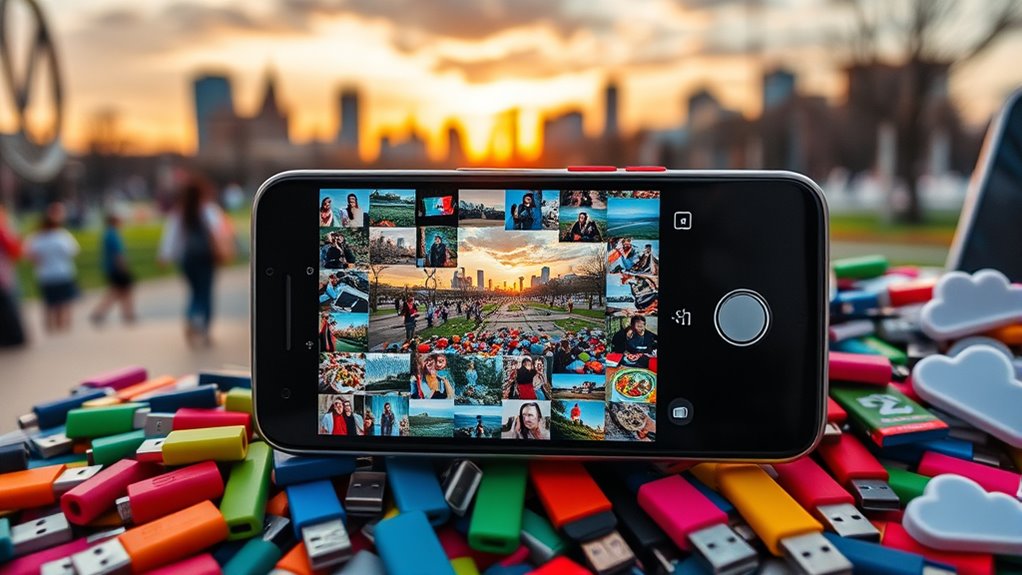
Many smartphone users tend to accumulate large collections of photos, often storing thousands in their camera rolls without regularly deleting or organizing them. This leads to cluttered galleries, making it harder to find favorite images when needed. Most people rarely delete unwanted photos, resulting in massive storage sizes that can slow device performance. To manage this, many turn to cloud storage services like Google Photos, iCloud, and OneDrive, which automatically back up images and offer sorting features. Photo management apps are also popular, helping users categorize and find photos quickly. Despite these tools, a significant number of users still struggle with organization, often leaving their camera rolls disorganized and overflowing. As photo libraries grow, efficient storage habits and smart management become essential to keep photography enjoyable and accessible. Additionally, adopting support breakfast habits such as regular backups and organization can help users maintain a more manageable photo collection.
The Influence of Mobile Photography on Professional Work

You notice how more professionals are incorporating smartphones into their workflows, often using them alongside traditional cameras. This shift influences how images are are captured, edited, and shared, blurring the lines between amateur and expert work. As mobile tech advances, it’s clear that smartphones are reshaping the tools and methods used in professional photography. Additionally, outdoor wisdom and rugged tech solutions are increasingly integrated into mobile photography setups for adventurous or remote shoots.
Smartphone Use by Professionals
As smartphones become increasingly integral to professional photography, their influence is reshaping workflows and creative possibilities. You now often use smartphones alongside traditional cameras, appreciating their portability and instant sharing capabilities. Many professionals prefer iPhones for quick shots or social media content because of their advanced computational photography features. You may also rely on smartphone apps for editing, creating seamless workflows that save time. The rise of hybrid shooting—combining stills with short videos—allows you to produce dynamic content without extra gear. Additionally, smartphone integration with drones and other innovative tools broadens your creative options. As mobile technology advances, you find yourself more adaptable, leveraging the convenience and versatility of smartphones to meet fast-paced client demands and expand your artistic reach. Mobile photography has also become a valuable tool for documenting projects and capturing behind-the-scenes moments, further enhancing your professional portfolio.
Impact on Traditional Equipment
The growing reliance on smartphones in professional photography is markedly reshaping the role of traditional equipment. You now find many professionals blending smartphone shots with DSLR or mirrorless cameras, often preferring smartphones for quick, spontaneous captures. This shift has led to a slight decline in mirrorless camera use, while smartphone integration increases. Many professionals leverage smartphones for social media content, sometimes bypassing bulky gear altogether. The trend towards Free Floating techniques also influences how images are captured and shared, emphasizing versatility and immediacy over traditional constraints.
Technological Advances Driving Mobile Photography Innovation
You can now capture stunning images thanks to breakthroughs in camera hardware, like larger sensors and multiple lenses, which enhance detail and versatility. AI-powered editing tools make it easier to improve photos instantly, transforming simple shots into professional-looking images. These technological advances are revolutionizing mobile photography, making high-quality content accessible to everyone.
AI-Enhanced Editing Capabilities
AI-enhanced editing capabilities are transforming mobile photography by making advanced enhancements accessible to everyone. With just a few taps, you can improve photo quality, correct lighting, and remove unwanted objects automatically. AI tools analyze your images, applying intelligent adjustments that used to require professional skills and expensive software. Features like scene optimization, skin smoothing, and background blurring help you create polished, share-worthy photos instantly. These capabilities reduce the need for extensive manual editing, allowing you to focus on capturing moments instead of fixing them later. As AI continues to evolve, it offers increasingly sophisticated enhancements that elevate your photos without complex processes. This democratization of editing empowers you to produce high-quality images effortlessly, transforming everyday snapshots into professional-looking photos.
Advanced Camera Hardware
Advances in mobile camera hardware are fueling a new era of innovation in smartphone photography. You now have access to multiple lenses, including ultra-wide, telephoto, and macro options, all in one device. Sensor sizes have grown larger, capturing more light for sharper images even in low-light conditions. Computational photography features like night mode, HDR, and image stabilization are standard, enabling you to shoot clearer photos without a professional setup. Faster autofocus systems, improved pixel technology, and higher-resolution sensors mean you get more detail with less effort. These hardware improvements make it easier for you to capture professional-quality images anytime, anywhere. Additionally, local automation and intelligent scene recognition enhance your photography experience by optimizing camera settings based on your environment, making it even simpler to achieve stunning results. As a result, your smartphone has become a powerful tool for creative expression, pushing the boundaries of what’s possible in mobile photography.
Social Media’s Role in Shaping Photography Styles
Social media platforms have profoundly influenced modern photography styles, encouraging you to capture more dynamic, engaging, and visually appealing images. You now prioritize vibrant colors, creative angles, and quick edits to stand out. Platforms like Instagram and TikTok push you toward vertical shots, quick transitions, and eye-catching compositions. This shift shapes your habits, making spontaneous, authentic moments more popular. Additionally, the desire for water-themed visuals, inspired by experiences at water parks and aquatic activities, influences your content creation. Below is a visual representation of these influences:
| Platform | Style Focus | Popular Content |
|---|---|---|
| Bright, polished aesthetics | Selfies, scenic shots | |
| TikTok | Short, energetic videos | Trendy challenges |
| Snapchat | Casual, candid captures | Friend group moments |
| Curated, themed visuals | Wedding, fashion shoots | |
| YouTube Shorts | Vertical storytelling | Travel vlogs, tutorials |
These trends redefine what’s considered “good” photography, fueling your creativity and habits.
The Impact of AI and Editing Tools on Image Quality
As your photography habits evolve with the influence of social media, the role of editing tools becomes increasingly prominent in shaping the final image quality. AI-powered editing apps now automatically enhance photos, adjusting brightness, contrast, and sharpness with minimal effort. These tools help you create polished images instantly, even if your original shot isn’t perfect. Features like skin smoothing, background blurring, and color correction are now standard, allowing you to craft visually striking content. AI also detects and removes unwanted objects or distractions, saving you time on manual edits. As a result, your photos look more professional and appealing, boosting engagement online. This seamless integration of AI and editing tools empowers you to elevate your photography, making stunning images accessible without advanced skills or expensive equipment.
Trends in Visual Composition and Platform Preferences
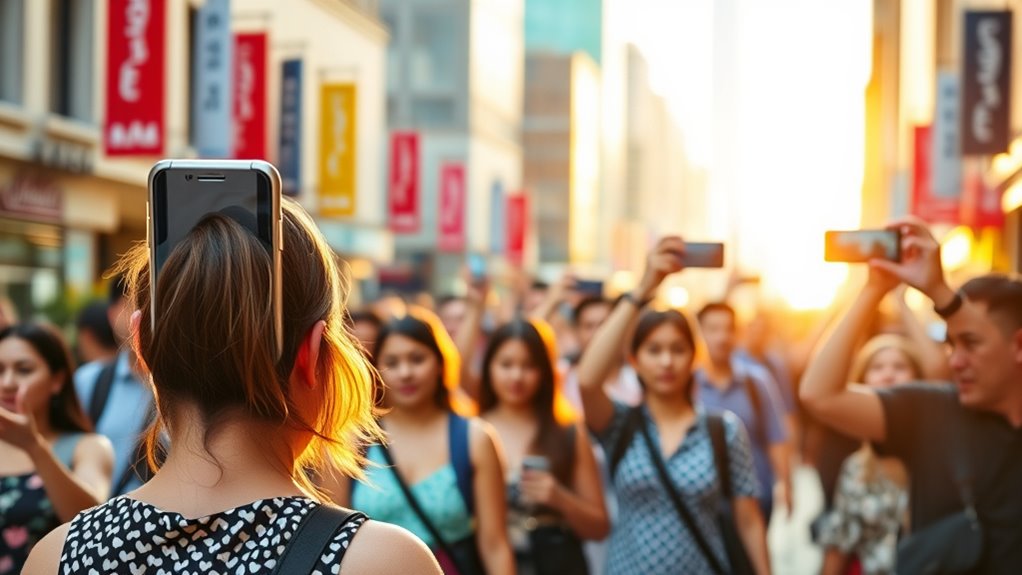
You’ve probably noticed that vertical videos and photos now dominate social media platforms like Instagram Reels and TikTok. As creators adopt hybrid photography techniques that blend stills with motion, visual composition continues to evolve. This shift reflects a preference for immersive, mobile-friendly content that captures attention quickly. Additionally, understanding how visual habits influence content creation can help creators optimize their work for better engagement.
Vertical Content Dominance
Vertical content has become the dominant format in mobile photography, especially on platforms like Instagram Reels and TikTok. You naturally hold your phone upright, making vertical shots more intuitive and engaging. This orientation aligns with how you scroll, swipe, and view content on your device, encouraging creators to design visuals that fit seamlessly into vertical feeds. As a result, photographers and content creators prioritize vertical framing to maximize reach and impact. This shift influences composition, prompting you to think differently about how you frame subjects, often emphasizing height over width. Platforms reward vertical content with higher visibility, making it essential for your photos and videos to adapt to this format. Vertical dominance shapes your visual habits, fostering more immersive, mobile-friendly storytelling.
Rise of Hybrid Photography
Hybrid photography is transforming how you create and share images by blending still photos with motion elements, making visuals more dynamic and engaging. You’re now able to combine static shots with videos, animations, or long exposures using apps that are built into your smartphone. This trend enhances storytelling, allowing you to craft immersive content that captures attention across platforms. As a result, visual composition shifts toward more cinematic and interactive styles. Platforms like Instagram Reels and TikTok favor these hybrid formats, encouraging creative experimentation. AI-powered tools also enable more sophisticated editing, making it easier to produce seamless motion-still integrations.
Future Directions of Smartphone Photography and Habits

As smartphone technology continues to advance rapidly, the future of mobile photography is poised to become even more integrated and innovative. You’ll see smarter AI-powered features that enhance your photos instantly, making professional-looking images accessible to everyone. Expect more seamless editing tools built directly into your device, reducing the need for third-party apps. As 5G becomes widespread, sharing high-quality images will be faster and easier, encouraging spontaneous content creation. Augmented reality (AR) features will likely become standard, allowing you to overlay virtual elements onto your photos and videos. Additionally, smartphones will continue to improve in low-light and zoom capabilities, pushing the boundaries of what’s possible with mobile photography. These advancements will shape your habits, making capturing, editing, and sharing moments more intuitive and immersive. Vintage design influences may also inspire new aesthetic options for phone interfaces and accessories, blending retro style with modern technology.
Frequently Asked Questions
How Do Smartphone Cameras Compare to Traditional Cameras in Professional Photography?
You’ll find that smartphone cameras are increasingly favored by professionals for certain tasks, thanks to their convenience, advanced AI editing, and high-quality lenses. While traditional cameras still excel in situations requiring superior zoom, low-light performance, and larger sensors, smartphones now handle many non-professional shoots with ease. This blend means you can switch seamlessly between devices, but for specialized work, traditional cameras still hold an edge in image quality and versatility.
What Psychological Effects Does Frequent Selfie-Taking Have on Users?
Frequent selfie-taking can boost your confidence and help you feel more connected, but it might also lead to vanity or dependency on external validation. You may start valuing your appearance over genuine self-acceptance, seeking likes instead of real connection. Over time, this habit could impact your self-esteem, making you more sensitive to online feedback. Remember, balancing self-expression with authentic self-love keeps your mental well-being healthier and more resilient.
How Do Storage Habits Influence Long-Term Photo Organization and Retrieval?
Your storage habits greatly impact your long-term photo organization and retrieval. When you rarely delete or organize your images, your camera roll becomes cluttered, making it harder to find specific photos later. Regularly sorting, deleting duplicates, and using folders or tagging helps you keep track of your memories. This approach guarantees your photos remain accessible and easy to browse, saving you time and stress when searching for those special moments.
What Ethical Concerns Arise From AI Editing and Augmented Reality in Mobile Photography?
You might not realize it, but AI editing and augmented reality in mobile photography raise serious ethical questions. Could you be unknowingly spreading false impressions or manipulating reality? As these tools become more advanced, you face dilemmas about authenticity, consent, and privacy. Are you prepared to navigate a world where what you see isn’t always what’s real? Staying aware and critical is your best defense against potential pitfalls.
How Will Future Innovations Impact the Quality and Diversity of Smartphone Photography?
Future innovations will markedly boost your smartphone photography quality and diversity. Enhanced AI tools will make editing seamless, allowing you to create professional-looking images effortlessly. Advances in camera hardware, like improved sensors and lenses, will let you capture stunning details in various lighting conditions. New features will encourage you to experiment with different styles and perspectives, broadening your creative horizons. Overall, these innovations will make mobile photography more accessible, versatile, and expressive than ever before.
Conclusion
Imagine capturing over 1 trillion photos a year with your phone—it’s astonishing how smartphone photography has become your go-to for everyday moments. As AI editing tools and social media shape your style, your camera phone isn’t just a device—it’s your personal storyteller. This shift means your daily life is now a vibrant gallery, constantly evolving. Embrace these changes, because your phone is transforming how you see and share the world around you.
Fall Picks
fall essentials
As an affiliate, we earn on qualifying purchases.