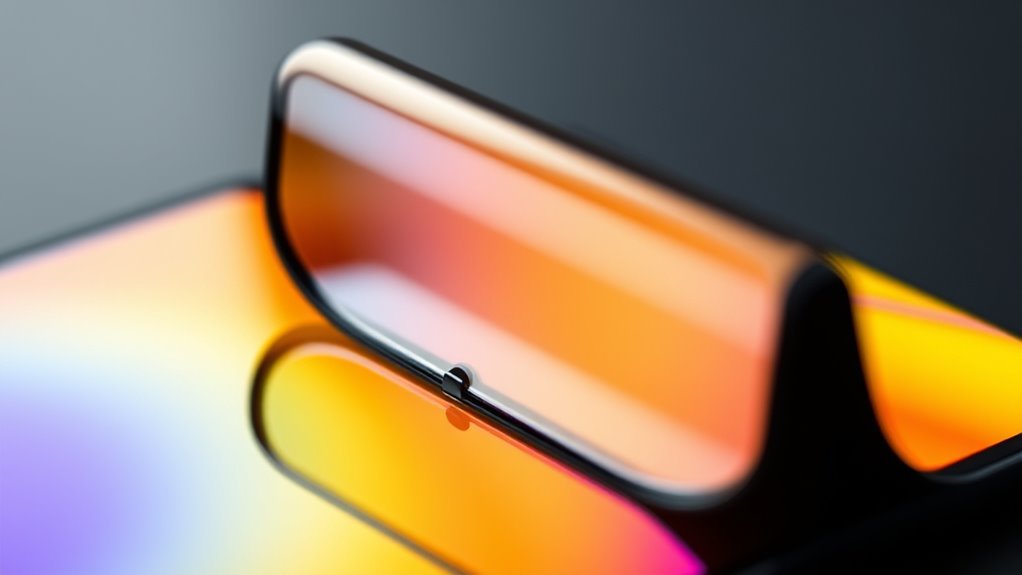

Foldable screens work by combining flexible materials like specially engineered plastics and thin glass that can bend without breaking. These screens are attached to precise hinge mechanisms made of metal or plastic, which allow smooth folding and unfolding. The hinges distribute stress evenly across the display, preventing damage over time. With ongoing innovations, these devices can fold into various shapes while staying durable and functional. If you explore further, you’ll discover how these tech details make foldable displays possible.
Key Takeaways
- Foldable screens use flexible materials like thin glass or engineered plastics that bend without breaking.
- Hinge mechanisms enable smooth folding and distribute stress evenly across the display.
- Flexible materials maintain transparency and durability through multiple folds, preventing damage over time.
- Advanced hinge designs allow for various fold angles while protecting the display from strain.
- Integration of flexible substrates and hinge technology makes foldable devices practical and durable for everyday use.
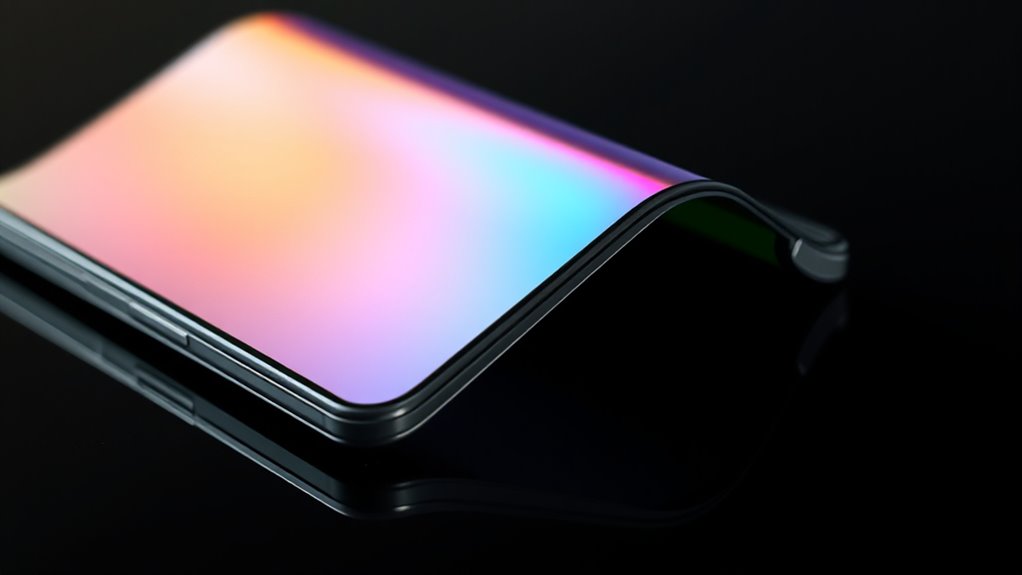
Foldable screens are revolutionizing the way we interact with devices by allowing screens to bend and fold without breaking. At the heart of this innovation are flexible materials that can endure repeated bending without losing functionality. Manufacturers use specially engineered plastics and thin glass that maintain transparency and durability even after multiple folds. These materials are essential because they need to bend seamlessly while supporting the display’s visual quality, touch sensitivity, and structural integrity. Without such flexible substrates, foldable screens wouldn’t be possible; instead, they would crack or degrade over time.
Flexible materials like engineered plastics and thin glass enable foldable screens to bend without breaking.
Alongside flexible materials, hinge mechanisms play a critical role in the functioning of foldable screens. These hinges are engineered to allow smooth, precise movement while protecting the display from stress and strain. They’re often composed of multiple components, including metal or plastic parts, that work together to enable the screen to fold at specific angles. Some hinge designs incorporate tensioned elements or specialized lubricants to guarantee the fold is both smooth and durable. These mechanisms are carefully tested to withstand thousands of folds, preventing wear and tear that could compromise the device’s performance.
When you fold or unfold a device with a foldable screen, the hinge mechanism distributes the mechanical stress evenly across the flexible materials, preventing damage. This coordination between flexible substrates and hinge design is what makes the device’s folding action both practical and long-lasting. The hinges are often concealed within the device’s frame, maintaining a sleek aesthetic while serving as the pivot points for the display. Advanced hinge engineering also allows for multiple fold angles, giving you the flexibility to use the device in various configurations, such as fully open, partially folded, or compact modes.
The integration of flexible materials with sophisticated hinge mechanisms is a marvel of modern engineering. It’s what enables you to carry a device that transforms from a phone to a tablet or a larger display seamlessly. Manufacturers continually refine these components, making hinges more durable and flexible materials more resilient. This synergy ensures foldable screens can handle everyday use without compromising performance or style. Ultimately, it’s the combination of flexible materials and advanced hinge mechanisms that makes foldable screens not just a technological novelty, but a practical, everyday tool that’s reshaping how you interact with digital content. Additionally, ongoing innovations in flexible materials are crucial for improving the overall durability and user experience of foldable devices.
Frequently Asked Questions
How Durable Are Foldable Screens Over Time?
Foldable screens are designed to be quite durable, but their longevity depends on screen flexibility and material quality. You might notice some wear over time, especially if you frequently fold and unfold your device. Manufacturers use advanced materials to improve durability, but repeated stress can still cause issues. To extend your screen’s lifespan, avoid excessive folding force and keep the device clean. With proper care, foldable screens can remain functional for years.
Can Foldable Screens Be Repaired Easily?
Think of your foldable screen as a delicate origami piece—you can fix it, but it’s not always straightforward. Repair challenges often arise because of tiny, intricate components, making panel replacement tricky and costly. You might find some repairs manageable, but many require specialized skills and tools. So, while your device can be repaired, expect that restoring it to perfect condition may involve careful handling and expert care.
What Materials Are Used in Foldable Display Hinges?
You’ll find hinge materials in foldable displays often include durable metals like stainless steel or aluminum for strength. Flexible polymers are also used to guarantee smooth movement and flexibility without breaking. These hinge materials work together to provide a reliable, long-lasting fold, allowing the screen to bend seamlessly without damage. The combination of metals and flexible polymers helps maintain screen integrity while enabling the foldable device to function smoothly.
Do Foldable Screens Affect Device Battery Life?
Ever wonder if a foldable screen drains your battery faster? It can slightly impact battery efficiency because the flexible display requires more power for its advanced components, leading to increased power consumption. However, manufacturers optimize software and hardware to manage this, so your device still lasts reasonably long. While foldable screens do use a bit more energy, thoughtful design helps balance performance and battery life, keeping your device functional throughout the day.
Are Foldable Screens Resistant to Water and Dust?
Foldable screens typically aren’t fully water-resistant or dust-proof, so you should be cautious around water and dust. While some devices feature water resistance and dust protection ratings, the foldable mechanism and flexible display layers make it harder to achieve high levels of protection. You might want to avoid exposing your foldable device to heavy dust or water, or consider using protective covers for added safety.
Conclusion
Think of foldable screens as a delicate origami masterpiece—each fold carefully crafted to bring flexibility and elegance. As you explore this technology, remember you’re holding a sheet of future that bends and unfolds like a story waiting to be written. With every crease, you’re witnessing the art of innovation unfold before your eyes, transforming how you see and interact with the world. Embrace this marvel, where technology and artistry seamlessly intertwine.