
If you’re comparing Xiaomi and Samsung flagships, you’ll find Xiaomi offers high specs at lower prices, focusing on affordability and innovative tech, while Samsung emphasizes premium build, refined camera technology, and a polished user experience. Samsung’s devices tend to prioritize camera quality and software optimization, while Xiaomi provides customizable features and strong performance for less. To discover how their designs, features, and user experiences truly differ, explore the details further.
Key Takeaways
- Samsung flagships focus on premium build quality, refined UI, and advanced camera technology, while Xiaomi emphasizes high specs and affordability.
- Samsung offers more polished, feature-rich software with extensive camera options; Xiaomi provides customizable MIUI and strong AI-driven photography features.
- Samsung’s camera systems excel in low-light and image processing, whereas Xiaomi delivers high-resolution sensors at a lower price point.
- Samsung’s devices are generally more refined and premium in design, while Xiaomi offers high-value features at accessible prices.
- Overall, Samsung prioritizes camera finesse and software sophistication, whereas Xiaomi emphasizes affordability and feature-rich hardware.
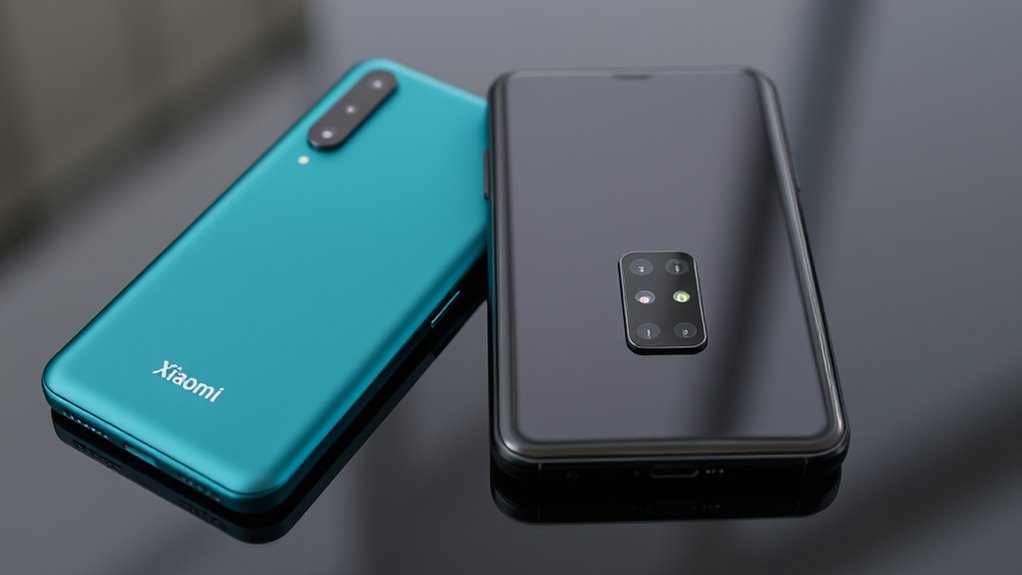
When you compare their flagship models, you’ll notice that Xiaomi emphasizes cutting-edge specs and affordability, while Samsung leans heavily into premium build quality and a refined user interface. But to truly see how they stack up, you need to look at key aspects like camera quality and software experience, which are often deciding factors for buyers. Starting with camera quality, Samsung has long been celebrated for its innovative camera technology. Its flagships typically feature multiple lenses, including ultra-wide, telephoto, and macro options, delivering versatile photography capabilities. The images tend to be sharp, with accurate colors and impressive low-light performance, thanks to advanced image processing and sensor technology. Xiaomi, on the other hand, has made impressive strides in camera tech, often offering similar multi-lens setups at a lower price point. Their cameras deliver vibrant photos, and recent models have improved considerably in low-light conditions. While Xiaomi might not always match Samsung’s finesse in color accuracy or detail, it compensates with high-resolution sensors and AI-driven features that make photography accessible and fun. If capturing professional-looking shots is your priority, Samsung’s camera system might have a slight advantage, but Xiaomi’s offerings are increasingly competitive. When it comes to software experience, Samsung’s One UI is refined, intuitive, and packed with features. It’s built on Android but customized to feel polished and user-friendly. Samsung regularly updates its software, adding new functionalities and improving stability. You’ll find a suite of useful apps and customization options that let you tailor your device to your liking. Xiaomi’s MIUI, meanwhile, offers a vibrant, feature-rich interface that appeals to those who enjoy personalization. It’s also based on Android, but it can feel more cluttered, with frequent notifications for updates and additional apps. Xiaomi tends to push out updates quickly, often incorporating new features inspired by the latest Android versions, but some users find MIUI’s UI a bit overwhelming at first glance. Ultimately, your software experience preference depends on whether you prefer Samsung’s clean, streamlined interface or Xiaomi’s more customizable, lively environment. Additionally, Xiaomi often incorporates cutting-edge technology into its devices at a more accessible price point, making it appealing for budget-conscious consumers seeking high specs. In the end, Xiaomi and Samsung each have their strengths that appeal to different users. Samsung’s camera technology and polished software experience offer a more premium, refined feel, especially if photography and smooth usability are your priorities. Xiaomi provides excellent value with competitive specs, strong camera performance, and a customizable software environment that appeals to tech enthusiasts. Your choice hinges on which aspects matter most to you — whether it’s the finesse of Samsung’s camera and software or Xiaomi’s affordability and feature-packed offerings.
Frequently Asked Questions
Which Brand Offers Better After-Sales Support Globally?
You’ll find Samsung generally offers better after-sales support globally, thanks to its extensive service network and all-encompassing warranty policies. Samsung’s widespread service centers make repairs and support more accessible, ensuring quicker assistance. Xiaomi’s support is improving, but its smaller service network can mean longer wait times and limited coverage in some regions. If reliable after-sales support matters most, Samsung is the stronger choice for global coverage.
How Do Xiaomi and Samsung Compare in Software Updates?
Imagine you’re in the year 2023, and both Xiaomi and Samsung prioritize software longevity for their flagship devices. Samsung typically offers more consistent update frequency, often providing three to four years of security patches and major OS updates. Xiaomi’s update support is improving but usually falls short of Samsung’s, meaning your device might not stay current as long. You’ll find Samsung’s software support more reliable for keeping your device secure and up-to-date.
What Are the Environmental Impacts of Each Company’s Manufacturing?
You should know that Xiaomi and Samsung both aim for sustainable manufacturing, but their environmental impacts differ. Samsung invests heavily in reducing its carbon footprint through eco-friendly materials and energy-efficient factories. Xiaomi also works toward sustainability, but its efforts are still developing. Choosing a brand committed to sustainable manufacturing helps lower the environmental impact, so consider their transparency on eco initiatives and how they minimize waste and emissions during production.
How Do Their Customer Satisfaction Ratings Differ Across Regions?
You’ll find that customer satisfaction ratings vary by region, influenced by regional preferences and brand loyalty. In some areas, Samsung’s reputation for innovation and quality boosts satisfaction levels, while Xiaomi appeals with affordability and feature-rich devices. Your experience may depend on where you are, as local preferences shape how highly customers rate each brand. Overall, Samsung tends to have stronger loyalty in Western markets, whereas Xiaomi scores higher in Asia.
Are There Significant Differences in Their Innovation Strategies?
You’ll notice significant differences in their innovation tactics and design philosophies. Samsung emphasizes cutting-edge technology, pushing boundaries with features like foldable screens and advanced displays, showcasing its commitment to innovation. Xiaomi, on the other hand, adopts a more cost-effective approach, focusing on delivering high specifications at competitive prices. Their design philosophies also differ: Samsung leans toward sleek, premium aesthetics, while Xiaomi prioritizes practicality and user-centric designs to appeal broadly.
Conclusion
When choosing between Xiaomi and Samsung, think of it like picking between a sleek sports car and a versatile SUV. Xiaomi offers impressive features at a more affordable price, while Samsung delivers premium quality and innovation. It all depends on what you value most—cost-efficiency or cutting-edge tech. Whatever your choice, both brands push boundaries like a painter with a full palette, ensuring you get a device that truly stands out.