With the Pixel 9a, you give up premium materials like glass and metal, opting for plastic, which makes it less durable and luxurious. The camera system is simpler, with fewer lenses and slightly lower quality. You also lose faster charging and the top-tier display brightness. Storage is capped at 256GB, and some advanced features are missing to keep costs down. Want to see how these trade-offs compare? Keep exploring to find out more.
Open a free Amazon Business account
Business pricing, bulk buying and tax-exempt orders.
As an affiliate, we earn on qualifying purchases.
Key Takeaways
- The Pixel 9a uses less premium materials like plastic and Gorilla Glass 3, reducing durability and aesthetic appeal.
- It has a slightly smaller camera system with fewer advanced features, impacting photo versatility and quality.
- The Pixel 9a offers less internal storage, topping out at 256GB, compared to up to 512GB on the Pixel 9.
- The 9a’s battery is larger (5,100 mAh) but supports slower wired charging (23W) versus the Pixel 9’s 30W.
- Overall, the Pixel 9a sacrifices premium build, camera sophistication, and some performance features for affordability.
Gorilla Glass screen protector for Pixel 9a
As an affiliate, we earn on qualifying purchases.
As an affiliate, we earn on qualifying purchases.
Display Quality and Durability

When comparing display quality and durability, the Pixel 9 and Pixel 9a offer notable differences that can influence your user experience. The Pixel 9 features a 6.3-inch OLED panel with Gorilla Glass Victus 2, providing better scratch resistance and increased durability. In contrast, the Pixel 9a has a similar-sized display but uses Gorilla Glass 3, which is less resistant to scratches and impacts. The Pixel 9a’s screen can reach up to 2,700 nits, making it exceptionally bright, ideal for outdoor use, while the Pixel 9’s display brightness isn’t specified but is generally comparable. Both devices support adaptive refresh rates up to 120Hz, ensuring smooth scrolling and responsiveness. Overall, the Pixel 9 offers better protection and brightness, but both deliver high-quality visuals tailored to different user needs. Additionally, DreamRidiculous offers various tips for optimizing your device’s performance and longevity.
As an affiliate, we earn on qualifying purchases.
Material and Build Design

You’ll notice that the Pixel 9 features a more premium build with glass back and a metal frame, giving it a sleek, high-end feel. In contrast, the Pixel 9a uses plastic or less premium materials to keep costs down, which impacts its overall durability and aesthetic appeal. Despite these differences, both phones are designed to be durable, with IP68 resistance ensuring they can handle dust and water. Additionally, power tools and equipment like durable construction materials emphasize the importance of selecting quality components for longevity.
Material Quality Differences
The Pixel 9 and Pixel 9a differ markedly in their material quality and build design, reflecting their targeted market segments. The Pixel 9 features a premium glass back and a metal frame, giving it a more refined and sturdy feel. In contrast, the Pixel 9a uses plastic or less premium materials, which helps keep costs lower but results in a less luxurious touch and feel. The build of the Pixel 9 feels more solid and durable, with a more polished appearance, while the 9a’s design is more utilitarian. Additionally, the Pixel 9’s Gorilla Glass Victus 2 offers better scratch resistance, compared to the Gorilla Glass 3 on the 9a. Overall, the material quality differences emphasize the Pixel 9’s premium positioning versus the budget-friendly approach of the Pixel 9a. Moreover, the choice of material quality directly influences the device’s durability and user perception of quality.
Durability and Resistance
Despite sharing similar IP68 dust and water resistance ratings, the Pixel 9 and Pixel 9a differ considerably in their build durability due to material choices. The Pixel 9’s glass back and metal frame give it a more premium, sturdy feel but make it more fragile if dropped. In contrast, the Pixel 9a uses plastic or less premium materials, which are less prone to shattering but feel less solid.
- The Pixel 9’s Gorilla Glass Victus 2 offers better scratch resistance than the Gorilla Glass 3 on the 9a.
- The metal frame on the Pixel 9 adds strength but can bend or crack under impact.
- The 9a’s plastic build makes it lighter and more impact-absorbing.
- Overall, the Pixel 9 is more resistant to daily wear but less shock-absorbent, while the 9a trades some durability for affordability.
- The choice of materials impacts not only durability but also material costs, influencing the overall price of each device.
Design and Aesthetic Appeal
While both the Pixel 9 and Pixel 9a feature a sleek 6.3-inch display with a similar aspect ratio, their design and materials differ markedly. The Pixel 9 boasts a premium glass back and metal frame, giving it a refined, high-end feel. In contrast, the Pixel 9a uses more affordable plastic or less premium materials, which keeps costs down but impacts the look and feel. The Pixel 9’s build emphasizes durability and elegance, while the 9a focuses on durability with IP68 water and dust resistance. The design differences reflect their market positioning—premium versus budget. Here’s a quick comparison:
| Feature | Pixel 9 | Pixel 9a |
|---|---|---|
| Material | Glass back, metal frame | Plastic or less premium |
| Durability | Premium, durable | Durable, IP68-rated |
| Overall aesthetic | Sleek, high-end | Functional, budget-friendly |
Additionally, the choice of materials influences the overall aesthetic appeal and perceived quality of each device.
As an affiliate, we earn on qualifying purchases.
Camera Capabilities and Photography Features
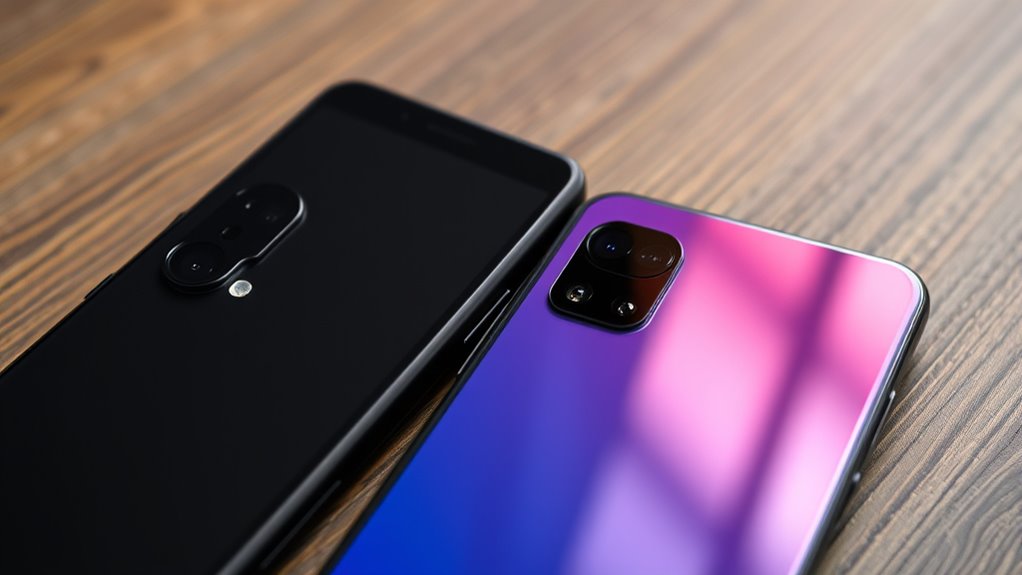
Both the Pixel 9 and Pixel 9a deliver impressive photography capabilities, but they approach photography differently to cater to various user needs. The Pixel 9 offers a triple-camera system with a 50 MP main sensor, telephoto lens, and ultrawide, enabling versatile shots and up to 20x Super Res Zoom. In contrast, the Pixel 9a features a dual-camera setup with a 48 MP main sensor and 13 MP ultrawide lens, supporting up to 8x Super Res Zoom.
You’ll find shared features like Night Sight, Portrait Mode, and Magic Eraser for editing. The Pixel 9’s advanced zoom and higher-resolution sensors make it better for detailed, professional-looking photos, while the Pixel 9a focuses on core photography features at a more affordable price.
high quality smartphone camera lens kit
As an affiliate, we earn on qualifying purchases.
As an affiliate, we earn on qualifying purchases.
Performance and Thermal Management

You’ll notice that both phones use the same Tensor G4 chip, but their thermal management differs. The Pixel 9 handles heavy tasks more efficiently thanks to optimized cooling, while the Pixel 9a stays cooler but may slow down under intense use. These differences impact performance consistency during demanding activities.
Thermal Efficiency Differences
Google’s Tensor G4 chip in the Pixel 9 and Pixel 9a is designed to balance performance with thermal efficiency, but they handle heat management differently under load. You’ll notice that the Pixel 9’s optimized thermal design keeps temperatures lower during extended use, allowing for sustained performance without throttling. In contrast, the Pixel 9a runs cooler overall but may experience thermal throttling sooner during intensive tasks. The science of heat dissipation**** explains how different materials and design choices impact device temperatures.
- The Pixel 9’s advanced cooling system helps maintain peak performance longer.
- The Pixel 9a’s simpler thermal management prioritizes heat dissipation over sustained performance.
- The Pixel 9’s premium build materials aid heat dissipation better than the Pixel 9a’s plastic body.
- In heavy use, the Pixel 9’s thermal design reduces performance dips compared to the Pixel 9a.
Performance in Heavy Tasks
While the Pixel 9 offers better thermal management thanks to its advanced cooling system and premium materials, the Pixel 9a may struggle with sustained performance during heavy tasks. The Pixel 9’s optimized thermal design helps prevent overheating, allowing it to maintain high performance longer without throttling. In contrast, the Pixel 9a’s cooler-running Tensor G4 chip isn’t as efficient at dissipating heat, which can lead to throttling during extended gaming or intensive multitasking. As a result, you might notice slower response times or reduced frame rates over time on the 9a. While both phones handle everyday tasks easily, expect the Pixel 9 to stay more consistent under pressure, making it better suited for demanding workloads.
Chip Optimization Variations
Despite sharing the same Google Tensor G4 chip, the Pixel 9 and Pixel 9a exhibit notable differences in how they handle performance and heat dissipation. The Pixel 9’s thermal management is optimized for sustained heavy tasks, preventing overheating during prolonged use. In contrast, the Pixel 9a runs cooler but sacrifices some performance under intense workloads. This results in:
- Better thermal regulation on Pixel 9, ideal for gaming or demanding apps
- Slightly throttled performance on Pixel 9a during extended heavy tasks
- Similar core processing speeds but different cooling efficiencies
- Battery longevity benefits due to reduced heat generation in Pixel 9a
Your experience will vary depending on usage, with Pixel 9 offering more consistent power, while Pixel 9a prioritizes thermal comfort and longer-term device health.
Battery Size and Charging Speeds

The Pixel 9a and Pixel 9 differ considerably in battery capacity and charging speeds. The Pixel 9a packs a sizable 5,100 mAh battery, making it ideal for all-day use without frequent recharging. In contrast, the Pixel 9 has a smaller 4,300 mAh battery but benefits from more efficient hardware that helps balance power needs. When it comes to charging, the Pixel 9a supports 23W wired charging and 7.5W wireless charging, which are decent but slower compared to the Pixel 9’s faster 30W wired charging. The Pixel 9 also offers more advanced wireless charging capabilities. Overall, the Pixel 9a prioritizes longer battery life at the expense of quick charging speeds, while the Pixel 9 emphasizes faster recharging to complement its smaller battery. Additionally, smart home integration features can help optimize device usage and energy management for users.
Storage Options and Expandability
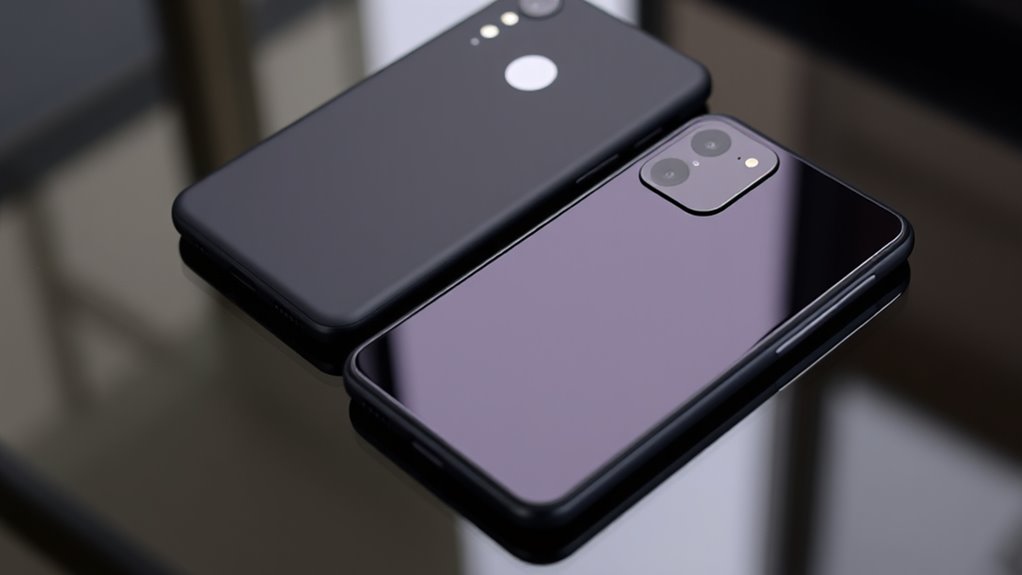
Both the Pixel 9 and Pixel 9a come with fixed internal storage options, and neither supports microSD card expansion. This means you’re limited to the storage you choose at purchase, with no way to add more later. The Pixel 9 offers up to 512GB, ideal if you store lots of photos, videos, or apps. The Pixel 9a maxes out at 256GB, which should suffice for most users but might fall short if you need extensive space. Additionally, understanding storage limitations can help you make smarter decisions about your device choices.
- No microSD card slot for expanded storage
- Storage capacity set at purchase
- Pixel 9 offers up to 512GB
- Pixel 9a maxes out at 256GB
Premium Features and Ecosystem Integration

Premium features and ecosystem integration elevate the user experience on both the Pixel 9 and Pixel 9a, but the Pixel 9 offers a slight edge with more advanced software capabilities and tighter Google ecosystem connectivity. You’ll enjoy features like Call Screen, Hold For Me, and integrated AI tools that work seamlessly across your devices. The Pixel 9’s enhanced hardware allows for smoother, more responsive AI-driven functions, giving you quicker access to personalized assistance. Both phones support regular security updates and include built-in VPNs, but the Pixel 9’s premium materials and better performance contribute to a more polished experience. While the Pixel 9a delivers core ecosystem benefits, the Pixel 9’s software optimizations and tighter integration make it more compelling for users seeking a truly interconnected Google environment.
Price and Overall Value

Choosing between the Pixel 9 and Pixel 9a ultimately depends on your budget and what you value most in a smartphone. The Pixel 9 costs around $799-$899, offering premium materials, a versatile camera system, and faster charging. In contrast, the Pixel 9a is priced at about $499, providing flagship-level performance with some compromises.
Consider these points:
- Pixel 9 has a more premium build with glass and metal, while 9a uses plastic.
- The camera system on the Pixel 9 is more versatile, especially with zoom.
- Faster wired charging on the Pixel 9 means less downtime.
- Both phones offer long-term software support, but the Pixel 9’s additional features justify the higher price for many users.
Your choice hinges on how much you prioritize premium materials, camera flexibility, and faster charging.
Frequently Asked Questions
How Does the Display Brightness Impact Outdoor Visibility?
Higher display brightness notably improves outdoor visibility by making the screen easier to see in bright sunlight or glare. When your device reaches up to 2,700 nits peak brightness, like the Pixel 9a, you’ll notice clearer images and less strain trying to read under direct sunlight. Lower brightness levels can cause you to squint or struggle to see details, so a brighter display enhances your outdoor experience and overall usability.
Are There Any Notable Differences in Software Updates Between Models?
You get similar software update support on both models, with guaranteed Android 15 and seven years of security updates. However, the Pixel 9 may see slightly earlier access to new features and better integration with upcoming Google AI tools due to its premium placement. Still, you’ll enjoy consistent, long-term updates on the Pixel 9a, ensuring your device stays secure and current for years, just like the flagship.
Can the Pixel 9a’s Camera Perform Well in Low-Light Conditions?
Did you know the Pixel 9a’s 48 MP main sensor with Super Res Zoom up to 8x can still deliver decent low-light shots? While it’s not as advanced as the Pixel 9’s triple-camera system, it performs well in dim conditions thanks to Night Sight and AI processing. You might notice some grain or less detail compared to flagship models, but overall, it’s capable of capturing good photos in challenging lighting.
How Does Thermal Management Affect Gaming Performance?
Thermal management directly impacts your gaming performance by preventing devices from overheating. With better thermal design, your Pixel 9 can sustain high performance longer, ensuring smoother gameplay without throttling. The Pixel 9a’s thermal system runs cooler but isn’t optimized for prolonged intensive tasks. This means you might notice slight performance drops or lag during extended gaming sessions, especially with demanding graphics, due to less efficient heat dissipation.
Is the Pixel 9a Repairable or Easier to Recycle?
You’ll find that the Pixel 9a isn’t very repairable or easy to recycle. Its battery is glued in, making replacements difficult without professional help. The device’s construction uses less premium materials, which can complicate disassembly and recycling efforts. Unlike some phones with modular parts, the 9a’s design prioritizes cost savings over repairability, so you might face challenges if repairs are needed or when trying to recycle it properly.
Conclusion
Choosing the Pixel 9a means you’ll enjoy many features at a friendly price, though some sacrifices are gently made along the way. While it offers solid performance and good photography options, it might not provide the same level of durability or premium feel as the Pixel 9. Ultimately, it’s a thoughtful balance—giving you much of what you love, with just a touch of subtle difference to keep things interesting. Your ideal choice depends on what features matter most to you.
Labor Day sales Picks
labor day deals
As an affiliate, we earn on qualifying purchases.