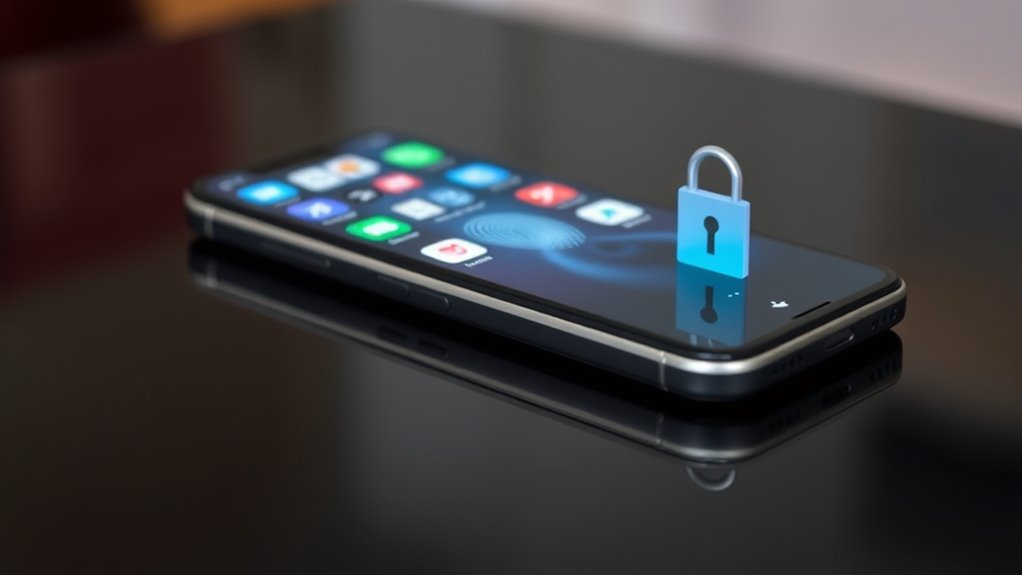

Your smartphone’s security relies on features like biometric authentication, app permission controls, encryption, and multi-factor authentication, all working together to protect your personal data from threats. These tools prevent unauthorized access, minimize data misuse, and keep your information private. Regularly updating your device and staying aware of security options strengthens your defenses. If you want to understand how these features keep you safe, keep exploring the ways your device can be protected.
Key Takeaways
- Modern smartphones use biometric authentication like fingerprint and facial recognition for quick, high-security access.
- Regularly reviewing and managing app permissions reduces data exposure and potential misuse.
- Multi-factor authentication, such as 2FA, adds an extra security layer beyond passwords.
- Device encryption protects stored data even if the phone is lost or stolen.
- Keeping software updated ensures security patches address vulnerabilities and enhance protection.

In today’s digital age, safeguarding your smartphone is more important than ever. With so much of your personal information stored on your device—photos, messages, banking details—it’s essential to understand how security features protect you. One of the most effective tools is biometric authentication. Instead of relying solely on traditional passwords or PINs, biometric methods like fingerprint scans or facial recognition offer quick, convenient access while maintaining high security. These features are designed to verify your identity with unique physical traits, making it considerably harder for someone else to unseal your phone. When you set up biometric authentication, you’re adding an extra layer of security that works seamlessly in everyday use. It’s not only faster but also more reliable than remembering complex passwords, which can be forgotten or stolen.
Biometric authentication adds quick, reliable security by verifying your unique physical traits, protecting your smartphone from unauthorized access.
However, security isn’t just about unsealing your device. App permissions play a fundamental role in maintaining your privacy. Many apps request access to sensitive data—your location, contacts, camera, microphone—often more than they need to function properly. It’s imperative to review these permissions regularly and only grant access to trusted applications. By managing app permissions, you minimize the risk of unwanted data collection or misuse. For example, denying a game access to your location or camera helps prevent potential privacy breaches. Modern smartphones allow you to control permissions easily in the device settings, so you can revoke access at any time if you notice unusual activity or simply no longer need an app to have certain permissions.
Additionally, your device’s security features often include options like two-factor authentication (2FA), which adds another barrier against unauthorized access. Enabling 2FA means that even if someone manages to get your password, they’d still need a secondary code—usually sent to your email or generated by an authenticator app—to get in. This tactic substantially reduces the chances of someone hacking into your accounts or data. Some devices also incorporate encryption technology, which further secures stored data from unauthorized access if the device is lost or stolen.
Together, biometric authentication, app permissions management, and multi-factor authentication form a strong security framework for your smartphone. They work in tandem to protect your personal information from threats ranging from casual snoopers to malicious hackers. While no system is completely foolproof, taking proactive steps to understand and utilize these features can make a marked difference. You should regularly update your device’s software as well, since updates often include security patches that fix vulnerabilities. Staying informed about your device’s security options empowers you to keep your digital life safe and secure in an increasingly connected world.
Frequently Asked Questions
Can I Upgrade My Phone’s Security After Purchase?
Yes, you can upgrade your phone’s security after purchase. You should regularly check for software updates, as these often include essential security patches that fix vulnerabilities. Installing the latest updates helps protect your device from new threats. Enable automatic updates if possible, so you stay current. Staying proactive with software updates and security patches guarantees your smartphone remains secure against evolving cyber threats.
How Often Should I Update My Smartphone’s Security Settings?
You should update your smartphone’s security settings at least once a month — it’s like putting a lock on your digital life! Regular software updates patch vulnerabilities, while reviewing app permissions keeps hackers out of your personal info. Don’t wait for a breach; stay ahead of threats by updating frequently. The more often you check, the safer you’ll be from sneaky cyberattacks trying to infiltrate your device.
What Are the Risks of Jailbreaking or Rooting My Device?
Jailbreaking or rooting your device risks voiding your device warranty and can compromise security. It may expose your phone to malware, data theft, and unauthorized access. Additionally, you could face app compatibility issues, as many apps won’t run on modified devices. While you gain customization options, these risks often outweigh benefits, making it safer to keep your device’s security features intact and avoid tampering.
Do Biometric Features Like Fingerprint Scanners Compromise Privacy?
Biometric features like fingerprint scanners do raise privacy concerns, but they generally don’t compromise your biometric privacy if properly secured. Fingerprint security stores your data locally on your device, not in the cloud, reducing risks of hacking. However, it’s wise to enable device encryption and use strong passwords as backups. While biometric data is unique, staying aware of how your device manages fingerprint security helps protect your privacy effectively.
How Can I Recover Data if My Phone Is Hacked?
If your phone is hacked, start by disconnecting from the internet to prevent further damage. Use encrypted backups to restore your data safely and guarantee your information stays protected. Run malware removal tools to detect and eliminate malicious software. Change all your passwords, enable two-factor authentication, and update your device’s software. These steps help recover your data and strengthen your phone’s security against future threats.
Conclusion
Now, picture your smartphone as a fortress guarding your personal world. With features like fingerprint scanners, facial recognition, and encrypted data, you’re holding the keys to a secure castle. But remember, no fortress is impenetrable. Stay vigilant, update your software, and use strong passwords. By doing so, you turn your device into a well-guarded sanctuary, ensuring your digital life remains private and protected amidst the busy, unpredictable landscape of today’s connected world.


