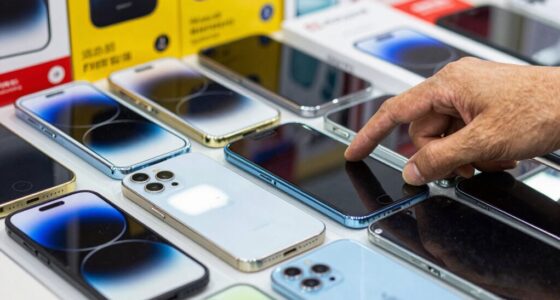
In the 2010s, smartphones like the iPhone 11 Pro, Google Pixel, and foldable devices from Samsung revolutionized mobile tech. You saw advances like powerful cameras, multiple lenses, and night modes that turned your phone into a true imaging tool. Foldable screens offered versatility, combining a compact form with a larger display. These innovations shaped the future of mobile design and functionality, and exploring further reveals how they continue to influence your everyday tech experience.

Get the latest gadgets delivered free — and shop member deals
- Fast, free delivery on millions of items
- Access to Prime Big Deal Days deals on October 6–7
- Prime Video, Amazon Music and more included
Key Takeaways
- The iPhone 6 revolutionized design with larger screens and introduced Apple Pay, setting the standard for premium smartphones.
- Samsung Galaxy S series pushed innovation with high-quality displays, powerful processors, and advanced camera systems.
- Foldable phones like the Samsung Galaxy Fold pioneered flexible screens, blending portability with larger displays.
- Google Pixel phones advanced computational photography, elevating smartphone camera capabilities.
- The rise of flagship devices with multi-lens cameras and foldable screens defined the decade’s technological innovation.

The 2010s was a transformative decade for mobile phones, marked by rapid innovation and the rise of devices that changed how we communicate and interact. During this period, manufacturers pushed the boundaries of design and functionality, introducing features that were once considered futuristic. One of the most exciting developments was the advent of foldable screens, which allowed phones to transform from compact devices into larger, tablet-like displays. You could carry a phone small enough to fit in your pocket, then unfold it to enjoy a bigger screen for media, gaming, or multitasking. This innovation signaled a shift toward more versatile devices that blended portability with functionality, setting the stage for a new era of mobile design.
Foldable screens revolutionized mobile design, blending portability with larger, versatile displays for media, gaming, and multitasking.
Alongside foldable screens, camera innovations played a pivotal role in defining the decade’s flagship phones. You no longer had to carry a separate camera or sacrifice quality for convenience. Manufacturers integrated multiple lenses, advanced sensors, and computational photography techniques that dramatically improved photo quality. Phones like the iPhone 11 Pro and Google Pixel 4 introduced triple lens setups and night modes, enabling you to capture stunning images in low light and from various angles. These camera advancements didn’t just enhance picture quality—they transformed your smartphone into a powerful imaging tool, rivaling dedicated cameras in many situations. The high-quality cameras also fueled the rise of social media, making sharing your moments easier and more vibrant than ever.
Throughout the 2010s, these innovations reshaped what you expected from a mobile device. Foldable screens hinted at a future where your phone could double as a mini tablet, offering expanded screen real estate without sacrificing portability. Camera innovations meant that your phone could be your primary camera, capable of professional-quality shots. These features drove competition among brands, leading to rapid improvements and more choices tailored to your needs. You experienced how these advancements made your daily life more seamless—whether it was editing photos on multiple lenses or unfolding your phone for a larger view during a video call. Additionally, the development of energy-efficient hardware contributed to longer battery life and overall sustainability of devices.
In essence, the 2010s left a legacy of pushing technological boundaries, making smartphones more versatile, powerful, and integral to your life. The innovations in foldable screens and camera technology not only defined that era but also set the foundation for what’s to come. As these features continue to evolve, they remind you that your smartphone isn’t just a device for communication—it’s a tool for creativity, productivity, and entertainment, constantly adapting to your needs.
Frequently Asked Questions
How Did the 2010S Phones Influence Modern Smartphone Design?
You see how 2010s phones influenced modern designs by popularizing features like foldable screens and camera advancements. These innovations pushed you to expect bigger, more versatile displays and better photos from your device. Manufacturers now focus on seamless foldability and high-quality cameras, making your smartphone more functional and adaptable. The 2010s set the stage for these cutting-edge features, shaping your current mobile experience profoundly.
Which 2010S Phone Had the Most Significant Technological Innovation?
You might be surprised, but the Samsung Galaxy Fold stands out as the most innovative 2010s phone. Its foldable screens redefined flexibility, making it possible to have a compact device that transforms into a tablet. Paired with advanced biometric security like fingerprint and facial recognition, it pushed boundaries. This coincidence of foldable tech and security advancements made it a true game-changer, shaping future smartphones’ design and functionality.
How Did Consumer Preferences Shape 2010S Phone Development?
You influenced 2010s phone development through your consumer trends, driving manufacturers to prioritize sleek design evolution and features like larger screens, better cameras, and faster performance. Your desire for portability, multitasking, and connectivity pushed brands to innovate constantly, shaping devices to fit your needs. As a result, phones became more personalized, user-friendly, and integrated into daily life, reflecting what you value most in technology.
What Were the Major Challenges Faced by Manufacturers in the 2010S?
You faced major challenges with battery life, as consumers demanded longer usage times, pushing manufacturers to innovate. Manufacturing costs also skyrocketed due to advanced features and premium materials, making it hard to balance quality and affordability. You had to constantly optimize designs and production processes to meet consumer expectations while managing expenses, all amidst rapid technological changes that kept pushing the boundaries of what smartphones could do.
How Did the 2010S Phones Impact Global Communication Habits?
Imagine your phone as a bridge, connecting you instantly to the world. In the 2010s, phones transformed communication by seamlessly integrating social media, making it easier to share moments and stay connected. They fostered global connectivity, shrinking distances and creating a digital village. You now communicate faster, more often, and more visually, shaping how you relate to others across continents. This era truly revolutionized your everyday interactions.
Conclusion
So, as you look back at the phones that shaped the 2010s, it’s clear they weren’t just devices—they were cultural icons. Each flagship pushed boundaries, changed how we connect, and left a lasting legacy. But isn’t it fascinating how quickly technology evolves? Today’s groundbreaking device might be tomorrow’s relic. What will the next decade’s iconic phones say about us and our ever-changing world?
Fall Picks
fall essentials
As an affiliate, we earn on qualifying purchases.