Starting with 1G, wireless communication focused on simple analog voice calls, but it was limited in coverage and security. 2G introduced digital signals, enabling text messaging and basic data services. With 3G, mobile internet became faster, supporting web browsing and video calls. 4G improved speeds further, allowing seamless streaming and gaming. Today, 5G offers ultra-low latency and massive device connectivity, transforming how you connect and communicate—discover more about this exciting evolution ahead.
Key Takeaways
- 1G introduced analog voice communication with bulky devices and limited coverage.
- 2G digitized signals, enabling SMS text messaging and laying the groundwork for data services.
- 3G significantly increased data speeds, supporting web browsing, video calls, and multimedia access.
- 4G provided high-speed, low-latency connectivity for HD streaming, online gaming, and real-time video conferencing.
- 5G offers ultra-fast speeds, low latency, and supports massive device connectivity, transforming communication and smart technologies.
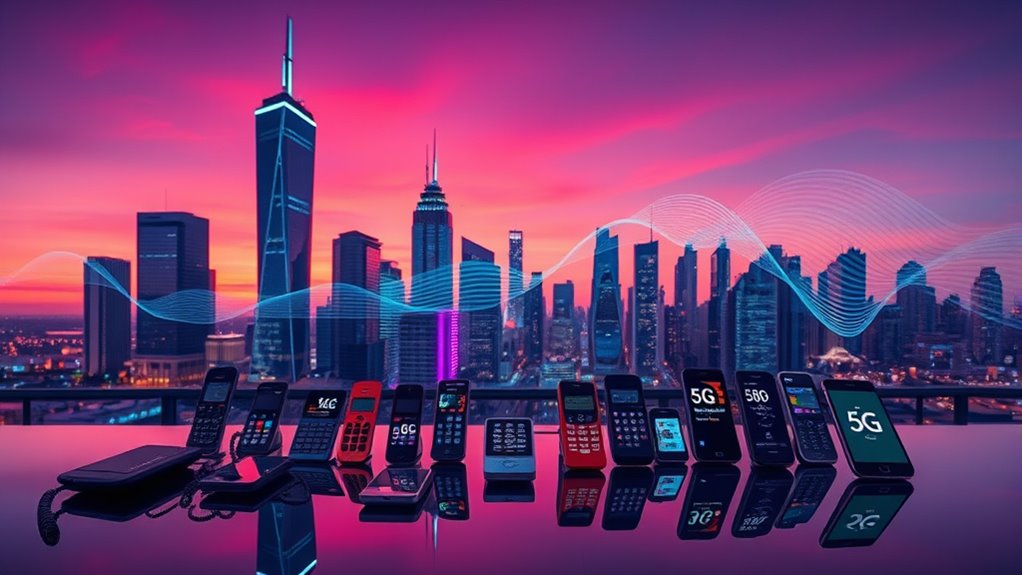
Mobile networks have evolved rapidly over the past several decades, transforming how we communicate and access information. This wireless evolution has seen the development of various network generations, each bringing significant improvements in speed, capacity, and functionality. You might not realize it, but every time you make a call, send a message, or stream a video, you’re experiencing the result of these technological leaps. Starting with 1G, the first generation of wireless technology, the focus was primarily on voice communication. These analog networks allowed for basic mobile calls but offered little in terms of data or security. They were bulky, had limited coverage, and were prone to interference, making them suitable only for simple voice transmission.
Mobile networks have evolved from basic voice calls to advanced high-speed connectivity shaping our digital world.
As technology advanced, the second generation, or 2G, emerged in the early 1990s, marking a pivotal shift in wireless evolution. This network generation introduced digital signals, which improved call quality and provided the foundation for text messaging and basic data services. With 2G, you could send SMS messages and enjoy better security features, but data speeds remained slow, limiting internet access on mobile devices.
The turn of the millennium brought about 3G, a major step forward in network generations. 3G networks significantly increased data speeds, enabling you to browse the web more comfortably, make video calls, and access multimedia content on your devices. The focus shifted from solely voice communication to more data-driven applications, opening the door for mobile internet and the rise of smartphones as we know them today. This network generation truly marked the beginning of mobile broadband, transforming how you connect on the go.
Moving into the 2010s, 4G networks further accelerated wireless evolution with even faster speeds and lower latency. This generation made streaming high-definition videos, online gaming, and real-time video conferencing seamless experiences. You could now do much more on your mobile device without waiting for pages to load or videos to buffer. The improvements in network infrastructure and technology allowed for a more connected world, supporting a growing ecosystem of apps and services that depend on reliable internet connections. Additionally, 4G’s improved connectivity capacity has laid the groundwork for many emerging technologies.
Now, with 5G rolling out globally, you’re witnessing the latest leap in network generations. 5G offers unprecedented speeds, ultra-low latency, and massive device connectivity, paving the way for innovations like autonomous vehicles, smart cities, and the Internet of Things. As a user, you’ll notice faster downloads, more stable connections, and new experiences that were impossible with earlier generations. Each step in this wireless evolution has reshaped how you communicate, work, and entertain yourself, making the journey from 1G to 5G a remarkable story of technological progress.
Frequently Asked Questions
How Does 6G Compare to Current 5G Technology?
You’ll find that 6G promises faster speeds and lower latency than 5G, thanks to antenna innovations and advanced spectrum management. It aims to support more connected devices and smarter technologies like AI integration. With better spectrum utilization, 6G will enhance network capacity and reliability, making your wireless experiences seamless. Overall, 6G builds on 5G’s foundation, pushing the boundaries of wireless communication even further.
What Are the Main Challenges in Developing 6G?
Think of developing 6G as charting uncharted waters; spectrum allocation becomes a tangled web, and infrastructure costs skyrocket like a rocket launch. You’ll face challenges in balancing frequency bands, ensuring global compatibility, and building advanced infrastructure. Overcoming these hurdles demands innovative solutions and international collaboration. If you stay adaptable and forward-thinking, you can steer through these storms toward a future of ultra-fast, seamless connectivity.
How Does Network Security Evolve With Each Generation?
You see, with each new network generation, security evolves by strengthening encryption protocols and user authentication. As technology advances, you benefit from more robust encryption, making it harder for hackers to access your data. Enhanced user authentication methods, like biometrics and multi-factor authentication, guarantee only authorized users connect. This continuous evolution keeps your information safer and adapts to new threats, maintaining trust in wireless communications.
What Impact Will 5G Have on Iot Devices?
Imagine a vast, expanding web connecting countless smart devices — that’s 5G transforming IoT. It will dramatically boost bandwidth needs, enabling seamless communication among more devices than ever before. You’ll see smarter homes, cities, and healthcare systems, as 5G supports the proliferation of IoT devices with faster speeds and lower latency. This interconnected future makes your devices more responsive, efficient, and integrated into daily life.
Are There Health Risks Associated With 5G Networks?
There are health concerns linked to 5G networks, mainly about radiation exposure. However, current scientific evidence suggests that the radiation from 5G is within safety limits set by health authorities. You shouldn’t worry excessively, but it’s wise to stay informed about ongoing research. If you’re concerned about radiation exposure, consider reducing your time near cell towers or using devices that limit EMF emissions.
Conclusion
Think of mobile networks like a relay race, passing the baton from 1G’s simple start to 5G’s lightning-fast finish. Each generation is a runner, pushing boundaries and breaking barriers to get you closer to the finish line of seamless connectivity. As you race into the future, remember that every leap forward is like passing the baton faster, ensuring you stay connected in an ever-evolving relay of innovation. The race isn’t over—it’s just getting faster.