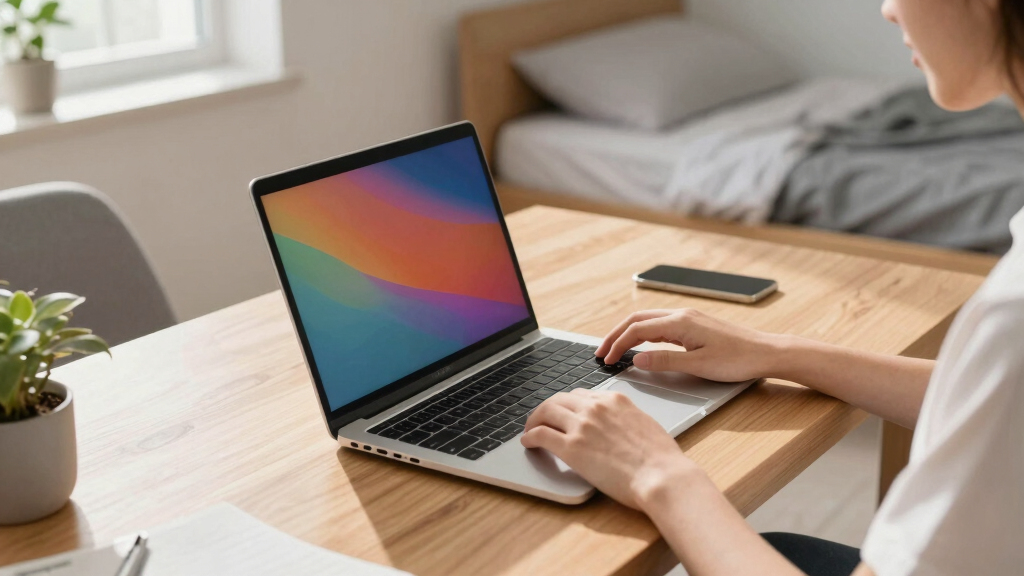

This guide helps students find a compact laptop that is portable, reliable, and powerful enough for coursework. It covers how to evaluate options, compare features, and make a confident purchase. Designed for beginners, this process can be completed in about 30 to 60 minutes.

Get the latest gadgets delivered free with Prime
- Fast, free delivery on millions of items
- Prime Video, Amazon Music and more included
- Member-only deals all year
Difficulty: Beginner | Time: 30-60 minutes
What You’ll Need
Tools & Materials:
- Internet-enabled device for research
- Budget estimate
- Notebook or note-taking app
Knowledge:
- Basic understanding of laptop specifications
- Awareness of personal study needs
Prepare a list of essential features you need, such as battery life, weight limit, and performance requirements.
compact student laptop under $700
As an affiliate, we earn on qualifying purchases.
As an affiliate, we earn on qualifying purchases.
Before You Start
Set your budget range and list your primary usage needs (e.g., note-taking, programming, media). Be aware of current deals or student discounts available online or in stores.
best lightweight laptops for students 2024
As an affiliate, we earn on qualifying purchases.
As an affiliate, we earn on qualifying purchases.
Step-by-Step Instructions
Step 1: Determine your primary use cases
List the main tasks you will perform on the laptop, such as typing essays, browsing the web, or running specific software.
Tip: Focus on the software or applications you need most often to prioritize specs like CPU or RAM.
Check: You have a clear list of tasks, which guides your feature priorities.
Step 2: Define your size and weight preferences
Select a maximum weight (e.g., under 3 pounds) and screen size (11-13 inches) for maximum portability.
Tip: Consider how much weight you can comfortably carry daily and whether a smaller screen impacts usability.
Check: You have a specific size and weight range that matches your portability needs.
Step 3: Set your budget range
Decide on a maximum amount you are willing to spend, typically between $300 and $700 for student laptops.
Tip: Look for current student discounts or seasonal sales to maximize value.
Check: Your budget range is established, narrowing your options.
Step 4: Research suitable laptop models
Use online reviews, manufacturer websites, and comparison tools to identify models within your size, weight, and budget criteria.
Tip: Prioritize laptops with good battery life, solid build quality, and positive user reviews.
Check: You have a shortlist of 3-5 potential laptops fitting your criteria.
Step 5: Compare specifications and features
Check key specs such as CPU (preferably Intel i3/i5 or AMD Ryzen 3/5), RAM (8GB recommended), SSD storage (at least 256GB), and battery life (minimum 8 hours).
Tip: Avoid laptops with outdated processors or insufficient RAM for multitasking.
Check: Your shortlisted models meet the essential specifications for your use cases.
Step 6: Assess build quality and warranty
Review build materials, keyboard comfort, port selection, and warranty coverage through product descriptions and user reviews.
Tip: Opt for models with good durability ratings and reliable customer support.
Check: You have identified models with solid build quality and favorable warranty terms.
Step 7: Check for compatibility and connectivity
Ensure the laptop has necessary ports (USB-C, USB-A, HDMI) and supports Wi-Fi 6 or latest standards for future-proof connectivity.
Tip: Confirm compatibility with any peripherals or accessories you plan to use.
Check: Your selected models support all required connectivity options.
Step 8: Make the purchase
Select the best model based on your comparison, then purchase from a reputable retailer offering student discounts or return policies.
Tip: Keep receipts and warranty info safe for future reference.
Check: You have completed the purchase of a compact student laptop that meets your needs.
11 inch to 13 inch student laptops with long battery life
As an affiliate, we earn on qualifying purchases.
As an affiliate, we earn on qualifying purchases.
Common Mistakes to Avoid
- Choosing a laptop with insufficient RAM or slow processor. — Prioritize models with at least 8GB of RAM and a recent processor to handle multitasking smoothly.
- Selecting a device that is too heavy or bulky for portability. — Stick to weight and size limits you set earlier, and test carrying the device before buying if possible.
- Ignoring battery life, resulting in frequent charging. — Check reviews for real-world battery performance and aim for at least 8 hours of usage.
- Overlooking warranty and support options. — Review warranty details and choose models with reliable support to avoid future issues.
student laptops with SSD and 8GB RAM
As an affiliate, we earn on qualifying purchases.
As an affiliate, we earn on qualifying purchases.
Troubleshooting
Problem: Laptop has poor battery life despite specifications.
Solution: Verify battery health through diagnostics or reviews; consider calibration or seek a replacement if defective.
Problem: Laptop is too slow or lags during use.
Solution: Ensure it meets minimum RAM and processor requirements; close unnecessary background apps or upgrade storage if possible.
Problem: Device does not support needed ports or peripherals.
Solution: Check port availability before buying; consider adapters or docking stations if required.
What Success Looks Like
The selected laptop is lightweight (under 3 pounds), fits your size preferences, runs your essential applications efficiently, has at least 8 hours of battery life, and fits within your budget.
Next Steps
Set up your new laptop with necessary software, update the operating system, and install essential applications. Keep your device clean and perform regular updates. Explore accessories like a protective case or external keyboard if needed.
Frequently Asked Questions
How do I verify a laptop’s battery life in-store?
Ask for a demonstration or check reviews for real-world battery performance. Test the device if possible by running typical tasks and measuring usage time.
Can I upgrade a compact student laptop later?
Many ultralight laptops have limited upgrade options. Prioritize sufficient RAM and storage upfront to avoid future limitations.
Is a cheaper laptop suitable for heavy multitasking?
Cheaper models may struggle with multitasking; look for at least 8GB RAM and a recent processor to handle multiple applications smoothly.
Are 11-inch laptops practical for university work?
Yes, if portability is your priority, but ensure the display size is comfortable for extended use and that the keyboard is usable for your typing needs.
Halloween Picks
halloween
As an affiliate, we earn on qualifying purchases.