Blue light filter glasses and screen protectors can lower eye strain and may help improve your sleep, but their effectiveness varies based on your usage and device tech. Wearing these tools can reduce discomfort during long screen time and lessen blue light exposure that disrupts melatonin production. However, they aren’t perfect solutions and work best when combined with healthy habits. If you want to discover more ways to protect your eyes, keep exploring.
Key Takeaways
- Blue light filters, via glasses or screen protectors, can reduce eye strain and discomfort during prolonged digital device use.
- They may modestly improve sleep quality by decreasing blue light exposure that suppresses melatonin.
- Effectiveness varies among individuals; some users experience significant relief, others see minimal benefits.
- These tools are supplementary; combining them with regular breaks and brightness adjustments enhances eye health.
- They do not eliminate blue light entirely but help lower exposure, supporting overall visual comfort and sleep regulation.
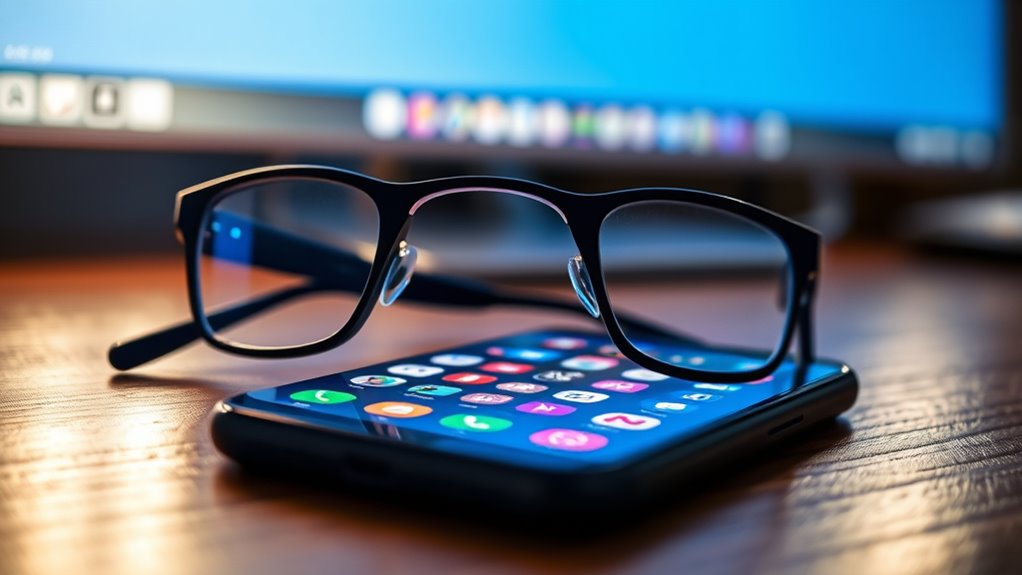
In today’s digital age, many people spend hours staring at screens, which exposes their eyes to blue light that can cause eye strain, headaches, and disrupted sleep. You might notice that after a long day of working on your computer or scrolling through your phone, your eyes feel tired, sore, or gritty. You may also find it difficult to fall asleep, even after hours of screen time. This is because blue light suppresses melatonin, the hormone that regulates your sleep cycle, leading to sleep disruption. To combat these issues, many turn to blue light filter glasses and screen protectors, claiming they can reduce eye strain and improve sleep quality. But do they really work?
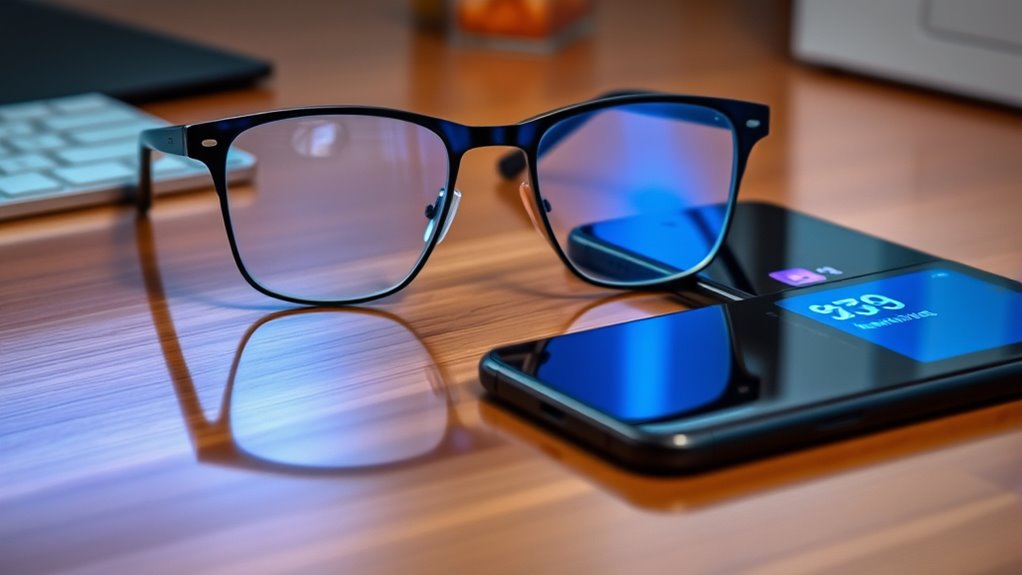
Blue light filter glasses are designed with specially coated lenses that block or absorb a portion of blue light emitted by screens. When you wear them, you might notice your eyes feel more comfortable after long sessions, with less fatigue or dryness. These glasses aim to minimize the strain on your eye muscles caused by prolonged focus and exposure to high-energy visible light. They can be particularly beneficial if you already experience eye discomfort or spend considerable hours on digital devices. However, their effectiveness varies from person to person. Some users report significant relief, while others see only marginal improvements. It’s important to remember that these glasses aren’t a cure-all; they’re a tool that can help reduce the visual stress associated with screen use.
Blue light glasses can reduce eye discomfort but vary in effectiveness from person to person.
Screen protectors with blue light filtering properties work differently. Instead of altering how you see, they are applied directly to your device’s screen. These protectors are made with coatings or films that filter out a portion of blue light before it reaches your eyes. Like glasses, they can help reduce eye strain, especially during extended screen time. If you use your device late at night, a blue light screen protector might also help mitigate sleep disruption by allowing your melatonin production to remain more natural. Nonetheless, these filters are not foolproof. The degree of blue light they block varies, and some argue that the real impact on sleep and eye health is modest. Additionally, advancements in screen technology have led to displays that emit less blue light overall, further reducing potential harm.
Ultimately, blue light filter glasses and screen protectors can be beneficial, particularly if you experience eye discomfort or sleep issues linked to screen use. They’re relatively simple solutions that may help you feel more comfortable and improve your sleep quality. Still, it’s wise to combine their use with other good habits—like taking regular breaks, adjusting screen brightness, and limiting screen time before bed. While these tools can make a difference, they’re most effective when integrated into a broader approach to digital health.
Frequently Asked Questions
Are Blue Light Filters Effective for Children’s Eye Health?
Blue light filters can be effective for children’s eye health by reducing blue light exposure effects that might contribute to eye strain and disrupt sleep. Since children’s eye development is still ongoing, protecting their eyes from excessive blue light helps minimize potential damage and discomfort. While filters aren’t a cure-all, they serve as a useful tool to lower blue light exposure effects and promote healthier eye habits during screen time.
Can Blue Light Glasses Improve Sleep Quality Significantly?
Think of blue light glasses as your evening lighthouse, guiding your sleep safely ashore. They can improve sleep quality markedly by supporting melatonin regulation and reducing eye strain relief. When you wear them before bed, you signal your body it’s time to wind down, helping you fall asleep faster and enjoy better rest. While they aren’t magic, they’re a helpful tool in your nightly routine for healthier sleep.
Do Screen Protectors Interfere With Screen Brightness or Clarity?
Screen protectors typically don’t interfere with screen brightness or clarity if you choose a high-quality one. You might notice slight differences with cheaper or thicker protectors, but most modern options are designed to preserve your screen clarity. To guarantee ideal brightness and clarity, select a protector specifically made for your device and install it carefully. This way, you can enjoy protection without compromising your viewing experience.
How Long Does It Take to Notice Benefits From Blue Light Filters?
Like a sunrise gradually brightening the sky, you’ll likely notice benefits from blue light filters within a few days to a week. The timing expectations vary based on your screen time and sensitivity, but most people experience improved eye comfort and reduced fatigue fairly quickly. Keep in mind, the benefit timeline can differ, so consistent use is key to seeing the full positive effects.
Are There Any Risks or Downsides to Using Blue Light Blocking Products?
Using blue light blocking products generally poses minimal risks, but some downsides exist. You might experience slight color distortion or reduced screen clarity, which could cause eye strain or digital fatigue over time. Additionally, relying solely on these filters shouldn’t replace good eye habits like regular breaks. If you notice increased discomfort or eye strain, consider adjusting usage or consulting an eye care professional to guarantee your eyes stay healthy.
Conclusion
So, do blue light filter glasses and screen protectors truly work? While some people notice less eye strain and better sleep, scientific evidence remains mixed. If you spend hours on screens daily, trying them out might be worth it—after all, your eyes deserve some extra care. Isn’t protecting your vision worth a simple experiment? Ultimately, whether they’re effective depends on your habits and needs, but giving them a shot could be a step toward healthier screen time.