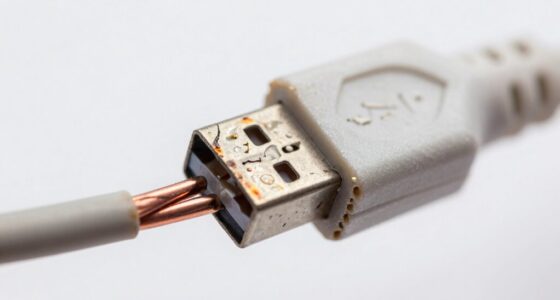
To organize and store your charging cables effectively, start by labeling them with masking tape or printable labels, so you can easily identify each one. Use small jars, containers, or DIY solutions like toilet paper rolls to keep cables separated and tangle-free. Velcro straps or zip ties help bundle and protect cables, while designated spots—such as drawers or pegboards—keep everything accessible. If you’re enthusiastic to learn more about seamless cable management, keep exploring these simple, smart ideas.

Get the latest gadgets delivered free — and shop member deals
- Fast, free delivery on millions of items
- Access to Prime Big Deal Days deals on October 6–7
- Prime Video, Amazon Music and more included
Key Takeaways
- Use labeled DIY containers like jars or cardboard tubes for easy identification and separation of charging cables.
- Bundle cables with velcro straps or zip ties to prevent tangling and keep them organized.
- Implement designated storage spots such as wall hooks, pegboards, or drawer compartments for quick access.
- Wrap cables neatly and store upright in small jars or containers to maintain order and simplify retrieval.
- Regularly evaluate and maintain your system by labeling and decluttering to ensure ongoing organization.

Keeping your charging cables organized can save you time and frustration, especially when you’re in a hurry. When cables are tangled or scattered, it’s easy to waste minutes searching for the right one or untangling knots. That’s why implementing simple cable management tips can make a noticeable difference. You don’t need fancy storage solutions—sometimes, DIY cable organizers are all you need to keep everything neat and accessible. Crafting your own organizers not only saves money but also allows you to customize storage to fit your space and needs.
Start by evaluating how many cables you have and where you usually use them. Once you know what you’re dealing with, you can decide on the best DIY cable organizers. For example, using empty toilet paper rolls or cardboard tubes can be a quick and effective solution. Simply cut a slit along the side of the roll, slide your cable through, and label each for easy identification. These little cylinders prevent cables from tangling and make stacking or storing them in drawers or boxes straightforward. You can also repurpose small jars or containers—label each with the device it belongs to, and store the cables upright for quick access.
Another smart DIY cable organizer is a simple pegboard or a piece of foam with holes drilled into it. You can attach hooks or push pins to hold individual cables, keeping them separated and tangle-free. This method works especially well for frequently used cables, ensuring they’re always within reach. For a more portable option, consider using zip ties or velcro straps to bundle cables together. Wrap each cable neatly, secure it with velcro, and store them in a drawer or box. This not only prevents tangling but also makes it easier to grab just the one you need without dragging out the entire collection.
Labeling is an essential step in effective cable management. Use masking tape and a permanent marker or printable labels to identify what each cable is for. This way, when you need to charge your phone or connect a device, you won’t waste time searching. Combining labels with your DIY cable organizers creates a system that’s both functional and easy to maintain. Additionally, understanding the importance of Free Floating in backyard design shows how versatile and adaptable storage solutions can be, helping to keep your space uncluttered.
Finally, establish a designated spot for all your charging cables. Whether it’s a drawer, a box, or a wall-mounted organizer, keeping everything in one place reduces clutter and makes your setup more efficient. With these simple cable management tips and some DIY ingenuity, you’ll find organizing your charging cables becomes an effortless part of your routine. Not only will your space look tidier, but you’ll also spend less time untangling and more time enjoying your charged devices.
As an affiliate, we earn on qualifying purchases.
Frequently Asked Questions
What Are the Best Materials for Cable Organizers?
You should choose cable organizers made from durable materials like silicone, nylon, or plastic. Silicone is flexible and gentle on cable types, preventing damage, while nylon offers strength and longevity. Plastic organizers are lightweight and easy to clean. Look for designs that keep your cables tangle-free, such as clips, sleeves, or spiral wraps. The right materials and organizer designs guarantee your cables stay neat, protected, and easy to access whenever you need them.
How Do I Prevent Cable Tangling Over Time?
To prevent cable tangling over time, you should use cable labels to identify each cord easily and avoid unnecessary detangling. Additionally, attach magnetic strips to your storage area; they hold cables securely in place, preventing knots and tangles. When storing, always coil your cables neatly and secure them with Velcro straps or twist ties. Regularly check and reorganize to keep everything orderly, ensuring your cables stay tangle-free longer.
Are There Eco-Friendly Cable Storage Options?
Yes, you can choose eco-friendly cable storage options like biodegradable containers or recycled material organizers. These options reduce plastic waste and support recycling initiatives, making your storage environmentally conscious. Look for products made from sustainable materials, or repurpose items like glass jars or bamboo boxes to store your cables. By selecting eco-friendly storage, you help lessen environmental impact while keeping your cables organized and accessible.
How Often Should I Replace Damaged Cables?
Don’t wait until it’s too late to replace damaged cables; it’s better to be safe than sorry. Check your cables regularly for frayed wires, exposed conductors, or bent connectors. Based on cable durability and replacement guidelines, replace them immediately if you notice any damage. Typically, you should consider replacing cables every 1-2 years, or sooner if they show signs of wear. Staying proactive keeps your devices safe and functioning smoothly.
Can Organizing Cables Improve Device Performance?
Yes, organizing cables can improve device performance. When you use cable length management techniques, you reduce strain and prevent damage, guaranteeing consistent power flow. Magnetic cable holders keep cables neat and accessible, minimizing wear and tear. Proper organization prevents tangling and accidental disconnections, which can disrupt device function. By maintaining orderly cables, you ensure your devices charge efficiently and operate smoothly, extending their lifespan and optimizing overall performance.
As an affiliate, we earn on qualifying purchases.
Conclusion
By implementing these simple organization tips, you’ll keep your charging cables neat and easily accessible. No more wasting time searching for the right one or dealing with tangled messes. While some may think it’s a tedious task, the payoff is worth it—you’ll save time and reduce frustration. Ultimately, a well-organized setup not only looks better but also protects your cables, extending their lifespan and ensuring your devices stay powered up whenever you need them.
As an affiliate, we earn on qualifying purchases.
As an affiliate, we earn on qualifying purchases.
Fall Picks
fall essentials
As an affiliate, we earn on qualifying purchases.