

TL;DR
PostgreSQL’s transaction model is increasingly viewed as a powerful tool for distributed systems. This development underscores its potential for complex, scalable architectures. Key details are confirmed, while some claims about capabilities remain under discussion.
PostgreSQL’s transaction model is being recognized as a ‘superpower’ for distributed systems, with experts highlighting its robustness and scalability. This recognition emphasizes PostgreSQL’s growing role in complex, distributed architectures, making it a key tool for developers seeking reliable, scalable data management.
Recent industry discussions and technical analyses have positioned PostgreSQL’s transaction capabilities as a significant advantage in building distributed systems. Unlike traditional relational databases, PostgreSQL offers features such as multi-version concurrency control (MVCC) and support for distributed transactions, which are increasingly seen as essential for modern, scalable architectures.
While PostgreSQL does not natively support distributed transactions in the same way as some NoSQL or NewSQL databases, recent developments and extensions (like Citus and pglogical) have enhanced its ability to operate across multiple nodes with transactional consistency. Experts like Robin Munn and Craig Kerstiens have highlighted these features as elevating PostgreSQL’s role in distributed environments.
Some claims suggest PostgreSQL can handle complex distributed transaction scenarios similar to distributed systems designed explicitly for such tasks, but these are still under active discussion and development. It is confirmed that PostgreSQL’s core features, combined with extensions, enable more robust distributed operations than previously possible.
Implications of PostgreSQL’s Distributed Transaction Capabilities
This development matters because it positions PostgreSQL as a more versatile choice for organizations aiming to build scalable, distributed data systems. Its ability to support complex transactions across nodes can reduce reliance on multiple database technologies, simplifying architecture and potentially lowering costs.
For developers and enterprises, this means potentially more reliable and consistent data management in distributed environments. It also influences the competitive landscape, as PostgreSQL’s growing capabilities could challenge specialized distributed databases.
PostgreSQL distributed transaction extension
As an affiliate, we earn on qualifying purchases.
As an affiliate, we earn on qualifying purchases.
Evolution of PostgreSQL in Distributed Systems
PostgreSQL has traditionally been recognized for its reliability and feature set as a relational database. Over recent years, the community and industry have pushed for enhancements that support distributed architectures, driven by the rise of cloud computing and microservices.
Extensions like Citus, which transforms PostgreSQL into a distributed database, and pglogical, which facilitates logical replication, have expanded its capabilities. These developments have been accompanied by increased discussions about PostgreSQL’s potential to handle distributed transactions more effectively, with some experts referring to this as a ‘superpower.’
While PostgreSQL does not yet natively support fully distributed ACID transactions at the core level, ongoing projects and community efforts aim to close this gap, making it a key area of focus for future releases.
“PostgreSQL’s transaction features, especially with extensions, are making it a formidable choice for distributed systems.”
— Robin Munn, PostgreSQL expert
PostgreSQL Citus extension
As an affiliate, we earn on qualifying purchases.
As an affiliate, we earn on qualifying purchases.
Limitations and Ongoing Development of Distributed Transactions
While there is broad recognition of PostgreSQL’s enhanced capabilities, it is still unclear how fully it can replace dedicated distributed databases in complex scenarios. Native support for distributed ACID transactions remains limited, and some claims about its capabilities are still under active development and testing.
It is not yet confirmed whether upcoming PostgreSQL versions will include native, seamless support for distributed transactions at the core level, or if extensions will continue to be the primary method.

PostgreSQL Mastery: Schema Design, Query Tuning, and HA
As an affiliate, we earn on qualifying purchases.
As an affiliate, we earn on qualifying purchases.
Future Enhancements and Community Efforts in Distributed Capabilities
PostgreSQL’s development community is actively working on improvements to support more robust distributed transaction management. Upcoming releases may introduce native features or further extend current extensions like Citus.
Expect ongoing discussions, testing, and possibly new tools aimed at enhancing PostgreSQL’s role in distributed systems. Industry analysts anticipate that these developments could significantly expand PostgreSQL’s applicability in large-scale, distributed architectures within the next year.
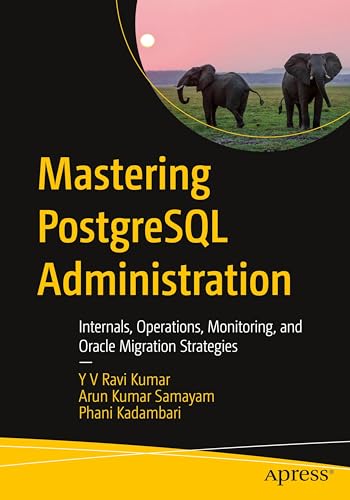
Mastering PostgreSQL Administration: Internals, Operations, Monitoring, and Oracle Migration Strategies
As an affiliate, we earn on qualifying purchases.
As an affiliate, we earn on qualifying purchases.
Key Questions
Can PostgreSQL fully replace distributed databases?
Currently, PostgreSQL offers enhanced capabilities for distributed transactions through extensions, but it does not yet natively support all features of dedicated distributed databases. Its role is evolving, with ongoing development aimed at closing this gap.
What extensions enable PostgreSQL to operate in distributed environments?
Extensions like Citus and pglogical are key tools that enable PostgreSQL to function across multiple nodes with improved transactional consistency and replication features.
How does PostgreSQL compare to NoSQL or NewSQL databases in distributed systems?
While NoSQL and NewSQL databases often natively support distributed transactions at scale, PostgreSQL relies on extensions and ongoing development. Its strength lies in combining relational features with improved distributed capabilities, but it may not yet match the native distributed transaction support of some specialized systems.
What are the main challenges for PostgreSQL in becoming a fully distributed system?
The primary challenges include achieving native support for distributed ACID transactions, maintaining performance at scale, and ensuring consistency across nodes in complex scenarios. These are active areas of research and development.
Source: hn