
Using third-party chargers can be risky if they lack proper safety certifications and quality standards. Cheap, uncertified chargers may cause overheating, electrical shorts, or damage to your device, and could even pose safety hazards like fires or shocks. Reputable brands and certified chargers ensure safer, more reliable power delivery that protects your battery and device longevity. To keep your phone safe, it’s best to stick with quality options—continue exploring to learn more about safe charging practices.
Listen free for 30 days with Audible
Thousands of audiobooks and originals — cancel anytime.
As an affiliate, we earn on qualifying purchases.
Key Takeaways
- Certified third-party chargers with safety certifications (UL, CE) are generally safe for your phone.
- Uncertified or poorly made chargers pose risks of overheating, electrical shorts, and device damage.
- Reputable brands follow strict quality controls, reducing hazards associated with third-party charging.
- Using damaged or low-quality chargers can accelerate battery wear and compromise device performance.
- Avoid public charging stations and always inspect chargers for damage to ensure safe use.

Apple MFi Certified iPhone 17 Charger 20W USB C Charger + 6FT Type C Cable
- Intelligent Power Distribution: Auto-detects device for optimal charging
- Dynamic Temperature Sensors: Monitors and adjusts to prevent overheating
- Advanced Safety Features: Multiple certifications and protection systems
As an affiliate, we earn on qualifying purchases.
As an affiliate, we earn on qualifying purchases.
Understanding the Risks of Uncertified Chargers
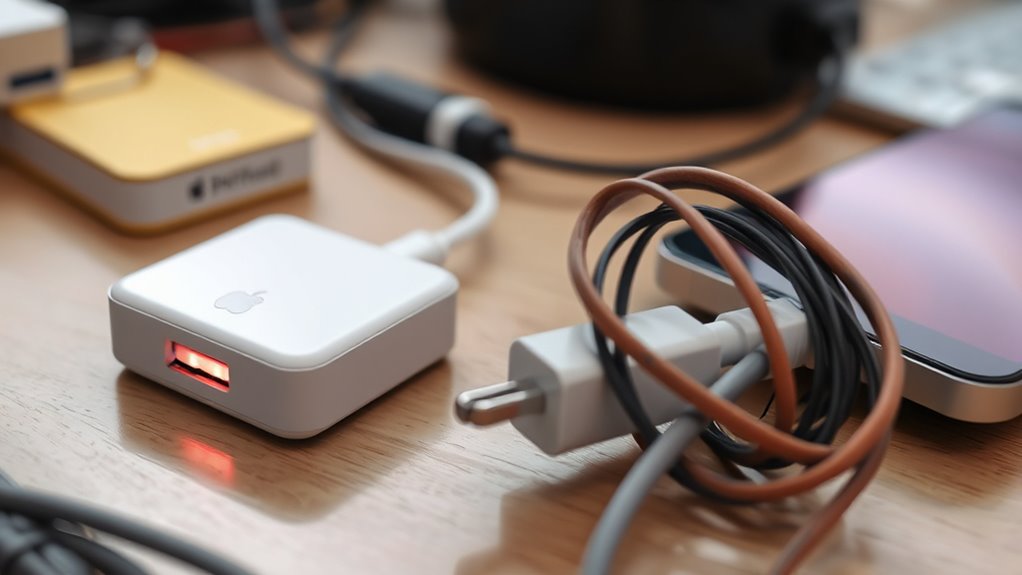
Uncertified chargers pose serious safety risks because they often lack essential features like proper insulation and surge protection. Without these protections, there’s a higher chance of electrical shorts, sparks, and even fires. Cheap components inside low-quality chargers can overheat, damaging your device or its charging port. If the charger is poorly made, you might also risk electrical shock or electrocution. Additionally, unstable power delivery from uncertified chargers can cause data corruption or software glitches, affecting your device’s performance. Leaving a faulty charger unattended increases fire hazards, especially if near flammable materials. These risks make it essential to avoid uncertified chargers and stick to certified, reputable options. Choosing the right charger isn’t just about speed; it’s about your safety and device longevity. Moreover, compliance with safety standards is crucial to ensure the charger meets essential safety criteria and reduces potential hazards.

iPhone 14 13 12 Charger Fast Charging 20W USB C Wall Charger with 6FT Cable
- Fast Charging Power: 20W PD 3.0 USB C port
- Rapid Device Charging: Charge iPhone 14 to 50% in 30 min
- Universal Compatibility: Compatible with iPhone, iPad, AirPods
As an affiliate, we earn on qualifying purchases.
As an affiliate, we earn on qualifying purchases.
The Importance of Safety Certifications and Brand Trust

Choosing a third-party charger from a reputable brand guarantees you get a product that satisfies essential safety standards. Look for certifications like UL, CE, or RoHS, which verify the charger meets safety and environmental requirements. Certified chargers are tested to reduce risks such as overheating, electrical shorts, and fires. Trustworthy brands often follow strict manufacturing processes and quality controls, making their products as safe as original equipment manufacturer (OEM) chargers. Avoid generic or unknown brands that lack certifications, as they’re more likely to compromise safety and damage your device. By choosing well-known, certified brands, you lower the risk of electrical hazards and ensure reliable performance. Proper safety standards play a crucial role in ensuring chargers are safe to use. Investing a little more in a trusted brand provides peace of mind and protects both your device and personal safety.

LISEN Chubby 4 in 1 Charging Cable (6.6FT) with Light, 240W Fast Charging Cable, USB A/C to C/Lightning Multi Charging Cable for iPhone 16 15 14 13 12 Pro Max, MacBook, iPad, Samsung, Black
- Universal Compatibility: Supports all major devices including iPhone, iPad, Samsung, MacBook
- 240W Fast Charging: Charges devices to 96% in 35 minutes
- High-Speed Data Transfer: 480Mbps transfer speed for quick syncing
As an affiliate, we earn on qualifying purchases.
As an affiliate, we earn on qualifying purchases.
How Third-Party Chargers Affect Your Device’s Battery Life

Using third-party chargers can change how quickly your device charges and how much heat it generates. Poor-quality cables or uncertified chargers might slow down charging or cause your battery to overheat. These issues can reduce your battery’s lifespan and harm your device over time. Additionally, certification standards help ensure that third-party chargers are safe and compatible with your device.
Charging Speed Variations
Have you ever noticed your device charging faster with certain chargers but not others? Third-party chargers can cause speed differences based on their power output and communication with your device. Cheap or uncertified chargers may deliver inconsistent power, leading to slower charging or even damage over time. Certified chargers from reputable brands often use technology like Power Delivery (PD) or Quick Charge, optimizing charging speeds. Here’s a quick comparison:
| Charger Type | Charging Speed |
|---|---|
| Certified, high-quality | Faster, reliable, optimized for device |
| Uncertified, cheap | Slower, inconsistent, risk of damage |
Using a certified charger guarantees your device charges efficiently without compromising safety or battery health. Avoid low-quality chargers to keep charging speeds steady and your device safe. Free Floating
Battery Heat Impact
Third-party chargers can considerably influence your device’s battery health by affecting the amount of heat generated during charging. Excess heat accelerates battery degradation, reducing overall lifespan and performance. Low-quality or uncertified chargers often lack proper voltage regulation, causing your phone to overheat as it charges. This heat stress damages battery cells over time, leading to decreased capacity and shorter intervals between charges. Even certified third-party chargers, if poorly made or incompatible, can produce unnecessary heat, especially if cables or connectors aren’t designed for efficient heat dissipation. To minimize heat-related damage, always choose certified chargers with good reviews and avoid leaving your device in hot environments while charging. Properly regulated chargers help keep battery temperature stable, preserving your device’s battery health in the long run. Additionally, understanding your device’s power requirements and using compatible chargers can help prevent overheating issues.

Magnetic Wireless Charger 15W with 20W Adapter & 6ft Cable – MagSafe Charger for iPhone 16/15/14/13/12 Pro/Max/Plus/Mini & AirPods 3/2/Pro – Fast Wireless Charging Pad for Home, Office, Travel
- Fast Wireless Charging: 15W MagSafe compatible charging
- Secure Magnetic Attachment: Strong magnet for stable connection
- Complete Charging Kit: Includes 20W adapter and 6ft cable
As an affiliate, we earn on qualifying purchases.
As an affiliate, we earn on qualifying purchases.
Cybersecurity Dangers Associated With Public Charging Stations

Public charging stations can pose serious cybersecurity risks, like “juice jacking,” where malware is installed through USB ports to steal your data or take control of your device. Even though such attacks are rare, they highlight the importance of protecting your personal information when using unfamiliar chargers. To stay safe, always use your own power bank or certified chargers instead of public options. Additionally, being aware of potential wave and wind vulnerabilities can help you better understand how to safeguard your devices from emerging threats.
Risks of Data Theft
Although many people overlook it, using public charging stations can expose your device to cybersecurity threats like data theft. Hackers can set up malicious stations that look legitimate, waiting for you to connect your device. Once connected, they can access personal data, messages, contacts, or even install malware without your knowledge. This technique, known as “juice jacking,” exploits the USB connection’s dual function for charging and data transfer. Even if you don’t intentionally transfer data, vulnerabilities in the port can allow cybercriminals to access your device remotely. To protect yourself, avoid charging at unfamiliar stations and never use untrusted public USB outlets. Instead, use a portable power bank or a certified charger plugged into an AC power outlet to keep your device safe. European cloud innovation offers secure alternatives for data management and online connectivity, emphasizing the importance of energy-efficient and protected digital solutions.
Protecting Personal Devices
Using public charging stations can expose your devices to cybersecurity risks that you might not expect. One major threat is “juice jacking,” where hackers inject malware or steal data through compromised USB ports. These stations often lack physical security or software protections, making your device vulnerable. To protect yourself, avoid using unknown or unsecured public chargers. Instead, carry a personal power bank or use certified chargers you trust. Always disconnect after charging and avoid leaving your device unattended. Here’s a quick comparison:
| Risk | Prevention |
|---|---|
| Data theft | Use personal chargers and avoid public ports |
| Malware infection | Avoid USB ports at untrusted stations |
| Device damage | Use certified, quality chargers |
| Physical tampering | Inspect stations for signs of tampering |
Safe Charging Practices
While charging your device at unfamiliar stations may seem convenient, it poses significant cybersecurity risks. Public USB chargers can be exploited through “juice jacking,” where malware installs or data theft occurs via compromised ports. Although rare, these attacks highlight the dangers of using unknown chargers. To protect yourself, avoid plugging into untrusted public stations, especially at airports, hotels, or cafes. Instead, use your own power bank or carry certified chargers and cables. Always inspect charging ports for tampering or damage before use. Keep your device’s software updated to patch security vulnerabilities. Never leave your device unattended while charging in public. Practicing these safe habits minimizes cybersecurity risks and helps safeguard your personal data from potential threats lurking at public charging stations. Additionally, understanding the psychological tactics used in manipulation can help you stay vigilant against covert threats.
Practical Tips for Safe Charging Practices

Practicing safe charging habits is essential to protect your devices and personal safety. To minimize risks, follow these practical tips:
Practicing safe charging habits helps protect devices and personal safety effectively.
- Never leave charging devices unattended or charge near flammable materials like bedding or paper.
- Regularly inspect chargers and cables for damage, such as fraying, discoloration, or exposed wires.
- Use only certified or reputable chargers and cables to ensure proper safety standards and compatibility.
- Be aware of vetted products that meet safety and effectiveness standards for peace of mind during use.
Handling your devices with care during charging helps prevent overheating, electrical shorts, and fire hazards. Keep chargers dry and avoid charging with wet hands or in humid environments. Educate children about safe practices, like not placing devices under pillows while charging. By staying vigilant and following these tips, you reduce the risk of accidents and protect your device’s longevity.
Cost Considerations: Quality vs. Affordability
Balancing cost and quality when choosing a third-party charger can be challenging, especially with so many options available. Cheaper chargers may seem like a good deal initially, but they often lack safety certifications and quality control, increasing the risk of damage or hazards. Investing a little more in a certified, reputable brand usually offers better protection and longevity, saving you money in the long run. The price gap between low-cost and quality chargers isn’t always significant, especially considering potential device damage or safety issues from cheaper options. High-quality third-party chargers from trusted manufacturers are designed to meet safety standards and deliver reliable performance. Remember, saving a few dollars now might lead to costly repairs or safety risks later, so weigh affordability against the potential consequences. Understanding safety standards can help you make more informed choices when selecting chargers.
Identifying Quality Third-Party Chargers and Cables

To identify a quality third-party charger or cable, start by checking for recognized safety certifications such as UL, CE, or RoHS. These marks indicate the product has passed safety and environmental standards. Next, examine the build quality: look for sturdy connectors, braided cables, and smooth fittings that suggest durability. Also, verify compatibility with your device’s charging specifications to prevent damaging power surges. Additionally, paying attention to industry trends can help you stay informed about the latest safety features and innovations in charging technology.
- Look for reputable brand names known for safety and quality.
- Check for clear labeling of specifications and certification marks.
- Inspect cables for frayed wiring, loose connectors, or discoloration.
Choosing certified products from trusted brands reduces safety risks and ensures reliable performance. Avoid cheap, unbranded cables, as they often lack proper safety features and may damage your device.
When to Avoid Using Third-Party Chargers

You should avoid using third-party chargers whenever you notice signs of damage, such as frayed cables, cracks, or discoloration, as these indicate compromised safety and increased risk of electrical faults. Damaged chargers can cause short circuits, sparks, or even fires, putting your device and safety at risk. If the charger feels unusually hot, emits a strange smell, or makes irregular noises, stop using it immediately. Avoid chargers lacking proper safety certifications like UL or CE, especially if they come from unknown brands or look cheap. Never use a charger that doesn’t match your device’s specifications or if it shows signs of wear and tear. Using compromised or uncertified chargers increases the danger of electrical shock, device damage, and safety hazards. Additionally, selecting chargers with proper safety standards can help ensure your safety and device longevity.
Frequently Asked Questions
Can Using Uncertified Chargers Permanently Damage My Phone’s Battery?
Using uncertified chargers can cause long-term damage to your phone’s battery. They often deliver unstable or inconsistent power, which can lead to overheating and degrade your battery over time. Cheap components might also cause physical damage to the battery or charging port. To protect your device, always choose certified chargers from reputable brands, as they guarantee proper power regulation and reduce the risk of battery damage and reduced lifespan.
Are All Third-Party Chargers Cheaper Because They Are Lower Quality?
Not all third-party chargers are cheaper because they’re lower quality. While many affordable options exist, some budget chargers meet safety standards and are certified by organizations like UL or CE. However, around 40% of cheap chargers lack proper certifications, increasing safety risks. So, it’s essential to verify certification and brand reputation, rather than price alone, to guarantee you’re choosing a safe, reliable charger that won’t damage your device.
How Can I Verify if a Third-Party Charger Has Proper Safety Certifications?
You can verify if a third-party charger has proper safety certifications by checking the label or packaging for marks like UL, CE, or RoHS. These indicate the product meets safety and environmental standards. Visit the manufacturer’s website or contact customer support to confirm certification authenticity. Always buy from reputable retailers and avoid chargers lacking certification marks, as uncertified products pose safety risks and may damage your device.
Is It Safe to Leave My Phone Charging Overnight With Any Third-Party Charger?
Leaving your phone charging overnight isn’t inherently unsafe if you use a certified, high-quality third-party charger. Studies show that most modern smartphones and chargers have built-in safeguards to prevent overheating and overcharging. However, you should still inspect your charger regularly, avoid leaving it near flammable objects, and never use damaged or uncertified devices. Practicing these safety tips can help minimize risks and guarantee your phone charges safely while you sleep.
Do High-Priced Third-Party Chargers Offer Better Safety Than Budget Options?
Yes, high-priced third-party chargers often offer better safety than budget options because they’re usually certified and made with quality components. You benefit from stricter manufacturing standards, better insulation, and surge protection, reducing risks like overheating or electrical shorts. While price isn’t the only factor, investing in reputable, certified chargers guarantees your device stays protected, and you’re less likely to encounter safety hazards associated with cheaper, uncertified options.
Conclusion
So, next time you blindly plug into that shiny, suspiciously cheap third-party charger, remember—you’re basically inviting a tiny, reckless electrician into your pocket. Think of your phone as a delicate diva, demanding only the finest, most certified pampering. Skimp on quality, and you might just turn your sleek device into a smoldering relic faster than you can say “battery fire.” Play it safe, or prepare for a fiery disaster—your call, but your phone’s reputation is on the line.
Flea & tick season Picks
flea and tick prevention
As an affiliate, we earn on qualifying purchases.