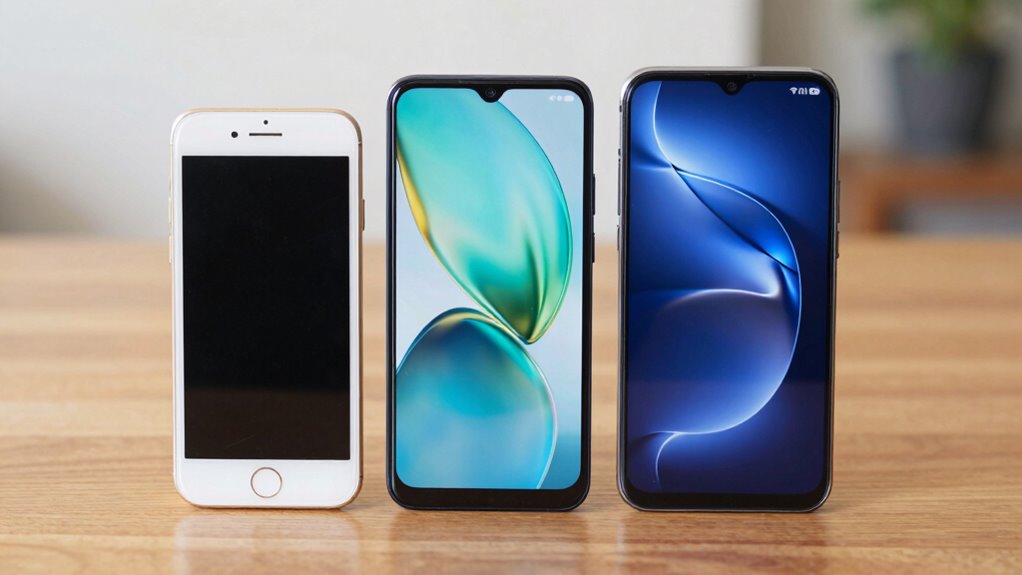

Budget phones are basic, focusing on essential features like decent photos and reliable performance, but often struggle in low-light and fast scenes. Midrange devices offer better cameras, bigger batteries, and smoother operation for most daily needs. Flagship phones provide top-tier camera systems, premium build quality, and the latest displays, making them ideal for enthusiasts and demanding users. Want to discover how these differences can influence your experience? Keep exploring for a deeper understanding.
Open a free Amazon Business account
Business pricing, bulk buying and tax-exempt orders.
As an affiliate, we earn on qualifying purchases.
Key Takeaways
- Camera quality improves significantly from basic sensors in budget phones to multiple lenses and AI enhancements in flagships.
- Battery life extends with larger batteries and more efficient processors, with flagships often lasting into the second day.
- Build materials, performance, and software smoothness increase from budget to flagship devices, offering more durability and premium feel.
- Display technology advances, providing sharper, higher-resolution screens in flagships for better media and gaming experiences.
- Choice depends on priorities like camera, battery, or display, aligning device features with user needs and lifestyle.
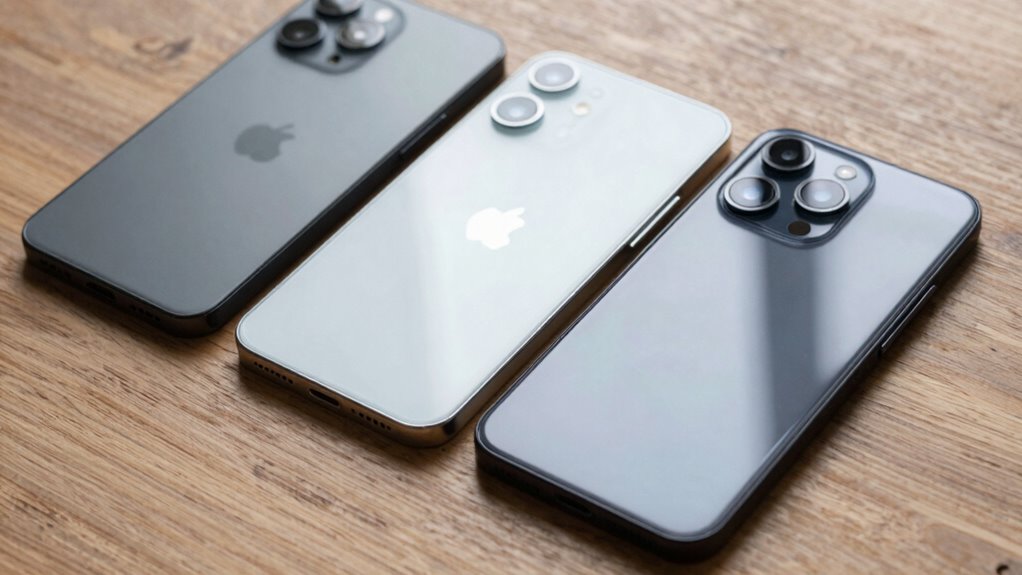
Choosing the right smartphone can be overwhelming, especially with the wide range of options available. Whether you’re looking for a budget device or a flagship powerhouse, understanding the key differences can help you make an informed decision. One of the most noticeable distinctions is camera quality. Budget phones often have basic camera setups that handle casual photos well but struggle in low-light conditions or when capturing fast-moving subjects. Midrange phones step up with improved sensors and software enhancements, offering sharper images and better color accuracy. Flagship phones, on the other hand, feature top-of-the-line camera systems, frequently equipped with multiple lenses, advanced image stabilization, and AI-driven features that produce professional-quality photos and videos. If photography is a priority for you, these differences are notable, and investing in a flagship can make a perceptible difference.
Camera quality varies greatly, from basic sensors in budget phones to professional-grade systems in flagships.
Battery life is another critical factor that separates these categories. Budget phones generally have smaller batteries, which means you might need to recharge more often, especially if you use demanding apps or keep the screen brightness high throughout the day. Midrange devices tend to offer a balance, with larger batteries and more efficient processors that extend usage time. Flagship phones, however, often include the largest batteries and cutting-edge processors designed for power efficiency, allowing them to last well into the second day under typical use. Additionally, flagship models often support fast charging and wireless charging, adding convenience. If you’re someone who relies heavily on your phone for work, entertainment, or long outings, these differences in battery capacity can profoundly impact your daily experience.
Beyond camera quality and battery life, the overall build quality, software features, and performance are key factors that set budget, midrange, and flagship phones apart. Budget phones tend to use less premium materials and may have slower processors, which can affect smoothness and multitasking. Midrange phones usually offer better performance, a more refined design, and improved features, making them a smart choice for most users. Flagship models deliver the best performance, often with the latest technology, faster processing speeds, and premium materials that feel more durable and stylish.
Recognizing these differences is especially important considering display technology and how it influences your viewing experience, whether for media, gaming, or general use. The quality of the display can significantly enhance your overall user experience, especially when engaging with high-resolution content. Ultimately, your choice depends on what matters most to you. If you’re on a tight budget but want reliable performance and decent photo quality, a midrange device might suit your needs perfectly. If you’re a photography enthusiast or need a device that can handle demanding tasks for years to come, investing in a flagship could be worth it. Understanding these distinctions helps you choose a phone that fits your lifestyle and expectations without overspending.
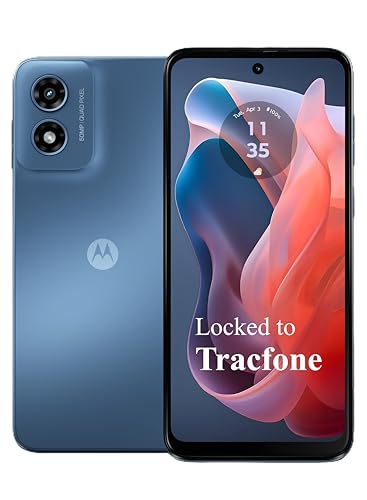
Tracfone Moto g Play 2024 Prepaid Phone with a 1-Yr Plan Included
- Carrier: Locked to Tracfone network
- Activation Promotion: Includes 1500 mins, texts, and data
- Camera System: 50MP Quad Pixel camera for sharp photos
As an affiliate, we earn on qualifying purchases.
As an affiliate, we earn on qualifying purchases.
Frequently Asked Questions
How Long Do Budget Phones Typically Receive Software Updates?
Budget phones usually get software updates for about one to two years, but this can vary. You might experience limited update frequency, meaning security patches and new features may not arrive regularly. Over time, the software longevity on budget devices decreases, so they become less secure and less functional compared to midrange or flagship phones. If you prioritize longer software support, investing in a midrange or flagship model might be a better choice.
Are Midrange Phones Suitable for Professional Gaming?
Midrange phones can be suitable for professional gaming, but it depends on their hardware specifications. If the device has a powerful processor, ample RAM, and a decent GPU, you’ll experience good gaming performance. However, lower-tier midrange models might struggle with demanding games. To guarantee a smooth experience, check the phone’s gaming performance benchmarks and hardware specs before making a choice.
Do Flagship Phones Have Better Durability Than Budget Models?
Flagship phones generally have better durability than budget models. Their durability comparison shows they use higher material quality, like reinforced glass and metal frames, which resist drops and scratches more effectively. You’ll find flagship devices often feature water and dust resistance, adding to their longevity. So, if durability matters to you, investing in a flagship phone means you’ll likely enjoy a more robust device that withstands daily wear and tear better.
How Do Camera Qualities Compare Across Different Phone Tiers?
Camera qualities vary considerably across phone tiers. Flagship phones usually have advanced camera features like multiple lenses, better image processing, and higher resolutions, delivering sharper, more detailed photos. Midrange phones offer decent camera features but may lack some advanced image processing capabilities. Budget models typically have basic camera features, which may result in lower image quality and less effective image processing. Your choice depends on your photography needs and budget.
Can Midrange Phones Replace Flagship Devices for Daily Use?
Can midrange phones replace flagship devices for daily use? Absolutely, but it depends. Midrange vs. flagship phones offer impressive features, yet flagships still lead in speed, camera, and build quality. If your daily usability revolves around basic tasks, midrange models might suffice. However, if you crave top-tier performance and cutting-edge tech, a flagship remains the better choice. Ultimately, it’s about balancing your needs and expectations.
midrange phones with good cameras
As an affiliate, we earn on qualifying purchases.
As an affiliate, we earn on qualifying purchases.
Conclusion
Choosing between budget, midrange, and flagship phones is like picking the right paintbrush for your masterpiece. Each offers a different stroke of power and finesse, but only you can decide which palette suits your picture. Don’t get lost in the maze of specs—trust your instincts to find the device that feels just right. After all, the best phone isn’t the most expensive; it’s the one that paints your daily life with color and clarity.

Anker 313 Qi-Certified 10W Max Wireless Charger Stand
- Fast Wireless Charging: Up to 10W for Samsung, 7.5W for iPhone
- Wide Device Compatibility: Compatible with all Qi-certified devices
- Flexible Viewing Modes: Supports landscape and portrait orientations
As an affiliate, we earn on qualifying purchases.
As an affiliate, we earn on qualifying purchases.

Samsung Galaxy A56 5G Cell Phone, 256GB AI Smartphone, Awesome LightGray
- Lightweight and Comfortable Design: Sleek, lightweight for easy handling
- Smart AI Features: Quick answers with Circle to Search
- Enhanced Camera Tools: Best Face and Auto Trim features
As an affiliate, we earn on qualifying purchases.
As an affiliate, we earn on qualifying purchases.
Grilling season Picks
grills
As an affiliate, we earn on qualifying purchases.