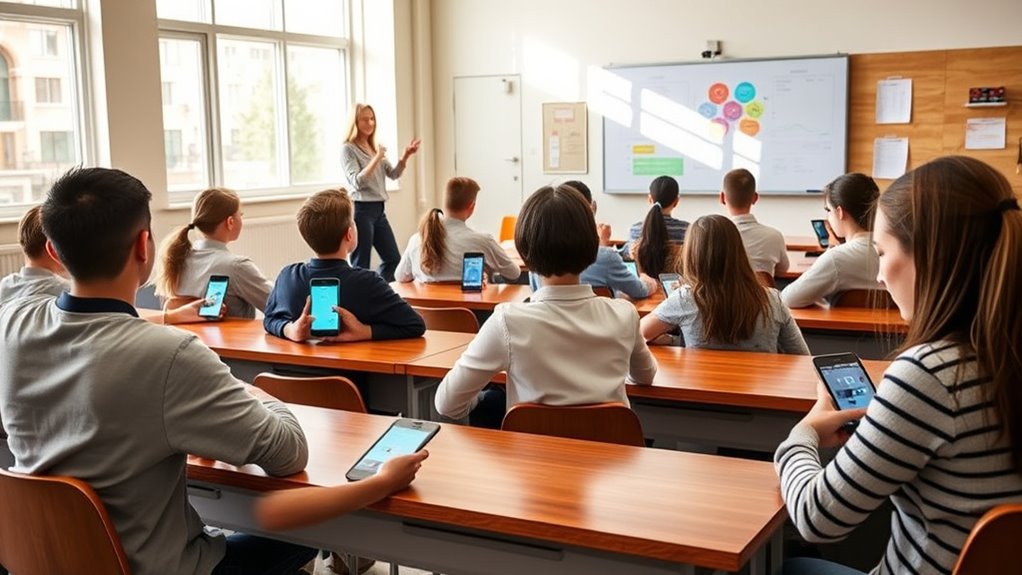

Smartphones in schools can be valuable educational tools if managed properly, giving you quick access to information and learning resources. However, they also pose distractions if used irresponsibly, with social media and games diverting your attention from lessons. Learning to use them responsibly and following established guidelines helps you enjoy their benefits while minimizing disruptions. If you want to discover ways to balance technology use effectively, keep exploring the strategies that can make a difference.
Key Takeaways
- Smartphones can enhance learning by providing access to educational resources when properly managed.
- Without regulation, smartphones often serve as distractions, reducing student focus and academic performance.
- Teaching digital citizenship helps students use smartphones responsibly and ethically in educational settings.
- Implementing device management strategies, like designated usage times, minimizes distractions and promotes engagement.
- Balanced smartphone use fosters better focus, responsible habits, and prepares students to manage technology outside school.
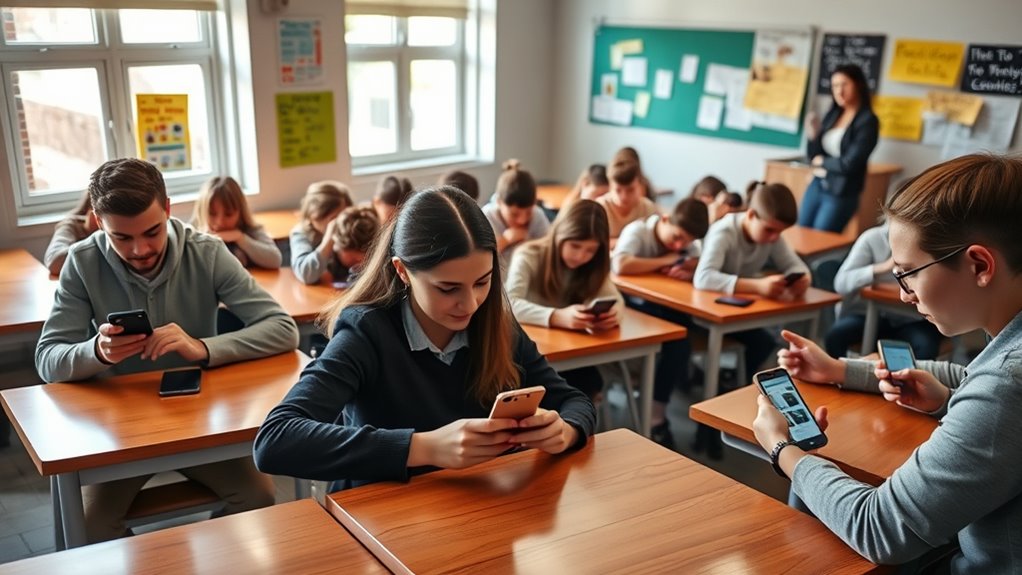
Have smartphones in schools truly enhance learning, or do they just serve as distractions? This question often lingers when you think about the role of technology in education. While smartphones can be powerful tools for learning, they also come with risks, especially if not managed properly. As a student, you might find yourself tempted to browse social media or play games during class, which hampers your focus and productivity. That’s where digital citizenship becomes essential. Understanding responsible use of technology helps you navigate your devices wisely, guaranteeing that they support your learning goals rather than hinder them. Schools that prioritize digital citizenship teach students how to respect online etiquette, protect their privacy, and avoid cyberbullying. When you develop these skills, you’re better equipped to manage your screen time effectively and stay focused on your studies. Additionally, practicing Free Floating techniques can help you maintain better control over your device use and minimize distractions. Screen time management is another vital aspect of integrating smartphones into the classroom. It’s easy to get lost in endless scrolling or notifications, but setting boundaries can make a significant difference. When you consciously limit your device usage during lessons, you’re more likely to retain information and engage actively with the material. Some schools implement policies that restrict non-educational apps or designate specific times for device use, encouraging you to stay disciplined. These strategies help you avoid the trap of distraction, making your smartphone a tool that enhances rather than detracts from your educational experience. Learning how to balance device use with other activities also prepares you for responsible tech habits outside of school, where managing your screen time is just as important.
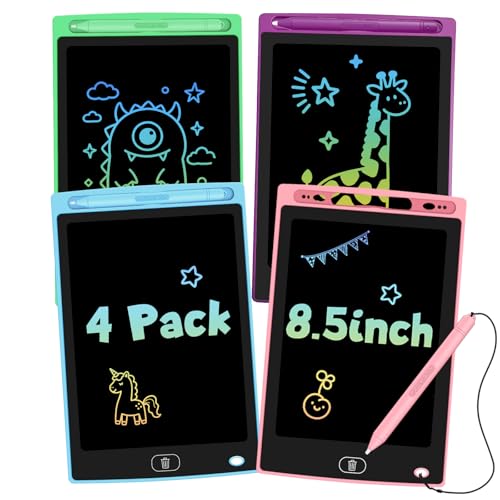
Glochin 4 Pack LCD Writing Tablet for Kids, Erasable and Reusable Toddler Doodle Board in 8.5 inch, Ideal Educational Drawing Pad for Learning Toy for Ages 3-8 Gifts for Girls Boys
【Learning Educational Tool】: The colorful writing tablet is also a great learning educational tool! Provide a good way…
As an affiliate, we earn on qualifying purchases.
As an affiliate, we earn on qualifying purchases.
Frequently Asked Questions
How Do Smartphones Impact Students’ Mental Health?
Smartphones can considerably impact your mental health by exposing you to social media, which may cause anxiety or low self-esteem. They also increase the risk of cyberbullying, leading to feelings of depression and isolation. While smartphones can help you stay connected and informed, it is crucial to set boundaries and use them responsibly to protect your mental well-being and avoid the negative effects of constant online engagement.
Are There Legal Regulations for Smartphone Use in Schools?
Yes, there are legal regulations for smartphone use in schools. You need to be aware that privacy concerns and data security are key considerations in these laws. Schools often implement policies to protect student information and limit distractions. These regulations vary by state or country, but generally, they aim to balance the benefits of smartphones with safeguarding students’ privacy and security, ensuring a safe learning environment.
What Are Effective Strategies for Managing Smartphone Distractions?
An ounce of prevention is worth a pound of cure. To manage smartphone distractions effectively, you should establish clear technology policies and consistently enforce them. Engage students by incorporating their devices into lessons, making learning interactive. Set designated times for phone use, and create engaging activities that keep students focused. By fostering a structured environment, you boost student engagement and minimize distractions, helping everyone stay on task.
How Do Teachers Integrate Smartphones Into Lesson Plans?
You can seamlessly incorporate smartphones into your lesson planning by designing classroom integration activities that engage students actively. Use apps and online resources to supplement lessons, encourage collaborative projects, or facilitate real-time quizzes. By setting clear guidelines and objectives, you turn smartphones into powerful educational tools, enhancing learning experiences. This approach keeps students focused and involved, transforming potential distractions into valuable assets within your overall lesson plan.
What Are Parents’ Roles in Regulating Smartphone Use at School?
As a parent, you play a crucial role in regulating smartphone use at school through active parental monitoring and effective communication strategies. You should set clear rules, discuss expectations, and stay informed about your child’s activities. Regular check-ins and open conversations help guarantee responsible use, while collaborating with teachers creates a consistent approach. Your involvement promotes balanced smartphone habits, fostering your child’s focus and safety during school hours.

Power On: Managing Screen Time to Benefit the Whole Family
As an affiliate, we earn on qualifying purchases.
As an affiliate, we earn on qualifying purchases.
Conclusion
Ultimately, smartphones can be both a blessing and a burden. When wisely wielded, they widen your world, welcoming learning with lively lessons and limitless links. But when misused, they become a distracting drain, diverting your dedication and dampening your focus. Choose wisely, wield mindfully, and let your device be a tool for growth, not a gateway to gloom. Embrace the balance, and turn your smartphone into a smart, supportive school companion.

130 US Civics & Citizenship Test Flashcards – Study Resource for Naturalization Exam & Civic Knowledge – Educational Tool for Students, Adults, ESL Learners, Classroom, or Homeschool by Briston
COMPREHENSIVE STUDY SET: Prepare for the USCIS Naturalization Test with 130 flashcards featuring 100 essential questions and 30…
As an affiliate, we earn on qualifying purchases.
As an affiliate, we earn on qualifying purchases.
![Express Schedule Free Employee Scheduling Software [PC/Mac Download]](https://m.media-amazon.com/images/I/41yvuCFIVfS._SL500_.jpg)
Express Schedule Free Employee Scheduling Software [PC/Mac Download]
Simple shift planning via an easy drag & drop interface
As an affiliate, we earn on qualifying purchases.
As an affiliate, we earn on qualifying purchases.