You’ve seen Android evolve from simple versions like Cupcake to the highly advanced Android 15. Each update brings better performance, security, and sleek user interfaces. You’ve noticed new features, smarter notifications, and more customization options with every release. Visual redesigns and gesture navigation make your device easier and more engaging to use. If you keep exploring this evolution, you’ll discover even more exciting changes shaping your Android experience today.
Key Takeaways
- Android evolved from Cupcake’s basic features to Android 15’s advanced performance, security, and compatibility improvements.
- Major UI redesigns, like Material Design, introduced cleaner visuals and intuitive navigation across versions.
- Updates continuously enhance user experience with smoother interactions, customization options, and smarter notifications.
- Each Android release focuses on security enhancements to counter emerging threats and protect user data.
- Compatibility with the latest hardware and technologies ensures Android devices stay current and functional over time.
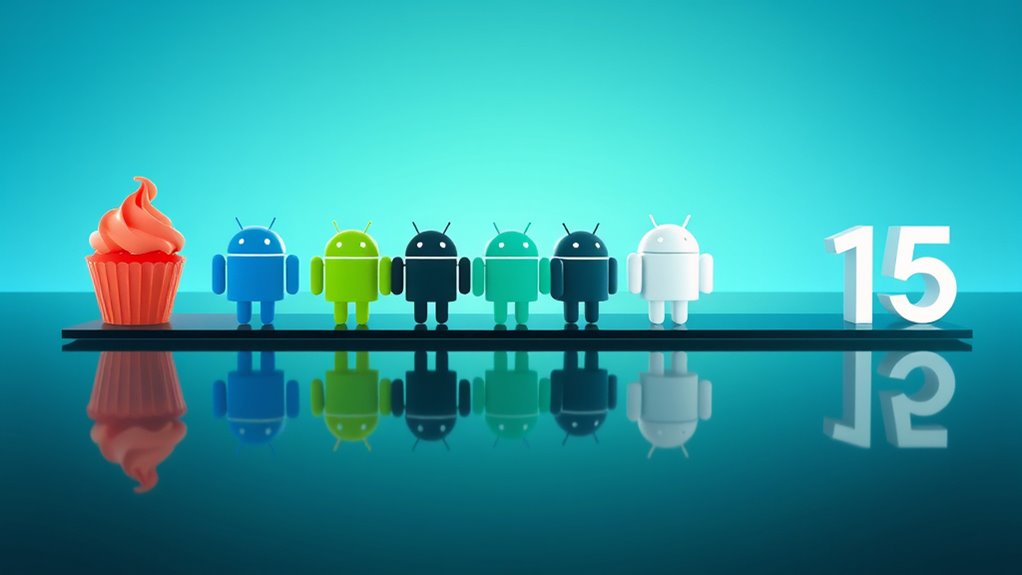
Android OS has transformed the way you use smartphones, evolving from a basic mobile platform into a versatile and powerful operating system. Over the years, it has seen numerous updates that have markedly improved performance, security, and functionality. One of the key aspects of this evolution is how Android updates have shaped the user experience. These updates aren’t just about fixing bugs; they introduce new features, enhance security, and refine the overall user interface. With each new version, you notice smoother interactions, more customization options, and a more intuitive navigation system. Android’s development team continuously pushes out updates to guarantee compatibility with the latest hardware and to keep your device secure against emerging threats.
The user interface has been a major focus throughout Android’s evolution. Early versions featured a simple, cluttered design, but as the operating system matured, Google prioritized making the interface more user-friendly and visually appealing. With each major release, like Android KitKat, Lollipop, and Marshmallow, you saw considerable design overhauls—introducing Material Design, which brought a cleaner look, vibrant colors, and consistent animations. These visual enhancements made interacting with your device more natural and engaging. Android updates often include improvements to the user interface, streamlining your experience by reducing steps needed to access apps, notifications, and settings. You’ve likely noticed how recent updates have emphasized minimalism, gesture navigation, and smarter notifications, making it easier to stay connected and productive. Additionally, updates increasingly focus on customization options, allowing users to personalize their device experience further.

TELESIN Fun Shot Magnetic Phone Camera Grip + 4 in 1 Magnetic RGB Selfie Light Bundle Kit Compatible with iPhone Magsafe & Android, Creator Kit for Selfies/Photography/TikTok/Zoom Calls/Video
TELESIN New Creator Kit: The Creator Kit Including fun shot magnetic phone camera grip + 4 in 1…
As an affiliate, we earn on qualifying purchases.
As an affiliate, we earn on qualifying purchases.
Frequently Asked Questions
How Does Android OS Compare to Other Mobile Operating Systems?
You’ll find Android OS offers more customization options and flexibility in its user interface compared to other mobile operating systems. Unlike iOS, which is more restricted, Android allows you to personalize your device with widgets, app layouts, and themes. This openness appeals to users who want a tailored experience, giving you more control over how your device looks and functions, making it stand out among other operating systems.
What Are the Future Features Expected in Android 15?
They say “the future is now,” and with Android 15, you’ll experience smarter, more personalized features. Expect advanced AI integration that enhances voice customization, making interactions seamless and natural. Android 15 will likely improve adaptive interfaces, better multitasking, and enhanced security. You’ll enjoy a more intuitive experience, with Google’s AI working behind the scenes to predict your needs and customize your device to fit your lifestyle perfectly.
How Has Android’s Security Evolved Over the Years?
You’ve seen Android’s security improve considerably over the years. It now offers advanced privacy enhancements, giving you better control over app permissions and data sharing. Additionally, malware protection has become more robust, with Google implementing stronger security patches and real-time threat detection. These updates help keep your device safer from vulnerabilities, ensuring your personal information remains secure as Android continues to evolve.
What Impact Has Android Had on Global Smartphone Markets?
Imagine you’re choosing a smartphone, and Android’s market share influences your decision. Android has markedly impacted global markets by offering affordable, customizable devices, boosting user adoption worldwide. Its open-source nature allows manufacturers to innovate, leading to a diverse range of smartphones for different budgets. This democratization of technology has expanded smartphone access, especially in emerging markets, making Android a dominant player and reshaping how people connect globally.
How Does Android Support Developers and App Innovation?
You find that Android supports developers with robust tools like Android Studio and an extensive app marketplace, making it easier to create and publish innovative apps. The platform’s open-source nature encourages experimentation and customization, fostering innovation. Regular updates provide new features and APIs, helping developers stay competitive. This ecosystem empowers you to build diverse, high-quality apps that reach billions of users worldwide, driving continuous growth and innovation in the mobile industry.

Tankicom TikTok Scrolling Ring with Gesture Control- Bluetooth Phone Remote Control with Air Mouse, Ebook Page Turner, YouTube & Instagram Compatible, Camera Shutter, for iOS&Android Compatible, Black
✅ Innovative Air Mouse Design – A Trending Way to Navigate Your iPhone: This creative phone remote controller…
As an affiliate, we earn on qualifying purchases.
As an affiliate, we earn on qualifying purchases.
Conclusion
As you’ve seen, Android’s journey from cupcake to Android 15 is quite the impressive story of growth and innovation. Each version gently nudged boundaries, making your experience smoother and more enjoyable. While the path wasn’t always perfectly straight, it led to a platform that feels familiar yet exciting. So, as you explore the latest features, remember that every step helped shape a better, more user-friendly experience—like a good friend, always enthusiastic to improve.

Webroot Internet Security Plus Antivirus Software 2026 3 Device 1 Year Download for PC/Mac/Chromebook/Android/IOS + Password Manager
POWERFUL, LIGHTNING-FAST ANTIVIRUS: Protects your computer from viruses and malware through the cloud; Webroot scans faster, uses fewer…
As an affiliate, we earn on qualifying purchases.
As an affiliate, we earn on qualifying purchases.

Wireless Charger for Samsung: 5 in 1 Samsung Wireless Charging Station for Galaxy S26 Ultra/S25/S24, Charger Stand for Galaxy Watch8/7/6/5/4, Charging Dock Stand for Android Multiple Devices, Black
【5 in 1 Samsung Charging Station】BERXZWE 5-in-1 samsung wireless charging station is equipped with a USB C port…
As an affiliate, we earn on qualifying purchases.
As an affiliate, we earn on qualifying purchases.