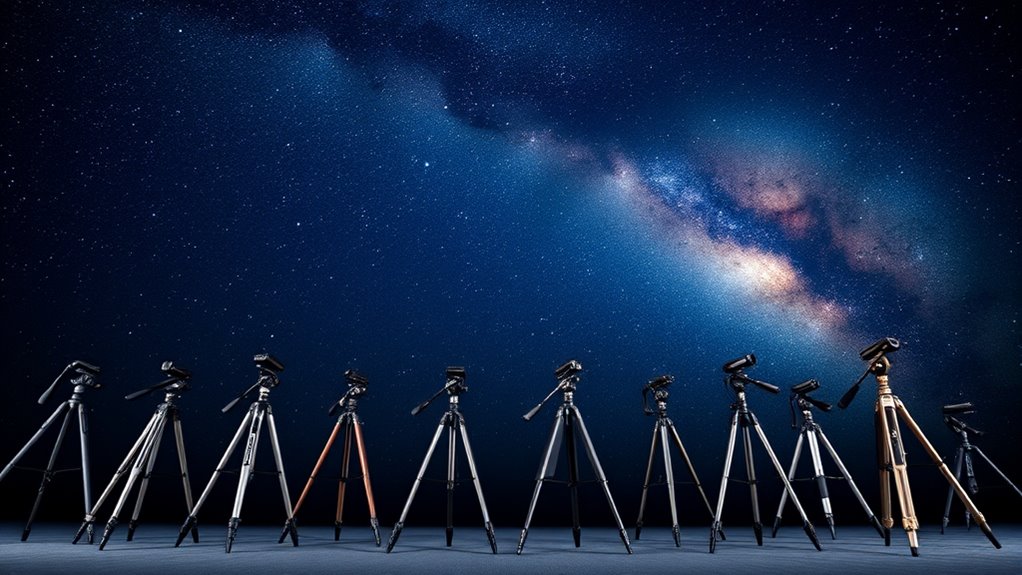

Choosing the right tripods and pier mounts for astrophotography is vital for capturing sharp, detailed night sky images. The best options offer stability, minimal vibrations, and ease of alignment, but often involve tradeoffs between portability and load capacity. The Sky-Watcher Wave 100i Pro Mount Kit stands out as the overall top pick for its reliability, while the iOptron SkyGuider Pro provides excellent portability for travel. Larger mounts like the Sky-Watcher EQ6 Wave excel in handling heavier equipment but can be less convenient for quick setups. Keep reading to see how these and other options compare and which might suit your specific astrophotography needs.

Get the latest gadgets delivered free — and shop member deals
- Fast, free delivery on millions of items
- Access to Prime Big Deal Days deals on October 6–7
- Prime Video, Amazon Music and more included
Complete the kit



Key Takeaways
- Stability and vibration dampening remain the most critical factors for sharp astrophotos, favoring heavier, more robust mounts and pier setups.
- Portability is often a tradeoff with performance; lightweight options may sacrifice some stability but are ideal for travel or quick setups.
- Motorized, computerized mounts enhance ease of tracking and alignment, especially for deep-sky imaging, but tend to be more expensive and complex to operate.
- Pier mounts provide excellent stability for permanent setups, while tripods offer more flexibility and mobility, suitable for field use.
- Build quality and materials, such as steel versus aluminum, significantly influence long-term durability and stability in different weather conditions.
| Sky-Watcher Wave 100i Pro Mount Kit with Steel Tripod and Extension Tube |  | Best Overall for Versatile Astrophotography Mounts | Mount Type: AZ and Imaging EQ Mount | Tripod Material: Steel | Tripod Size: 2-inch | VIEW ON AMAZON | See Our Full Breakdown |
| Sky-Watcher Star Adventurer GTi Mount Kit with Counterweight, Tripod, and Pier Extension |  | Best for Portable, Smartphone-Controlled Astrophotography | Model Number: S20595 | Item Length: 44.5 inches | Included Components: Counterweight bar, 5 lb. counterweight, tripod, pier extension | VIEW ON AMAZON | See Our Full Breakdown |
| iOptron SkyGuider Pro Camera Mount Full Package |  | Best for Long Exposure Astrophotography and Portable Precision | Weight: 2.2 lbs (1.00kg) | Payload Capacity: 11 lbs (4.99kg) | Latitude Adjustment Range: -30° to 65° | VIEW ON AMAZON | See Our Full Breakdown |
| Sky-Watcher EQ6 Wave Steel Tripod |  | Best Heavy-Duty Support for Large Telescopes | Model Number: S30918 | Item Length: 48 inches | Material: Steel | VIEW ON AMAZON | See Our Full Breakdown |
| Sky-Watcher Wave 150i Pro Mount Kit with Steel Tripod and Extension Tube |  | Best for Heavy-Duty, Precise Astrophotography | Mount Type: GoTo strainwave | Tripod Material: Steel | Leg Diameter: 2-inch | VIEW ON AMAZON | See Our Full Breakdown |
| Sky-Watcher AL-EQ55i Pier Extension for Mounts |  | Best for Extending Mount Height and Enhancing Stability | Mount: Equatorial Mount | Focus Type: Manual Focus | Batteries Required: 1 nonstandard battery | VIEW ON AMAZON | See Our Full Breakdown |
| iEXOS-100-2 PMC-Eight Equatorial Tracker System Tripod and Mount for Astrophotography with WiFi and Bluetooth |  | Best for Advanced, User-Friendly Tracking and Precise Alignment | Processor: Eight CPUs (PMC-Eight system) | Gears: Clutched dual-axis worm gears | Motors: Quiet stepper motors | VIEW ON AMAZON | See Our Full Breakdown |
More Details on Our Top Picks
Sky-Watcher Wave 100i Pro Mount Kit with Steel Tripod and Extension Tube
This kit stands out for combining a strainwave head with a robust 2-inch steel tripod, offering a stable platform for both visual observation and astrophotography. Unlike the lighter Sky-Watcher Star Adventurer GTi, which excels in portability, this setup prioritizes stability and load capacity, making it ideal for heavier equipment. The inclusion of an extension tube adds flexibility for different setups. Its main tradeoff is less portability due to weight and size, and limited details on specific compatibility and features may leave some users wanting more guidance. This makes it perfect for dedicated astrophotographers needing a durable, versatile mount that can handle heavier gear without sacrificing stability.
Pros:- Stable and durable steel tripod for long-term use
- Versatile AZ and imaging EQ mount supports multiple observing modes
- Includes extension tube for flexibility in setup
Cons:- Heavy and less portable compared to lighter mounts
- Limited info on compatibility with specific accessories or payload details
Best for: Advanced amateur astronomers seeking a stable, multi-purpose mount with heavy-duty support
Not ideal for: Travelers or beginners who need lightweight, quick-setup options
- Mount Type:AZ and Imaging EQ Mount
- Tripod Material:Steel
- Tripod Size:2-inch
- Includes:Extension tube, Adapter for EQ6 tripod
Our verdict“This mount kit is best suited for those prioritizing stability and durability over portability in astrophotography setups.”
Sky-Watcher Star Adventurer GTi Mount Kit with Counterweight, Tripod, and Pier Extension
This lightweight, portable mount excels in ease of use, with full GoTo capabilities, Wi-Fi control, and a built-in polar scope, making it ideal for astrophotographers on the move. Compared to the more robust Sky-Watcher Wave 150i Pro, which offers higher payload support, the Star Adventurer GTi is better suited to DSLR and mirrorless cameras with modest weight. Its portability and smartphone control are major advantages, but its payload capacity limits larger telescopes or heavy camera rigs. Some users report Wi-Fi stability issues, which can hinder quick setup. Overall, this is an excellent choice for beginners and travelers looking for a compact, feature-rich mount that’s simple to operate.
Pros:- Full GoTo and tracking modes including lunar, solar, sidereal
- Wi-Fi and smartphone control for easy operation
- Lightweight, portable design for travel
Cons:- Limited payload capacity (up to 11 lbs) for larger equipment
- Wi-Fi connection can be unstable for some users
- Requires setup and alignment for best performance
Best for: Beginners or travel enthusiasts needing a lightweight, Wi-Fi-enabled mount for casual astrophotography
Not ideal for: Advanced users with larger telescopes or heavy astrophotography rigs
- Model Number:S20595
- Item Length:44.5 inches
- Included Components:Counterweight bar, 5 lb. counterweight, tripod, pier extension
- Weight Capacity:11 lbs
Our verdict“Ideal for beginners and mobile users who prioritize portability and smart control over heavy-duty payload support.”
iOptron SkyGuider Pro Camera Mount Full Package
The iOptron SkyGuider Pro offers a compact yet capable solution for astrophotographers needing precise polar alignment and long exposure support. Its lightweight design (just 2.2 lbs) makes it more portable than larger mounts like the Sky-Watcher EQ6, yet it supports payloads up to 11 lbs, comparable to the Star Adventurer GTi. The illuminated polar scope and extended battery life enable extended sessions with minimal fuss. Unlike the heavier EQ6 setup, the SkyGuider Pro emphasizes fine polar alignment and quiet tracking, ideal for capturing subtle celestial details. The main drawback is the need for calibration and setup, which can be challenging for absolute beginners, and it’s limited strictly to astrophotography rather than visual use. Overall, this makes a strong choice for dedicated astrophotographers focused on long exposures and portability.
Pros:- Lightweight and portable for easy transport
- Supports heavy camera and lens setups
- Precise polar alignment with illuminated polar scope
Cons:- Requires calibration and setup for accurate tracking
- Limited to celestial tracking, not ideal for visual observation
- Somewhat complex for absolute beginners
Best for: Astrophotography enthusiasts who need precise, portable tracking for long exposures
Not ideal for: Casual observers or those unfamiliar with polar alignment procedures
- Weight:2.2 lbs (1.00kg)
- Payload Capacity:11 lbs (4.99kg)
- Latitude Adjustment Range:-30° to 65°
- Battery Life:Up to 20 hours
- Tracking Speeds:1X, 1/2X, solar, lunar
Our verdict“This mount is perfect for astrophotographers seeking a portable, precise tracking platform for extended imaging sessions.”
Sky-Watcher EQ6 Wave Steel Tripod
The EQ6 Wave Steel Tripod offers unmatched stability for larger optical setups, making it the go-to choice for serious astrophotographers with big telescopes. Its heavy-duty steel construction and 2-inch diameter legs provide a solid platform that minimizes vibrations during long exposures. Compared to lighter tripods like the Sky-Watcher Wave 100i Pro, this model sacrifices portability for stability and support for larger payloads. Compatibility with multiple mounts like NEQ6, EQ6, and AZ-EQ6 ensures versatility, but its weight can make transport and setup more taxing, especially for those with limited strength or space. This tripod is designed for users who need a durable, stable base for demanding astrophotography rather than quick or casual setups.
Pros:- Heavy-duty steel construction provides excellent stability
- Compatible with multiple mounts for versatility
- Suitable for large optical tube assemblies
Cons:- Heavy weight can complicate transport and setup
- Limited to tripod use without additional accessories
Best for: Experienced astrophotographers with large, heavy telescopes requiring maximum stability
Not ideal for: Travelers or beginners who need lightweight, easy-to-move tripods
- Model Number:S30918
- Item Length:48 inches
- Material:Steel
- Compatibility:Wave mounts, NEQ6, EQ6, EQ6-R, AZ-EQ6
- Warranty:Two-year limited warranty
Our verdict“This tripod is best for those needing a rugged, stable platform for large, demanding astrophotography setups.”
Sky-Watcher Wave 150i Pro Mount Kit with Steel Tripod and Extension Tube
This kit combines a strainwave mount with a sturdy 2-inch steel tripod, offering high precision tracking suited for serious astrophotography. Compared with the Sky-Watcher Wave 100i Pro, which supports lighter gear, this 150i Pro supports heavier payloads thanks to its robust construction. The included extension tube and adapter further enhance its versatility for various setups. However, the increased weight and complexity make it less ideal for beginners or those seeking a quick setup, as proper calibration and handling are necessary to maximize its potential. This mount is best suited for dedicated astrophotographers who need a reliable and precise platform for demanding imaging sessions.
Pros:- Stable, heavy-duty steel tripod ensures precision
- High-accuracy strainwave mount for tracking
- Includes extension tube and adapter for versatile setups
Cons:- Heavy and less portable than smaller mounts
- Complex setup process requiring calibration
Best for: Experienced astrophotographers requiring a heavy-duty, precise mount for advanced imaging
Not ideal for: Beginners or anyone prioritizing portability and quick deployment
- Mount Type:GoTo strainwave
- Tripod Material:Steel
- Leg Diameter:2-inch
- Includes:Extension tube, adapter for EQ6 tripod
Our verdict“Ideal for serious astrophotographers needing a durable, high-precision mount for demanding imaging projects.”
Sky-Watcher AL-EQ55i Pier Extension for Mounts
The Sky-Watcher AL-EQ55i Pier Extension stands out for its simplicity and targeted function: raising the mount height by 8.5 inches to improve clearance and stability. Unlike a full tripod replacement like the iEXOS-100-2 PMC-Eight, this extension offers a straightforward way to adapt existing setups for better performance in high-latitude conditions. Its compact design and light weight make it easy to handle, but the need for a nonstandard battery and limited compatibility mean it’s best suited for users already invested in the AL-EQ55i mount. The extension enhances observational comfort and stability but doesn’t include hardware or support for other mount models, which could limit flexibility. Overall, this pick makes sense for those who need a quick, specific upgrade to their current mount for astrophotography at extreme latitudes, prioritizing stability over versatility.
Pros:- Raises mount height for better clearance and access
- Improves stability for astrophotography in extreme latitudes
- Lightweight and compact, easy to install
Cons:- Requires a nonstandard battery, adding complexity
- Limited to specific mount compatibility, reducing versatility
Best for: Owners of the AL-EQ55i mount seeking to improve stability and clearance at high latitudes.
Not ideal for: Users with different mount models or those wanting an all-in-one pier solution, as it’s designed specifically for the AL-EQ55i.
- Mount:Equatorial Mount
- Focus Type:Manual Focus
- Batteries Required:1 nonstandard battery
- Item Dimensions:4.5″D x 4.5″W x 6.5″H
- Item Weight:2.4 pounds
- Purpose:Pier extension for stability and clearance
Our verdict“This extension is ideal for AL-EQ55i owners who need a quick and stable altitude boost at high latitudes.”
iEXOS-100-2 PMC-Eight Equatorial Tracker System Tripod and Mount for Astrophotography with WiFi and Bluetooth
The iEXOS-100-2 PMC-Eight excels as a comprehensive astrophotography tripod and mount system, offering an eight-CPU setup that provides exceptional responsiveness and reliability. Compared with the simpler Sky-Watcher AL-EQ55i Pier Extension, this system integrates advanced electronics and connectivity features, making star alignment and tracking more intuitive and accurate. Its quiet dual-axis worm gears and smooth stepper motors enable precise movement, while built-in WiFi and Bluetooth allow seamless control via multiple devices. However, the setup process can be complex, especially for newcomers, and the high cost may be a barrier for casual users. Additionally, the need for compatible devices for app operation requires planning. This system is best suited for dedicated astrophotographers who prefer automated, fast, and reliable tracking with modern connectivity features, accepting the steeper learning curve and higher investment.
Pros:- Highly responsive with eight CPUs ensuring reliable star tracking
- Quiet, precise dual-axis worm gears for smooth operation
- Intuitive app control compatible with major platforms
- Fast, accurate polar alignment features
Cons:- Setup can be complex and may require some learning curve
- Higher price point compared to basic mounts and tripods
- Dependent on compatible devices for full functionality
Best for: Experienced astrophotographers wanting a reliable, high-tech tracking system with easy app control.
Not ideal for: Beginners or casual users who prefer simpler, less expensive setups or are uncomfortable with complex electronics.
- Processor:Eight CPUs (PMC-Eight system)
- Gears:Clutched dual-axis worm gears
- Motors:Quiet stepper motors
- Connectivity:WiFi and Bluetooth
- App Compatibility:Apple, Android, Windows
- Alignment Features:Polar alignment sight hole, altitude control
Our verdict“This mount system is best for experienced astrophotographers seeking advanced tracking with user-friendly app control, despite the learning curve and cost.”

How We Picked
These products were evaluated based on a combination of stability, load capacity, ease of use, build quality, and value. Priority was given to mounts with reliable tracking and minimal vibration, which are essential for astrophotography. Portability, setup complexity, and compatibility with common telescopes or cameras also played key roles. The ranking reflects a balance between performance and practicality, aiming to recommend options suited for beginners, enthusiasts, and experienced astrophotographers alike.Factors to Consider When Choosing Tripods And Pier Mounts For Astrophotography
Selecting the right tripod or pier mount involves understanding your specific astrophotography needs. Consider how much weight your equipment requires, how portable you need the setup to be, and whether you prefer manual or motorized tracking. These factors influence long-term satisfaction and image quality, so it’s worth assessing each carefully before making a decision.Stability and Vibration Damping
Astrophotography demands a stable platform to prevent vibrations that can blur images. Heavier mounts and those made from steel or with reinforced legs tend to dampen vibrations better. When choosing, consider how much your camera and telescope weigh, and whether the mount can support it without flexing or wobbling during long exposures.
Load Capacity and Compatibility
Matching the mount’s load capacity with your equipment is essential. Overloading can lead to instability or damage, while underloading might restrict future upgrades. Ensure the mount can handle both your current gear and any planned additions, like larger telescopes or cameras.
Ease of Use and Setup
Complexity varies widely—manual mounts are simpler but require precise alignment, while motorized, computerized options automate tracking but involve learning curves. For beginners, intuitive interfaces and straightforward setup processes can save frustration and time, whereas advanced users might prioritize advanced features and fine control.
Portability vs. Permanence
Portable tripods are ideal for field use or travel but may compromise some stability compared to fixed pier mounts. Conversely, pier setups excel at stability for permanent observatories but are less practical for mobile imaging. Think about where you’ll be using the setup most often and choose accordingly.
Build Materials and Weather Resistance
Durability matters, especially if you plan to use your mount outdoors frequently. Steel offers robustness and vibration damping but is heavier, while aluminum is lighter but may be less sturdy in harsh conditions. Consider weather-resistant coatings or materials if you live in climates with high humidity or temperature swings.
Frequently Asked Questions
Can I use a standard photography tripod for astrophotography?
Using a standard photography tripod is generally not recommended for astrophotography because most are not stable enough to handle long exposures or heavy equipment. They tend to vibrate easily and lack the precision tracking required for deep-sky imaging. For better results, investing in a dedicated astrophotography mount or pier provides the stability and tracking accuracy needed to produce clear, detailed images of the night sky.
What is the main advantage of a pier mount over a tripod?
A pier mount offers superior stability and reduces vibrations, making it ideal for long-exposure astrophotography. It is typically fixed in a permanent or semi-permanent installation, which minimizes movement and allows for more precise alignment. However, it sacrifices portability, so if you need to set up in different locations regularly, a portable tripod might be more practical.
Should I prioritize motorized mounts or manual ones?
Motorized mounts significantly ease the process of tracking celestial objects, especially during long exposures, and are invaluable for deep-sky astrophotography. Manual mounts are less expensive and simpler but require more skill and effort to maintain accurate tracking. If you are serious about astrophotography and plan to capture detailed images, investing in a motorized, computerized mount makes a noticeable difference in image quality and ease of use.
How much weight should my mount support?
Your mount should support at least 50% more than the combined weight of your telescope, camera, and accessories to ensure stability and longevity. Overloading can lead to wobbling or damage, especially during prolonged imaging sessions. Always check the manufacturer’s specifications and consider future upgrades when selecting a mount or pier.
What should I consider for weather resistance in a mount?
If you plan to use your mount outdoors frequently, look for models with weather-resistant coatings or made from corrosion-resistant materials like stainless steel or treated aluminum. Proper maintenance, such as covering the mount during rain or snow, also extends its lifespan. Weather resistance is crucial for preserving the mount’s performance and durability over time.
Conclusion
For those just starting out, a lightweight, easy-to-setup tripod like the Sky-Watcher Star Adventurer GTi offers a manageable entry point. Enthusiasts seeking versatility and excellent tracking might prefer the iOptron SkyGuider Pro for its portability and features. Serious astrophotographers or observatories will find the Sky-Watcher EQ6 Wave or the Wave 150i Pro more suitable for handling heavier gear and providing stable long exposures. Budget-conscious users should focus on balancing cost with stability, while those with specific needs, like deep-sky imaging or travel, should prioritize features accordingly.Fall Picks
fall essentials
As an affiliate, we earn on qualifying purchases.