
In 2025, I recommend the Apple 2024 Mac mini models for video editing. The M4 chip is perfect for basic tasks, while the M4 Pro chip handles heavy-duty editing seamlessly. With support for high-res displays and fast SSD options, you can’t go wrong. Their compact design makes them easy to fit into any workspace. Plus, the robust connectivity options keep you connected with all your favorite peripherals. Stick around to discover even more about optimizing your video editing setup!
Key Takeaways
- The 2024 Mac Mini models offer powerful M4 and M4 Pro processors, enhancing video editing performance with up to 12 CPU and 16 GPU cores.
- With up to 24GB of unified memory, these models can efficiently handle multitasking during extensive video editing projects.
- The compact design supports up to three 6K displays, providing an expansive workspace for high-resolution video editing.
- Fast SSD options, starting from 512GB and customizable, ensure quick read/write speeds essential for handling large video files.
- Seamless compatibility with professional editing software and hardware acceleration for codecs like ProRes enhances overall editing efficiency and workflow.

Apple 2024 Mac mini Desktop Computer with M4 chip with 10‑core CPU and 10‑core GPU: Built for Apple Intelligence, 16GB Unified Memory, 256GB SSD Storage, Gigabit Ethernet. Works with iPhone/iPad
SIZE DOWN. POWER UP — The far mightier, way tinier Mac mini desktop computer is five by five...
As an affiliate, we earn on qualifying purchases.
Apple 2024 Mac mini Desktop Computer with M4 chip
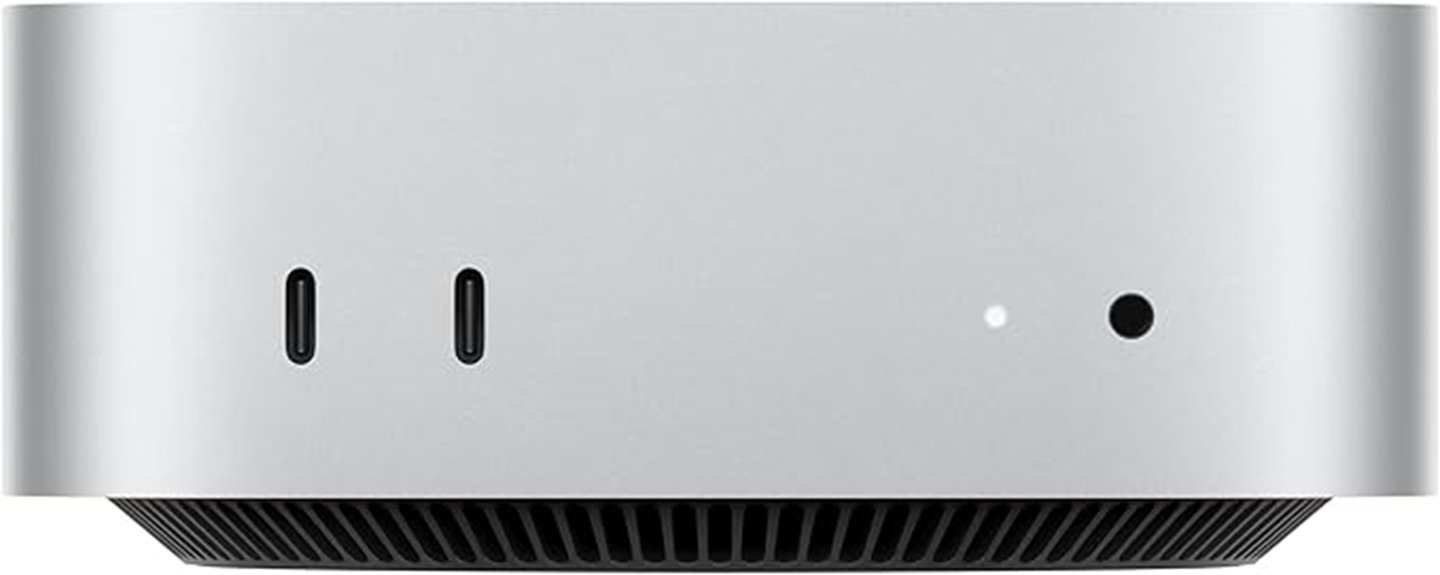
If you’re a video editor looking for a compact powerhouse, the Apple 2024 Mac mini Desktop Computer with the M4 chip should be on your radar. This little beast measures just 5×5 inches and weighs only 1.5 pounds, making it easy to fit next to my monitor. With a 10-core CPU and 10-core GPU, its performance is incredible, handling 4K video editing like a breeze. Plus, the seamless integration with my iPhone enhances my workflow. The M4 chip’s hardware acceleration for various codecs guarantees smooth playback and editing. It’s a game-changer for any video editing studio, especially for those on the go.
Best For: Video editors and creative professionals looking for a compact, high-performance desktop computer that integrates seamlessly with Apple devices.
Pros:
- Compact design allows for easy placement and portability.
- Powerful M4 chip delivers exceptional performance for 4K video editing.
- Seamless integration with iPhone and other Apple devices enhances productivity.
Cons:
- Limited upgrade options for certain hardware components.
- Higher price point compared to some competitors in the market.
- May require additional accessories for optimal connectivity with multiple displays.
Apple 2024 Mac mini Desktop Computer with M4 Pro chip with 12‑core CPU and 16‑core GPU: Built for Apple Intelligence, 24GB Unified Memory, 512GB SSD Storage, Gigabit Ethernet. Works with iPhone/iPad
SIZE DOWN. POWER UP — The far mightier, way tinier Mac mini desktop computer is five by five...
As an affiliate, we earn on qualifying purchases.
Apple 2024 Mac mini Desktop Computer with M4 Pro chip

The Apple 2024 Mac mini Desktop Computer with the M4 Pro chip is a powerhouse for video editors who need a compact yet formidable machine. Weighing just 1.6 pounds, its 5×5-inch design fits seamlessly beside your monitor. With a 12-core CPU and 16-core GPU, it handles demanding tasks effortlessly. The hardware-accelerated video decode/encode features are perfect for editing workflows. Plus, it supports up to three 6K displays, enhancing your editing experience. I love its seamless integration with macOS and other Apple devices. Environmentally friendly, it’s a great choice for creators committed to sustainability.
Best For: Video editors and creative professionals looking for a powerful yet compact desktop solution for demanding tasks.
Pros:
- Compact design (5×5 inches) makes it easy to fit alongside monitors without taking up much space.
- Powerful performance with a 12-core CPU and 16-core GPU, ideal for handling complex video editing workflows.
- Environmentally friendly and carbon neutral, aligning with sustainability goals.
Cons:
- Limited upgrade options for the GPU and CPU may restrict future performance enhancements.
- Higher price point compared to other compact desktop options may not be suitable for budget-conscious buyers.
- May require additional adapters or cables for connecting multiple displays depending on existing setup.
Apple 2024 Mac mini Desktop Computer with M4 chip with 10‑core CPU and 10‑core GPU: Built for Apple Intelligence, 16GB Unified Memory, 512GB SSD Storage, Gigabit Ethernet. Works with iPhone/iPad
SIZE DOWN. POWER UP — The far mightier, way tinier Mac mini desktop computer is five by five...
As an affiliate, we earn on qualifying purchases.
Apple 2024 Mac mini Desktop Computer with M4 chip
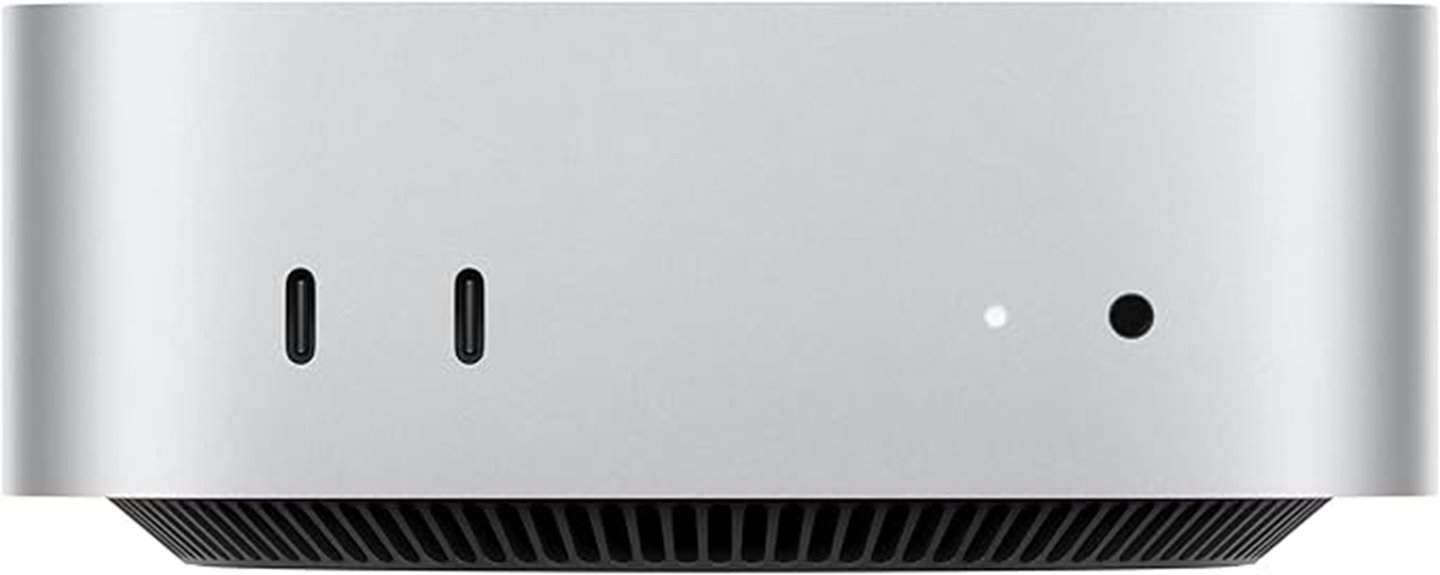
For anyone diving into video editing, the Apple 2024 Mac mini Desktop Computer with the M4 chip stands out with its compact design and powerful performance. Its five-by-five-inch footprint fits perfectly beside any monitor, while the 10-core CPU and GPU deliver fast, fluid editing experiences. With 16GB of unified memory and a 512GB SSD, multitasking and storage are a breeze. The variety of ports, including Thunderbolt and HDMI, guarantees I can connect all my devices effortlessly. Plus, it integrates seamlessly with my iPhone and iPad, streamlining my workflow. And I love that it’s a carbon-neutral product, reflecting Apple’s commitment to sustainability.
Best For: The Apple 2024 Mac mini Desktop Computer with M4 chip is best for video editors and creative professionals seeking a compact yet powerful workstation.
Pros:
- Compact design allows it to fit seamlessly into any workspace.
- Fast performance with the 10-core CPU and GPU, ideal for demanding tasks like video editing.
- Seamless integration with iPhone and iPad enhances productivity and workflow.
Cons:
- Limited upgrade options due to its compact nature.
- 512GB SSD may be insufficient for users with large files and projects.
- Higher price point compared to some competitors in the market.
Apple 2024 Mac mini Desktop Computer with M4 chip with 10‑core CPU and 10‑core GPU: Built for Apple Intelligence, 24GB Unified Memory, 512GB SSD Storage, Gigabit Ethernet. Works with iPhone/iPad
SIZE DOWN. POWER UP — The far mightier, way tinier Mac mini desktop computer is five by five...
As an affiliate, we earn on qualifying purchases.
Apple 2024 Mac mini Desktop Computer with M4 chip

Designed with video editors in mind, the Apple 2024 Mac mini Desktop Computer with the M4 chip offers powerful performance in an impressively compact form factor. Weighing just 1.5 pounds and measuring 5×5 inches, it fits perfectly beside my monitor. The M4 chip, with its 10-core CPU and GPU, delivers fast performance for demanding apps like Adobe Creative Cloud. With up to 24GB of unified memory and configurable storage options, it handles heavy video projects seamlessly. Plus, its connectivity options, including Thunderbolt 4 and Wi-Fi 6E, guarantee I’m always connected and ready to create.
Best For: Video editors and creative professionals seeking a compact yet powerful desktop solution for demanding applications.
Pros:
- Compact design (5×5 inches, 1.5 pounds) makes it easy to fit in any workspace.
- M4 chip with 10-core CPU and GPU provides exceptional performance for resource-intensive applications.
- Versatile connectivity options including Thunderbolt 4 and Wi-Fi 6E ensure seamless integration with other devices.
Cons:
- Limited upgrade options for memory and storage after purchase.
- May not support some high-end gaming requirements despite its powerful hardware.
- Price point may be higher compared to other desktop options with similar specifications.
Factors to Consider When Choosing a Mac Studio for Video Editing

When I’m choosing a Mac Studio for video editing, I always consider a few key factors. Performance specifications, storage capacity, and display support are vital for my workflow. Plus, I need to make certain it has the right connectivity options and software compatibility to meet my editing needs.
Performance Specifications Importance
Choosing the right Mac Studio for video editing hinges on understanding its performance specifications, as these factors directly influence your editing experience. Higher core counts and GPU performance are essential for rendering speed and real-time editing. When I consider my needs, I look for increased memory bandwidth and larger RAM configurations to guarantee smooth multitasking and handle large video files effortlessly. Hardware-accelerated video decode/encode engines, like ProRes and AV1, greatly reduce rendering times, which I find invaluable. Additionally, advanced processors with Neural Engines enhance AI-powered tools, boosting efficiency in my workflows. Ultimately, I prioritize processing power to comfortably work with high-resolution, multi-layered videos, including 8K and HDR content, ensuring I’m always ready for the most demanding projects.
Storage Capacity Considerations
After considering performance specifications, it’s clear that storage capacity plays a vital role in my video editing setup. I recommend opting for at least 1TB of SSD storage to handle high-resolution files and multiple projects efficiently. The faster read/write speeds of SSDs greatly enhance my workflow during rendering and exporting. If I frequently work with 4K or 8K footage, I’d definitely consider future-proofing by choosing higher storage options. While external storage solutions can supplement my internal storage, integrated larger SSDs provide more seamless data access. It’s also important to keep in mind that my choice of storage capacity can influence overall system cost, so it should align with my current and anticipated storage needs for future video projects.
Display Support Options
As I explore video editing, I know that display support options are essential for maximizing my productivity. Depending on the Mac Studio model, I can connect up to three 6K displays through Thunderbolt and HDMI, which is fantastic for detailed work. I appreciate the ability to support native DisplayPort 1.4 or 2.1 over USB-C, allowing for high-resolution displays, including stunning 8K and 5K monitors. The option for dual 6K displays or a single 8K display gives me the flexibility to create a professional editing setup. With multiple high-resolution monitors, my visual workspace expands, making color grading and intricate editing tasks much easier. Choosing the right display support truly enhances my workflow efficiency.
Connectivity and Ports
When I’m selecting a Mac Studio for video editing, I prioritize the connectivity and ports available, since they directly impact my editing efficiency. I make sure it has sufficient Thunderbolt 4 or 5 ports to connect multiple high-resolution displays and external drives at once. HDMI ports that support 4K or even 8K are vital for high-quality video output. I also look for USB-C or USB 3 ports to facilitate fast data transfers with peripherals like external SSDs and capture cards. Network connectivity options, particularly Gigabit or 10Gb Ethernet, are essential for seamless internet access and quick file transfers during my editing workflows. Finally, I need dedicated headphone or audio output ports for real-time audio monitoring while I edit.
Software Compatibility Requirements
Choosing the right Mac Studio for video editing hinges on software compatibility, especially since I want to make certain it can handle the latest applications efficiently. First, I ensure it supports the latest macOS version, as this is essential for running current and future video editing software. I also verify compatibility with professional applications like Adobe Premiere Pro, Final Cut Pro, and DaVinci Resolve, which often require recent updates. The hardware’s capabilities, including GPU and media engines, must meet my performance needs for high-resolution footage. Additionally, I check that the system’s ports and connectivity options support essential external devices. Finally, it’s critical that the Mac Studio supports hardware-accelerated video codecs like ProRes and HEVC for optimal performance.
Frequently Asked Questions
What Is the Optimal RAM Size for Video Editing on a Mac?
For video editing on a Mac, I’d recommend at least 16GB of RAM. It gives you enough power to run editing software smoothly without lag. However, if you’re working with high-resolution footage or complex projects, 32GB is even better for peak performance. I’ve found that more RAM allows me to multitask efficiently and handle larger files. So, consider your editing needs before deciding on the right amount for your setup.
How Do I Improve Video Editing Performance on My Mac?
To improve video editing performance on my Mac, I optimize my storage by using an external SSD for my projects. I also close unnecessary applications to free up RAM and guarantee my software’s updated for the latest performance enhancements. Increasing my RAM would be ideal, but I also manage my media files efficiently to reduce lag. Finally, I regularly clear caches and temporary files to keep everything running smoothly.
Can I Upgrade the Storage on My Mac Mini?
Absolutely, you can upgrade the storage on your Mac Mini! I’ve done it myself, and it’s a straightforward process. Just remember, if you’ve got an older model, you might find it easier to swap out the internal SSD. For newer models, consider using an external drive for extra space. I’ve seen significant speed boosts and smoother editing experiences with this simple storage solution. Don’t hesitate to enhance your Mac’s memory!
What Software Is Best for Video Editing on a Mac?
For video editing on a Mac, I’ve found Final Cut Pro to be the best option. Its user-friendly interface and powerful features really enhance my editing workflow. I also like Adobe Premiere Pro for its flexibility and integration with other Adobe apps. If I’m looking for something free, DaVinci Resolve is impressive for color grading. Ultimately, it depends on your specific needs, but these options have consistently worked well for me.
How Does Thermal Performance Affect Video Editing on a Mac?
Think of thermal performance as the heart of your Mac during video editing. When it runs cool, it beats steadily, ensuring smooth playback and rendering. If it overheats, it’s like gasping for air, leading to throttling and lag. I’ve noticed that a well-cooled Mac keeps my workflow uninterrupted, letting me focus on creativity instead of technical hiccups. So, investing in good thermal management is vital for an enjoyable editing experience.
Conclusion
In summary, choosing the right Mac studio for video editing is like picking the perfect paintbrush for a masterpiece; it can make all the difference in your creative process. Whether you opt for the M4 chip or the more powerful M4 Pro, each model offers impressive performance tailored for video editing. By considering your specific needs and workflow, you can find a Mac that not only meets but exceeds your expectations, allowing your creativity to truly shine.