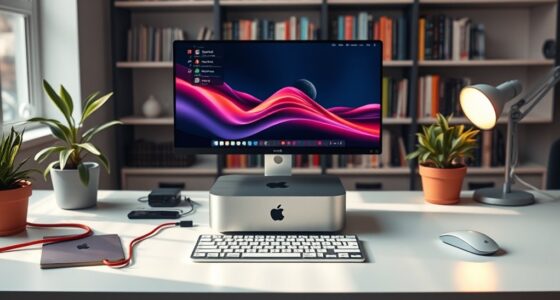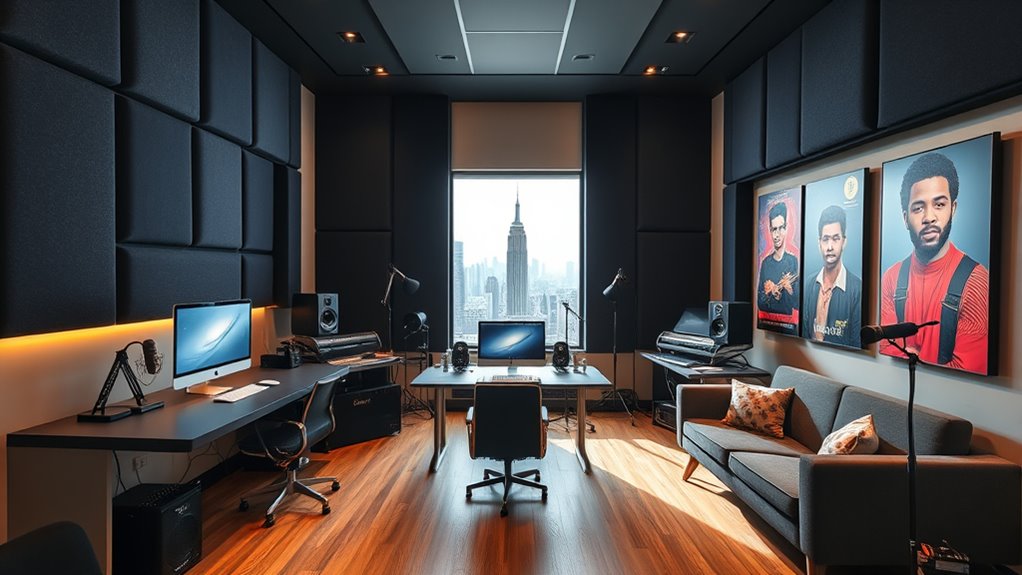

When it comes to audio production, I highly recommend the 2024 Apple Mac mini with the M4 and M4 Pro chips. These models pack impressive power with their 10-core CPUs and GPUs, making them perfect for demanding tasks. They support multiple displays, have plenty of connectivity options, and their internal storage solutions optimize workflow. Plus, their seamless integration with professional software gives you an edge in music creation. Stick around, and I’ll share more about what makes these models exceptional.
Key Takeaways
- The Apple 2024 Mac mini with M4 chip offers a powerful 10-core CPU and GPU for demanding audio production tasks.
- Configurable up to 32GB of unified memory ensures smooth multitasking with multiple audio plugins and large projects.
- Supports multiple high-resolution displays, enhancing workflow efficiency for music creators through expanded workspace.
- Thunderbolt 5 and USB-C ports provide seamless connectivity with audio interfaces and external devices, essential for professional setups.
- Optimized software like Logic Pro and Ableton Live ensures improved performance and processing speed on macOS for audio production.
Apple 2024 Mac mini Desktop Computer with M4 chip
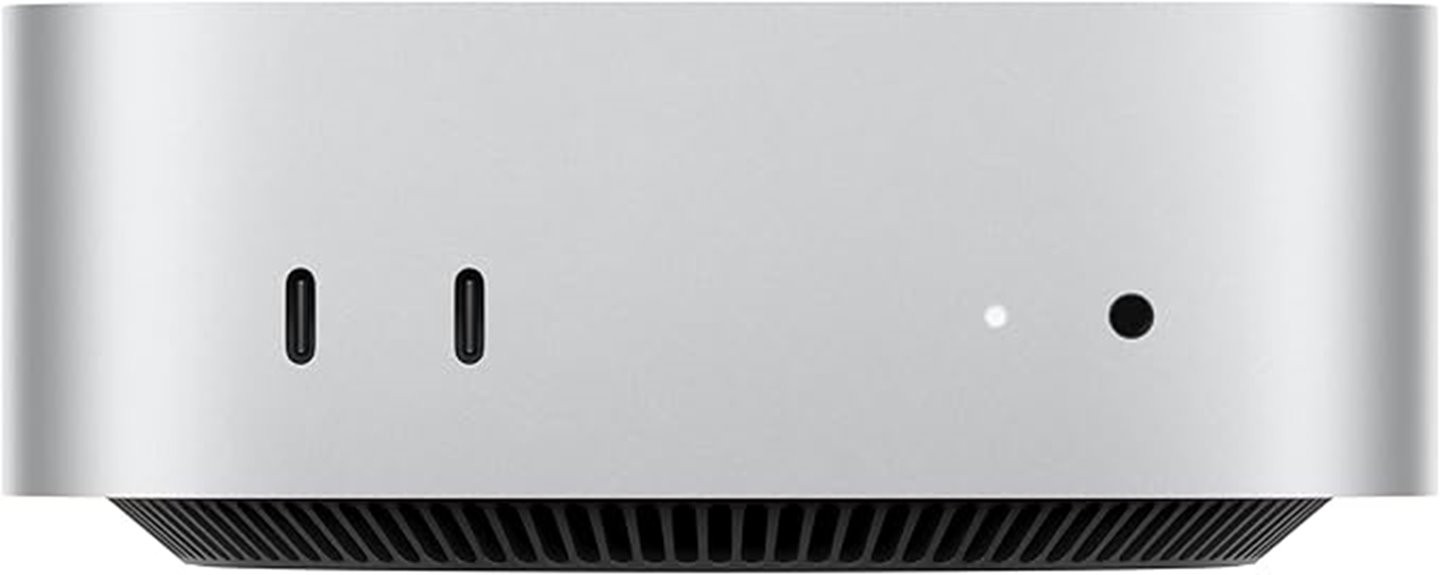
If you’re a music producer or audio engineer looking for a powerful yet compact solution, the Apple 2024 Mac mini with the M4 chip could be your best choice. Its sleek five-by-five-inch design fits perfectly beside any monitor, while its performance is anything but small. With a 10-core CPU and GPU, plus 16GB of unified memory, I can multitask effortlessly without any lag. The multiple ports, including Thunderbolt and HDMI, offer great connectivity options for all my gear. Plus, it syncs beautifully with my iPhone and iPad, making collaboration a breeze. This Mac mini is a game-changer for my audio production needs.
Best For: Music producers and audio engineers seeking a powerful, compact desktop solution for seamless multitasking and connectivity.
Pros:
- Powerful Performance: Equipped with a 10-core CPU and GPU, delivering fast and fluid performance ideal for demanding audio production tasks.
- Compact Design: Its small five-by-five-inch size allows it to fit easily in any workspace without sacrificing capabilities.
- Excellent Connectivity: Multiple ports including Thunderbolt and HDMI, along with front-facing USB-C ports, enhance versatility and ease of access.
Cons:
- Limited Upgradeability: The compact design may limit future upgrade options compared to larger desktop models.
- Price Point: Higher price compared to some competing desktop solutions may not be budget-friendly for all users.
- No Built-in Display: Requires an external monitor, which adds to the overall setup cost and space requirements.
Apple 2024 Mac mini Desktop Computer with M4 Chip
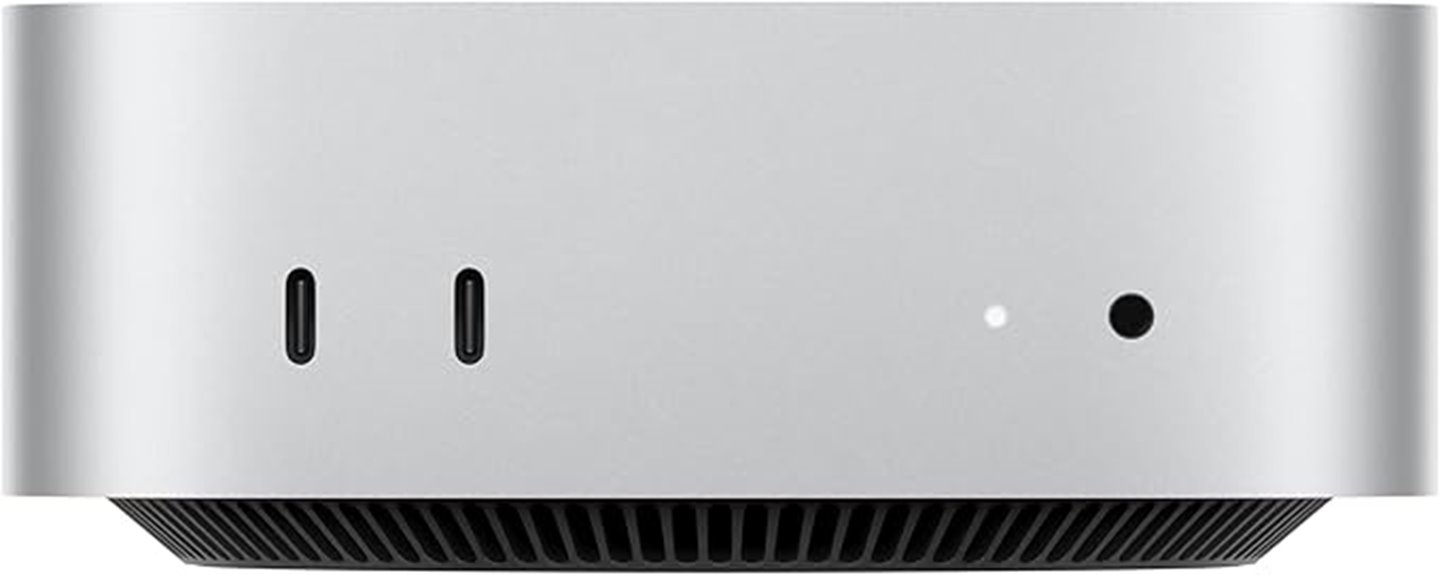
The Apple 2024 Mac mini Desktop Computer with M4 chip is an excellent choice for audio producers seeking powerful performance in a compact design. Weighing just 1.5 pounds and measuring 5×5 inches, it fits neatly alongside my monitor without taking up too much space. The M4 chip’s 10-core CPU and 10-core GPU deliver fast, fluid performance, perfect for demanding audio applications. With up to 32GB of unified memory and 512GB SSD storage, it handles everything from ProTools to Logic Pro effortlessly. Plus, its carbon-neutral design aligns with my values, making it an eco-friendly option for my studio setup.
Best For: Audio producers seeking powerful performance in a compact and eco-friendly desktop solution.
Pros:
- Compact design (5×5 inches, 1.5 pounds) fits easily alongside monitors, saving desk space.
- Powerful M4 chip with 10-core CPU and GPU provides fast performance for demanding audio applications.
- Configurable memory and storage options (up to 32GB RAM and 2TB SSD) cater to various production needs.
Cons:
- Limited upgrade options for internal components after purchase.
- Higher initial cost compared to some traditional desktop alternatives.
- May require additional peripherals (monitor, keyboard, mouse) for complete setup.
Apple 2024 Mac mini Desktop Computer with M4 Pro chip

For audio producers seeking a compact yet powerful solution, the Apple 2024 Mac mini with the M4 Pro chip stands out as an ideal choice. Its sleek 5×5-inch design makes it easy to fit alongside your gear without sacrificing performance. With a 12-core CPU and 16-core GPU, it tackles demanding tasks like audio editing and complex projects effortlessly. The connectivity options, including Thunderbolt 5 and HDMI, support multiple high-resolution displays, giving you plenty of room for your workspace. Plus, its carbon-neutral design aligns with sustainable practices. This Mac mini truly delivers the performance and efficiency music creators need.
Best For: Audio producers seeking a compact and powerful desktop solution for demanding editing tasks.
Pros:
- Compact design allows easy placement alongside other studio equipment without taking up much space.
- Powerful performance with a 12-core CPU and 16-core GPU, enabling smooth handling of complex audio editing projects.
- Versatile connectivity options, including Thunderbolt 5 and HDMI, support multiple high-resolution displays for an expanded workspace.
Cons:
- Limited upgrade options for built-in components may restrict future enhancements.
- Higher price point compared to traditional desktops in the same category.
- Potential compatibility issues with older audio software not optimized for Apple silicon.
Apple 2024 Mac mini Desktop Computer with M4 chip

With its powerful M4 chip and compact design, the 2024 Mac mini Desktop Computer is an ideal choice for audio producers who need both performance and portability. This little powerhouse packs a 10-core CPU and GPU, boasting 16GB of unified memory, configurable to 32GB. It supports up to three displays for seamless multitasking, essential for any studio setup. Plus, with hardware-accelerated video encoding and decoding, your audio-visual projects come to life effortlessly. I love how it integrates seamlessly with my other Apple devices, making my workflow smoother than ever. If you’re serious about music production, this Mac mini is a solid investment.
Best For: Audio producers and creatives seeking a powerful yet compact desktop computer for enhanced performance and seamless integration with other Apple devices.
Pros:
- Exceptional performance with the M4 chip, featuring a 10-core CPU and GPU for demanding tasks.
- Supports up to three displays, making multitasking efficient for studio setups.
- Seamless integration with other Apple devices, enhancing workflow and productivity.
Cons:
- Limited upgrade options for memory and storage compared to traditional desktop PCs.
- Higher price point may not be suitable for budget-conscious users.
- Compact design may lack expandability for additional hardware components.
Factors to Consider When Choosing a Mac Studio for Audio Production
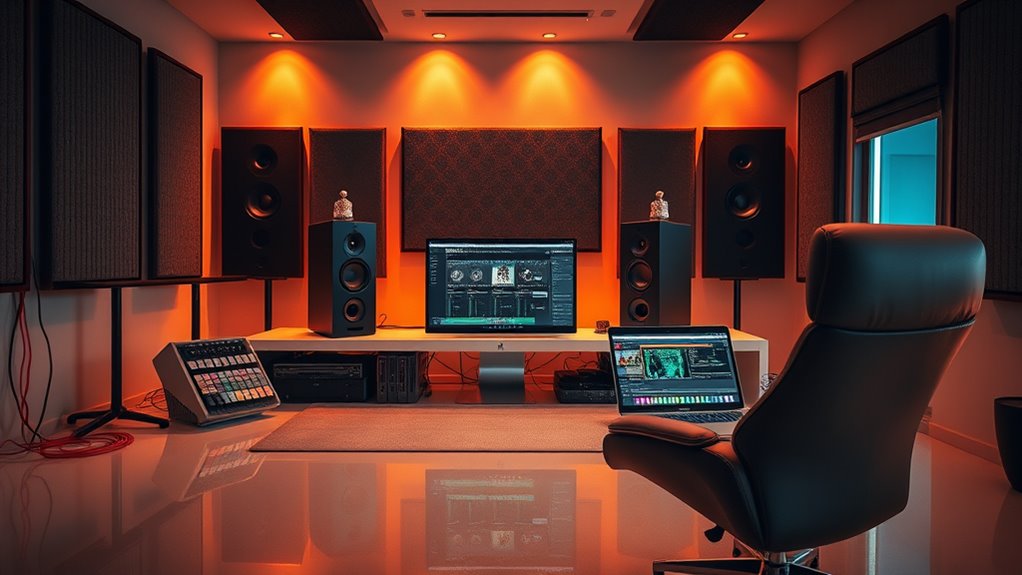
When choosing a Mac Studio for audio production, I consider several key factors that can make or break my workflow. Processing power, memory, and storage options are vital, as well as audio interface compatibility. Additionally, I pay attention to display support and how well the software is optimized for macOS to guarantee a smooth experience.
Processing Power Requirements
How important is processing power when choosing a Mac Studio for audio production? It’s vital. Higher processing power translates to smoother real-time audio editing and mixing, especially when dealing with large, complex projects. I’ve found that multi-core CPUs with more cores can effortlessly handle numerous audio tracks and effects simultaneously without any latency issues. Faster processors also mean reduced rendering times for audio effects, plugins, and final mixes, which boosts my productivity considerably. Plus, adequate processing power is essential for running demanding audio software and virtual instruments effectively. Investing in a higher-tier Mac Studio with advanced processors not only meets my current needs but also future-proofs my setup as my audio production demands grow.
Memory and Storage Options
Alongside processing power, memory and storage options play a significant role in choosing a Mac Studio for audio production. I’ve found that opting for higher memory, like 32GB or even 64GB, can dramatically enhance performance when juggling multiple audio plugins and large sample libraries. Ample storage capacity is essential too; with options up to 8TB, I can easily store high-resolution audio files and project backups without worry. Additionally, faster RAM, boasting bandwidths like 273GB/s, improves real-time audio processing and cuts down latency. I also appreciate upgradable storage configurations, which offer flexibility as my projects evolve. By choosing a Mac Studio with increased memory and storage, I guarantee a smoother workflow and minimize reliance on external drives.
Audio Interface Compatibility
Choosing the right audio interface is vital for maximizing the potential of your Mac Studio in audio production. First, make sure your Mac Studio has compatible Thunderbolt or USB-C ports, as most interfaces use these connections. It’s also essential to check if the audio interface supports macOS natively for seamless driver and software performance. Look into the sample rate and bit depth support, like 96kHz or 192kHz, to guarantee it meets your production needs. Don’t forget to verify that your Mac Studio’s hardware specifications—like CPU and RAM—can handle the audio interface’s data throughput without latency issues. Finally, consider the power requirements: whether your interface needs an external power supply or can draw power via bus affects compatibility with your Mac Studio’s ports.
Display Support and Setup
When setting up your Mac Studio for audio production, have you considered how many displays you’ll need to optimize your workflow? I find that having multiple screens can greatly enhance productivity. Make sure your Mac Studio supports enough displays, like multiple 6K monitors via Thunderbolt or HDMI. It’s essential to check the maximum resolution and refresh rates for each monitor to meet your specific audio needs. Also, verify the available ports, ensuring they align with your setup for easy connections. Don’t overlook the maximum number of displays supported, especially if you’re opting for high-resolution or HDR monitors. Ultimately, confirm compatibility with your existing display technology, including DisplayPort 2.1 or HDMI 2.1 standards, to avoid headaches later on.
Software Optimization for Macos
To maximize your audio production experience on a Mac Studio, it’s essential to focus on software optimization for macOS, as it guarantees your applications run smoothly and efficiently. Many professional audio tools, like Logic Pro and Ableton Live, are designed to leverage Apple’s silicon architecture, enhancing their performance. When software is optimized, you’ll notice improvements in latency, processing speed, and stability during complex tasks like editing and mixing. Staying updated with the latest macOS compatibility updates is also indispensable, as these often include enhancements for audio plugins and virtual instruments, ensuring everything integrates seamlessly. Regular updates from developers help maintain compatibility and performance with the latest macOS versions, so make it a habit to keep your software current for the best results.
Port Availability and Connectivity
While evaluating a Mac Studio for audio production, it’s essential to take into account port availability and connectivity options. I always make sure there are enough Thunderbolt and USB-C ports to connect my audio interfaces, external drives, and MIDI controllers simultaneously. If I plan to integrate visual components or multi-display setups, I check for HDMI or other video output ports. It’s also important to confirm the presence of a headphone jack or dedicated audio ports for direct monitoring without needing extra adapters. Additionally, I consider the number and type of Ethernet ports, especially when streaming high-quality audio over networks. Ultimately, I verify compatibility with my existing audio equipment to make sure everything connects seamlessly.
Frequently Asked Questions
Can I Upgrade the RAM in My Mac Studio Later?
Unfortunately, you can’t upgrade the RAM in your Mac Studio later. Apple designs these machines with soldered memory, meaning it’s fixed in place. I learned this the hard way when I wanted more memory for my projects. I recommend deciding on the amount of RAM you need at the time of purchase. If you think you’ll need more, it’s best to opt for the higher capacity model right from the start.
What’s the Warranty Duration for Apple Mac Studio Products?
Did you know that over 90% of Mac users report satisfaction with their devices? Apple’s Mac Studio products come with a standard one-year limited warranty. This covers hardware repairs and service, giving me peace of mind. If I want extended coverage, I can purchase AppleCare+, which adds two more years. Knowing this helps me feel secure in my investment, especially when I’m diving deep into my creative projects.
Are There Any External Audio Interfaces Recommended for Mac Studios?
I’ve found some great external audio interfaces for Mac Studios. The Focusrite Scarlett series is fantastic for its sound quality and ease of use. I also love the Universal Audio Apollo Twin for its impressive plugins and low latency. If you’re looking for something budget-friendly, the Behringer UMC series works well too. All of these options have served me well, enhancing my audio production experience markedly!
How Does Macos Impact Audio Production Software Compatibility?
I know some folks worry that macOS limits audio production software options, but that’s not the case. Most major audio software developers optimize their programs for macOS, ensuring compatibility and seamless integration. I’ve found that running software like Logic Pro or Ableton Live on macOS is smooth and efficient. Plus, macOS’s stability and performance enhance my workflow, allowing me to focus more on creativity and less on technical issues.
Can I Run Windows on a Mac Studio for Audio Production?
Yes, I can run Windows on a Mac Studio for audio production. I use Boot Camp to install Windows, which allows me to switch between macOS and Windows easily. This way, I can access software that’s exclusive to Windows while still benefiting from the Mac’s powerful hardware. It’s a great solution for getting the best of both worlds, especially when I need specific applications for my music projects.
Conclusion
In the world of audio production, choosing the right Mac studio is like picking the perfect instrument for your music; it sets the tone for everything you create. Whether you opt for the standard M4 chip or the more powerful M4 Pro, each model offers unique benefits tailored to your needs. Remember to contemplate factors like performance and budget, and you’ll find a Mac that resonates with your creative goals. Happy producing!