
If you’re looking to enhance your astrophotography game, I’ve found the five best filter wheels and sets for mono cameras. The SVBONY SV133 offers a sturdy, light-tight design, while the NEWER 58mm ND Lens Filter Kit provides versatile lighting control. The Acuvar Graduated Color set is perfect for balancing landscapes, and the Kaleidoscope Filter adds a creative touch. Finally, the Altura Photo Kit stands out for its budget-friendly versatility. Stick around, and I’ll share more insights!
Open a free Amazon Business account
Business pricing, bulk buying and tax-exempt orders.
As an affiliate, we earn on qualifying purchases.
Key Takeaways
- Choose filter wheels that are compatible with your mono camera’s mount type and size for seamless integration and performance.
- Opt for a filter wheel with multiple positions (5-7) for greater versatility and quick filter changes during astrophotography sessions.
- Select filter sets made from high-quality optical glass to maintain image clarity and prevent vignetting during imaging.
- Look for durable aluminum construction in filter wheels, ensuring stability and longevity while preventing stray light interference.
- Consider ease of use features like quick-release mechanisms and motorized controls to streamline filter changes and enhance workflow efficiency.
SVBONY SV133 Filter Wheel for Telescope
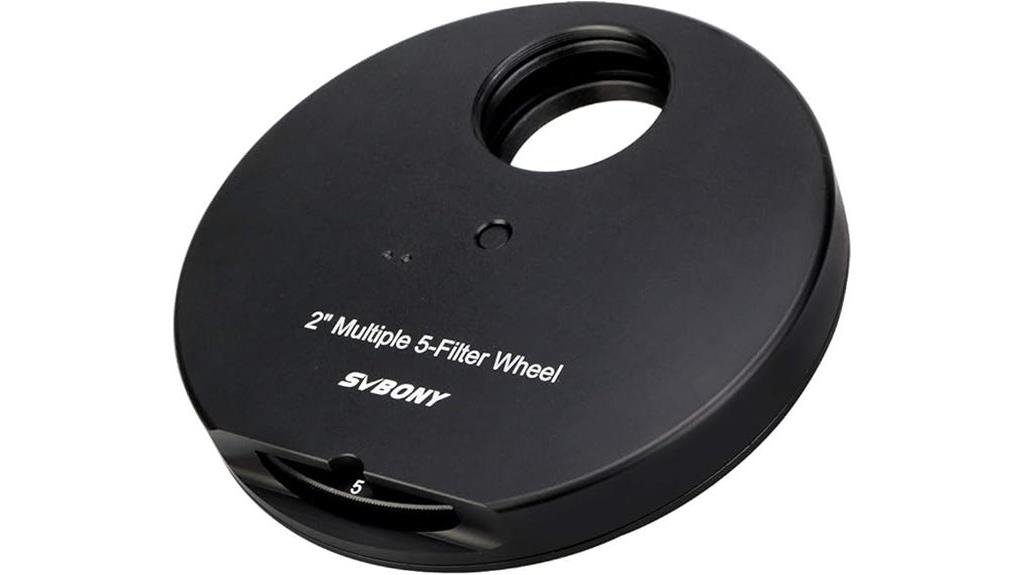
If you’re looking for a reliable filter wheel that enhances both visual observations and astrophotography, the SVBONY SV133 Filter Wheel is an excellent choice for amateur astronomers and seasoned astrophotographers alike. Its five-position design allows me to swiftly switch between filters, whether I’m using eyepieces or cameras. The sturdy aluminum construction guarantees stability, even with heavy gear attached. I appreciate the light-tight design that eliminates reflections, maintaining image quality. Plus, the included adapters make it easy to set up and get started. With the SV133, I’m able to achieve precise, high-quality imaging every time I observe the night sky.
Best For: Amateur astronomers and seasoned astrophotographers looking for a reliable and efficient filter wheel for visual observations and imaging.
Pros:
- Durable aluminum construction ensures stability and longevity with heavy equipment.
- Five-position design enables quick and easy filter changes during use.
- Light-tight design prevents reflections and stray light, maintaining high image quality.
Cons:
- Does not include M48 to M42 adapters, which may limit compatibility with certain cameras.
- Some users may find the setup process requires additional time for adjustments.
- The knurled wheel may require practice to master for rapid filter switching.
NEEWER 58mm ND Lens Filter Kit for DSLR Cameras

The NEEWER 58mm ND Lens Filter Kit is an excellent choice for photographers who want to enhance their image quality and gain greater control over lighting conditions. This kit includes essential filters like ND2, ND4, and ND8, which help manage light exposure for stunning long exposures. With a CPL filter to boost color saturation and a UV filter for lens protection, it’s an all-encompassing set. Plus, the collapsible rubber lens hood and snap-on cap make it convenient for outdoor shoots. Weighing in at just 8.5 ounces, it’s portable and compatible with popular DSLR brands like Canon and Nikon.
Best For: Photographers seeking versatile lighting control and lens protection for both indoor and outdoor shooting conditions.
Pros:
- Versatile filter options including ND, CPL, and UV filters that enhance image quality and manage light exposure effectively.
- Portable design at just 8.5 ounces, making it easy to carry during shoots.
- Comprehensive kit includes additional accessories like a collapsible lens hood and snap-on cap for added convenience.
Cons:
- Compatibility limited to lenses with a 58mm thread, which may exclude some camera models.
- No specific price listed, requiring users to check for current pricing and availability.
- Learning curve for beginners unfamiliar with using different filters effectively in various photography scenarios.
Acuvar 58mm Graduated Color Lens Filter Kit (6 Piece Set)

For photographers and content creators looking to elevate their outdoor imagery, the Acuvar 58mm Graduated Color Lens Filter Kit is a game-changer. This six-piece set, made of HD optical glass and durable aluminum frames, enhances landscapes and sunsets beautifully. I love how these filters help me control exposure between bright and dark areas, ensuring balanced images without heavy post-processing. They’re perfect for capturing vibrant skies and creating dramatic effects right in-camera. Plus, the included travel pouch makes it easy to take them anywhere. If you want to improve your visual storytelling, this filter kit is an essential tool for your gear.
Best For: Photographers and content creators seeking to enhance outdoor imagery with vibrant colors and balanced exposures.
Pros:
- High-quality HD optical glass ensures crisp image quality and durability.
- Includes a travel pouch for easy portability and convenience on shoots.
- Helps achieve artistic effects directly in-camera, reducing the need for post-processing.
Cons:
- Limited to 58mm lens threads, which may not be compatible with all camera models.
- Requires manual adjustments for optimal results, which may be challenging for beginners.
- The six-piece set may be more filters than needed for casual photographers.
Kaleidoscope Lens Filter 82mm for Photography Creation

A Kaleidoscope Lens Filter 82mm is perfect for photographers seeking to elevate their creative game, as it transforms ordinary scenes into mesmerizing visual experiences. This filter opens up a world of fractal effects and visual illusions, letting me express my artistic vision uniquely. Made from durable optical glass, it guarantees clear visuals even with extended use. I love experimenting with different focal lengths; rotating the filter reveals varied effects. Whether I’m capturing repeating subjects or exploring new techniques, this filter enhances my photography projects. Plus, with reliable customer support, I feel confident in my investment.
Best For: Photographers looking to enhance their creative expression and explore unique visual effects in their work.
Pros:
- High-quality optical glass construction ensures durability and clear visuals.
- Versatile usage allows for multiple refractions and varied effects by adjusting focal length and filter rotation.
- Ideal for artistic projects, particularly fractal photography and visual experimentation.
Cons:
- May require practice to master the various effects and achieve desired results.
- Limited optimal shooting aperture range may not suit all photographic scenarios.
- The filter’s unique effects may not appeal to traditional photography styles.
Altura Photo 72mm Lens Filter Kit
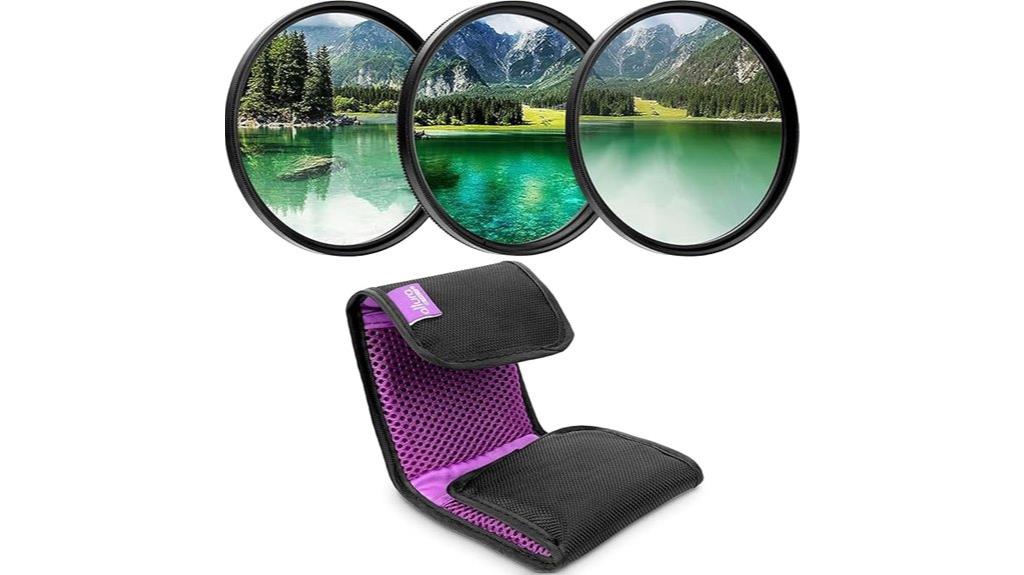
When seeking the perfect kit to enhance your photography, the Altura Photo 72mm Lens Filter Kit stands out with its multi-coated UV protector, CPL polarizing, and ND neutral density filters. This high-quality set is compatible with popular lenses from brands like Canon, Nikon, and Sony. Weighing just 2.89 ounces, it’s lightweight and easy to carry, making it ideal for on-the-go shooting. The padded protective pouch guarantees your filters stay safe during travel. With an impressive 4.5-star rating from over 7,700 reviews, it’s a reliable choice for any photographer looking to elevate their shots. Don’t miss out on this essential kit!
Best For: The Altura Photo 72mm Lens Filter Kit is best for photographers seeking versatile lens protection and image enhancement in a lightweight and portable package.
Pros:
- High compatibility with popular lenses from major brands like Canon, Nikon, and Sony.
- Includes three essential filters (UV, CPL, ND) for various photographic needs.
- Lightweight and portable design, along with a padded protective pouch for safe storage.
Cons:
- Limited to 72mm lenses, requiring users to verify their lens thread size for compatibility.
- May not suit advanced photographers who prefer specialized filters.
- Considered a budget option, which might not meet the needs of professional users seeking premium filters.
Factors to Consider When Choosing Filter Wheels and Filter Sets for Mono Cameras

When choosing filter wheels and sets for mono cameras, I think it’s crucial to take into account several key factors. Compatibility with your camera, the number of filter positions, and the overall build quality can greatly affect your imaging experience. Plus, ease of filter changes and a light-tight design shouldn’t be overlooked for ideal results.
Filter Compatibility With Cameras
How can you guarantee the filter wheel and filter set you choose for your mono camera will elevate your astrophotography experience? First, ensure the filter wheel and filter set are compatible with your camera’s mount type and size, like 2-inch or 58mm threads. Next, verify that the filter set includes adapters for your specific camera model. It’s essential to confirm that the filters support your camera’s sensor type and resolution, preventing issues like vignetting or image degradation. Lastly, check the optical coatings and glass quality of the filters; this is critical for maintaining image clarity and avoiding unwanted reflections. By considering these factors, you’ll be well on your way to enhancing your astrophotography game.
Number of Filter Positions
Choosing the right number of filter positions for your filter wheel can profoundly impact your astrophotography experience. Typically, you’ll find configurations with 3, 5, or 7 positions. If you want versatility, opting for a higher number gives you access to a broader selection of filters without the hassle of swapping them out during your sessions. This not only saves time but also allows you to adapt quickly to changing imaging conditions. However, if you’re just starting or have budget constraints, a wheel with fewer positions can be more compact and affordable, though you’ll sacrifice some filter variety. Ultimately, think about your specific imaging needs and the types of filters you plan to use regularly to make the best choice.
Build Quality and Durability
While I often focus on the features of filter wheels, the build quality and durability are just as essential for ensuring a successful astrophotography experience. High-quality filter wheels are made from sturdy materials like aluminum, providing stability during use. A light-tight interior is fundamental to keep stray light from affecting your images. Precision machining and secure locking mechanisms are critical for accurate filter positioning, preventing any shifting that could ruin your shots. Additionally, robust adapters and attachment points support heavier cameras and accessories without damage. A well-designed filter wheel should also resist dust, moisture, and temperature fluctuations, extending its lifespan. Investing in durable equipment pays off, allowing you to focus on capturing stunning celestial images.
Ease of Filter Changes
When I’m out capturing the night sky, the ease of changing filters can make all the difference in my astrophotography workflow. A filter wheel with a quick-release mechanism is invaluable; it lets me swap filters quickly, saving precious time during those fleeting moments of perfect conditions. I also appreciate wheels designed with precise, indexed positions, ensuring accurate filter placements without the hassle of misalignment. Lightweight, durable aluminum housing makes handling a breeze, reducing fatigue after long sessions. Some of my favorite wheels even include motorized controls for seamless, remote filter switching. Ultimately, clear, numbered position indicators help me quickly identify filters, especially in low-light situations. This all adds up to a smoother, more efficient astrophotography experience.
Light-Tight Design Importance
How essential is a light-tight design for your astrophotography setup? It’s absolutely necessary. A light-tight filter wheel prevents stray light from sneaking in, which is crucial for achieving optimal image contrast and accuracy. By ensuring complete light sealing, you eliminate pesky internal reflections that can lead to flares or distortions in your images. This is especially important for long-exposure astrophotography, where maintaining consistent exposure levels is key. Additionally, proper light-tightness minimizes the risk of stray light contamination, which can seriously degrade the quality of your sensitive mono camera images. In environments with ambient light pollution, a well-designed light-tight filter wheel is critical for high-precision imaging results. So, don’t overlook this feature when making your choice!
Additional Accessories Included
Choosing the right filter wheel and filter set for your mono camera involves more than just selecting the best filters; it’s also about the additional accessories that enhance your imaging experience. Many filter wheels come equipped with adapters, lock rings, and rotation rings, ensuring secure and precise filter positioning. Some filter sets even include protective caps or cases for safe storage and transport. I find that accessories like light shields help prevent stray light, while tethers can stop accidental filter dislodgement during use. furthermore, certain filter wheels boast built-in locking mechanisms to maintain filter alignment. Always check compatibility with your camera type, as included or optional accessories like T-ring adapters can make a significant difference in your setup.
Frequently Asked Questions
Can I Use These Filters With Other Camera Types?
Yes, you can use these filters with other camera types, but it depends on the compatibility of the filter size and mount. I’ve had success using similar filters on DSLRs and mirrorless cameras, but I always check the specifications first. If your camera supports the same filter thread size, you’re good to go! Just make sure to take into account the intended use and camera sensor for ideal results.
What Is the Best Filter for Deep-Sky Photography?
For deep-sky photography, I’ve found that narrowband filters, like Ha (hydrogen-alpha), OIII (oxygen-III), and SII (sulfur-II), work best. They help isolate specific wavelengths from celestial objects, enhancing details and reducing light pollution. If you’re capturing nebulae, these filters can bring out stunning colors and structures. I’d recommend starting with a Ha filter; it’s incredibly versatile and often yields amazing results in various conditions. Happy shooting!
How Do I Clean My Filters Properly?
Cleaning filters? It’s not like I enjoy risking my precious gear! But here’s what I do: First, I blow off any dust with a bulb blower. Then, I use a microfiber cloth slightly dampened with distilled water or a specialized lens cleaner. I gently wipe in a circular motion. I avoid harsh chemicals like the plague! Finally, I let them air dry completely before putting them back. Simple, right?
Are There Any Compatibility Issues With My Mono Camera?
Yes, there can be compatibility issues with mono cameras. I’ve experienced this firsthand. It’s essential to check whether your filter wheel matches your camera’s specifications. Sometimes, the mounting system or the sensor size can create problems. I always recommend looking at the manufacturer’s guidelines and user reviews. If you’re unsure, reaching out to support can clarify any doubts. Ensuring compatibility upfront saves a lot of hassle down the line.
How Do I Determine the Right Filter Size for My Setup?
To determine the right filter size for my setup, I first check my camera’s specifications. Most mono cameras will specify the required filter diameter. I also consider the size of my telescope’s focuser and any adapters I might use. It’s vital to guarantee that the filters fit snugly without causing vignetting. I usually go for standard sizes like 1.25″ or 2″, depending on my equipment. Always double-check before making a purchase!
Conclusion
In conclusion, investing in the right filter wheel and filter set can truly elevate your astrophotography experience. For instance, I once captured stunning nebula details using the SVBONY SV133 paired with a narrowband filter set. The colors and contrasts were breathtaking! By carefully considering your options and understanding how each filter impacts your images, you’ll open new levels of creativity and precision in your night sky photography. So go ahead, enhance your gear and watch your results soar!
Labor Day sales Picks
labor day deals
As an affiliate, we earn on qualifying purchases.