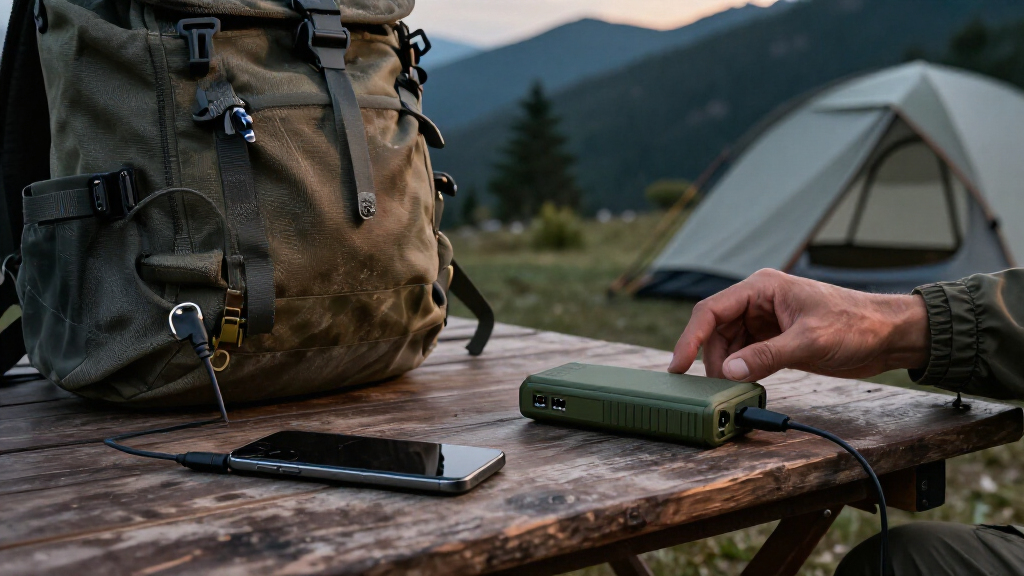

Military-grade portable power banks vary widely: rugged styling alone does not tell you how well a charger handles water, drops, or long trips. My best overall pick is the NESTOUT 15,000mAh Power Bank, pairing IP67 protection with 32W USB-C PD and useful capacity. The BLAVOR 15,000mAh LiFePO4 stands out for its battery chemistry and water protection, while the INIU Rugged 10,000mAh 45W favors faster charging in a smaller-capacity format. The main tradeoffs are capacity versus carry weight, charging speed versus runtime, and certified protection versus extra lights or solar features. Read on for the full breakdown and guidance on matching the right balance to your trips.

Get the latest gadgets delivered free with Prime
- Fast, free delivery on millions of items
- Prime Video, Amazon Music and more included
- Member-only deals all year
Complete the kit



Key Takeaways
- NESTOUT’s 15,000mAh model makes the strongest all-around case in this lineup by combining IP67 protection, 32W USB-C PD, and more capacity than the compact options.
- BLAVOR’s LiFePO4 battery is a distinct pick for shoppers prioritizing battery chemistry and a 15,000mAh capacity, rather than maximum USB-C output.
- INIU’s 45W models focus on charging speed in a 10,000mAh format; the flashlight version adds campsite utility, but neither offers the same stated IP67 protection as NESTOUT or BLAVOR.
- For higher stated capacity, ToughTested and ASWAYKE offer 24,000mAh and 20,000mAh respectively, though buyers should weigh their outdoor lighting features against size and the value of verified protection details.
- NESTOUT’s 5,000mAh and Goal Zero’s 9,600mAh models suit lighter, shorter outings better than multi-day backup; capacity is the clearest dividing line in this group.
| BLAVOR 15,000mAh Rugged LiFePO4 Power Bank with IP67 Waterproof Protection |  | Best for Long-Term Outdoor Carry | Capacity: 15,000mAh | Battery chemistry: LiFePO4 (LFP) | Water and dust protection: IP67 when lid is fully tightened | VIEW LATEST PRICE | See Our Full Breakdown |
| ToughTested 24,000mAh Solar Power Bank with LED Flashlight and USB-C Fast Charging |  | Best for High-Capacity Group Charging | Capacity: 24,000mAh | Battery type: Lithium-ion | Ports: 3: USB-A, USB-C, and Micro input | VIEW LATEST PRICE | See Our Full Breakdown |
| Goal Zero Venture 35 9600mAh Power Bank with 18W USB-C PD |  | Best Compact Emergency Backup | Capacity: 9,600mAh | Battery type: Lithium-Nickel Manganese Cobalt (NMC) | USB-C charging: 18W USB-C PD | VIEW LATEST PRICE | See Our Full Breakdown |
| NESTOUT Rugged 5,000mAh Outdoor Power Bank, USB-C Fast Charging, IP67 Waterproof and Shockproof |  | Best for Minimalist Day Trips | Capacity: 5,000mAh | Maximum charging output: 15W | Ports: USB-A and USB-C | VIEW LATEST PRICE | See Our Full Breakdown |
| ELECOM NESTOUT 10,280mAh Rugged Power Bank with 20W USB-C PD |  | Best Balanced Rugged NESTOUT | Capacity: 10,280mAh | Battery type: Lithium-ion | Fast charging: USB-C Power Delivery, up to 20W stated | VIEW LATEST PRICE | See Our Full Breakdown |
| INIU Rugged 10,000mAh Portable Charger, 45W USB-C Power Bank |  | Best Compact Fast-Charging Pick | Battery capacity: 10,000mAh | Maximum output: 45W | Ports: 2 USB-C | VIEW LATEST PRICE | See Our Full Breakdown |
| INIU Outdoor Rugged 10,000mAh 45W Portable Charger with Flashlight |  | Best Compact Pick with a Flashlight | Battery capacity: 10,000mAh | Maximum charging output: 45W | Battery type: Lithium polymer | VIEW LATEST PRICE | See Our Full Breakdown |
| ASWAYKE P20 20,000mAh Rugged Power Bank with 420-Lumen Camping Light |  | Best for Campsite Lighting and Capacity | Battery capacity: 20,000mAh | Charging: USB-C PD fast charging | Ports: USB-C and USB-A | VIEW LATEST PRICE | See Our Full Breakdown |
| NESTOUT Rugged 15,000mAh Power Bank, 32W USB-C PD, IP67 Waterproof and Shockproof (Beige) |  | Best for Documented Drop Protection | Battery capacity: 15,000mAh | Maximum output: 32W | Ports: 3; USB Type-A and USB Type-C | VIEW LATEST PRICE | See Our Full Breakdown |
| military grade portable power bank | Ports | Dimensions | Warranty | Weight |
|---|---|---|---|---|
| BLAVOR 15,000mAh Rugged LiFePO | 2 USB-C | 17.7 × 5.2 × 4.1 cm | 3 years; lifetime customer support | — |
| ToughTested 24,000mAh Solar Po | 3: USB-A, USB-C, and Micro input | 6.75 × 3.5 × 1.25 in | 5-year limited manufacturer’s warranty | 16 oz |
| Goal Zero Venture 35 9600mAh P | 3 total, including 2 USB-A outputs | 4.41 × 2.68 × 1.1 in | — | 0.29 kg |
| NESTOUT Rugged 5,000mAh Outdoo | USB-A and USB-C | 5.31 × 1.42 × 1.42 in | 1 year | 4.9 oz |
| ELECOM NESTOUT 10,280mAh Rugge | 2: USB-A and USB-C | 5 × 2.4 × 1.4 in | — | 241g |
| INIU Rugged 10,000mAh Portable | 2 USB-C | 3.6 × 2.3 × 1.1 in | 5 years | 6.9 oz (160 g) |
| INIU Outdoor Rugged 10,000mAh | — | 3.58 × 2.26 × 1.1 in | 5 years | — |
| ASWAYKE P20 20,000mAh Rugged P | USB-C and USB-A | — | One year | 1.5 lb |
| NESTOUT Rugged 15,000mAh Power | 3; USB Type-A and USB Type-C | 5 × 2.4 × 3 in | 1 year | 364g |
More Details on Our Top Picks
BLAVOR 15,000mAh Rugged LiFePO4 Power Bank with IP67 Waterproof Protection
The BLAVOR earns this spot by pairing 15,000mAh capacity with a LiFePO4 battery rated for more than 3,500 charge cycles, a useful combination for frequent outdoor use and long-term ownership. Its IP67 protection applies when the lid is fully tightened, while the cylindrical body and cable-lanyard design make it easier to carry than the broader ToughTested 24,000mAh model. Two USB-C ports can charge separate devices, but the 20W maximum is modest beside the 45W INIU options elsewhere in the roundup. The built-in cable is convenient only if your devices use USB-C, and the seal depends on closing the lid correctly. I’d choose it for durable everyday carry, not for fast-charging power-hungry devices or for anyone who wants a solar panel.
Pros:- LiFePO4 battery rated for more than 3,500 charge cycles.
- IP67 water and dust protection when the lid is fully tightened.
- Two USB-C ports support charging two devices.
- Integrated USB-C cable lanyard reduces the need to pack a separate cable.
Cons:- 20W maximum output is slower than the 45W INIU models in this roundup.
- Water protection depends on fully tightening the lid.
- Integrated cable is USB-C to USB-C, limiting convenience for other connectors.
Best for: Frequent hikers and everyday-carry users who want a compact, water-resistant bank with a long-cycle-life battery and USB-C devices.
Not ideal for: People who need laptop-class charging, a built-in solar panel, or a cable for devices that do not use USB-C.
- Capacity:15,000mAh
- Battery chemistry:LiFePO4 (LFP)
- Water and dust protection:IP67 when lid is fully tightened
- Ports:2 USB-C
- Maximum charging power:20W
- Integrated cable:USB-C to USB-C cable lanyard
- Dimensions:17.7 × 5.2 × 4.1 cm
- Warranty:3 years; lifetime customer support
Our verdict“Choose the BLAVOR for durable, frequent carry and long battery-cycle life, but skip it if charging speed matters more than rugged longevity.”
ToughTested 24,000mAh Solar Power Bank with LED Flashlight and USB-C Fast Charging
For trips where several devices need backup, the ToughTested stands out with 24,000mAh capacity and three output ports, more than the BLAVOR or the compact Goal Zero Venture 35. Its USB-C PD output reaches 18W, and the USB-A port adds flexibility for older cables; the four-mode flashlight also gives it a clear camp-and-emergency role. The integrated solar panels can provide a supplemental charge when sunlight is available, but I would not treat them as a dependable replacement for charging from an outlet. Protection claims are also presented as both IP66 and IP67, so buyers should not assume a precise submersion rating from the supplied information. Its larger, 16-ounce body trades easy pocket carry for capacity and multi-device utility.
Pros:- 24,000mAh capacity provides more reserve than the smaller BLAVOR and Goal Zero options.
- Three ports allow charging up to three devices at once.
- USB-C PD output supports charging up to 18W.
- Includes solar panels and a four-mode LED flashlight for outdoor backup.
Cons:- Solar charging depends on sunlight and is not a reliable primary recharge method.
- Protection is listed as both IP66 and IP67, leaving the exact rating unclear.
- At 16 ounces, it is less suited to light or pocket carry.
Best for: Campers and travel groups carrying several phones or small electronics who want high capacity, multiple ports, and a backup light.
Not ideal for: Pocket-carry users or buyers who need a clearly specified waterproof rating and dependable solar replenishment.
- Capacity:24,000mAh
- Battery type:Lithium-ion
- Ports:3: USB-A, USB-C, and Micro input
- USB-C Power Delivery:18W
- Flashlight:4-mode LED
- Protection stated:IP66/IP67; rugged, waterproof, dustproof, and shockproof
- Weight:16 oz
- Dimensions:6.75 × 3.5 × 1.25 in
- Warranty:5-year limited manufacturer’s warranty
Our verdict“Pick the ToughTested when shared capacity and multiple outputs matter more than compact carry or unambiguous ingress-protection details.”
Goal Zero Venture 35 9600mAh Power Bank with 18W USB-C PD
The Venture 35 is the lineup’s portability-first choice: at 0.29 kg and 9,600mAh, it is easier to pack than the higher-capacity ToughTested or BLAVOR without giving up a stated IP67 rating. A protective sleeve and waterproof port plug add practical barriers against grit and water, while the 50-lumen flashlight is useful for finding gear or handling a brief outage. It has three total ports, including two USB-A outputs, but its capacity is better matched to topping up a phone than supporting several devices through a long trip. The listing calls it solar powered without specifying an included panel, so I would not buy it expecting meaningful solar charging. Compared with the NESTOUT 5,000mAh, it offers more reserve but is less minimal.
Pros:- IP67-rated design includes a protective sleeve and waterproof port plug.
- 18W USB-C Power Delivery supports faster charging than basic USB output.
- Two USB-A outputs add compatibility for existing cables.
- Integrated 50-lumen flashlight is handy for short outdoor tasks.
Cons:- 9,600mAh capacity is limited for extended trips or repeated multi-device charging.
- Solar power is listed, but no included solar panel is specified.
- The 50-lumen light is suited to close tasks, not broad campsite illumination.
Best for: Day hikers and emergency-kit owners who want a relatively light, IP67-rated phone backup with a small built-in light.
Not ideal for: Multi-device groups or buyers seeking high capacity, a confirmed included solar panel, or a clearly stated fast-charge output beyond 18W.
- Capacity:9,600mAh
- Battery type:Lithium-Nickel Manganese Cobalt (NMC)
- USB-C charging:18W USB-C PD
- Ports:3 total, including 2 USB-A outputs
- Water and dust protection:IP67
- Flashlight:Integrated, 50 lumens
- Weight:0.29 kg
- Dimensions:4.41 × 2.68 × 1.1 in
Our verdict“Choose the Venture 35 for a light, weather-protected emergency backup, not as the main power source for a group or long expedition.”
NESTOUT Rugged 5,000mAh Outdoor Power Bank, USB-C Fast Charging, IP67 Waterproof and Shockproof
The NESTOUT 5,000mAh makes the most sense when small size and drop protection matter more than carrying multiple phone charges. At 4.9 ounces, it is lighter than the Goal Zero Venture 35 and much less substantial than the ELECOM NESTOUT 10,280mAh. Its IP67 rating, silicone shock cushion, and MIL-STD 810G 516.7 drop-test claim make it a particularly focused pick for a short outing or a backup tucked into a small kit. The ¼-20 mount also gives compatible accessories a place to attach, though it does not add capacity or charging speed. With only 5,000mAh and a stated 15W maximum, it is a poor match for extended trips or power-hungry devices; charging from a PC USB port may also be slow or may not work.
Pros:- Light 4.9-ounce body suits compact day-trip kits.
- IP67 protection and a silicone cushion support use around water, dust, and drops.
- Drop protection is tested to MIL-STD 810G 516.7.
- ¼-20 tripod mount supports compatible accessories.
Cons:- 5,000mAh capacity limits how much larger devices can be recharged.
- 15W maximum output is lower than the ELECOM NESTOUT’s stated 20W.
- Charging from a PC USB port may be slow or may not work.
Best for: Minimalist hikers, cyclists, and day-trippers who want a lightweight phone backup with tested shock protection and a tripod mount.
Not ideal for: Users who need more than a brief phone top-up, want faster output, or expect reliable charging from a computer USB port.
- Capacity:5,000mAh
- Maximum charging output:15W
- Ports:USB-A and USB-C
- Water and dust protection:IP67; submersion up to 1 meter for 30 minutes
- Drop protection:MIL-STD 810G 516.7 Drop Test
- Mount:¼-20 tripod mount
- Weight:4.9 oz
- Dimensions:5.31 × 1.42 × 1.42 in
- Warranty:1 year
Our verdict“Choose this NESTOUT for a light, rugged day-trip backup, but move to the ELECOM version if you need more capacity and faster output.”
ELECOM NESTOUT 10,280mAh Rugged Power Bank with 20W USB-C PD
The ELECOM NESTOUT is the more capable choice for buyers who like the small NESTOUT’s protective design but need more reserve. Its 10,280mAh capacity is roughly double that model’s 5,000mAh, and the stated 20W USB-C PD output gives it a stronger charging case for phones and small electronics. IP67 protection, a silicone-cushioned shell, and a MIL-STD 810G 516.7 drop-test claim keep the focus on field durability; the ¼-20 mount also supports compatible accessories. Against the BLAVOR, it offers a tripod mount and drop-test detail, while the BLAVOR has a larger capacity and a LiFePO4 battery rated for more cycles. Here, the mount is just a feature—the tripod and lights are not included—and computer USB charging may be unreliable.
Pros:- 10,280mAh capacity offers more reserve than the 5,000mAh NESTOUT model.
- Stated 20W USB-C PD output supports faster charging than the smaller NESTOUT.
- IP67 protection and silicone cushioning are paired with a MIL-STD drop-test claim.
- Built-in ¼-20 mount supports compatible tripods and modular accessories.
Cons:- Tripod and lights are not included.
- A computer USB port may charge it slowly or may not work.
- The one-year warranty is shorter than the BLAVOR’s stated three-year warranty.
Best for: Outdoor photographers and device owners who want a mid-capacity rugged bank with USB-C PD and a mount for compatible accessories.
Not ideal for: Buyers who need a long-cycle-life LiFePO4 battery, included tripod or lights, or dependable computer-port recharging.
- Capacity:10,280mAh
- Battery type:Lithium-ion
- Fast charging:USB-C Power Delivery, up to 20W stated
- Ports:2: USB-A and USB-C
- Water and dust protection:IP67; submersion up to 1 meter for up to 30 minutes
- Drop protection:MIL-STD 810G 516.7
- Tripod mount:¼-20-inch
- Dimensions:5 × 2.4 × 1.4 in
- Weight:241g
Our verdict“Choose the ELECOM NESTOUT for a practical balance of rugged protection, mid-range capacity, and accessory mounting, but not for included field accessories or long-cycle LiFePO4 chemistry.”
INIU Rugged 10,000mAh Portable Charger, 45W USB-C Power Bank
For hikers and travelers who want rugged protection without carrying a heavier bank, I’d put this INIU near the top of the compact options. Its 6.9-ounce body combines an IP67 rating with up to 45W output, so it offers more charging headroom than the Goal Zero Venture 35 while staying small enough for a daypack pocket. A built-in tripod thread and detachable D-ring screw also make it easier to mount or attach than a plain pocket charger. The tradeoff is capacity: 10,000mAh is better suited to topping up a phone or a small device than supporting several devices over a long trip. Its two listed USB-C ports may also be less convenient for buyers who rely on USB-A cables. I’d choose it for compactness and speed, not extended off-grid power.
Pros:- IP67-rated design resists water and dust
- Up to 45W output supports fast charging for compatible devices
- At 6.9 ounces, it is easy to carry on hikes and trips
- Built-in tripod thread and included carabiner support mounting and attachment
Cons:- 10,000mAh capacity can be limiting on extended trips or with multiple devices
- Only two USB-C ports are listed, with no USB-A port specified
Best for: Day hikers and carry-on travelers who want IP67 protection and fast USB-C charging in a lightweight pack
Not ideal for: Campers planning several days away from outlets or buyers who need USB-A connections and multiple full-device recharges
- Battery capacity:10,000mAh
- Maximum output:45W
- Ports:2 USB-C
- Ingress protection:IP67
- Weight:6.9 oz (160 g)
- Dimensions:3.6 × 2.3 × 1.1 in
- Mounting:Built-in 1/4-in thread
- Warranty:5 years
Our verdict“Choose this INIU if you want a particularly light, rugged bank with faster output than the Goal Zero Venture 35, but pack a higher-capacity option for longer trips.”
INIU Outdoor Rugged 10,000mAh 45W Portable Charger with Flashlight
This version suits buyers who want a pocket-size rugged charger with a light included, rather than a larger bank built around campsite illumination. Like the other INIU RG10000, it offers 10,000mAh, up to 45W charging, and a carabiner, but the supplied flashlight gives it a different job in a daypack or emergency kit. Compared with the ASWAYKE P20, it is far easier to carry; the ASWAYKE’s 420-lumen light and 20,000mAh capacity make more sense for a fixed camp setup, but its 1.5-pound weight is a substantial burden. This INIU’s capacity is modest for multiple devices or long outings, and the product data conflict: it lists two USB-C outputs but also says there is one port. I’d confirm the port layout before buying if connection count matters.
Pros:- Compact dimensions and 160g battery weight suit pocket or daypack carry
- Up to 45W output supports fast charging for compatible devices
- Includes a flashlight, carabiner, and USB-C cable
- Five-year warranty is longer than the one-year coverage listed for the ASWAYKE P20
Cons:- 10,000mAh capacity is limited for extended trips or charging several devices
- Port information is inconsistent, listing both two USB-C outputs and one port
Best for: Day hikers and commuters who want a lightweight 45W power bank with a flashlight for basic outdoor or backup use
Not ideal for: Multi-day campers who need high capacity, or buyers who need a clearly specified port layout before purchase
- Battery capacity:10,000mAh
- Maximum charging output:45W
- Battery type:Lithium polymer
- Listed connectors:2 USB-C outputs; product data also lists 1 port
- Dimensions:3.58 × 2.26 × 1.1 in
- Battery weight:160g
- Included accessories:Carabiner, USB-C cable, flashlight
- Warranty:5 years
Our verdict“Pick this INIU over the heavier ASWAYKE P20 when a compact charger and basic flashlight matter more than extended capacity or a high-output camp light.”
ASWAYKE P20 20,000mAh Rugged Power Bank with 420-Lumen Camping Light
If my priority were a camp-side power source rather than something to carry all day, the ASWAYKE P20 would be the stronger fit. Its 20,000mAh capacity doubles the listed capacity of both INIU 10,000mAh models, and its built-in 420-lumen light adds high, soft, SOS, strobe, and warm modes for camp tasks or signaling. USB-C PD, USB-A, and a digital charging display also make it more versatile at a shared campsite than the more pocket-focused INIU chargers. That capability comes with a real carrying cost: at 1.5 pounds, it is much heavier than either INIU, and the stated one-year warranty is shorter than their five-year coverage. Its IP68 rating applies to the bank, while the light is described as IPX5, so I would not treat the whole assembly as equally protected.
Pros:- 20,000mAh capacity offers more reserve than the 10,000mAh INIU models
- 420-lumen light includes five modes, including SOS and strobe
- USB-C PD and USB-A support charging a range of devices
- Digital display shows battery percentage and input and output current
Cons:- At 1.5 pounds, it is substantially heavier than the compact INIU options
- The light is described as IPX5 even though the power bank is rated IP68
- One-year warranty is shorter than the five-year coverage listed for the INIU models
Best for: Car campers and base-camp users who want a higher-capacity bank with a bright built-in light and visible charge status
Not ideal for: Backpackers prioritizing low pack weight, or buyers who need matching water-protection ratings for the bank and light
- Battery capacity:20,000mAh
- Charging:USB-C PD fast charging
- Ports:USB-C and USB-A
- Power-bank water resistance:IP68
- Camping light:420 lumens; High, Soft, SOS, Strobe, and Warm modes
- Drop resistance:Up to 2m
- Weight:1.5 lb
- Warranty:One year
Our verdict“Choose the P20 for campsite capacity and lighting when its 1.5-pound weight is acceptable, rather than for lightweight hiking.”
NESTOUT Rugged 15,000mAh Power Bank, 32W USB-C PD, IP67 Waterproof and Shockproof (Beige)
The NESTOUT is my pick in this group for buyers who care about a clearly stated shock-protection basis, not just a rugged-looking shell. Its hard case, silicone cushioning, and MIL-STD 810G 516.7 drop-test claim give it a stronger documented impact-protection story than the INIU models, whose supplied details emphasize IP67 water and dust resistance. It also steps up to 15,000mAh over the INIU 10,000mAh banks while remaining much lighter than the 1.5-pound ASWAYKE P20. The compromises are 32W maximum output—below the INIU chargers’ 45W—and a one-year warranty. The tripod mount is useful for compatible accessories, but those accessories are not included. I’d favor it for a protected everyday outdoor kit, not for the fastest charging or a ready-made lighting setup.
Pros:- IP67 rating provides stated water and dust resistance
- Silicone-cushioned hard shell is described as tested to MIL-STD 810G 516.7 drop test
- 15,000mAh capacity exceeds the 10,000mAh INIU models
- Three ports include USB Type-A and USB Type-C
Cons:- 32W maximum output is lower than the INIU models’ 45W
- Tripod and lights are not included
- The one-year warranty is shorter than the five-year coverage listed for the INIU options
Best for: Outdoor users who want IP67 protection, a stated MIL-STD drop-test claim, and more capacity than a 10,000mAh compact bank
Not ideal for: Buyers prioritizing 45W output, included lights or tripod accessories, or longer stated warranty coverage
- Battery capacity:15,000mAh
- Maximum output:32W
- Ports:3; USB Type-A and USB Type-C
- Water and dust resistance:IP67; submersible up to 1m for up to 30 minutes
- Shock protection:Silicone-cushioned hard shell; tested to MIL-STD 810G 516.7 drop test
- Weight:364g
- Dimensions:5 × 2.4 × 3 in
- Warranty:1 year
Our verdict“Choose the NESTOUT if documented drop protection and a 15,000mAh capacity matter more than the INIU models’ higher output or longer warranty.”
How We Picked
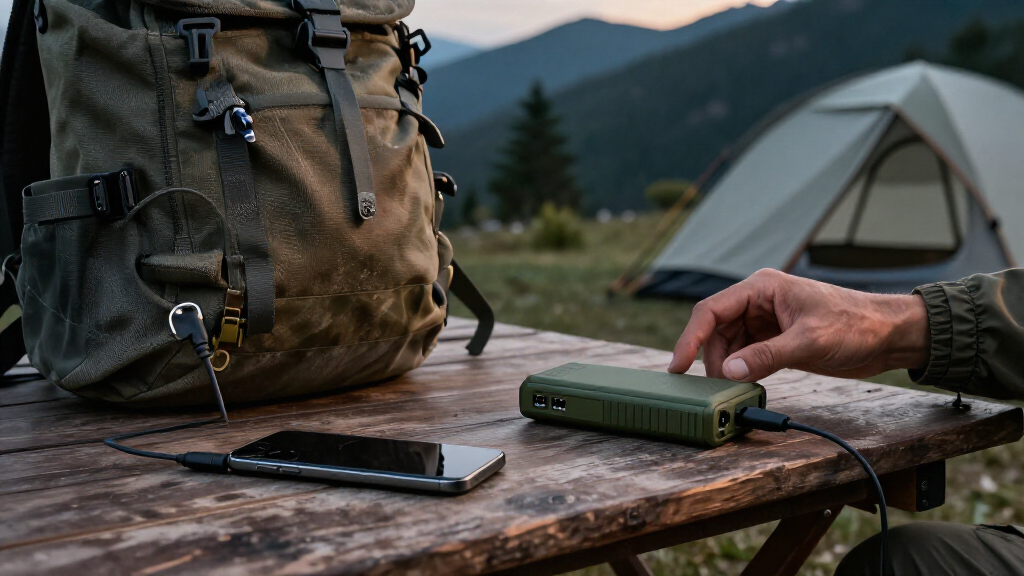
I compared the nine options on the factors that matter when a power bank may be carried outdoors: stated capacity, USB-C charging output, weather and impact protection, portability, and practical extras such as flashlights or camping lights. I gave more weight to clearly stated protection and charging specifications than to rugged styling or accessory features alone. Capacity matters, but a bigger number does not automatically make a better choice if the unit is harder to carry or its durability claims are less specific.
The ranking favors useful balance for a broad range of outdoor users, then recognizes models that serve more specific needs. That puts the NESTOUT 15,000mAh near the top for its stated IP67 protection, 32W output, and mid-to-high capacity. Compact NESTOUT and Goal Zero options rank for light carry, while ToughTested and ASWAYKE appeal to buyers who place a premium on capacity or built-in illumination. Product names and specifications alone cannot verify a military certification or performance under every field condition, so I treat “military grade” as a search term—not proof of a shared standard.
Factors to Consider When Choosing Military Grade Portable Power Banks
Choose a rugged power bank by matching it to the conditions and devices you actually need to support. The best fit depends on more than a rugged case: usable capacity, charging compatibility, clearly stated protection, and the burden of carrying it all matter.
Check What “Military Grade” Actually Means
The phrase military grade does not identify one universal durability test for consumer power banks. Look for specific details such as an IP rating, stated shock resistance, or a named test standard, and check what the manufacturer says those claims cover. An IP67 rating, for example, describes dust and water resistance under specified test conditions; it does not promise protection from every drop, saltwater exposure, or prolonged submersion. A rugged shell without test details may still help with everyday knocks, but it is harder to compare objectively. Match the documented protection to your likely hazards rather than treating tough-looking styling as a substitute for evidence. If your work or trip has strict equipment requirements, verify the exact certification with the maker before relying on it.
Estimate Capacity From Your Trip, Not the Label Alone
Capacity in mAh is useful for comparing batteries, but it does not translate directly into an exact number of phone charges. Power conversion losses, cable quality, device battery size, and the amount of power left in the bank all affect real-world output. For a day hike, a 5,000mAh or 9,600mAh model may be a lighter choice if you only need a phone top-up. Multi-day outings or multiple devices favor the 15,000mAh to 24,000mAh range, at the cost of more weight and bulk. A common mistake is buying the largest capacity available without checking whether it fits your pack and charging routine. Leave extra room for cold weather and heavy phone use, both of which can increase your need for backup power.
Match USB-C Output to the Device You Charge
USB-C PD output affects how quickly a compatible phone or tablet can recharge, but the power bank and device must support compatible charging profiles. A 45W unit may be useful for devices that can accept higher output, while an 18W or 20W model can suit phones and smaller electronics. A higher wattage rating does not make every device charge faster; the device sets its own limit, and some cables can restrict performance. Check whether the bank can charge more than one device at once and whether its output changes when ports are shared. Also look at how the power bank itself recharges: a large-capacity unit can be inconvenient if it takes too long to refill between outings. Choose output around your devices, not the biggest number on the listing.
Treat Water and Drop Protection as Separate Questions
Weather resistance and impact resistance address different risks, so one claim does not cover the other. If rain, dust, or wet gear is the main concern, seek a clearly stated IP rating and read its limits. If drops are more likely, look for explicit shockproof claims and consider how exposed ports and attached cables are protected. Seals can wear or be compromised by dirt, so inspect covers and closures rather than assuming a rating lasts forever without care. Do not charge a wet unit or connect wet cables unless the manufacturer specifically permits it. For remote trips, a dry bag or protective pouch can add a layer of protection without requiring a heavier power bank.
Decide Whether Built-In Lights and Solar Features Earn Their Bulk
Integrated lights can reduce the number of items you pack, especially for campsite tasks or emergencies, but they do not replace a dedicated headlamp when hands-free lighting matters. Compare brightness, runtime, and lighting modes if those details are available; a lumen figure alone does not tell you how long a light lasts. Solar panels on a power bank can be useful as a supplemental option, but small panels generally should not be treated as a dependable way to refill a large battery quickly. Cloud cover, panel angle, and available daylight all affect output. A built-in feature makes sense when it replaces gear you would carry anyway. Skip it if you would rather have a simpler bank with less bulk and rely on separate lighting or charging equipment.
Balance Carry Weight, Capacity, and Backup Plans
Portability is part of performance on a hike or job site: a power bank left behind cannot help when a device runs low. Compare dimensions and weight, not capacity alone, and think about how often you will carry the unit rather than leave it in a vehicle. For a group, two smaller banks can spread the load and leave you with backup if one is lost, while a single larger bank may be simpler to manage. Keep cables compatible with your devices and pack a spare when a failed cable would cut off access to power. If the trip has no reliable resupply, plan around the energy needs of essential devices first. A realistic charging plan can prevent paying the carry penalty for capacity you are unlikely to use.
Frequently Asked Questions
Does “military grade” mean a power bank has passed a military certification?
Not by itself. “Military grade” is often used as a marketing description and does not name a single test or certification shared by all nine products. Look for specific claims such as an IP rating, a stated drop test, or a named standard, then confirm what the maker says the test covers. The NESTOUT and BLAVOR models in this lineup state IP67 protection, which is more informative about dust and water resistance than rugged wording alone. If a certification is required for work, travel, or a contract, request documentation from the manufacturer rather than relying on the product title.
Which capacity should I choose for a multi-day trip?
Start with your devices and days between recharge opportunities. A 5,000mAh or 9,600mAh bank is more suited to lighter use or shorter outings, while 15,000mAh to 24,000mAh gives more reserve for repeated phone charging or multiple devices. Real output will be lower than the printed capacity because power conversion and charging conditions use some energy. Cold temperatures and navigation, photos, or hotspot use can also raise demand. If you cannot recharge on the trip, build in a reserve rather than planning to drain the bank to zero.
Is a 45W power bank worth choosing if I mainly charge a phone?
Only if the added output fits your wider needs. A phone that accepts less than 45W will not draw the full rated output, so a higher rating may not make its charging meaningfully faster. The INIU 45W options can make more sense if you also charge a tablet or another compatible device. Compare that benefit with their 10,000mAh capacity and the lower stated capacity of some alternatives. Check your device’s supported charging standard and use a suitable cable before paying a portability penalty for power you cannot use.
Can I rely on a power bank’s solar feature to recharge it outdoors?
Plan on solar as supplemental power, not your main recharge method. The panel’s output depends on direct sunlight, angle, weather, and how much panel area the unit has. A large-capacity bank can take a long time to refill from a small built-in panel, leaving little energy for devices if you depend on it as your only source. For trips where power access is limited, start with a fully charged bank and calculate your device needs before departure. If dependable solar charging matters, compare the bank with a separate panel designed for that job and check its stated output.
Should I choose a waterproof model or a higher-capacity model?
Let the likely failure risk decide. For wet, dusty, or unpredictable conditions, stated IP67 protection on options such as the NESTOUT or BLAVOR models may be more valuable than extra capacity without similarly clear protection details. For longer trips where you can keep gear dry but cannot recharge, a higher-capacity option such as the 24,000mAh ToughTested or 20,000mAh ASWAYKE may better match the need. Neither choice covers every situation: water resistance does not guarantee impact protection, and a large battery does not help if it is left behind because of its size. Consider a protective pouch and a charging plan if your trip calls for both durability and extended runtime.
Conclusion
For the broadest mix of outdoor protection, charging output, and capacity, I recommend the NESTOUT 15,000mAh as the best overall pick. The BLAVOR 15,000mAh LiFePO4 is my best value-style choice for shoppers who prioritize its battery chemistry and stated IP67 protection; the NESTOUT 10,280mAh is the best premium-leaning option for buyers who want a more compact protected bank with 20W USB-C PD. Beginners who need a straightforward carry option can start with the Goal Zero Venture 35, while hikers who want the lightest setup may prefer the NESTOUT 5,000mAh. For faster output, choose an INIU 45W; for built-in campsite lighting, compare the ASWAYKE and flashlight-equipped options; for higher capacity, look at ToughTested or ASWAYKE. The right choice comes down to whether your priority is documented protection, longer runtime, faster charging, or fewer separate items in your pack.