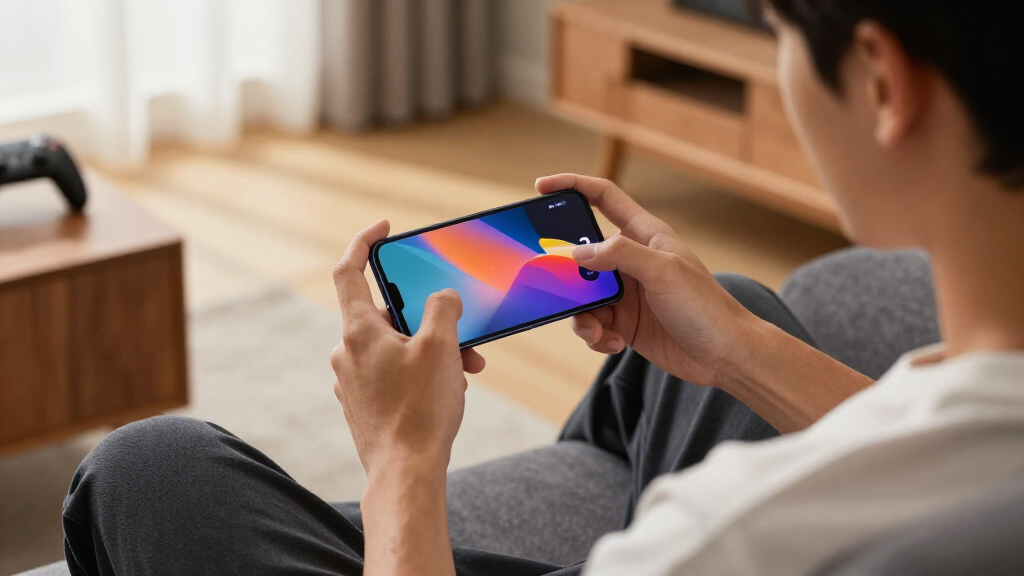

The best gaming smartphones balance sustained performance, a responsive display, and battery life with the features you need outside games. I rank the ASUS ROG Phone 8 as the best overall pick for its gaming-focused design and generous memory, while the POCO F8 Ultra stands out as a strong all-round alternative and the POCO X7 Pro as a value-minded option. Your main tradeoff is between dedicated gaming controls and cooling, everyday versatility, and ruggedness or a lower-cost configuration. Older or lesser-documented models may also bring more uncertainty around long-term software support and demanding modern games. Read on for the full breakdown and a guide to choosing the right phone for your play style.

Get the latest gadgets delivered free with Prime
- Fast, free delivery on millions of items
- Prime Video, Amazon Music and more included
- Member-only deals all year
Complete the kit



Key Takeaways
- The ROG Phone 8 is the most gaming-focused choice: Its 16GB of RAM and gaming-oriented product line make it the clearest fit for players who put extended sessions first, though its gaming strengths may be more than casual players need.
- The POCO F8 Ultra and POCO F6 offer different paths to strong everyday gaming: The F8 Ultra has the more premium positioning, while the F6’s listed 12GB RAM and 512GB storage make it appealing for players who keep large games installed.
- The POCO X7 Pro is the value-leaning contender: Its 12GB RAM and 512GB configuration offer plenty of listed memory and storage, but buyers should compare its chipset and support details before assuming it suits the most demanding titles.
- Ruggedness is a separate priority from gaming performance: The FOSSiBOT F114 advertises a 120Hz display and rugged construction, a combination that may appeal to outdoor users, but its gaming credentials need closer verification than its headline RAM figure.
- Not every phone listed is equally easy to recommend for modern gaming: The first-generation Razer Phone is an older model, and the Redbeat E3 and Nothing Phone (4a) Pro listings provide limited gaming-specific detail; verify chipset, update support, and display behavior before buying.
| Razer Phone (1st Generation), 64GB, 8GB RAM, Black |  | Best for Front-Facing Gaming Audio | Display refresh rate: 120 Hz | Display glass: Corning Gorilla Glass 3 | Processor: Qualcomm Snapdragon 835 | VIEW LATEST PRICE | See Our Full Breakdown |
| Xiaomi Poco X8 Pro 5G Unlocked Smartphone, 256GB + 8GB, Black |  | Best for Long Gaming Sessions | Display: 6.59-inch 1.5K AMOLED, 2756 × 1268, up to 120Hz | Processor: MediaTek Dimensity 8500-Ultra, octa-core up to 3.4GHz | RAM: 8GB | VIEW LATEST PRICE | See Our Full Breakdown |
| FOSSiBOT F114 Rugged Unlocked Smartphone, 28GB RAM, 256GB Storage, 50MP Camera, 6.67-Inch 120Hz Display, Android 15 |  | Best for Rugged Use | Display: 6.67-inch HD+, 120Hz | Processor: Unisoc octa-core | RAM: 28GB total: 8GB physical plus 20GB extended | VIEW LATEST PRICE | See Our Full Breakdown |
| Xiaomi POCO F6 5G Dual SIM Smartphone, 12GB RAM, 512GB Storage, Titanium |  | Best for Performance and Game Storage | Processor: Snapdragon 8s Gen 3, up to 3.0GHz | RAM: 12GB | Storage: 512GB | VIEW LATEST PRICE | See Our Full Breakdown |
| Xiaomi Poco X7 Pro 5G Unlocked Smartphone, 12GB RAM, 512GB Storage, Green |  | Best Balanced Gaming Pick | Display: 6.67-inch CrystalRes AMOLED, 2712 × 1220, up to 120Hz | Processor: MediaTek Dimensity 8400-Ultra, octa-core up to 3.25GHz | RAM: 12GB | VIEW LATEST PRICE | See Our Full Breakdown |
| ASUS ROG Phone 8 Unlocked Android Phone, 256GB, 16GB RAM, Phantom Black |  | Best Dedicated Gaming Pick | Display: 6.78-inch AMOLED, 165Hz, up to 2,500 nits | Processor: Snapdragon 8 Gen 3, 3.3 GHz | RAM and storage: 16GB LPDDR5X RAM; 256GB UFS 4.0 | VIEW LATEST PRICE | See Our Full Breakdown |
| Xiaomi POCO F8 Ultra 5G 256GB, 12GB RAM, Dual SIM, Black |  | Best for Long Gaming Sessions | Display: 6.85-inch AMOLED, 2608 × 1200, up to 120Hz | Processor: Snapdragon 8 Elite Gen 5, 3nm octa-core | RAM and storage: 12GB RAM; 256GB storage | VIEW LATEST PRICE | See Our Full Breakdown |
| Nothing Phone (4a) Pro Unlocked Smartphone, 12GB RAM, 256GB Storage, Black |  | Best for Gaming and Everyday Use | Display: 6.83-inch 1.5K AMOLED, adaptive 144Hz, up to 5,000 nits | Processor: Qualcomm Snapdragon 7 Gen 4; listing also names Snapdragon 7+ Gen 4 | RAM and storage: 12GB LPDDR5X RAM; 256GB UFS 3.1 | VIEW LATEST PRICE | See Our Full Breakdown |
| Redbeat E3 Unlocked Android Smartphone, 256GB, 6.6-Inch Display, 50MP Camera, Dual SIM |  | Best for Casual Gaming on a Basic Phone | Display: 6.6-inch IPS, HD resolution, 60Hz | Processor: Octa-core, 1.6 GHz | RAM and storage: 12GB listed as 6GB + 6GB; 256GB storage | VIEW LATEST PRICE | See Our Full Breakdown |
| gaming smartphone | Processor | Display | Battery | RAM |
|---|---|---|---|---|
| Razer Phone | Qualcomm Snapdragon 835 | — | 4,000 mAh | 8GB |
| Xiaomi Poco X8 Pro 5G Unlocked | MediaTek Dimensity 8500-Ultra, octa-core up to 3.4GHz | 6.59-inch 1.5K AMOLED, 2756 × 1268, up to 120Hz | 6,500 mAh typical capacity | 8GB |
| FOSSiBOT F114 Rugged Unlocked | Unisoc octa-core | 6.67-inch HD+, 120Hz | 5,000mAh | 28GB total: 8GB physical plus 20GB extended |
| Xiaomi POCO F6 5G Dual SIM Sma | Snapdragon 8s Gen 3, up to 3.0GHz | 6.67-inch CrystalRes 1.5K Flow AMOLED, up to 120Hz | 5,000mAh typical | 12GB |
| Xiaomi Poco X7 Pro 5G Unlocked | MediaTek Dimensity 8400-Ultra, octa-core up to 3.25GHz | 6.67-inch CrystalRes AMOLED, 2712 × 1220, up to 120Hz | 6,000mAh typical | 12GB |
| ASUS ROG Phone 8 Unlocked Andr | Snapdragon 8 Gen 3, 3.3 GHz | 6.78-inch AMOLED, 165Hz, up to 2,500 nits | 5,500mAh | — |
| Xiaomi POCO F8 Ultra 5G 256GB | Snapdragon 8 Elite Gen 5, 3nm octa-core | 6.85-inch AMOLED, 2608 × 1200, up to 120Hz | 6,500mAh typical | — |
| Nothing Phone | Qualcomm Snapdragon 7 Gen 4; listing also names Snapdragon 7+ Gen 4 | 6.83-inch 1.5K AMOLED, adaptive 144Hz, up to 5,000 nits | — | — |
| Redbeat E3 Unlocked Android Sm | Octa-core, 1.6 GHz | 6.6-inch IPS, HD resolution, 60Hz | — | — |
More Details on Our Top Picks
Razer Phone (1st Generation), 64GB, 8GB RAM, Black
The original Razer Phone is the most gaming-focused pick here for players who value clear, direct sound and fluid motion. Its 120 Hz display can make supported games feel smoother, while the dual front-facing speakers keep audio aimed toward you rather than blocked by your hands. That layout gives it a distinct advantage over the Xiaomi POCO F6, which offers a newer processor and far more storage but does not list comparable front-facing speaker hardware.
The tradeoff is age: its Snapdragon 835, Android 8.1, and 64GB storage are less suited to demanding modern games and large libraries than the newer phones in this roundup. Its GSM-only compatibility also rules out Verizon and Sprint. Choose it for its gaming-oriented screen and speakers, not for current-generation performance or broad carrier support.
Pros:- 120 Hz display supports smoother motion in compatible games
- Dual front-facing speakers with Dolby Atmos and THX-certified audio
- 8GB RAM paired with a Snapdragon 835 processor
- 4,000 mAh battery
Cons:- Older Snapdragon 835 and Android 8.1 are less capable for demanding modern games
- 64GB storage is limited beside the 512GB POCO F6 and POCO X7 Pro
- GSM-only compatibility excludes CDMA carriers such as Verizon and Sprint
Best for: Players who want front-facing stereo sound and a high-refresh-rate screen for casual gaming, and who use a compatible GSM carrier.
Not ideal for: Players who want strong performance in newer demanding games, ample room for a large game library, current software, or Verizon and Sprint compatibility.
- Display refresh rate:120 Hz
- Display glass:Corning Gorilla Glass 3
- Processor:Qualcomm Snapdragon 835
- RAM:8GB
- Storage:64GB
- Battery:4,000 mAh
- Audio:Dual front-facing speakers, dual amplifiers, Dolby Atmos, THX-certified DAC
- Operating system:Android 8.1
- Network compatibility:GSM unlocked; not compatible with CDMA carriers
Our verdict“Choose the Razer Phone for its distinctive front-facing gaming audio, but skip it if modern game performance, storage, or broad carrier support matters more.”
Xiaomi Poco X8 Pro 5G Unlocked Smartphone, 256GB + 8GB, Black
The Poco X8 Pro suits players who would rather stay in a game than hunt for a charger. Its 6,500 mAh battery is the largest specified in this group, and 100W wired charging gives it a quick way back into play when it does run low. The 6.59-inch 1.5K AMOLED screen also pairs a high refresh rate with a sharp image, while the Dimensity 8500-Ultra gives it a more current platform than the original Razer Phone.
Compared with the POCO F6, the X8 Pro prioritizes battery capacity and faster wired charging over the F6’s listed 12GB RAM and 512GB storage. Its own 8GB RAM and 256GB storage are ample for many players, but there is no microSD slot. US carrier support is limited to T-Mobile and compatible networks, so check service compatibility before choosing it.
Pros:- 6,500 mAh battery supports longer sessions between charges
- 100W wired charging can shorten charging breaks
- 1.5K AMOLED display with refresh rate up to 120Hz
- 256GB storage and dual-SIM support
Cons:- US carrier compatibility is limited to T-Mobile and compatible networks
- No microSD card slot for expanding game storage
- 8GB RAM is less than the 12GB in the POCO F6 and POCO X7 Pro
Best for: Mobile gamers who play long sessions, want a large battery and fast charging, and use T-Mobile or a compatible network.
Not ideal for: Players on AT&T or Verizon, or anyone who wants microSD expansion or more than 256GB of built-in storage.
- Display:6.59-inch 1.5K AMOLED, 2756 × 1268, up to 120Hz
- Processor:MediaTek Dimensity 8500-Ultra, octa-core up to 3.4GHz
- RAM:8GB
- Storage:256GB; no microSD slot
- Battery:6,500 mAh typical capacity
- Charging:100W wired; up to 27W reverse charging
- SIM:Dual SIM
- Connectivity:5G, Wi-Fi 6, Bluetooth 6.0, NFC, USB Type-C
- US network compatibility:T-Mobile, Mint, Tello, or networks using T-Mobile
Our verdict“Pick the Poco X8 Pro if battery life and rapid charging lead your gaming priorities and its restricted US network support fits your service.”
FOSSiBOT F114 Rugged Unlocked Smartphone, 28GB RAM, 256GB Storage, 50MP Camera, 6.67-Inch 120Hz Display, Android 15
The FOSSiBOT F114 is the pick for players who take their phone outdoors or work in rough conditions and want gaming to remain part of the package. Its IP68/IP69K and MIL-STD-810H ratings distinguish it from the POCO F6, which is explicitly not water resistant. The 6.67-inch, 120Hz display offers a smooth refresh rate, and the battery is rated at 5,000mAh; expandable storage up to 2TB also gives game libraries room to grow.
This is not the performance-first choice. The Unisoc octa-core processor is specified without a model number, and the advertised 28GB RAM includes 20GB of extended memory, not just physical RAM. The HD+ display is lower resolution than the 1.5K panels on the POCO F6 and X7 Pro, and this is a 4G phone rather than a 5G gaming option. Carrier support excludes AT&T and Cricket.
Pros:- IP68/IP69K and MIL-STD-810H durability ratings
- 120Hz display for smoother motion in supported games
- 256GB storage expandable up to 2TB with a TF card
- 5,000mAh battery
Cons:- 28GB advertised RAM includes 20GB of extended memory; physical RAM is 8GB
- HD+ resolution and an unspecified Unisoc processor make it less suited to demanding gaming than the POCO F6
- 4G only, with AT&T and Cricket unsupported
Best for: Outdoor players and field workers who need a rugged phone, expandable storage, and a high-refresh-rate screen for lighter gaming.
Not ideal for: Players focused on demanding graphics, 5G, a high-resolution display, or AT&T and Cricket service.
- Display:6.67-inch HD+, 120Hz
- Processor:Unisoc octa-core
- RAM:28GB total: 8GB physical plus 20GB extended
- Storage:256GB, expandable up to 2TB with TF card
- Battery:5,000mAh
- Durability:IP68/IP69K and MIL-STD-810H
- Mobile network:4G
- Operating system:Android 15
- Supported carriers:T-Mobile and listed compatible networks; AT&T and Cricket unsupported
Our verdict“Choose the FOSSiBOT F114 when ruggedness and expandable storage matter more than gaming speed, screen resolution, or 5G.”
Xiaomi POCO F6 5G Dual SIM Smartphone, 12GB RAM, 512GB Storage, Titanium
The POCO F6 is the strongest fit here for players who want a capable gaming setup without moving to a phone built around specialist gaming accessories. Its Snapdragon 8s Gen 3, 12GB RAM, and 512GB storage give it a more performance-oriented specification than the 8GB Poco X8 Pro, with enough built-in room for a sizable game collection. The 6.67-inch 1.5K AMOLED display runs at up to 120Hz, balancing sharp visuals with smooth motion in compatible games.
It gives up the X8 Pro’s larger 6,500mAh battery and 100W charging: the F6 has a 5,000mAh battery and 90W charging. Durability is another compromise, as it is not water resistant, unlike the POCO X7 Pro’s stated IP68 rating. US compatibility is also listed for T-Mobile network providers, so this is a focused choice rather than a universal unlocked option.
Pros:- Snapdragon 8s Gen 3 processor and 12GB RAM
- 512GB storage for a large game library
- 6.67-inch 1.5K AMOLED display with refresh rate up to 120Hz
- 5,000mAh battery with 90W turbo charging
Cons:- Not water resistant, unlike the POCO X7 Pro
- 5,000mAh battery is smaller than the Poco X8 Pro’s 6,500mAh capacity
- US compatibility is listed for T-Mobile network providers
Best for: Players who want a faster-spec Android phone with 12GB RAM, generous built-in game storage, and a sharp high-refresh-rate display.
Not ideal for: Players who need water resistance, a larger battery, microSD expansion, or US service outside T-Mobile-compatible networks.
- Processor:Snapdragon 8s Gen 3, up to 3.0GHz
- RAM:12GB
- Storage:512GB
- Display:6.67-inch CrystalRes 1.5K Flow AMOLED, up to 120Hz
- Battery:5,000mAh typical
- Charging:90W turbo charging
- SIM:Dual Nano SIM
- Operating system:Xiaomi HyperOS
- Water resistance:Not water resistant
Our verdict“Choose the POCO F6 if processing power and ample built-in storage matter more to you than water resistance or the largest battery.”
Xiaomi Poco X7 Pro 5G Unlocked Smartphone, 12GB RAM, 512GB Storage, Green
The POCO X7 Pro earns the balanced-gaming role by combining a 120Hz 1.5K AMOLED display and 12GB RAM with a 6,000mAh battery, 90W charging, and an IP68 rating. That combination makes it more adaptable than the POCO F6 for players who want water and dust resistance alongside strong gaming-oriented specs. The Dimensity 8400-Ultra and 512GB storage also give it a more current, roomy setup than the older Razer Phone.
It does not match the F6’s listed Snapdragon 8s Gen 3 processor, so players choosing primarily by chipset may prefer that model. The X7 Pro’s 6000mAh capacity is also smaller than the Poco X8 Pro’s 6,500mAh, though it comes with 90W charging and an included charger. Its main practical limit is connectivity in the US: support is restricted to T-Mobile and compatible networks, and storage cannot be expanded with microSD.
Pros:- Dimensity 8400-Ultra processor with 12GB RAM
- 1.5K AMOLED display with refresh rate up to 120Hz
- 6,000mAh battery and included 90W charger
- IP68 water and dust resistance with 512GB storage
Cons:- No microSD slot for adding game storage
- US carrier compatibility is limited to T-Mobile and compatible networks
- Poco X8 Pro has a larger battery, while the POCO F6 lists a different, higher-tier Snapdragon processor
Best for: Players who want a capable everyday gaming phone with a high-refresh-rate AMOLED screen, substantial battery, IP68 protection, and large built-in storage.
Not ideal for: Players on networks outside the T-Mobile family, or those who prioritize the POCO F6’s listed processor or want microSD expansion.
- Display:6.67-inch CrystalRes AMOLED, 2712 × 1220, up to 120Hz
- Processor:MediaTek Dimensity 8400-Ultra, octa-core up to 3.25GHz
- RAM:12GB
- Storage:512GB; microSD not supported
- Battery:6,000mAh typical
- Charging:90W HyperCharge; charger included
- Rear cameras:50MP main with OIS; 8MP ultra-wide
- Durability:IP68 water and dust resistance
- US carrier compatibility:T-Mobile, Mint, Tello, and networks using T-Mobile
Our verdict“Pick the POCO X7 Pro if you want a well-rounded gaming phone with water resistance and long battery capacity, provided its network limits fit.”
ASUS ROG Phone 8 Unlocked Android Phone, 256GB, 16GB RAM, Phantom Black
The ROG Phone 8 is the most gaming-focused choice here: its 165Hz AMOLED display, Snapdragon 8 Gen 3 chip, 16GB of RAM, and AirTrigger controls are built for responsive play and touch inputs that feel closer to gamepad buttons. Compared with the POCO F8 Ultra, it offers a higher listed refresh rate and gaming-specific controls, while the POCO counters with a larger battery and faster charging. ASUS also gives this model IP68 water resistance and a stabilized main camera, making it less specialized in everyday use than some gaming phones. The tradeoffs are a cooling accessory sold separately and carrier support limited to GSM networks; buyers should check their carrier before choosing it.
Pros:- 165Hz AMOLED display supports exceptionally fluid motion in compatible games
- Snapdragon 8 Gen 3 and 16GB RAM provide strong headroom for demanding titles
- AirTrigger controls add customizable physical-style inputs
- IP68 protection and 6-axis gimbal stabilization add everyday versatility
Cons:- External cooling accessory is sold separately
- GSM network support may rule it out for some carriers
- 5,500mAh battery is smaller than the POCO F8 Ultra’s 6,500mAh capacity
Best for: Mobile players who want dedicated shoulder controls, a high-refresh display, and strong flagship processing for competitive games.
Not ideal for: Players who need broad carrier compatibility or want the fullest cooling setup without buying a separate accessory.
- Display:6.78-inch AMOLED, 165Hz, up to 2,500 nits
- Processor:Snapdragon 8 Gen 3, 3.3 GHz
- RAM and storage:16GB LPDDR5X RAM; 256GB UFS 4.0
- Battery:5,500mAh
- Charging:65W wired; 15W wireless
- Controls and protection:AirTrigger controls; IP68 water resistance
- Operating system:Android 14
- Network and SIM:GSM network compatibility; dual Nano-SIM
Our verdict“Choose the ROG Phone 8 if gaming controls and a 165Hz screen matter more to you than the POCO F8 Ultra’s larger battery and faster charging.”
Xiaomi POCO F8 Ultra 5G 256GB, 12GB RAM, Dual SIM, Black
The POCO F8 Ultra suits players who want flagship-class processing without making gaming controls the whole point of the phone. Its Snapdragon 8 Elite Gen 5 processor, 6,500mAh battery, and 100W wired charging make it a strong fit for long sessions, while Bose-tuned stereo audio adds presence without headphones. The ROG Phone 8 is the clearer pick for touch-based competitive play, thanks to its 165Hz screen and AirTriggers; the POCO’s display tops out at 120Hz. In return, this model brings a higher-resolution 6.85-inch panel, wireless charging, and a versatile triple-camera system. Its main buyer checks are carrier fit—listed U.S. support is limited to T-Mobile networks—and the lack of a microSD slot.
Pros:- Snapdragon 8 Elite Gen 5 processor is suited to demanding games
- 6,500mAh battery and 100W wired charging support long play and quick top-ups
- Bose-tuned stereo speakers with Dolby Atmos provide immersive built-in audio
- 50MP triple rear cameras include OIS and a periscope telephoto lens
Cons:- 120Hz refresh rate is lower than the ROG Phone 8’s 165Hz
- No microSD card slot for expanding game and media storage
- Listed U.S. carrier compatibility is limited to T-Mobile network providers
Best for: Players who want a powerful large-screen phone for extended sessions, strong built-in audio, and fast wired and wireless charging.
Not ideal for: Gamers who need AirTrigger-style controls, a refresh rate above 120Hz, expandable storage, or support beyond T-Mobile network providers in the U.S.
- Display:6.85-inch AMOLED, 2608 × 1200, up to 120Hz
- Processor:Snapdragon 8 Elite Gen 5, 3nm octa-core
- RAM and storage:12GB RAM; 256GB storage
- Battery:6,500mAh typical
- Charging:100W wired; 50W wireless
- Audio:Stereo speakers with independent subwoofer; Dolby Atmos; Sound by Bose
- Rear cameras:50MP main with OIS; 50MP periscope telephoto with OIS; 50MP ultra-wide
- Network and SIM:5G; dual SIM with nano SIM and/or eSIM; listed U.S. support for T-Mobile network providers
Our verdict“Pick the POCO F8 Ultra if battery endurance, fast charging, and built-in audio take priority over the ROG Phone 8’s faster screen and gaming controls.”
Nothing Phone (4a) Pro Unlocked Smartphone, 12GB RAM, 256GB Storage, Black
The Nothing Phone (4a) Pro is a balanced pick for buyers who game regularly but also want a distinctive everyday phone. Its adaptive 144Hz AMOLED display gives motion a smoother feel than the POCO F8 Ultra’s 120Hz panel, while the Snapdragon 7 Gen 4 sits below the ROG Phone 8 and POCO in stated processing tier. That makes this a less convincing choice for players chasing the strongest performance in demanding games, but a more practical fit for mixed use, with a periscope telephoto camera, aluminum body, and Glyph Matrix lighting. The listed peak brightness is high, though real-world visibility can vary by conditions. Check carrier support before buying: Verizon is not recommended, and the listing has conflicting processor and camera details.
Pros:- Adaptive 144Hz AMOLED display offers smoother motion than the POCO F8 Ultra’s 120Hz panel
- 50MP periscope telephoto camera provides 3.5x optical zoom
- Aluminum unibody, Gorilla Glass 7i, and IP65 protection add everyday durability
- Glyph Matrix lighting gives the phone a distinctive visual notification system
Cons:- Snapdragon 7 Gen 4 is a lower stated processor tier than the ROG Phone 8 and POCO F8 Ultra
- Verizon use is not recommended, and carrier compatibility varies
- Product listing contains conflicting processor and camera specifications
Best for: Players who want a high-refresh screen for casual and mid-range gaming alongside distinctive design and useful zoom cameras.
Not ideal for: Competitive players seeking the strongest gaming processor, or Verizon customers who need reliable carrier compatibility.
- Display:6.83-inch 1.5K AMOLED, adaptive 144Hz, up to 5,000 nits
- Processor:Qualcomm Snapdragon 7 Gen 4; listing also names Snapdragon 7+ Gen 4
- RAM and storage:12GB LPDDR5X RAM; 256GB UFS 3.1
- Battery and charging:5,080mAh; 50W fast charging
- Rear cameras:50MP main with OIS; 50MP periscope with 3.5x optical zoom; 8MP ultra-wide
- Operating system:Android 16 with Nothing OS 4.1
- Materials and protection:Aluminum unibody; Gorilla Glass 7i; IP65-rated
- Network and SIM:5G; dual SIM; AT&T and T-Mobile generally supported; Verizon not recommended
Our verdict“Choose the Nothing Phone (4a) Pro for a stylish daily phone with a fast screen and useful cameras, not for maximum gaming performance.”
Redbeat E3 Unlocked Android Smartphone, 256GB, 6.6-Inch Display, 50MP Camera, Dual SIM
The Redbeat E3 is the entry-level option in this group, but its gaming appeal is limited to casual titles and everyday phone use. The 1.6GHz octa-core processor and 60Hz HD display are a clear step down from the 144Hz Nothing Phone (4a) Pro and the flagship chips in the ROG Phone 8 and POCO F8 Ultra. That difference means less fluid motion and less headroom for demanding games; buyers should not mistake the listed 12GB RAM, which is configured as 6GB plus 6GB, for the same experience as a higher-tier gaming phone. It does offer expandable storage up to 1TB and a 5,000mAh battery, practical for a modest game library. Its 4G-only connectivity and lack of water resistance narrow the fit further.
Pros:- Storage expands up to 1TB with a memory card
- 5,000mAh battery suits everyday use and lighter gaming
- 3.5mm headphone jack supports wired gaming headsets
- Fingerprint and face recognition provide two biometric unlock options
Cons:- 60Hz HD display is less sharp and fluid than the higher-refresh panels in this roundup
- 1.6GHz processor and 4G LTE limit its fit for demanding games and 5G connectivity
- Not water resistant
Best for: First-time smartphone buyers or casual players who mainly run lightweight games and value expandable storage and a headphone jack.
Not ideal for: Competitive or graphics-heavy gamers who expect high refresh rates, 5G, water resistance, or flagship-level processing.
- Display:6.6-inch IPS, HD resolution, 60Hz
- Processor:Octa-core, 1.6 GHz
- RAM and storage:12GB listed as 6GB + 6GB; 256GB storage
- Expandable storage:Up to 1TB
- Battery and charging:5,000mAh; 18W fast charging
- Cameras:50MP rear; 8MP front
- Operating system and network:Android 14; 4G LTE
- SIM and audio:Dual Nano-SIM; 3.5mm headphone jack
Our verdict“Choose the Redbeat E3 only for lightweight games and basic smartphone tasks if expandable storage matters more than gaming speed.”
How We Picked
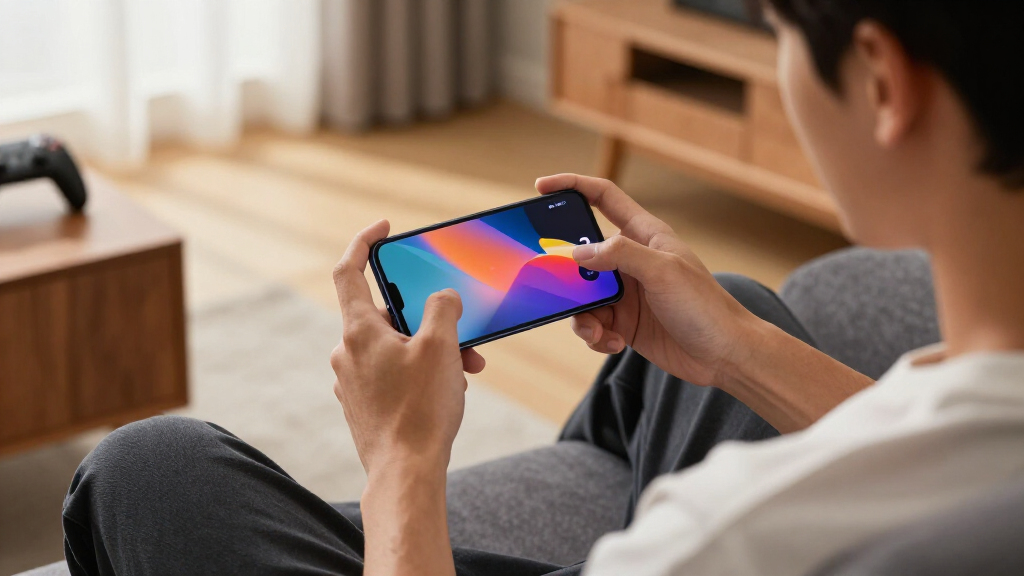
I ranked these phones around the factors that change the gaming experience: processor capability, ability to sustain performance, display responsiveness, battery and charging behavior, memory and storage, and useful gaming features such as controls or cooling. A high RAM figure alone does not establish how smoothly a phone runs demanding games, so I treated advertised memory as one part of the picture rather than a performance guarantee. I also considered how well each option makes sense as a daily phone, since most buyers use the same device for calls, apps, photos, and gaming.
The ROG Phone 8 ranks first because its product positioning and 16GB RAM configuration make it the most clearly gaming-oriented option in this group. The POCO models follow as more conventional phones with attractive listed memory and storage configurations, while the FOSSiBOT earns a distinct rugged-use role rather than an automatic gaming-performance advantage. I rank older and less-documented choices lower because buyers should verify current software support, chipset details, and compatibility before relying on them for demanding games. Where the supplied product information does not establish a gaming advantage, I avoid treating a large specification number as proof.
| gaming smartphone | Operating system |
|---|---|
| Razer Phone | Android 8.1 |
| Xiaomi Poco X8 Pro 5G Unlocked | — |
| FOSSiBOT F114 Rugged Unlocked | Android 15 |
| Xiaomi POCO F6 5G Dual SIM Sma | Xiaomi HyperOS |
| Xiaomi Poco X7 Pro 5G Unlocked | — |
| ASUS ROG Phone 8 Unlocked Andr | Android 14 |
| Xiaomi POCO F8 Ultra 5G 256GB | — |
| Nothing Phone | Android 16 with Nothing OS 4.1 |
| Redbeat E3 Unlocked Android Sm | — |
Factors to Consider When Choosing Best Gaming Smartphones
Before choosing a handset, match its strengths to the games you play and how long you play them. A phone that handles short casual sessions well may struggle to keep performance steady during a long competitive match. These factors can help separate genuine gaming advantages from specifications that look impressive on a listing.
Match the chipset to your actual games
Start with the processor and graphics capability, not RAM or a gaming label. Competitive shooters, demanding open-world games, and emulators place different loads on a phone, so check performance evidence for the specific titles you play. A powerful chipset can still slow down when heat builds during a long session. If a listing does not name the processor, seek out the exact model number before buying rather than inferring performance from the phone’s generation or memory. Casual puzzle and strategy players can often choose a less specialized phone without losing much in practice. The tradeoff is simple: pay for sustained performance when your games regularly demand it, not just because a spec sheet has large numbers.
Look beyond refresh rate when judging the display
A high refresh rate can make scrolling and supported games feel smoother, but it cannot make every game run at that rate. Touch response, brightness, resolution, and how well the display remains readable in your usual lighting all shape play. Check whether your preferred games support high frame rates on the phone, since software limits can leave a fast panel underused. Bigger screens give controls and game worlds more room, but can make one-handed play and carrying the phone less comfortable. Resolution also affects workload: a sharper screen may ask more of the graphics hardware. Choose for the games and grip you actually have, not the largest refresh-rate number alone.
Treat heat management as part of performance
Peak performance matters less if the phone gets hot and slows down partway through a session. Reviews and manufacturer information about cooling can help explain whether a model is suited to extended play, though external conditions and game settings also matter. A phone case may trap heat, while charging during gaming can add to it. If you play for hours, leave room in your setup for airflow and consider whether an optional controller or cooling accessory will fit your routine. Do not assume a rugged body automatically provides gaming-grade thermal management. A less specialized phone can be a better fit for short sessions, while sustained play rewards devices with clearer cooling provisions.
Plan battery life, charging, and storage together
Long gaming sessions drain batteries faster than casual browsing, and high brightness or mobile data can raise consumption further. Compare independent battery and charging information rather than judging capacity alone; charging speed is useful, but it does not replace endurance away from an outlet. Games can also occupy substantial storage, especially when updates and downloadable assets accumulate. A larger storage configuration can reduce how often you remove games, but it may not be worth prioritizing over a stronger processor if your library is small. Check whether the phone supports expandable storage if that matters to you, and confirm the exact configuration sold. Keep enough free space for updates, since a nearly full phone can make managing a game library frustrating.
Decide whether gaming extras justify a specialized phone
Dedicated controls, accessory support, stereo speakers, and gaming software can make frequent play more comfortable. Those additions have less value if you mostly play quick sessions or use a separate console at home. A specialized gaming handset can also be larger or more conspicuous than a conventional phone, so weigh its extras against your daily needs. Check how accessible the gaming tools are and whether they work with the titles you care about. If you want one device for work, photos, and play, prioritize balanced software support and camera quality alongside performance. Paying extra for features you will rarely use is a common way to end up with the wrong kind of gaming phone.
Verify software support and carrier compatibility
Gaming depends on more than hardware: operating system updates, security patches, and access to current game services affect how long a phone remains practical. Older models may still run familiar titles, but their support window and app compatibility deserve special scrutiny. Unlocked phones can work across networks, yet band support varies by region and carrier, so verify compatibility before ordering. Imported or lesser-known models may also have different warranty terms, update schedules, or access to local service. Look up the exact model and regional version rather than relying on a broad product name. This check is especially useful when a listing gives limited chipset or support information.
Frequently Asked Questions
Is the ASUS ROG Phone 8 worth choosing if I only play casually?
It can make sense if you also want its gaming-focused features for frequent sessions, but casual play may not benefit much from a specialized handset. Compare its size, everyday features, and support details with the POCO options before deciding. A more conventional phone may suit you better if you mainly play short sessions and want a balanced daily device. Do not choose it on the 16GB RAM figure alone; processor capability, cooling, and the games you play matter more. The ROG makes the clearest case when gaming is a regular priority rather than an occasional pastime.
Should I choose a phone with more RAM or more storage for gaming?
Prioritize a capable processor and sustained performance before either memory figure. RAM helps keep apps and games active, but an advertised amount does not tell you how well a particular title runs. Storage determines how many large games and downloads you can keep installed without managing space. If you rotate between a few games, you may not need the largest storage configuration; if you keep a broad library, extra storage can be more convenient. The POCO F6 and X7 Pro listings pair 12GB RAM with 512GB storage, but buyers should still verify the processor and exact configuration.
Can a rugged phone be a good choice for mobile gaming?
Yes, if protection from rough environments matters as much as play, but rugged construction does not prove that a phone can sustain demanding games. Check the processor, cooling behavior, screen responsiveness, and confirmed game performance separately. The FOSSiBOT F114 listing advertises a 120Hz display and rugged design, yet its large RAM figure alone does not establish how it handles intensive titles. A rugged model may also be bulkier, which can affect grip during long sessions. Choose it when durability is a real need, and verify its gaming capabilities before treating it as a performance-first phone.
Is an older gaming phone like the first-generation Razer Phone still a sensible buy?
It may suit someone who specifically wants an older device for light play or a collection, but age introduces practical questions. Check whether it still receives security updates, supports the games and services you use, and has a battery in good condition. Confirm network compatibility and availability of replacement parts before relying on it as your main phone. Its original gaming focus does not guarantee smooth performance with current titles. For a primary gaming device, a newer model with clearer support information is usually easier to recommend.
What should I verify before buying an unlocked gaming phone?
Confirm that the exact model supports your carrier’s network bands and has the right SIM configuration for your needs. Then check the processor, regional software version, update policy, warranty coverage, and return terms. This matters especially for listings with limited technical detail, including lesser-known brands or models sold in multiple regional variants. Look for evidence that your preferred games run well rather than treating display refresh rate or RAM as a substitute. A phone can be unlocked and still be a poor fit for your network or gaming library.
Conclusion
For a clear gaming-first recommendation, I would choose the ASUS ROG Phone 8 as best overall, especially for frequent players who value a specialized handset. The POCO X7 Pro is my best value-leaning pick on its listed 12GB RAM and 512GB storage, while the POCO F8 Ultra is the premium-leaning alternative for buyers who want a higher-end POCO option. For beginners, I would start with a conventional POCO model whose exact chipset, software support, and carrier compatibility are easy to confirm, rather than buying a rugged or older phone based on headline specs. Choose the FOSSiBOT F114 for rugged-use needs only after checking gaming performance, and treat the first-generation Razer Phone and Redbeat E3 as specialist options that need extra verification. The right choice depends on how demanding your games are, how long you play, and whether gaming features matter more than everyday versatility.
Halloween Picks
halloween
As an affiliate, we earn on qualifying purchases.