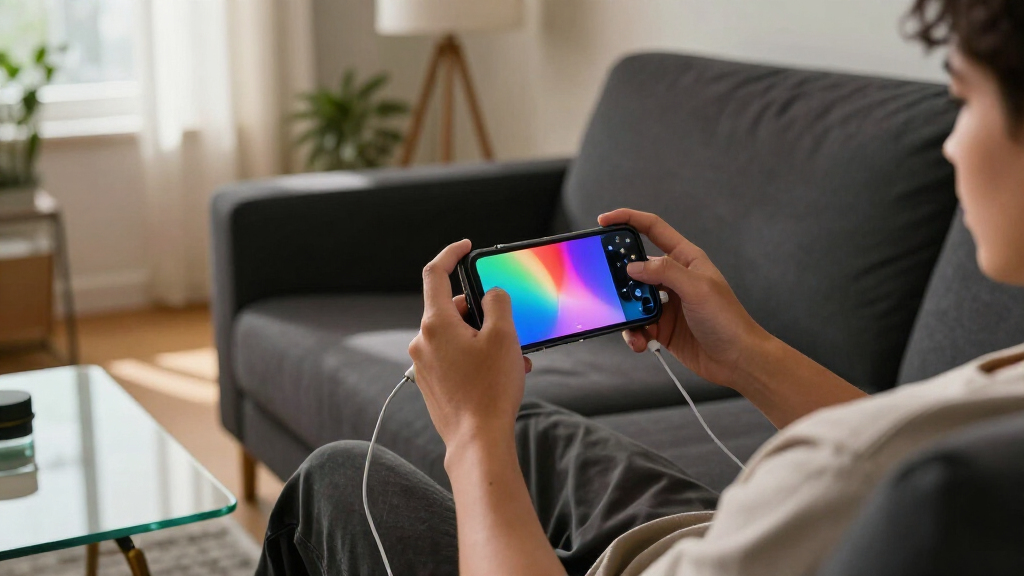

The best gaming phones pair dependable performance with a responsive screen and enough battery life for long sessions. My best overall pick is the ASUS ROG Phone 9, which is purpose-built for gaming, while the POCO X7 Pro stands out as a value-minded option and the ROG Phone 8 Pro suits buyers seeking a premium gaming focus. The main tradeoffs are gaming-specific controls and cooling versus everyday comfort, software support, and versatility. A gaming label alone does not guarantee strong sustained performance, especially on budget or older phones. Continue reading for the full breakdown and a guide to choosing the right fit.

Get the latest gadgets delivered free with Prime
- Fast, free delivery on millions of items
- Prime Video, Amazon Music and more included
- Member-only deals all year
Complete the kit



Key Takeaways
- The ROG Phone 9 is the clearest gaming-first choice in this lineup; the ROG Phone 8 Pro is another dedicated option, while standard phones make more sense for mixed daily use.
- POCO models give buyers a performance-focused alternative to specialist gaming phones, but compare their exact generation and configuration rather than assuming the names indicate similar speed.
- Storage and memory vary widely: several listed models offer 12GB RAM and 512GB storage, while older or entry-level choices may leave less room for large games and downloads.
- Some options need extra scrutiny before purchase: the rugged FOSSIBOT F114 is 4G, the redbeat E3 is also 4G, and the first-generation Razer Phone is an older device.
- Renewed status changes the buying decision for the Galaxy S23 Ultra and Galaxy S26; condition, battery health, return terms, and software support matter alongside hardware.
| Xiaomi Poco X7 Pro 5G Unlocked Smartphone, 12GB RAM, 512GB Storage, Black |  | Best Value Gaming Pick | Processor: MediaTek Dimensity 8400-Ultra | RAM: 12GB | Storage: 512GB; no microSD slot | VIEW LATEST PRICE | See Our Full Breakdown |
| ASUS ROG Phone 8 Pro 5G, 512GB, 16GB RAM, Dual SIM, Factory Unlocked, Black |  | Best Gaming Accessories Bundle | Processor: Snapdragon 8 Gen 3 | RAM: 16GB | Storage: 512GB | VIEW LATEST PRICE | See Our Full Breakdown |
| Samsung Galaxy S23 Ultra 5G, 256GB, Phantom Black, Unlocked (Renewed) |  | Best for Gaming and Everyday Versatility | Processor: Snapdragon 8 Gen 2 | RAM: 8GB | Storage: 256GB | VIEW LATEST PRICE | See Our Full Breakdown |
| FOSSIBOT F114 Rugged 4G Smartphone, 8GB RAM, 256GB Storage, Black |  | Best Rugged Pick for Casual Gaming | Processor: Unisoc octa-core | RAM: 8GB physical plus 20GB extended | Storage: 256GB, expandable up to 2TB with TF card | VIEW LATEST PRICE | See Our Full Breakdown |
| ASUS ROG Phone 9 Dual-SIM 5G Smartphone, 512GB, 12GB RAM, Phantom Black |  | Best Premium Gaming Performance | Processor: Qualcomm Snapdragon 8 Elite, octa-core, up to 4.32GHz | RAM: 12GB | Storage: 512GB | VIEW LATEST PRICE | See Our Full Breakdown |
| Samsung Galaxy S26 256GB, 12GB RAM, 6.3-inch Unlocked Android Smartphone, Black (Renewed) |  | Best Compact Gaming Phone | Display: 6.3-inch Dynamic AMOLED 2X, 2340 x 1080, adaptive 120Hz | Processor: Snapdragon 8 Elite Gen 5 for Galaxy, up to 4.4GHz | RAM: 12GB | VIEW LATEST PRICE | See Our Full Breakdown |
| Nothing Phone (3) 5G Unlocked Smartphone, 256GB, Black |  | Best for Gaming and Everyday Versatility | Display: 6.67-inch FHD+ 1.5K AMOLED, adaptive 120Hz, up to 4,500 nits peak brightness | Processor: Snapdragon 8s Gen 4, 4nm, up to 3.2GHz | Memory: 24GB LPDDR5X | VIEW LATEST PRICE | See Our Full Breakdown |
| Xiaomi POCO F8 Pro 5G Unlocked Smartphone, 256GB, 12GB RAM, Black |  | Best for High-Performance Gaming | Display: 6.59-inch AMOLED, 2510 x 1156, up to 120Hz | Processor: Snapdragon 8 Elite, 3nm | RAM and storage: 12GB RAM, 256GB storage | VIEW LATEST PRICE | See Our Full Breakdown |
| Xiaomi Poco X8 Pro 5G Smartphone, 512GB, 12GB RAM, White |  | Best for Long Sessions and Large Game Libraries | Display: 6.59-inch 1.5K AMOLED, up to 120Hz | Processor: MediaTek Dimensity 8500-Ultra, octa-core up to 3.4GHz | RAM and storage: 12GB RAM, 512GB storage | VIEW LATEST PRICE | See Our Full Breakdown |
| redbeat E3 Unlocked Android Gaming Phone, 256GB ROM/12GB RAM, 6.6″ HD Display, 50MP Camera, 5000mAh Battery, Dual SIM 4G LTE |  | Best Entry-Level Pick for Casual Games | Display: 6.6-inch IPS HD, 60Hz | Processor: Octa-core, 1.6GHz | RAM: 12GB | VIEW LATEST PRICE | See Our Full Breakdown |
| BLU Bold N4 5G Unlocked Smartphone, 512GB, 8GB RAM, White |  | Best for Extra Storage and Handy Rear Controls | Processor: MediaTek Dimensity 8000 | RAM: 8GB | Storage: 512GB | VIEW LATEST PRICE | See Our Full Breakdown |
| Xiaomi Poco F7 Pro 5G Smartphone (512GB + 12GB RAM, Blue) |  | Best for High-Performance Gaming | Processor: Snapdragon 8 Gen 3 (4nm) | RAM: 12GB | Storage: 512GB | VIEW LATEST PRICE | See Our Full Breakdown |
| Razer Phone (1st Generation), 64GB, 8GB RAM, 120Hz Display, Dual Cameras, Black |  | Best for Front-Facing Gaming Audio | Processor: Qualcomm Snapdragon 835, 2.45GHz | RAM: 8GB | Storage: 64GB | VIEW LATEST PRICE | See Our Full Breakdown |
| Xiaomi Poco X8 Pro Max 5G (512GB + 12GB) Unlocked Smartphone – White |  | Best for Long Gaming Sessions | Processor: MediaTek Dimensity 9500s (3nm) | RAM: 12GB | Storage: 512GB; no microSD | VIEW LATEST PRICE | See Our Full Breakdown |
| Nothing Phone (4a) Pro Smartphone, Android 16, 12GB RAM + 256GB Storage, Silver |  | Best for a High-Refresh Display and Everyday Versatility | Processor: Qualcomm Snapdragon 7 Gen 4 | RAM: 12GB LPDDR5X | Storage: 256GB UFS 3.1 | VIEW LATEST PRICE | See Our Full Breakdown |
| gaming phone | Processor | Display | Storage | RAM |
|---|---|---|---|---|
| Xiaomi Poco X7 Pro 5G Unlocked | MediaTek Dimensity 8400-Ultra | 6.67-inch AMOLED, 2712 × 1220, up to 120Hz | 512GB; no microSD slot | 12GB |
| ASUS ROG Phone 8 Pro 5G | Snapdragon 8 Gen 3 | 6.78-inch AMOLED, 2400 × 1080, up to 165Hz | 512GB | 16GB |
| Samsung Galaxy S23 Ultra 5G | Snapdragon 8 Gen 2 | 6.8-inch Dynamic AMOLED 2X, 1440 × 3088, adaptive 1–120Hz | 256GB | 8GB |
| FOSSIBOT F114 Rugged 4G Smartp | Unisoc octa-core | 6.67-inch HD+, 120Hz | 256GB, expandable up to 2TB with TF card | 8GB physical plus 20GB extended |
| ASUS ROG Phone 9 Dual-SIM 5G S | Qualcomm Snapdragon 8 Elite, octa-core, up to 4.32GHz | 6.78-inch LTPO AMOLED, 1080 × 2400 | 512GB | 12GB |
| Samsung Galaxy S26 256GB | Snapdragon 8 Elite Gen 5 for Galaxy, up to 4.4GHz | 6.3-inch Dynamic AMOLED 2X, 2340 x 1080, adaptive 120Hz | 256GB | 12GB |
| Nothing Phone | Snapdragon 8s Gen 4, 4nm, up to 3.2GHz | 6.67-inch FHD+ 1.5K AMOLED, adaptive 120Hz, up to 4,500 nits peak brightness | 256GB UFS 4.0 | — |
| Xiaomi POCO F8 Pro 5G Unlocked | Snapdragon 8 Elite, 3nm | 6.59-inch AMOLED, 2510 x 1156, up to 120Hz | — | — |
| Xiaomi Poco X8 Pro 5G Smartpho | MediaTek Dimensity 8500-Ultra, octa-core up to 3.4GHz | 6.59-inch 1.5K AMOLED, up to 120Hz | — | — |
| redbeat E3 Unlocked Android Ga | Octa-core, 1.6GHz | 6.6-inch IPS HD, 60Hz | 256GB internal; expandable up to 1TB | 12GB |
| BLU Bold N4 5G Unlocked Smartp | MediaTek Dimensity 8000 | — | 512GB | 8GB |
| Xiaomi Poco F7 Pro 5G Smartpho | Snapdragon 8 Gen 3 (4nm) | 6.67-inch WQHD+ Flow AMOLED, 120Hz, 3200 nits peak brightness | 512GB | 12GB |
| Razer Phone | Qualcomm Snapdragon 835, 2.45GHz | 5.72 inches, 1440 × 2560, 120Hz | 64GB | 8GB |
| Xiaomi Poco X8 Pro Max 5G | MediaTek Dimensity 9500s (3nm) | 6.83-inch 1.5K AMOLED, 120Hz, 3500 nits peak brightness | 512GB; no microSD | 12GB |
| Nothing Phone | Qualcomm Snapdragon 7 Gen 4 | 6.83-inch 1.5K AMOLED, 144Hz, 5000 nits peak brightness | 256GB UFS 3.1 | 12GB LPDDR5X |
More Details on Our Top Picks
Xiaomi Poco X7 Pro 5G Unlocked Smartphone, 12GB RAM, 512GB Storage, Black
The Poco X7 Pro makes gaming-friendly hardware accessible without the bulk or specialist focus of the ROG models. Its Dimensity 8400-Ultra and 120Hz, 1.5K AMOLED screen are a strong pairing for smooth play and crisp visuals, while the 6,000mAh battery gives longer sessions more breathing room than the ROG Phone 8 Pro’s 5,500mAh cell. 90W charging can also shorten breaks between sessions. The tradeoff is less gaming-specific support: unlike the ROG Phone 8 Pro, this listing does not include a cooling fan, and sustained heavy play may be less comfortable without that accessory. I’d also check carrier support before buying, since the US model is limited to T-Mobile network carriers. No microSD slot means the 512GB is fixed storage.
Pros:- 1.5K AMOLED display with refresh rates up to 120Hz
- Dimensity 8400-Ultra processor and 12GB RAM
- 6,000mAh battery with 90W charging and included charger
- IP68 dust and water resistance
Cons:- US model supports T-Mobile network carriers, so other US carrier users should verify compatibility
- No microSD slot for adding storage later
- No gaming cooling fan is listed among the included accessories
Best for: Mobile gamers who want a sharp 120Hz screen, a large battery, and ample built-in storage without choosing a dedicated gaming-phone setup.
Not ideal for: Players on Verizon or AT&T, or those who want a bundled cooling fan, gaming-focused accessories, or expandable storage.
- Processor:MediaTek Dimensity 8400-Ultra
- RAM:12GB
- Storage:512GB; no microSD slot
- Display:6.67-inch AMOLED, 2712 × 1220, up to 120Hz
- Battery:6,000mAh typical
- Charging:90W HyperCharge; charger included
- Connectivity:5G, 4G LTE, Wi-Fi 6, Bluetooth 5.4, NFC
- Durability:IP68 dust and water resistance
Our verdict“Choose the Poco X7 Pro for a balanced gaming phone with a fast display and long-lasting battery, provided its carrier limits fit your network.”
ASUS ROG Phone 8 Pro 5G, 512GB, 16GB RAM, Dual SIM, Factory Unlocked, Black
The ROG Phone 8 Pro is the clearest choice here for players who want gaming-oriented hardware rather than a general phone that also runs games well. Its Snapdragon 8 Gen 3, 16GB RAM, and display reaching 165Hz give it a performance-first profile, while the included cooling fan is a practical advantage over the Poco X7 Pro, which has no fan listed. That accessory can help during longer sessions, though it adds another item to carry. The 6.78-inch AMOLED is large for games, but its 2400 × 1080 resolution is less detailed on paper than the Poco’s 1.5K panel. The camera system is more versatile than a typical gaming-focused setup, including a 3x telephoto lens and gimbal stabilization. Carrier support is a key limitation: this model does not work with Verizon or Sprint, and it lacks a headphone jack.
Pros:- Snapdragon 8 Gen 3 processor with 16GB RAM
- 6.78-inch AMOLED display with refresh rates up to 165Hz
- Cooling fan, screen protection, charger, and cable included
- 50MP rear camera with 3x telephoto lens and 6-axis gimbal stabilization
Cons:- Not compatible with Verizon or Sprint
- No headphone jack
- 1080p resolution is lower than the Poco X7 Pro’s 1.5K display
Best for: Competitive mobile gamers who want a high-refresh display, bundled cooling hardware, and enough RAM for demanding games and multitasking.
Not ideal for: Verizon or Sprint users, and players who prioritize a sharper display or a built-in headphone jack.
- Processor:Snapdragon 8 Gen 3
- RAM:16GB
- Storage:512GB
- Display:6.78-inch AMOLED, 2400 × 1080, up to 165Hz
- Battery:5,500mAh
- Rear camera:50MP with 3x telephoto lens and 6-axis hybrid gimbal stabilization
- SIM:Dual physical Nano-SIM
- Included accessories:Cooling fan, screen protection, charger, and charging cable
- Carrier compatibility:GSM carriers; not compatible with Verizon or Sprint
Our verdict“Pick the ROG Phone 8 Pro if bundled cooling and a 165Hz screen matter more to you than carrier flexibility or higher display resolution.”
Samsung Galaxy S23 Ultra 5G, 256GB, Phantom Black, Unlocked (Renewed)
The Galaxy S23 Ultra suits buyers who want a capable gaming phone that also brings a high-resolution screen, extensive camera options, and S Pen support. Its Snapdragon 8 Gen 2 is older than the chips in the ROG Phone 8 Pro and ROG Phone 9, so I’d rank it behind those ASUS models for a gaming-first purchase. Still, the adaptive 1–120Hz Dynamic AMOLED 2X display and 1440 × 3088 resolution make games look detailed, while the 5,000mAh battery supports everyday use alongside play. The 200MP main camera and four-camera rear system give it a broader role than the ROG Phone 8 Pro’s more explicitly gaming-oriented bundle. The main compromise is its renewed condition: buyers must accept a previously owned device, and the listing specifies a 90-day limited warranty.
Pros:- 6.8-inch Dynamic AMOLED 2X display with 1440 × 3088 resolution and adaptive 1–120Hz refresh
- Snapdragon 8 Gen 2 processor and 8GB RAM
- Four-camera rear system with a 200MP main sensor
- S Pen support and unlocked 5G connectivity
Cons:- Renewed condition may not suit buyers who want a new device
- Snapdragon 8 Gen 2 is an older processor than the chips in the ROG Phone 8 Pro and ROG Phone 9
- 256GB storage is less than the 512GB offered by the Poco X7 Pro and both ROG models
Best for: Buyers who want a large, detailed gaming display plus a versatile camera system and S Pen for work or creative tasks.
Not ideal for: Gamers seeking the newest listed processor, a gaming fan accessory, or the certainty of a new-condition device.
- Processor:Snapdragon 8 Gen 2
- RAM:8GB
- Storage:256GB
- Display:6.8-inch Dynamic AMOLED 2X, 1440 × 3088, adaptive 1–120Hz
- Battery:5,000mAh
- Rear cameras:Four-camera system; 200MP main sensor
- Connectivity:5G, Wi-Fi, Bluetooth; unlocked for all carriers
- Condition:Renewed
- Warranty:90-day limited warranty
Our verdict“Choose the renewed S23 Ultra if gaming is one part of a broader camera, productivity, and entertainment workload and renewed condition is acceptable.”
FOSSIBOT F114 Rugged 4G Smartphone, 8GB RAM, 256GB Storage, Black
The FOSSIBOT F114 is the outlier in this gaming-phone group: its strongest case is surviving rough conditions, not maximizing game performance. The IP68/IP69K and MIL-STD-810H ratings make it a better fit than the Poco X7 Pro or ROG Phone 8 Pro for outdoor work and frequent exposure to dust or water. It also has a 120Hz display, but the HD+ resolution and Unisoc octa-core processor make it a less convincing option for visually demanding games than the faster chips and sharper screens in those phones. Its 8GB physical RAM should not be confused with the advertised 28GB total; the extra 20GB is extended RAM. Expandable storage is a real plus, although 4G-only connectivity and limited carrier support narrow its appeal. Skip it if gaming performance is your main goal.
Pros:- IP68/IP69K and MIL-STD-810H durability certifications
- 120Hz display for smoother motion in supported games
- 256GB storage expandable up to 2TB with a TF card
- 5,000mAh battery
Cons:- Unisoc octa-core processor and HD+ resolution are less suited to demanding games than the Poco X7 Pro or ROG Phone 8 Pro
- 4G connectivity only
- AT&T and Cricket are unsupported; the 28GB total RAM includes 20GB of extended RAM
Best for: Outdoor workers and casual gamers who need a rugged, expandable-storage phone and mainly play less demanding games.
Not ideal for: Players seeking high-end 3D gaming performance, 5G connectivity, or support for AT&T and Cricket.
- Processor:Unisoc octa-core
- RAM:8GB physical plus 20GB extended
- Storage:256GB, expandable up to 2TB with TF card
- Display:6.67-inch HD+, 120Hz
- Battery:5,000mAh
- Rear camera:50MP
- Durability:IP68/IP69K and MIL-STD-810H
- Connectivity:4G and NFC
- Carrier support:Listed T-Mobile network carriers; AT&T and Cricket unsupported
Our verdict“Buy the FOSSIBOT F114 for ruggedness and expandable storage, not for gaming speed or demanding graphics.”
ASUS ROG Phone 9 Dual-SIM 5G Smartphone, 512GB, 12GB RAM, Phantom Black
The ROG Phone 9 leads this group on listed processor generation, pairing the Snapdragon 8 Elite with 12GB RAM and a 6.78-inch LTPO AMOLED display. That makes it the strongest fit here for players who want a newer high-end platform and a large screen, while its 5,800mAh battery supports extended play. Compared with the ROG Phone 8 Pro, it has the newer processor and a larger battery, but this listing does not specify a refresh rate or include the older model’s cooling fan. I would not assume those features from the product name alone. The 512GB storage and dual SIM plus eSIM support suit heavy app libraries and multiple lines. Its international GSM-only version is the key catch: buyers should confirm network compatibility, especially if their carrier relies on CDMA.
Pros:- Snapdragon 8 Elite processor
- 6.78-inch LTPO AMOLED display
- 5,800mAh battery and 512GB storage
- Dual Nano-SIM with eSIM support
Cons:- GSM-only international version; no CDMA support, so carrier compatibility needs checking
- Refresh rate is not specified in the supplied product details
- No cooling fan is listed, unlike the ROG Phone 8 Pro bundle
Best for: Mobile gamers who want the newest listed processor, a large AMOLED screen, and 512GB storage, and who can confirm GSM carrier compatibility.
Not ideal for: CDMA-network users or gamers who require a confirmed high refresh rate and a bundled cooling fan.
- Processor:Qualcomm Snapdragon 8 Elite, octa-core, up to 4.32GHz
- RAM:12GB
- Storage:512GB
- Display:6.78-inch LTPO AMOLED, 1080 × 2400
- Operating system:Android 15
- Battery:5,800mAh, non-removable
- Rear cameras:50MP wide with gimbal OIS, 13MP ultrawide, 5MP macro
- SIM:Dual Nano-SIM; eSIM supported
- Network:Unlocked 5G; GSM only, no CDMA
Our verdict“Choose the ROG Phone 9 for its newer processor and roomy storage if your carrier supports this GSM-only version and you do not need a listed fan accessory.”
Samsung Galaxy S26 256GB, 12GB RAM, 6.3-inch Unlocked Android Smartphone, Black (Renewed)
The Galaxy S26 is the most pocketable gaming pick here: its 6.3-inch screen is easier to manage on the move than the 6.59-inch POCO F8 Pro, while the adaptive 120Hz AMOLED keeps supported games looking fluid. Its Snapdragon 8 Elite Gen 5 for Galaxy and 12GB of RAM give it a stronger performance foundation than the redbeat E3, whose modest 1.6GHz processor and 60Hz HD screen suit lighter play better. The S26 also doubles as a more versatile everyday phone, with a telephoto camera, wireless charging, and dual-SIM support. The tradeoff is its 4,300mAh battery, smaller than the POCO options, and the listing provides no runtime estimate. It is also renewed, with a 90-day limited warranty, so buyers should weigh condition uncertainty against its compact size.
Pros:- Compact 6.3-inch Dynamic AMOLED 2X display with adaptive 120Hz refresh rate
- Snapdragon 8 Elite Gen 5 for Galaxy and 12GB RAM
- 256GB storage plus nano-SIM and eSIM dual-SIM support
- Triple rear cameras with 3x optical zoom and wireless charging
Cons:- Renewed condition may not suit buyers who prefer a new phone
- 4,300mAh battery is smaller than the POCO F8 Pro and POCO X8 Pro batteries
- No battery-life estimate is provided
Best for: Players who want a compact, flagship-class Android phone for gaming on commutes and everyday use.
Not ideal for: Long-session players who prioritize a large battery or buyers who only want a new device with a longer stated warranty.
- Display:6.3-inch Dynamic AMOLED 2X, 2340 x 1080, adaptive 120Hz
- Processor:Snapdragon 8 Elite Gen 5 for Galaxy, up to 4.4GHz
- RAM:12GB
- Storage:256GB
- Battery:4,300mAh; wireless and reverse wireless charging supported
- Rear cameras:50MP wide with OIS, 10MP telephoto with 3x optical zoom, 12MP ultrawide
- Connectivity:5G Sub-6 and mmWave, Wi-Fi 7, Bluetooth 6.0
- Condition and warranty:Renewed; 90-day limited warranty
Our verdict“Choose the renewed Galaxy S26 if you want powerful gaming in a compact phone and can accept its smaller battery and renewed condition.”
Nothing Phone (3) 5G Unlocked Smartphone, 256GB, Black
The Nothing Phone (3) suits players who want a large, high-refresh display without choosing a phone built only around gaming. Its 6.67-inch AMOLED panel runs at an adaptive 120Hz, and the listed Snapdragon 8s Gen 4 is a step below the Galaxy S26’s flagship-tier chip on paper, but offers a more capable gaming platform than the redbeat E3’s 1.6GHz processor. A 5,150mAh battery and IP68 protection make it a practical companion beyond game sessions, while its four 50MP cameras add flexibility the POCO X8 Pro’s two-camera rear setup does not match. The distinctive Glyph Interface is a design feature rather than a gaming advantage. Check carrier fit before buying: AT&T and T-Mobile support is listed, but Verizon may require IMEI whitelisting. That compatibility caveat limits its appeal as a universal unlocked pick.
Pros:- 6.67-inch AMOLED display with adaptive 120Hz refresh rate
- 5,150mAh battery for longer sessions between charges
- Four 50MP cameras, including a periscope camera, with Ultra XDR 4K video
- IP68-rated protection
Cons:- Verizon use may require IMEI whitelisting, and carrier compatibility varies
- Snapdragon 8s Gen 4 is a less powerful listed chip than the Galaxy S26 and POCO F8 Pro processors
- Glyph Interface is distinctive but does not directly improve game performance
Best for: Players who want a large 120Hz screen, a substantial battery, and a versatile camera setup for daily use on AT&T or T-Mobile.
Not ideal for: Verizon users who need straightforward activation, or performance-focused buyers seeking the strongest listed processor in this batch.
- Display:6.67-inch FHD+ 1.5K AMOLED, adaptive 120Hz, up to 4,500 nits peak brightness
- Processor:Snapdragon 8s Gen 4, 4nm, up to 3.2GHz
- Memory:24GB LPDDR5X
- Storage:256GB UFS 4.0
- Battery:5,150mAh
- Cameras:Four 50MP cameras: main, periscope, ultrawide, and front
- Protection:IP68
- Carrier support:5G; broad AT&T and T-Mobile support; Verizon may require IMEI whitelisting
Our verdict“Pick the Nothing Phone (3) if you want an all-around 120Hz phone with gaming capacity and your carrier is supported.”
Xiaomi POCO F8 Pro 5G Unlocked Smartphone, 256GB, 12GB RAM, Black
The POCO F8 Pro is the clearest performance-first choice in this group: its Snapdragon 8 Elite pairs with a 6.59-inch 120Hz AMOLED screen, giving demanding games more room and a stronger chip than the Nothing Phone (3)’s Snapdragon 8s Gen 4. Its 6,210mAh battery and 100W HyperCharge also make it a better fit for extended play than the smaller-battery Galaxy S26. Bose stereo speakers add an immersive audio option when headphones are not handy. The compromises are practical, not cosmetic: US support is listed for T-Mobile network carriers, so buyers on other networks should check compatibility before ordering. Unlike the POCO X8 Pro, this model includes a telephoto camera, but it has only 256GB of storage and no microSD slot. Choose it for chip and screen performance, not carrier flexibility or expandable space.
Pros:- Snapdragon 8 Elite processor for demanding mobile games
- 6.59-inch 120Hz AMOLED display with Dolby Vision and HDR10+
- 6,210mAh battery with 100W HyperCharge
- Bose symmetrical stereo speakers and a 50MP telephoto camera
Cons:- US carrier compatibility is listed for T-Mobile network carriers
- No microSD card slot for expanding storage
- 256GB capacity may constrain large game libraries and media collections
Best for: Mobile gamers who want a fast Snapdragon platform, a large 120Hz display, and long sessions on a compatible T-Mobile network.
Not ideal for: Buyers on non-T-Mobile US networks or players who need expandable storage beyond the built-in 256GB.
- Display:6.59-inch AMOLED, 2510 x 1156, up to 120Hz
- Processor:Snapdragon 8 Elite, 3nm
- RAM and storage:12GB RAM, 256GB storage
- Battery:6,210mAh typical
- Charging:100W HyperCharge; up to 22.5W wired reverse charging
- Rear cameras:50MP main with OIS, 50MP telephoto, 8MP ultrawide
- Audio:Bose symmetrical stereo speakers
- US carrier compatibility:T-Mobile, Mint, Tello, and other T-Mobile network carriers
Our verdict“Choose the POCO F8 Pro for its gaming-focused combination of a fast chip, 120Hz screen, and large battery if your carrier is compatible.”
Xiaomi Poco X8 Pro 5G Smartphone, 512GB, 12GB RAM, White
The POCO X8 Pro puts endurance and built-in space ahead of the F8 Pro’s stronger listed processor. Its 6,500mAh battery is the largest specified among these five phones, and 512GB storage gives players more room for game installs than the 256GB Galaxy S26 or POCO F8 Pro. The 6.59-inch 1.5K AMOLED screen reaches up to 120Hz, so scrolling and supported games can look smoother than on the redbeat E3’s 60Hz HD panel. Its Dimensity 8500-Ultra is a capable mid-to-upper-tier platform on paper, though the F8 Pro’s Snapdragon 8 Elite makes that model the better pick for buyers prioritizing raw gaming performance. The X8 Pro keeps a simpler rear camera setup and has no microSD slot, so the fixed storage choice matters. US compatibility is also limited to T-Mobile network carriers.
Pros:- 6,500mAh battery with 100W wired charging
- 512GB storage for a larger installed game library
- 6.59-inch 1.5K AMOLED display with up to 120Hz and Dolby Vision
- 50MP main camera with OIS, dual SIM, and NFC
Cons:- Dimensity 8500-Ultra is a lower gaming-performance pick than the POCO F8 Pro’s Snapdragon 8 Elite
- No microSD card slot
- US carrier compatibility is listed for T-Mobile network carriers
Best for: Players who install many games and want a large battery with fast charging for long stretches away from an outlet.
Not ideal for: Gamers seeking the strongest listed processor, expandable storage, or US carrier support beyond T-Mobile network carriers.
- Display:6.59-inch 1.5K AMOLED, up to 120Hz
- Processor:MediaTek Dimensity 8500-Ultra, octa-core up to 3.4GHz
- RAM and storage:12GB RAM, 512GB storage
- Battery:6,500mAh
- Charging:100W wired; up to 27W reverse charging
- Rear cameras:50MP main with OIS and 8MP ultrawide
- Connectivity:5G, dual SIM, Wi-Fi 6, Bluetooth 6.0, NFC
- US carrier compatibility:T-Mobile, Mint, Tello, and other T-Mobile network carriers
Our verdict“Choose the POCO X8 Pro over the F8 Pro if battery endurance and 512GB of built-in storage matter more to you than the faster listed chip.”
redbeat E3 Unlocked Android Gaming Phone, 256GB ROM/12GB RAM, 6.6″ HD Display, 50MP Camera, 5000mAh Battery, Dual SIM 4G LTE
The redbeat E3 is the basic, low-demand option in a batch otherwise led by faster 120Hz phones. Its 6.6-inch screen and 5,000mAh battery provide a roomy format for casual play, but the listed display is HD at 60Hz and its octa-core processor runs at 1.6GHz. That makes it a weaker fit for graphically demanding games than the POCO X8 Pro, whose 120Hz AMOLED panel and Dimensity 8500-Ultra are better suited to smoother, more intensive play. The E3’s 12GB RAM and expandable storage up to 1TB may help with multitasking and media capacity, but they do not erase the processor and screen limits. It also lacks water resistance and supports 4G LTE rather than 5G. I’d treat it as a casual-use phone, not a serious gaming upgrade.
Pros:- 12GB RAM and 256GB internal storage
- Storage expansion supported up to 1TB
- 5,000mAh battery and dual nano-SIM slots
- 3.5mm headphone jack, side fingerprint reader, and facial recognition
Cons:- 1.6GHz processor is modest for demanding modern games
- HD IPS display is limited to 60Hz, unlike the 120Hz AMOLED options
- 4G LTE only and not water resistant
Best for: Casual players who mainly run lighter games and want expandable storage, dual SIM, and a headphone jack.
Not ideal for: Players of demanding 3D titles who expect smooth high-refresh gameplay, 5G, or water resistance.
- Display:6.6-inch IPS HD, 60Hz
- Processor:Octa-core, 1.6GHz
- RAM:12GB
- Storage:256GB internal; expandable up to 1TB
- Battery:5,000mAh; 18W fast charging
- Rear camera:50MP with PDAF autofocus
- Connectivity:4G LTE, USB Type-C, 3.5mm headphone jack
- Operating system:Android 14
Our verdict“Pick the redbeat E3 only for lighter gaming and expandable storage; choose the POCO X8 Pro or F8 Pro for demanding titles.”
BLU Bold N4 5G Unlocked Smartphone, 512GB, 8GB RAM, White
The BLU Bold N4 pairs a 120Hz curved AMOLED screen with a small rear display, giving it a distinctive setup for gaming and quick selfie framing. Its 512GB of storage is roomier than the Razer Phone’s 64GB, which matters if you keep several large games installed. The listed MediaTek Dimensity 8000 and 8GB of RAM offer a gaming-oriented foundation, while the 5,000mAh battery and 66W charging help limit downtime between sessions. Still, the specs provided do not establish performance on par with the newer, faster-chipset phones in this roundup, such as the POCO F7 Pro. The carrier limits are a major buying filter: it does not support AT&T, Cricket, or CDMA networks, and it has no water resistance. I’d pick it for storage and screen extras, not for the broadest compatibility or maximum gaming headroom.
Pros:- 512GB storage leaves room for a large game library without a microSD card.
- 120Hz AMOLED main display supports smoother motion in compatible games.
- 5,000mAh battery with 66W quick charging helps shorten charging breaks.
- Rear display adds a convenient surface for quick controls and selfie framing.
Cons:- Not compatible with AT&T, Cricket, or CDMA networks such as Verizon and Sprint.
- No water-resistance rating is provided.
- Its listed processor and 8GB RAM provide less clearly established gaming headroom than the POCO F7 Pro’s Snapdragon 8 Gen 3 and 12GB RAM.
Best for: Gamers on T-Mobile, Metro PCS, or another supported GSM carrier who want ample built-in storage and a 120Hz screen.
Not ideal for: AT&T, Cricket, Verizon, or Sprint users, and anyone who needs water resistance or wants the strongest listed chipset for demanding games.
- Processor:MediaTek Dimensity 8000
- RAM:8GB
- Storage:512GB
- Main display:6.78-inch curved AMOLED, 1080 × 2340, 120Hz
- Rear display:1.74 inches
- Battery and charging:5,000mAh; 66W quick charge
- Operating system:Android 15
- Network limits:GSM unlocked; not compatible with AT&T, Cricket, or CDMA networks
Our verdict“Choose the Bold N4 if your carrier is supported and storage plus display extras matter more than top-tier gaming performance.”
Xiaomi Poco F7 Pro 5G Smartphone (512GB + 12GB RAM, Blue)
The POCO F7 Pro is the strongest balanced gaming pick in this group: its Snapdragon 8 Gen 3, 12GB of RAM, and LiquidCool 4.0 cooling are built to handle demanding games with more performance headroom than the BLU Bold N4 or the older Razer Phone. The 6.67-inch 2K AMOLED panel combines sharp detail with a 120Hz refresh rate, while the 6,000mAh battery supports longer play between charges. IP68 protection also gives it a durability advantage over the Bold N4, which has no water-resistance rating. The tradeoffs are practical rather than cosmetic: there is no microSD slot, and US network support is focused on T-Mobile and its MVNOs. I’d rank it above the Nothing Phone (4a) Pro for gaming power, though that Nothing model offers a faster-refresh 144Hz screen.
Pros:- Snapdragon 8 Gen 3 and 12GB RAM provide substantial performance headroom for demanding games.
- LiquidCool 4.0 cooling is designed to help sustain performance during longer sessions.
- 2K 120Hz AMOLED display combines high resolution with smooth motion.
- 6,000mAh battery and IP68 protection suit extended everyday use.
Cons:- No microSD slot for adding storage beyond the built-in 512GB.
- US carrier compatibility is focused on T-Mobile and its MVNOs.
- The Nothing Phone (4a) Pro has a higher 144Hz refresh rate for players who value screen smoothness above this model’s chipset advantage.
Best for: Mobile gamers who play demanding titles, want strong cooling and battery capacity, and use T-Mobile, Mint, Tello, or a compatible global GSM carrier.
Not ideal for: AT&T or Verizon users, and players who need expandable storage or prioritize a 144Hz display over chipset performance.
- Processor:Snapdragon 8 Gen 3 (4nm)
- RAM:12GB
- Storage:512GB
- Display:6.67-inch WQHD+ Flow AMOLED, 120Hz, 3200 nits peak brightness
- Battery:6,000mAh
- Cooling:LiquidCool 4.0
- Durability:IP68 dust and water resistance; Corning Gorilla Glass 7i
- Network compatibility:T-Mobile, Mint, Tello, and global GSM carriers
Our verdict“Pick the POCO F7 Pro for demanding mobile games if its carrier support fits your needs and you do not need expandable storage.”
Razer Phone (1st Generation), 64GB, 8GB RAM, 120Hz Display, Dual Cameras, Black
The first-generation Razer Phone stands apart for its dual front-facing speakers, a layout that directs game audio toward the player rather than away from them. Its 120Hz, 1440 × 2560 display was a notable gaming feature, and 8GB of RAM helps round out the listed hardware. But this is a 2017 phone running Android 8.1, so its Snapdragon 835 is far behind the POCO F7 Pro’s Snapdragon 8 Gen 3 for modern, demanding games. Storage is another clear limit: 64GB is far less than the Bold N4’s 512GB, and the provided specs list no headphone jack for wired audio. I’d consider it only for someone specifically drawn to its speaker-and-screen setup, not as a forward-looking gaming phone or a dependable match for current network needs.
Pros:- Dual front-facing speakers support Dolby Atmos and carry THX certification.
- 1440 × 2560 display with 120Hz refresh rate offers sharp, fluid visuals.
- 8GB RAM is substantial for the phone’s generation.
- 4,000mAh battery provides a defined capacity for everyday use.
Cons:- Snapdragon 835 and Android 8.1 make it a much older gaming platform than the POCO F7 Pro.
- 64GB storage is limited beside the 512GB offered by the BLU Bold N4.
- No headphone jack, and it is not compatible with CDMA carriers.
Best for: Collectors or light mobile gamers who value front-facing speakers and a high-resolution 120Hz screen more than current-generation performance.
Not ideal for: Players who want to run demanding new games, need substantial storage, use a CDMA carrier, or rely on a headphone jack.
- Processor:Qualcomm Snapdragon 835, 2.45GHz
- RAM:8GB
- Storage:64GB
- Display:5.72 inches, 1440 × 2560, 120Hz
- Operating system:Android 8.1
- Battery:4,000mAh
- Audio:Dual front-facing speakers with Dolby Atmos and THX certification
- Cellular compatibility:Unlocked GSM; not compatible with CDMA carriers
Our verdict“Choose the Razer Phone for its distinctive built-in gaming audio, but skip it if modern game performance or long-term compatibility is your priority.”
Xiaomi Poco X8 Pro Max 5G (512GB + 12GB) Unlocked Smartphone – White
The POCO X8 Pro Max makes endurance its defining advantage: an 8,500mAh battery paired with 100W HyperCharge is a stronger fit for long gaming stretches than the POCO F7 Pro’s 6,000mAh cell. Its Dimensity 9500s chipset, 12GB RAM, and 120Hz AMOLED screen also give it a high-performance foundation, while Wi-Fi 7 and 512GB of storage add useful capacity for connected play and installed games. The screen is larger than the F7 Pro’s at 6.83 inches, but the phone’s size may be a drawback for one-handed gaming or smaller pockets. There is no microSD slot, and the supplied compatibility information limits US use to T-Mobile. I’d choose this over the Nothing Phone (4a) Pro when battery life and gaming hardware take precedence over its 144Hz display and lighter build.
Pros:- 8,500mAh battery is the largest listed here and suits extended gaming sessions.
- 100W HyperCharge can reduce time spent plugged in.
- Dimensity 9500s and 12GB RAM provide a strong gaming-focused hardware base.
- 6.83-inch 120Hz AMOLED display offers ample screen space and smooth motion.
Cons:- Large body may feel cumbersome for one-handed play and everyday carry.
- No microSD slot for storage expansion.
- US carrier compatibility is limited to T-Mobile according to the supplied product data.
Best for: Players who spend long stretches gaming away from a charger, want a large display, and use T-Mobile or a compatible GSM carrier.
Not ideal for: People who prefer compact phones, need expandable storage, or rely on a US carrier outside the stated T-Mobile compatibility.
- Processor:MediaTek Dimensity 9500s (3nm)
- RAM:12GB
- Storage:512GB; no microSD
- Display:6.83-inch 1.5K AMOLED, 120Hz, 3500 nits peak brightness
- Battery and charging:8,500mAh; 100W HyperCharge; 27W reverse charging
- Connectivity:5G, Wi-Fi 7, Bluetooth 6.0, NFC
- SIM:Dual SIM (nano + nano/eSIM)
- Network compatibility:T-Mobile and compatible GSM carriers, per supplied product data
Our verdict“Choose the POCO X8 Pro Max if battery endurance is your main gaming priority and its large size and carrier limits work for you.”
Nothing Phone (4a) Pro Smartphone, Android 16, 12GB RAM + 256GB Storage, Silver
The Nothing Phone (4a) Pro combines a 144Hz AMOLED display with a Snapdragon 7 Gen 4, making it a more screen-focused option than the 120Hz POCO F7 Pro and POCO X8 Pro Max. That higher refresh ceiling can make supported games and interface motion look smoother, while the slimmer 7.9mm aluminum body is a different proposition from the X8 Pro Max’s battery-heavy, large-screen design. Its 5,080mAh battery and 50W charging are respectable, but they do not match the X8 Pro Max’s 8,500mAh capacity or 100W charging for long sessions. The 256GB storage is also half the capacity of the POCO models here, and UFS 3.1 is slower than some flagship storage. I’d choose it for a polished, versatile phone that games well, rather than for maximum sustained gaming performance.
Pros:- 144Hz AMOLED display offers a higher refresh rate than the 120Hz POCO F7 Pro and POCO X8 Pro Max.
- Snapdragon 7 Gen 4 and 12GB RAM provide a capable platform for gaming and multitasking.
- Aluminum unibody, Gorilla Glass 7i, and IP65 rating add a premium, splash-resistant build.
- 50MP periscope camera adds 3.5x optical zoom, giving it more camera flexibility than the gaming-focused POCO options.
Cons:- Snapdragon 7 Gen 4 is not as performance-focused as the POCO F7 Pro’s Snapdragon 8 Gen 3.
- 256GB storage is less than the 512GB on both POCO models in this batch, and there is no listed microSD expansion.
- Verizon is not recommended, and IP65 protection does not cover submersion.
Best for: Players who want a smooth 144Hz screen in a slim, well-built phone that also offers a versatile camera system for everyday use.
Not ideal for: Dedicated gamers seeking the strongest listed chipset, the longest battery life, 512GB storage, or reliable Verizon support.
- Processor:Qualcomm Snapdragon 7 Gen 4
- RAM:12GB LPDDR5X
- Storage:256GB UFS 3.1
- Display:6.83-inch 1.5K AMOLED, 144Hz, 5000 nits peak brightness
- Battery and charging:5,080mAh; 50W fast charging
- Operating system:Android 16 with Nothing OS 4.1
- Build and protection:Aluminum unibody, Gorilla Glass 7i, IP65
- Carrier compatibility:AT&T and T-Mobile supported; Verizon not recommended
Our verdict“Pick the Nothing Phone (4a) Pro if you want a high-refresh gaming screen in a slim, camera-capable phone rather than the strongest gaming hardware or longest battery life.”
How We Picked
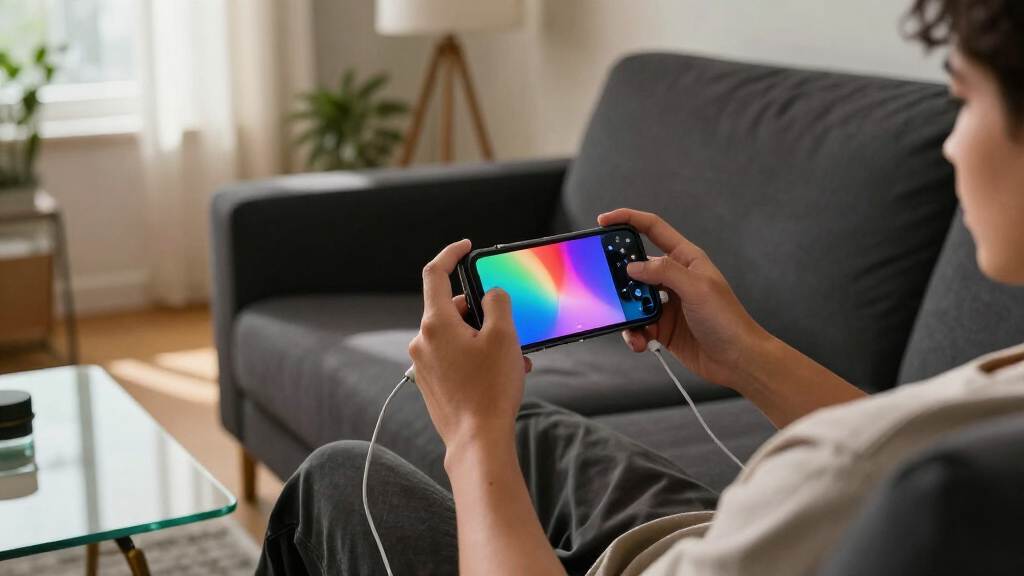
I ranked these phones by how well their listed hardware and design suit sustained mobile gaming, then weighed the experience against everyday usability. Performance potential, display responsiveness, battery capacity where stated, storage, connectivity generation, and gaming-focused features all informed the comparison. I also considered whether a phone is a current-purpose-built gaming model, a general-purpose flagship, a value-oriented device, a rugged phone, or an older model. Product names and headline specifications alone cannot confirm real-world frame rates or thermal behavior, so buyers should verify exact regional specifications before purchase.
The ranking favors phones with a clear gaming purpose and a stronger balance of gaming features and practical use, followed by capable general-purpose and value-focused options. Models with older hardware, 4G-only connectivity, renewed condition, or limited gaming-specific information rank lower because they involve more uncertainty or narrower appeal. That does not make them automatic exclusions: the right choice depends on game demands, budget, comfort, and how much gaming matters relative to everyday tasks.
Factors to Consider When Choosing Best Gaming Phones
Choosing a gaming phone is about more than finding the largest memory figure or a gaming-themed name. I would match the phone to the games you play, how long you play at a stretch, and whether the device also needs to serve as your everyday camera and communication tool. These broader checks can prevent a spec-sheet mismatch.
Match Performance to the Games You Play
Competitive shooters and demanding action games place more pressure on sustained processing power than casual puzzle or strategy titles. A fast chip can still slow down during long sessions if a phone cannot manage heat, so peak performance figures do not tell the whole story. Look for independent sustained-load tests for the exact model and regional version you plan to buy. Check whether your preferred games support the frame-rate and graphics settings you want; the phone cannot force a game to offer them. Buyers who play lighter titles can often prioritize comfort, battery life, or a better everyday camera instead of paying for specialist features. I would avoid choosing only by RAM, since memory capacity does not establish how quickly a game will run.
Consider Screen Feel, Not Just Screen Size
A large display can make controls and game details easier to see, but it also makes a phone harder to grip for extended play. Refresh rate and touch response affect how fluid inputs feel, yet the benefit depends on whether a game supports higher refresh rates. Brightness, glare handling, and viewing comfort matter if you play outdoors or in varied lighting. Resolution can improve detail but may place extra load on hardware and battery when a game renders at a high setting. Before buying, compare dimensions and weight as carefully as display specifications, especially if you use a controller or play one-handed. A balanced screen can be more useful than the biggest panel available.
Plan for Heat and Long Sessions
Gaming performance over a few minutes can differ from performance after an hour, so seek long-session testing rather than relying on launch-day benchmark peaks. Cooling systems, body materials, ambient temperature, and the way you hold the phone all affect heat buildup. A hot device may become uncomfortable or reduce performance, even if its hardware looks strong on paper. External fans and gaming cases can help some players, but they add bulk and may obstruct ports or buttons. If you mostly play plugged in, check charging behavior and whether heat management changes while charging. For frequent marathon sessions, a stable experience matters more than a brief burst of speed.
Treat Battery and Charging as a Routine
High frame rates, bright displays, and demanding games drain batteries faster than ordinary messaging or browsing. Battery capacity is only a starting point; screen settings, signal strength, game optimization, and temperature shape actual runtime. Fast charging can shorten breaks, but frequent heat during charging and gaming can affect comfort and battery wear over time. Think about where you play and whether you can recharge between sessions instead of assuming a large battery will last all day. If you play away from an outlet, independent gaming-runtime tests are more useful than general mixed-use estimates. Lowering graphics or refresh settings can extend a session when maximum performance is not necessary.
Check Compatibility, Software, and Condition
Unlocked status does not mean every phone supports every carrier band, so confirm network compatibility for your country and provider before ordering. The 4G-only models in this roundup may be a poor fit for buyers who need 5G access or expect to keep a phone for several years. Check the manufacturer’s software-support policy and whether the exact model still receives security updates. For renewed phones, inspect the seller’s condition definitions, battery expectations, included accessories, return window, and warranty coverage. Older models can offer useful features but may have shorter remaining support and fewer replacement parts. I would treat these details as part of the phone’s value, not as paperwork to review after buying.
Choose Storage for Your Game Library
Large games, downloaded assets, video captures, and updates can consume storage quickly. A 256GB model may be ample for a smaller rotation, but players who keep many large titles installed may prefer 512GB. Check whether the exact phone supports expandable storage; do not assume a memory-card slot is present. Cloud backups help with photos and documents, but they do not replace local space needed for installed games. RAM and storage are separate: more RAM can help keep apps available, while more storage gives games room to stay installed. Choose based on your habits rather than buying the largest configuration automatically.
Frequently Asked Questions
Should I choose a dedicated gaming phone or a regular flagship?
A dedicated gaming phone makes sense if you play demanding titles often and will use its gaming-oriented controls, display features, or cooling design. A general-purpose flagship can be a better fit if camera quality, a compact design, and a polished everyday experience matter just as much. Dedicated features do not guarantee that every game runs at its highest settings, so check performance tests for the specific games you play. Also compare software support and network compatibility. If gaming is occasional, a versatile phone may offer a better balance for your daily routine.
Is 12GB of RAM enough for mobile gaming?
For many mobile games, 12GB of RAM is ample, but RAM by itself does not determine frame rate or graphics quality. The processor, cooling, game optimization, and display settings also shape performance. More memory can help with multitasking and keeping apps available, but it is not a substitute for stronger core hardware. Check the exact model’s configuration because similar product names can have different memory and storage versions. If you mainly play one or two games, prioritize sustained performance and comfort over a larger RAM number.
Is a renewed phone a sensible choice for gaming?
A renewed phone can suit a buyer who wants a capable device and is comfortable checking condition details carefully. Gaming puts repeated load on the battery and hardware, so battery health and the seller’s testing standards matter more than appearance alone. Review the return policy and warranty, and confirm what accessories are included. Older models may also have shorter software-support life or limited compatibility with newer network features. I would compare the renewed phone’s condition and support outlook against a newer value-focused model before deciding.
Do I need a 5G phone to play mobile games?
No, 5G is not required for most gaming performance because the phone’s processor and connection quality affect gameplay in different ways. A stable Wi-Fi connection is often preferable at home, while mobile data matters when you play away from it. 5G can offer faster downloads and may help in supported areas, but coverage varies by carrier and location. Check band compatibility rather than relying only on an unlocked label. A 4G phone may still handle games well, but it is a narrower choice for buyers who want newer mobile-network support.
How much storage should I choose for a gaming phone?
Choose storage based on how many large games you keep installed and how much video or other media you save locally. A 256GB configuration can work for a selective library, while 512GB offers more room for frequent downloads and captures. Game updates can require extra free space, so a nearly full phone can become inconvenient even when the installed library technically fits. Confirm whether the model supports expandable storage before counting on a memory card. If you do not want to remove games regularly, extra built-in storage can be more useful than a modest increase in RAM.
Conclusion
For a gaming-first buyer, I would start with the ASUS ROG Phone 9 as the best overall pick, with the ROG Phone 8 Pro as another premium-focused alternative. The POCO X7 Pro is my value-oriented recommendation for shoppers who want a more general-purpose phone with gaming potential, while the Samsung Galaxy S23 Ultra may suit someone who also prioritizes a versatile flagship experience and accepts the checks that come with a renewed device. Beginners should favor a current, unlocked model with a straightforward return policy and enough storage for their game library, rather than buying an older gaming phone just for its specialist label. For buyers who need 5G, I would rule out the FOSSIBOT F114 and redbeat E3; anyone drawn to the original Razer Phone should weigh its age and support outlook carefully. Match the choice to your actual games, session length, and daily-use needs, then verify the exact configuration and regional compatibility before ordering.