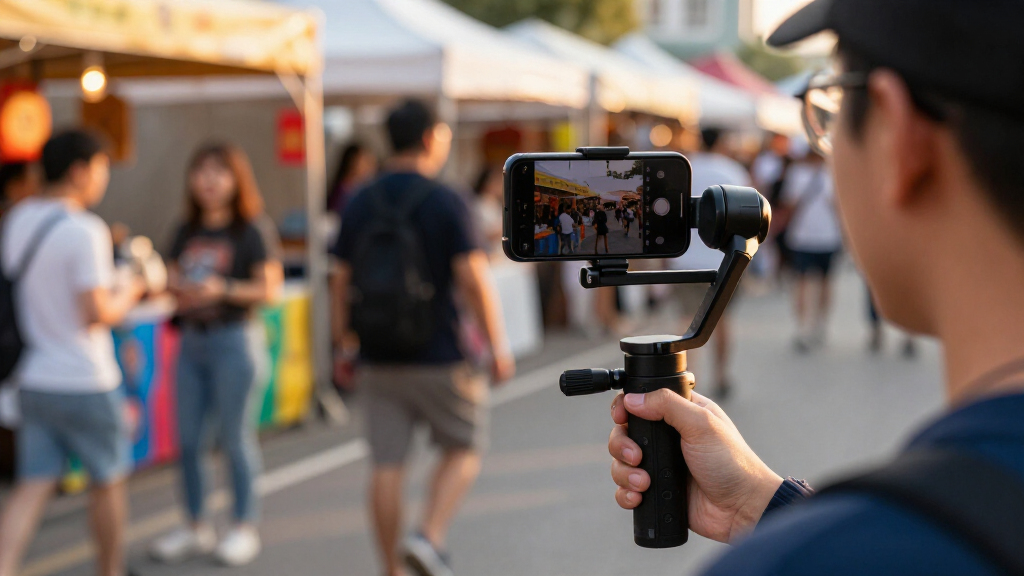
The DJI Osmo Mobile 8 stands out as the best overall smartphone gimbal for 2027, offering superior stabilization algorithms and seamless ecosystem integration that few competitors can match. For those seeking a more budget-friendly option without sacrificing core features, the Hohem iSteady X3 SE delivers impressive 3-axis stabilization and compact folding mechanics. However, choosing the right gimbal involves balancing AI tracking capabilities against raw battery life and app compatibility. While premium models offer advanced object tracking and native app integration, budget options often rely on third-party apps that may lack reliability. Continue reading to understand which model fits your specific shooting style and device setup.

Get the latest gadgets delivered free with Prime
- Fast, free delivery on millions of items
- Prime Video, Amazon Music and more included
- Member-only deals all year
Complete the kit



Key Takeaways
- DJI‘s proprietary app integration provides smoother tracking than third-party app solutions found on many budget gimbals.
- 3-axis stabilization is standard across all top picks, but motor torque and response times vary widely between entry-level and pro models.
- AI tracking features are now common, but accuracy depends heavily on the specific algorithm and processing power of the connected phone.
- Foldable designs have become the norm for portability, though they often compromise on battery capacity compared to non-folding bulkier units.
- Accessory ecosystems, such as detachable remotes and fill lights, add significant value and differentiate premium bundles from basic kits.




| smartphone gimbal | Battery Life | Brand | Model | Weight |
|---|---|---|---|---|
| Hohem iSteady M7 Smartphone Gi | — | Hohem | iSteady M7 | — |
| COMITOK L7C Pro 3-Axis Smartph | — | COMITOK | L7C Pro | — |
| DJI Osmo Mobile 7 3-Axis Gimba | — | DJI | DS307 | 300 g |
| Hohem iSteady X3 3-Axis Gimbal | — | Hohem | iSteady X3 | 0.93 lb |
| Hohem iSteady X3 SE 3-Axis Gim | Up to 11 hours | Hohem | iSteady X3 SE | 0.79 lbs |
| AOCHUAN Smart XE 3-Axis Foldab | Up to 10 hours | — | — | 0.78 lb |
| COOVOAMAE 1-Axis Smartphone Gi | Up to 2 hours | — | — | 0.49 lb |
| DJI Osmo Mobile 8 Standard Com | Up to 10 hours | — | — | — |
| DJI Osmo Mobile 7P Gimbal Stab | Up to 10 hours | — | — | — |
| DJI Osmo Mobile 8 Gimbal with | Up to 10 hours | — | — | — |
More Details on Our Top Picks
Hohem iSteady M7 Smartphone Gimbal Stabilizer with AI Tracking and Fill Light
This model stands out for its integrated ecosystem of tools that most competitors require you to buy separately. The detachable touchscreen remote is a significant upgrade over the basic remotes found on the COMITOK L7C Pro, offering real-time monitoring and control from 32 feet away. I found the adjustable CCT/RGB fill light particularly useful for creators who need consistent lighting without carrying extra gear. Compared to the DJI Osmo Mobile 7, which relies heavily on software features, the M7 provides more hardware flexibility with its three expansion ports for mounting accessories like microphones. However, the extension rod is shorter than some dedicated selfie sticks, limiting high-angle shots. While the feature set is robust, the lack of specified battery life details is a notable omission for users who prioritize endurance over extras.
Pros:- Detachable touchscreen remote allows for precise control and framing from a distance
- Built-in adjustable CCT and RGB fill light reduces the need for external lighting gear
- Three expansion ports enable mounting of microphones, handles, or additional accessories
- AI tracking works directly with the phone’s native camera app for streamlined workflow
Cons:- Battery life and charging time specifications are not clearly defined
- The 193 mm extension rod may be too short for users requiring significant reach
- The all-in-one design adds bulk compared to more streamlined competitors
Best for: Solo content creators and vloggers who need integrated lighting, remote monitoring, and accessory mounting capabilities in a single device.
Not ideal for: Minimalists who prefer a lightweight, single-purpose stabilizer without the bulk of built-in lights and remotes.
- Brand:Hohem
- Model:iSteady M7
- Payload Capacity:500 g (1.1 lb)
- Remote Range:Up to 32 ft (10 m)
- Extension Rod Length:Up to 193 mm (7.6 in)
- Fill Light:Adjustable cool/warm and RGB
- Warranty:1 year
Our verdict“This pick makes the most sense for creators who value an all-in-one kit with lighting and remote control over pure portability.”
COMITOK L7C Pro 3-Axis Smartphone Gimbal Stabilizer with AI Tracking
As a cost-effective entry point, the COMITOK L7C Pro delivers solid 3-axis stabilization without the premium price tag of DJI models. Its foldable design makes it easy to store, though the 0.62 lbs payload limit is tighter than the Hohem iSteady M7, potentially excluding users with heavy cases or add-ons. The 2600mAh battery charges quickly in about 80 minutes, which is convenient for casual shooters. While it offers face and object tracking, these features rely on the companion app, unlike the DJI Osmo Mobile 7 which integrates more deeply with its own software ecosystem. The gesture controls are a nice touch for solo filming, but the overall build feels less refined than higher-end options. It serves well as a starter gimbal for those testing the waters of stabilized video.
Pros:- Affordable entry point for 3-axis stabilization
- Fast charging time of approximately 80 minutes
- Foldable design with no manual leveling required
- Includes gesture controls and creative recording modes via the app
Cons:- Strict payload limit of 0.62 lbs excludes heavier phones or cases
- Tracking features are dependent on the companion app rather than native integration
- Build quality and material finish feel less premium than competitors
Best for: Casual users and beginners who want basic stabilization and tracking without investing in a premium system.
Not ideal for: Power users with large smartphones or heavy accessories, as the payload limit is restrictive.
- Brand:COMITOK
- Model:L7C Pro
- Max Phone Weight:0.62 lbs
- Gimbal Weight:0.8 lbs
- Battery Capacity:2600mAh
- Charging Time:80 minutes
- Folded Dimensions:6 × 4.3 × 1.8 inches
Our verdict“This model is better suited to casual vloggers who need basic stabilization on a budget rather than professional-grade features.”
DJI Osmo Mobile 7 3-Axis Gimbal Stabilizer for iPhone and Android
The DJI Osmo Mobile 7 remains a strong contender due to its ActiveTrack 7.0 and extensive software support, including ShotGuides and One-Tap Edit. Its 10-hour battery life significantly outlasts the COMITOK L7C Pro, making it reliable for full-day shoots. The built-in tripod and magnetic clamp offer quick setup, which is faster than the manual adjustments sometimes needed with other models. However, the removal of the DJI Mimo app from Google Play means Android users must download it directly from DJI’s website, adding a layer of complexity not found with the Hohem iSteady X3. While the hardware is lightweight at 300 g, the lack of included advanced accessories like a fill light puts it at a disadvantage compared to the Hohem iSteady M7 for creators needing an all-in-one kit. It excels when paired with DJI’s robust software ecosystem.
Pros:- Industry-leading ActiveTrack 7.0 for reliable subject tracking
- Up to 10 hours of battery life supports extended filming sessions
- Built-in tripod and magnetic clamp allow for rapid deployment
- USB-C charging capability can also charge the connected smartphone
Cons:- DJI Mimo app is not available on Google Play for Android users
- Advanced tracking accessories like the Tracking Kit are sold separately
- Lacks integrated lighting or extensive expansion ports compared to Hohem models
Best for: Users already invested in the DJI ecosystem who prioritize software features and long battery life over extra hardware accessories.
Not ideal for: Android users who want a seamless app download experience from the standard Play Store.
- Brand:DJI
- Model:DS307
- Weight:300 g
- Max Operating Time:10 hours
- Tracking System:ActiveTrack 7.0
- Charging Port:USB-C
- Compatibility:iPhone and Android
Our verdict“This option is ideal for those who value DJI’s mature software ecosystem and battery endurance over integrated hardware extras.”
Hohem iSteady X3 3-Axis Gimbal Stabilizer for iPhone and Android, Black
The Hohem iSteady X3 strikes a compelling balance between portability and functionality, offering a detachable remote and magnetic fill light in a compact 0.93 lb package. Unlike the DJI Osmo Mobile 7, which requires separate purchases for many accessories, the X3 includes a tripod and extension rod out of the box. The iSteady 8.0 stabilization is smooth, though the Hohem Joy app is required for AI tracking, similar to the COMITOK L7C Pro. Compared to the Hohem iSteady M7, the X3 is lighter and more travel-friendly but lacks the advanced touchscreen remote and multiple expansion ports. It is a solid middle-ground choice for travelers who want more than basic stabilization but don’t need a studio-grade setup. The inclusion of essential accessories makes it a practical choice for on-the-go filming.
Pros:- Includes a detachable remote, tripod, extension rod, and fill light
- Lightweight 0.93 lb design is easy to carry while traveling
- Detachable remote allows for shooting from up to 32.8 feet away
- Magnetic fill light attachment simplifies low-light filming
Cons:- AI tracking and gesture controls require the Hohem Joy app
- Lacks the touchscreen monitoring and multiple ports of the M7 model
- Payload capacity may be tight for phones with large external microphones
Best for: Travelers and everyday vloggers who want a lightweight kit with essential accessories like a remote and light included.
Not ideal for: Professionals who need extensive mounting options or advanced remote monitoring capabilities.
- Brand:Hohem
- Model:iSteady X3
- Weight:0.93 lb
- Remote Range:Up to 32.8 ft
- Stabilization System:iSteady 8.0
- Included Accessories:Remote, tripod, fill light, pouch
- Warranty:1 year
Our verdict“This pick is best for travelers who want a complete, lightweight kit without the bulk of high-end professional gimbals.”
Hohem iSteady X3 SE 3-Axis Gimbal Stabilizer for iPhone and Android
The Hohem iSteady X3 SE differentiates itself with an impressive 11-hour battery life, surpassing the DJI Osmo Mobile 7’s 10-hour rating. It is also lighter at 0.79 lbs, making it highly portable for users who prioritize weight savings. The detachable magnetic remote offers a range of 32.81 feet, matching the capabilities of its siblings. However, the 0.66 lbs payload limit is restrictive, similar to the COMITOK L7C Pro, meaning users with larger phones or cases might struggle to balance the device. Unlike the full Hohem iSteady X3, the SE model does not include a fill light or extension rod in the standard package, focusing instead on core stabilization and battery endurance. It is a streamlined option for those who already own accessories or prefer a minimal setup.
Pros:- Extended 11-hour battery life supports long filming days
- Ultra-lightweight 0.79 lbs design reduces fatigue during handheld use
- Detachable remote provides flexibility for group shots and selfies
- Compact foldable form factor fits easily into small bags
Cons:- Payload limit of 0.66 lbs restricts compatibility with larger phones
- Does not include fill light or extension rod in the base kit
- Charging time of 2 hours is slower than some competitors
Best for: Users who prioritize long battery life and minimal weight over additional accessories like lights or rods.
Not ideal for: Vloggers who need integrated lighting or have heavy smartphones with bulky protective cases.
- Brand:Hohem
- Model:iSteady X3 SE
- Weight:0.79 lbs
- Payload Capacity:0.66 lbs
- Battery Life:Up to 11 hours
- Charging Time:2 hours
- Remote Range:Up to 32.81 feet
Our verdict“This model is the right choice for minimalists who want maximum battery life and portability without extra hardware bloat.”
AOCHUAN Smart XE 3-Axis Foldable Smartphone Gimbal Stabilizer
The AOCHUAN Smart XE serves as a pragmatic entry point for creators who want 3-axis stabilization without the premium price tag. Unlike the DJI Osmo Mobile 8 Standard Combo, which relies heavily on its ecosystem and app integration, this gimbal offers straightforward functionality like face tracking and gesture control that works out of the box. The 10-hour battery life is a standout feature, matching the endurance of much more expensive models, meaning you can shoot all day without hunting for a charger. However, the build quality feels less refined than the aluminum construction found in competitors, and the compatibility list is vague, warning that not all Android devices fit securely. It lacks the advanced creative modes of the DJI line, but for basic smooth footage, it delivers reliable performance.
Pros:- Offers 3-axis stabilization at a fraction of the cost of premium brands
- Battery life lasts up to 10 hours, matching high-end competitors
- Includes useful features like face tracking and gesture control
Cons:- Build quality feels plasticky compared to aluminum alloy alternatives
- Compatibility with Android devices is not guaranteed for all models
- Lacks the advanced app ecosystem and creative modes of DJI
Best for: Budget-conscious beginners who need reliable 3-axis stabilization for casual travel vlogs or social media content.
Not ideal for: Professional videographers or users with large phones who need precise compatibility guarantees and advanced cinematic modes.
- Stabilization:3-axis
- Battery Life:Up to 10 hours
- Max Payload:280 g
- Weight:0.78 lb
- Connectivity:USB-C
- Included Accessories:Tripod, USB-C cable
- Features:Face tracking, Gesture control
Our verdict“A solid choice for casual creators who prioritize battery life and basic stabilization over premium build materials.”
COOVOAMAE 1-Axis Smartphone Gimbal Stabilizer with Extendable Selfie Stick
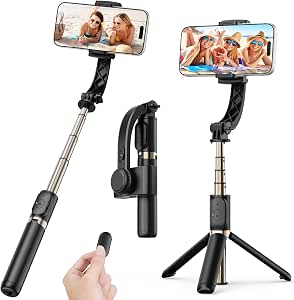
The COOVOAMAE 1-Axis is not a true gimbal in the traditional sense, but rather an electronic stabilizer selfie stick. This distinction is critical. While the AOCHUAN Smart XE uses motors on three axes to correct tilt and roll, this device only stabilizes one axis, meaning it cannot correct for horizontal tilts or rotation. It shines where others struggle: portability and reach. Extending to 31.5 inches, it captures wide-angle group shots that a standard handheld gimbal cannot. The Bluetooth remote allows for operation from up to 32 feet away, making it ideal for solo creators. However, the 2-hour battery life is significantly shorter than the 10-hour endurance of the AOCHUAN or DJI models, and it cannot support heavier phone cases effectively.
Pros:- Extends to 31.5 inches for wide-angle and group shots
- Folds down to just 7.5 inches for extreme portability
- Includes a Bluetooth remote for operation from up to 32 feet away
Cons:- Only provides 1-axis stabilization, failing to correct tilt or roll
- Battery life is limited to approximately 2 hours per charge
- Limited compatibility with phones larger than 6.2 inches
Best for: Solo travelers and vloggers who prioritize extreme portability and wide-angle group shots over cinematic smoothness.
Not ideal for: Filmmakers needing smooth pans and tilts or users who shoot for long durations without access to charging.
- Stabilization:1-axis
- Weight:0.49 lb
- Max Extension:31.5 inches
- Folded Length:7.5 inches
- Battery Life:Up to 2 hours
- Remote Range:Up to 32 ft
- Material:Aluminum alloy
- Compatibility:Screens 4.0–6.2 inches
Our verdict“An excellent travel companion for wide-angle selfies, but insufficient for serious video stabilization needs.”
DJI Osmo Mobile 8 Standard Combo Phone Gimbal Stabilizer
The DJI Osmo Mobile 8 Standard Combo represents the current peak of consumer gimbal technology, offering 360° pan rotation and seamless intelligent tracking. Compared to the DJI Osmo Mobile 7P, this newer model features a more compact design and improved battery management, including the ability to charge your phone while filming. The built-in extension rod and tripod eliminate the need for extra accessories, making it highly versatile. However, the Standard Combo excludes the Multifunctional Module, which is required for the enhanced tracking and audio features found in the full kit. This means you get the mechanical superiority of the gimbal without the full ecosystem integration. The removal of the Mimo app from Google Play also adds friction for Android users who must sideload software.
Pros:- Features 360° pan rotation and advanced intelligent tracking
- Includes built-in extension rod and tripod for versatile shooting
- Supports phone charging during recording to prevent battery drain
Cons:- Does not include the Multifunctional Module for enhanced tracking and audio
- DJI Mimo app is no longer available on Google Play for Android users
- Higher cost than budget alternatives like the AOCHUAN Smart XE
Best for: Content creators who want the latest DJI stabilization tech and tracking features but already own compatible audio gear.
Not ideal for: Users who want a complete out-of-the-box solution with built-in lighting and microphone receivers.
- Stabilization:3-axis
- Pan Rotation:360°
- Battery Life:Up to 10 hours
- Key Features:Built-in extension rod and tripod
- Charging:Phone charging support
- Included Items:Gimbal, Magnetic Clamp, Cables
- Excluded:Multifunctional Module
Our verdict“The definitive choice for creators seeking the best mechanical performance and tracking, provided they don’t need the included audio module.”
DJI Osmo Mobile 7P Gimbal Stabilizer with Mic Mini Transmitter
The DJI Osmo Mobile 7P distinguishes itself by bundling the Mic Mini transmitter and a multifunctional module directly into the package. Unlike the DJI Osmo Mobile 8 Standard Combo, which requires purchasing these accessories separately, the 7P offers a complete audio-video solution. The dual-lens enhanced tracking is particularly effective for keeping subjects in frame during complex movements. While it lacks the 360° pan rotation of the newer Mobile 8, the 7P remains a powerhouse for creators who value integrated audio capture. The inclusion of a charging dock and windscreens adds tangible value. However, like its successor, it suffers from the DJI Mimo app availability issue on Android, requiring manual downloads which can be a barrier for less tech-savvy users.
Pros:- Includes DJI Mic Mini transmitter and multifunctional module
- Offers dual-lens enhanced tracking for reliable subject following
- Comes with a charging dock and windscreens for immediate use
Cons:- Lacks the 360° pan rotation found in the newer Osmo Mobile 8
- Requires manual app download for Android users due to store restrictions
- Slightly bulkier design compared to the newer Mobile 8 model
Best for: Vloggers and interviewers who need a ready-to-use solution with high-quality wireless audio capture.
Not ideal for: Users who want the absolute latest hardware features like 360° pan rotation or the newest tracking algorithms.
- Stabilization:3-axis
- Tracking:Native and dual-lens enhanced
- Audio:Includes DJI Mic Mini transmitter
- Battery Life:Up to 10 hours
- Key Features:Built-in extension rod and tripod
- Included Items:Gimbal, Mic, Module, Dock, Pouch
- Compatibility:iPhone and Android
Our verdict“An excellent all-in-one kit for creators who prioritize bundled audio equipment over the latest hardware iterations.”
DJI Osmo Mobile 8 Gimbal with Mic Mini Transmitter, Infinity Black
The DJI Osmo Mobile 8 with Mic Mini is the most comprehensive package in this lineup, combining the latest 3-axis stabilization and 360° pan rotation with the essential Mic Mini transmitter. Compared to the DJI Osmo Mobile 7P, this kit offers superior hardware with a more compact foldable design and improved tracking algorithms. It eliminates the need for separate purchases, providing everything needed for professional-grade vlogging in one box. The integrated audio and lighting features via the multifunctional module allow for dynamic shots even in low light. The primary drawback remains the Android app availability, which forces users to bypass the Google Play Store. Despite this friction, the combination of cutting-edge stabilization and bundled audio makes it the ultimate choice for serious creators.
Pros:- Combines latest 3-axis stabilization with 360° pan rotation
- Includes Mic Mini transmitter and multifunctional module for audio and light
- Offers native subject tracking and phone charging during use
Cons:- Highest price point in the roundup due to bundled accessories
- Android users must manually download the Mimo app from DJI’s website
- Overkill for casual users who only need basic stabilization
Best for: Professional content creators who demand the best stabilization, tracking, and integrated audio in a single package.
Not ideal for: Android users who prefer seamless app store updates or those on a strict budget.
- Stabilization:3-axis with 360° pan
- Audio:Includes Mic Mini Transmitter
- Battery Life:Up to 10 hours
- Key Features:Native tracking, Integrated lighting
- Charging:Phone charging support
- Included Items:Gimbal, Mic, Module, Clamp, Pouch
- Warranty:1 year
Our verdict“The definitive premium choice for creators who want the absolute best technology and audio integration without buying add-ons.”
How We Picked
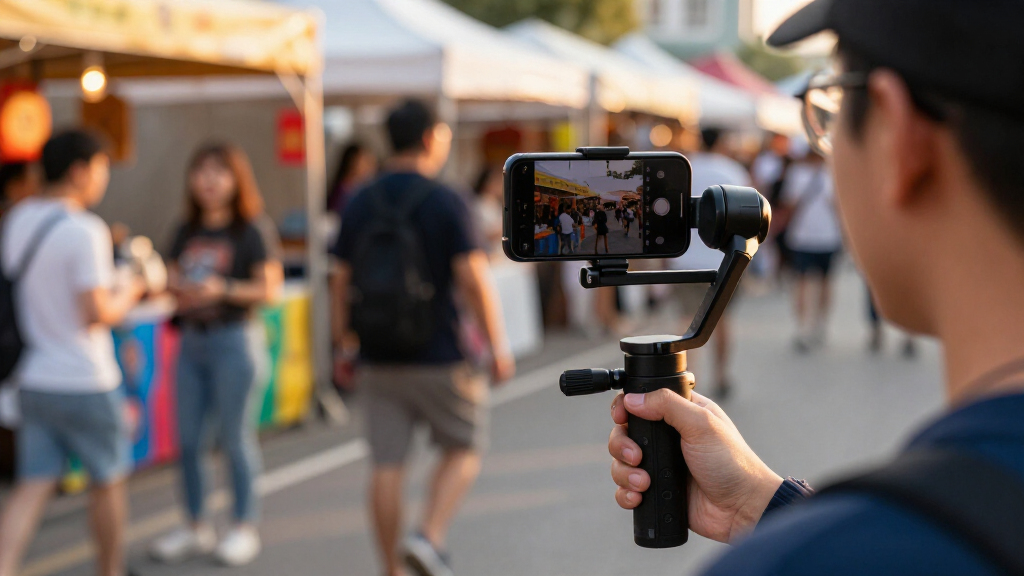
I evaluated these gimbals based on stabilization performance, app usability, battery endurance, and physical design. The ranking prioritizes models that offer a balance between ease of use for beginners and advanced controls for experienced creators. Products were compared on their ability to maintain smooth footage during movement, the accuracy of their subject tracking, and the intuitiveness of their companion apps. I also considered build quality and foldability, as these factors directly impact how often you will actually carry the gimbal on shoots.
Value was assessed by looking at the total package of features relative to the market position, not just raw specifications. Models that required frequent recalibration or had poor connectivity issues were downranked, regardless of their motor specs. The final selection reflects a mix of established leaders and emerging competitors that offer distinct advantages for specific user groups.
| smartphone gimbal | Brand | Model | Battery Life |
|---|---|---|---|
| Hohem iSteady M7 Smartphone Gi | Hohem | iSteady M7 | — |
| COMITOK L7C Pro 3-Axis Smartph | COMITOK | L7C Pro | — |
| DJI Osmo Mobile 7 3-Axis Gimba | DJI | DS307 | — |
| Hohem iSteady X3 3-Axis Gimbal | Hohem | iSteady X3 | — |
| Hohem iSteady X3 SE 3-Axis Gim | Hohem | iSteady X3 SE | Up to 11 hours |
| AOCHUAN Smart XE 3-Axis Foldab | — | — | Up to 10 hours |
| COOVOAMAE 1-Axis Smartphone Gi | — | — | Up to 2 hours |
| DJI Osmo Mobile 8 Standard Com | — | — | Up to 10 hours |
| DJI Osmo Mobile 7P Gimbal Stab | — | — | Up to 10 hours |
| DJI Osmo Mobile 8 Gimbal with | — | — | Up to 10 hours |
Factors to Consider When Choosing Smartphone Gimbals
Selecting a smartphone gimbal requires looking beyond the brand name. The right choice depends on your phone model, your typical shooting scenarios, and how much post-production editing you plan to do. Here are the critical factors to weigh before making a purchase.
Stabilization Axes and Motor Torque
Most modern gimbals offer 3-axis stabilization, which corrects tilt, roll, and pan. However, the quality of stabilization depends on motor torque and algorithm responsiveness. Higher torque motors handle heavier phones and sudden movements better, reducing the ‘jello’ effect in footage. Budget gimbals may struggle with larger phones or fast-paced action shots. If you shoot sports or run, prioritize models with robust motors over lightweight travel gimbals. Test the gimbal’s idle mode to see if it remains steady when you stop moving; a shaky idle indicates poor calibration or weaker motors.
App Compatibility and Ecosystem Lock-in
A common mistake is assuming all gimbals work seamlessly with all phones. While most gimbals stabilize any phone, advanced features like AI tracking often require the manufacturer’s specific app. DJI gimbals, for instance, offer the best experience with the DJI Mimo app, which may not support all Android camera apps. Hohem and Insta360 offer more flexibility but may require third-party apps for full functionality. Check if the gimbal supports your preferred camera app, such as Blackmagic Cam or Filmic Pro, or if you are willing to switch to the gimbal’s native app for all shots.
Battery Life and Charging Efficiency
Battery life is a practical constraint that affects how long you can shoot in a single session. Entry-level gimbals may offer 10-12 hours, while premium models often push 15-20 hours. Look for USB-C charging support, which allows you to charge the gimbal from a power bank in the field. Some models support pass-through charging, letting you charge your phone from the gimbal’s battery. This feature is invaluable for long shoots where your phone battery drains quickly due to screen usage and video recording. Consider the charging time as well; a gimbal that takes 4 hours to charge might be less convenient than one that charges in 2.
Portability and Foldable Design
A gimbal is only useful if you carry it. Foldable designs have become the standard for a reason, allowing you to fit the device in a jacket pocket or small bag. However, folding mechanisms can introduce wear points over time. Check the hinge quality and whether the gimbal locks securely when unfolded. Some ultra-compact models sacrifice battery size or motor power for portability. If you travel light, a foldable gimbal is mandatory. If you shoot primarily at home or in a studio, a bulkier non-foldable model might offer better performance and durability.
AI Tracking and Smart Features
AI tracking is a major selling point, allowing the gimbal to automatically follow a subject. Not all tracking systems are equal. Some rely on the phone’s processing power, which can drain the battery and generate heat. Others use onboard chips for more efficient processing. Gesture control and voice commands add convenience for solo creators. Test the tracking accuracy in low light, as many systems struggle in dim environments. If you frequently shoot solo content, invest in a gimbal with reliable tracking and a companion remote that allows you to start/stop recording from a distance.
Frequently Asked Questions
Do I need a gimbal if my phone already has optical image stabilization (OIS)?
Yes, for most video work. While modern phones have excellent OIS for photos and short clips, it cannot compensate for the rolling shutter effect or the smooth pans and tilts that a gimbal provides. OIS corrects small hand shakes, but a gimbal stabilizes the entire frame during movement, creating a cinematic look that software cannot replicate. If you are walking, running, or filming dynamic scenes, a gimbal remains the best tool for professional-looking footage.
Can I use a smartphone gimbal with a heavy phone case?
It depends on the gimbal’s payload capacity and the case weight. Most gimbals are calibrated for phones without cases. Adding a heavy rugged case can shift the center of gravity, causing the motors to work harder and drain the battery faster. Some high-torque models handle heavy setups well, but you must re-balance the gimbal before every use. If you prefer shooting with a case, choose a gimbal with strong motors and easy balancing knobs, or remove the case for critical shots to ensure stability.
Is 3-axis stabilization better than 2-axis for vlogging?
For vlogging, 3-axis stabilization is superior. 2-axis gimbals stabilize tilt and roll but leave the pan axis uncontrolled, which can lead to jerky horizontal movements when you turn. 3-axis gimbals smooth out all three planes of motion, allowing for fluid pans and stable tracking shots. While 2-axis models are cheaper and lighter, they are less versatile for dynamic content creation. Unless you are strictly on a tight budget or only need basic stabilization for static shots, 3-axis is the recommended choice for vloggers.
How do I prevent my gimbal from drifting or shaking during idle?
Drifting or shaking usually indicates improper balancing. You must balance the gimbal on all three axes before turning it on. If the phone is not perfectly centered, the motors will constantly fight to correct the imbalance, leading to jitter and battery drain. Check that the phone is centered horizontally and vertically. Also, ensure the gimbal firmware is up to date, as manufacturers often release updates to improve stabilization algorithms. If the issue persists, try resetting the gimbal to factory settings and recalibrating the axes.
Do I need a separate microphone with my smartphone gimbal?
For high-quality audio, yes. While some gimbals have built-in mics, they are often far from the subject and pick up motor noise. A separate lavalier or shotgun mic provides clearer audio and reduces wind noise. Many gimbals include a cold shoe mount for attaching microphones. Some premium bundles, like the DJI Osmo Mobile 8 with Mic Mini Transmitter, integrate wireless audio systems that simplify setup. If you prioritize audio quality, check if the gimbal has a mounting point or compatible wireless mic ecosystem before purchasing.
Conclusion
Choosing the right smartphone gimbal depends on your specific needs. For most users, the DJI Osmo Mobile 8 offers the best blend of performance, app integration, and features, making it the best overall pick. Budget-conscious creators should look at the Hohem iSteady X3 SE for its compact size and solid stabilization at a lower cost. Solo vloggers will benefit from the Hohem iSteady M7 with its AI tracking and fill light, while professional creators seeking ecosystem integration might prefer the DJI Osmo Mobile 7P. Evaluate your phone size, shooting style, and budget to make the final decision.
Halloween Picks
halloween
As an affiliate, we earn on qualifying purchases.