
Removable batteries mostly disappeared from phones because manufacturers wanted sleeker, more durable designs that are water and dust resistant. They also prioritized longer device lifespan and better safety features from newer battery chemistries. While it means you can’t swap batteries easily, it allows for slimmer phones with bigger screens and advanced technology. If you’re curious about how this shift impacts repairability and innovation, there’s more to discover below.
Key Takeaways
- Industry shifted toward sleeker, water, and dust resistant designs, favoring sealed, non-removable batteries for better durability.
- Advances in battery chemistry and safety enabled thinner devices with larger capacities, reducing the need for removable batteries.
- Removing the battery allowed for more innovative, larger screens and internal components in modern smartphones.
- Consumer demand for durable, stylish, and waterproof phones led manufacturers to adopt non-removable battery designs.
- Ease of repairs and user control decreased as removable batteries were replaced with integrated, hard-to-replace power sources.
The Early Days of Removable Batteries and Their Benefits
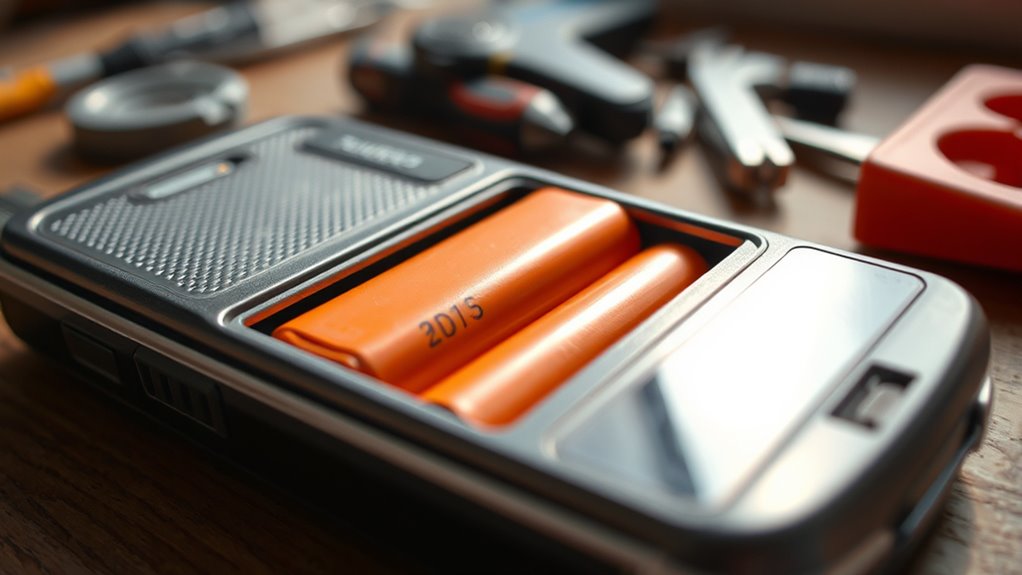
In the early days of mobile phones, removable batteries were essential for practical reasons. You could easily swap out a dead battery with a fresh one, giving your device extended use without needing to recharge constantly. This was especially useful when early batteries like Ni-Cd and NiMH weren’t very efficient, so frequent replacements kept your phone running longer. Manufacturers designed phones like the Motorola DynaTAC and early Nokia models with user-replaceable batteries, making maintenance simple. If your battery degraded, you simply popped it out and put in a new one. This flexibility meant fewer trips to service centers and less electronic waste. Removable batteries gave you control over your device’s power, improving usability and convenience during those early mobile days. Additionally, battery technology advancements eventually led to the development of sealed, non-removable batteries, which helped improve device design and water resistance.
Technological Breakthroughs in Battery Chemistry
You should recognize how advancements in battery chemistry have transformed phone design and performance. Lithium-ion batteries, with their higher energy density, let devices run longer and shrink in size. These breakthroughs also include safety improvements that make batteries more reliable and less prone to hazards. For example, ongoing research aims to eliminate the need for removable batteries altogether, reflecting a shift in design philosophy driven by newer technological innovations.
Lithium-ion Energy Density
How did lithium-ion batteries revolutionize smartphone design? They dramatically increased energy density, meaning you could get more power in a smaller, lighter package. This breakthrough allowed manufacturers to create slim, sleek phones without sacrificing battery life. Lithium-ion chemistry enabled batteries to hold more charge per unit weight, so your device could last longer between charges. Advances in electrolyte formulations and electrode materials further boosted energy density, pushing the limits of what’s possible in mobile power sources. These improvements meant manufacturers could design thinner phones with larger screens and more internal space for other components. Additionally, innovations in battery chemistry have continually expanded the potential of portable energy sources. These improvements meant manufacturers could design thinner phones with larger screens and more internal space for other components. As a result, you experienced more powerful, longer-lasting devices, fueling the trend toward sealed, non-removable batteries that support modern, ultra-slim designs.
Thinner Battery Designs
What enables modern smartphones to be so slim and lightweight? It’s largely thanks to technological breakthroughs in battery chemistry that have allowed for thinner battery designs. Lithium-ion batteries, introduced in the early 1990s, offer a high energy density in a compact form, making it possible to reduce battery size without sacrificing capacity. Advances in electrode materials and cell architecture further shrink battery thickness while maintaining performance. Manufacturers can now embed these slim batteries seamlessly into the device’s chassis, freeing up internal space for larger screens and sleeker profiles. Additionally, improved manufacturing techniques guarantee these batteries are safer and more reliable despite their reduced size. Battery chemistry progress in battery chemistry and design directly contributes to the slim, lightweight aesthetics that define today’s smartphones.
Enhanced Safety Features
Advancements in battery chemistry have considerably enhanced safety features in modern smartphones. These breakthroughs include the development of solid-state batteries and improved electrolyte formulations that notably reduce fire risks. They also feature built-in safety mechanisms like thermal regulators and shutdown systems that prevent overheating or short circuits. These innovations make devices safer without the need for user intervention or removable batteries.
| Safety Feature | Function | Benefit |
|---|---|---|
| Thermal Management | Regulates battery temperature | Prevents overheating |
| Built-in Shutoff | Disconnects power during faults | Avoids fires or explosions |
| Non-flammable Electrolyte | Reduces fire risk | Improves safety |
| Pressure Sensors | Detects swelling or damage | Alerts users early |
| Fire-resistant Casings | Contain potential fires | Protects users |
The Shift Toward Sleeker and More Durable Phone Designs
The push for sleeker and more durable phone designs has transformed the way manufacturers build smartphones. To achieve slimmer profiles, they eliminated the bulk of removable batteries, integrating power sources directly into the device’s frame. This move allows for larger screens and more internal space for advanced components, making phones thinner and more attractive. Sealed designs also improve water and dust resistance, enhancing durability. You’ll notice that modern phones lack battery compartments, emphasizing style and robustness over user accessibility. By removing the removable battery, manufacturers can craft seamless, glass-backed devices that are both elegant and sturdy. This shift has prioritized aesthetics and longevity, even if it means sacrificing the quick battery swaps you once relied on. Additionally, advancements in power backup systems have made it possible for smartphones to maintain longer battery life without removable options, emphasizing the importance of efficient built-in batteries.
Industry Adoption of Non-Removable Power Sources
As smartphones became sleeker and more durable, manufacturers increasingly moved away from removable batteries to accommodate these design goals. This shift allowed for slimmer profiles, water resistance, and larger screens. Industry leaders like Apple popularized sealed designs starting with the iPhone in 2007, setting a trend many followed. Most major brands adopted non-removable batteries by the early 2010s, driven by consumer demand for stylish, compact devices. The table below highlights key reasons behind this industry shift:
| Reason | Benefit | Impact |
|---|---|---|
| Thinner Devices | More elegant, portable phones | Reduced internal space |
| Water & Dust Resistance | Enhanced durability | Fewer user-repair options |
| Larger Screens | Improved multimedia experience | Increased device complexity |
The Impact on User Convenience and Repairability

When batteries are built-in, replacing them becomes more complicated and costly, often requiring professional help. You lose the quick and easy option to swap out a dead battery for a fresh one, which can be frustrating during busy days. This shift reduces your control over device maintenance and can lead to increased electronic waste. Additionally, the reliance on essential oils for repair highlights the importance of sustainability and ease of maintenance in modern devices.
Reduced Repair Ease
Moving to non-removable batteries has made repairing smartphones considerably more difficult. You can’t easily swap out a degraded battery or fix issues without specialized tools. This increases repair costs and often forces you to replace the entire device. The repair process becomes more complex, requiring disassembly and risking damage to delicate components. This shift discourages DIY fixes and makes professional repairs more expensive. As a result, many devices end up discarded sooner, increasing electronic waste. The following table summarizes these impacts:
| Aspect | Effect |
|---|---|
| DIY Repair | Becomes almost impossible without professional tools |
| Cost | Repairs are more expensive for users |
| Device Longevity | Reduced, leading to earlier device disposal |
Decreased Battery Flexibility
The shift to non-removable batteries has substantially reduced your ability to customize and manage your device’s power. You can’t easily swap batteries to extend usage during the day or carry a spare for emergencies. This limits your flexibility in adjusting power sources based on your needs. Additionally, with sealed batteries, you’re forced to rely on built-in charging options like wireless or fast charging, which may not always suit your schedule. If your battery degrades, you can’t simply replace it yourself; instead, you face costly repairs or device replacements. This reduces your control over device longevity and sustainability. Overall, non-removable batteries restrict your options for managing power, making your device less adaptable to your lifestyle and preferences.
Market Trends and Consumer Preferences
Consumer preferences are increasingly shifting toward smartphones that prioritize durability, repairability, and sustainability. You want a device that lasts longer, is easier to fix, and minimizes environmental impact. Manufacturers respond to this demand by designing sleek, sealed phones with non-removable batteries, offering better water and dust resistance. These designs support thinner, more modern aesthetics and allow for larger screens and advanced features. While some consumers still value removable batteries for quick swaps and extended use, the overall market favors devices that are slim, stylish, and less prone to damage. Fast charging and longer-lasting batteries reduce the need for user-replaceable options. As awareness of environmental issues grows, consumer preferences are slowly shifting back toward repairability and sustainability, influencing industry trends and regulations. At-home repairability is becoming a significant factor as consumers seek more sustainable and long-lasting device options.
The Role of Fast Charging and Wireless Technologies
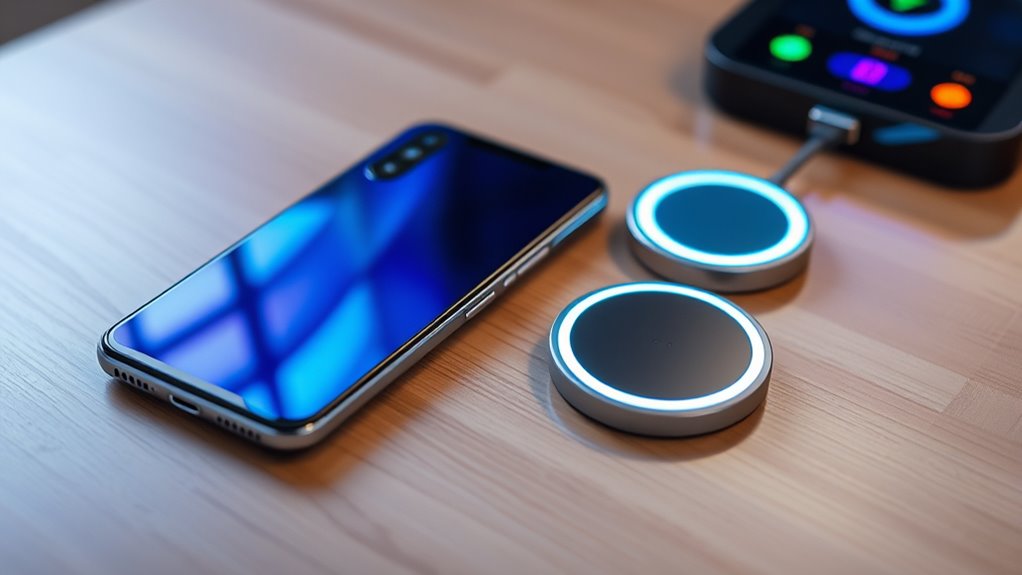
Fast charging and wireless technologies have transformed how you power your smartphone, reducing dependency on removable batteries for quick and convenient recharges. Now, you can juice up your device rapidly without swapping batteries. Fast charging uses higher wattage to cut charge times, while wireless charging offers cable-free convenience. These advancements make removable batteries less necessary, as you can quickly restore power with minimal effort. The table below highlights key features of these technologies:
| Technology | Benefit | Limitation |
|---|---|---|
| Fast Charging | Recharges quickly, saves time | Can generate heat, reduces battery lifespan |
| Wireless Charging | Convenient, cable-free | Slower than wired fast charging |
| Battery Tech | Longer-lasting, safer batteries | Still evolving for higher speeds |
| Device Design | Slimmer, more durable | May require compatible accessories |
Additionally, ongoing developments in battery technology continue to improve the safety and longevity of mobile power sources, further reducing the need for removable batteries.
Exceptions and Ongoing Use of Removable Batteries
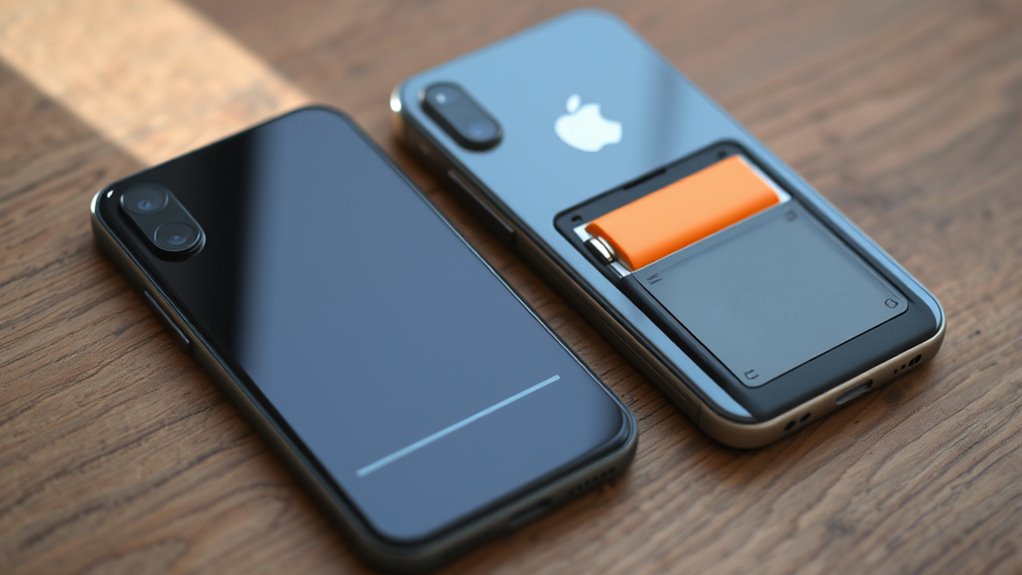
Although most smartphones now feature sealed batteries, several exceptions still thrive in the market. You’ll find budget models, rugged phones, and some niche devices with removable batteries. Manufacturers like Nokia, Motorola, and CAT continue to produce phones with user-replaceable batteries, appealing to those who prioritize longevity and easy repairs. These phones often target users in remote areas or environments where quick battery swaps are essential. Some consumers prefer removable batteries because they can carry extra power sources without needing to recharge immediately. Additionally, repair advocates support removable batteries for reducing electronic waste and extending device lifespan. Free floating designs also contribute to the ease of removing batteries, making repairs and upgrades more accessible. While the trend toward sealed designs dominates, these exceptions serve specific needs, allowing users to swap batteries easily, save costs, and maintain their devices longer.
Future Directions and Possible Reconsiderations

As concerns about sustainability and device longevity grow, the future of smartphone battery design may see a reconsideration of removable batteries. You might see manufacturers exploring hybrid approaches that combine sleek, sealed designs with easy battery access. Innovations could include modular components or standardized battery replacements, making repairs more affordable and environmentally friendly. Advances in battery chemistry and management systems might extend lifespan, reducing the need for frequent swaps. Regulations, like those proposed by the EU, could push companies to offer more repairable devices. Consumer demand for sustainability and repairability may influence future designs, encouraging brands to balance sleek aesthetics with user-friendly features. Ultimately, the industry might find new ways to prioritize both device aesthetics and long-term usability, reintroducing removable batteries as part of a sustainable approach. Battery accessibility could become a key feature in future smartphones, aligning with environmental and repairability goals.
Frequently Asked Questions
Are Removable Batteries Still Available on Any New Smartphones Today?
Yes, removable batteries are still available on some new smartphones today. You can find them mainly in budget or rugged models, like certain Nokia, Motorola, or CAT phones. These phones cater to users who want easy battery swaps or enhanced durability. However, most flagship devices now feature sealed, non-removable batteries for sleekness and water resistance, so removable options are becoming increasingly rare but still exist in select models.
How Do Non-Removable Batteries Impact Smartphone Repair Costs?
Non-removable batteries substantially spike smartphone repair costs because you can’t easily swap out a dead or degraded battery. When issues arise, you often need professional help, which can be pricey and time-consuming. You might end up replacing the entire device instead of just the battery. This design choice makes repairs more complex and costly, discouraging DIY fixes and increasing electronic waste. Ultimately, it pushes repair expenses upward and convenience downward.
Can Removable Batteries Improve Phone Sustainability and Environmental Impact?
Removable batteries can improve your phone’s sustainability by making it easier to replace, which extends the device’s lifespan and reduces electronic waste. When batteries degrade, you can swap them out instead of discarding the whole phone. This encourages repairability, minimizes environmental impact, and supports a more sustainable tech cycle. If more phones offered removable batteries, you’d likely see less e-waste and a greener approach to technology use.
What Are the Main Technical Limitations of Sealed, Non-Removable Batteries?
Imagine trying to replace a tiny, delicate battery nestled deep inside a sleek, sealed smartphone like a hidden treasure. The main technical limitations include difficulty in repairability, making battery replacement costly or impossible without professional help. Sealed batteries also hinder upgrades and repairs, reducing device lifespan. Over time, heat and wear can’t be easily managed, risking safety issues and decreasing overall device longevity, which affects user satisfaction and sustainability.
Will Future Smartphone Designs Likely Return to Removable Batteries?
Future smartphone designs might see a return of removable batteries as user demand for repairability and sustainability grows. You could benefit from easily swapping batteries, extending device life and reducing electronic waste. However, manufacturers will likely prioritize sleek, sealed designs for durability and aesthetics. While some niche models may reintroduce removable batteries, mainstream phones will probably keep sealed batteries, balancing innovation with consumers’ desire for easier repairs.
Conclusion
Remember, the landscape of phone batteries has shifted like a tide, favoring sleekness over accessibility. While removable batteries offered freedom and ease, advancements in technology have made non-removable designs the new standard. As you navigate future innovations, keep in mind that sometimes, you have to let go of the old to embrace the new—like shedding leaves in autumn, making way for fresh growth and progress.