
As someone interested in eco-friendly tech, you’ll find that the push for sustainable smartphones involves companies adopting recycled materials, modular designs, and repairability to reduce e-waste and resource depletion. Industry leaders like Samsung and Fairphone are setting examples by using recycled metals and fair-traded materials, while promoting longer-lasting devices with software support. These innovations aim to lower environmental impact and foster circular economies. Staying informed can reveal how your choices can support a greener, more responsible smartphone industry.
Listen free for 30 days with Audible
Thousands of audiobooks and originals — cancel anytime.
As an affiliate, we earn on qualifying purchases.
Key Takeaways
- Industry leaders are adopting recycled materials and eco-friendly designs to reduce environmental impact.
- Modular and repairable smartphones extend device lifespan, decreasing e-waste.
- Companies are committing to renewable energy use and circular economy strategies in manufacturing.
- Responsible recycling programs recover valuable materials and prevent harmful e-waste disposal.
- Consumer awareness and participation in sustainable practices drive industry innovation and environmental benefits.

Xoopar Multi USB Cable 4 in 1 – Universal Charger Made from Recycled Plastic – USB, USB-C, Lighting, Micro USB Ports – Compatible with All Smartphones Mr Bio Blue Octopus
- Eco-friendly Material: Made from 23% recycled ABS plastic and 38% RTPE
- Universal Smartphone Compatibility: Compatible with iPhone, Samsung, Huawei, HTC, LG, Google, and more
- Compact and Lightweight: 15 cm long, weighs 12 g for portability
As an affiliate, we earn on qualifying purchases.
As an affiliate, we earn on qualifying purchases.
The Environmental Toll of Smartphone Manufacturing

Smartphone manufacturing has a significant environmental impact due to the extensive resources and energy it consumes. Each year, nearly 1.5 billion smartphones are sold, leading to massive resource extraction and waste. Mining rare earth elements required for components causes ecological damage, including habitat destruction and pollution. The manufacturing process itself is energy-intensive, contributing heavily to carbon emissions. Additionally, the short lifespan of most devices accelerates e-waste accumulation and depletes finite resources. When you dispose of your old phone, it often ends up in landfills, where harmful chemicals can leach into the environment. Recycling and responsible collection are vital to minimize pollution and recover valuable materials. Improving projector technology can help reduce energy consumption and prolong device lifespan, contributing to sustainability. Recognizing this impact helps you understand the importance of sustainable practices and choosing eco-friendly devices.

Fairphone Fairbuds XL Horizon Black Over-Ear Wireless Headphones with Active Noise Cancelling, aptX-HD 24-bit Audio, 30 H Battery, IP54 Weatherproof, Replaceable Parts
- Premium 40mm Drivers: Wide sonic range with detailed sound
- aptX-HD Support: 24-bit studio-quality wireless audio
- Active Noise Cancelling: Blocks out noise for immersive listening
As an affiliate, we earn on qualifying purchases.
As an affiliate, we earn on qualifying purchases.
Samsung’s Leadership in Sustainable Design

Samsung leads in sustainable design by prioritizing eco-friendly materials, like recycled cobalt and plastics, in their devices. They also implement recycling and upcycling programs, giving old phones a new purpose and reducing e-waste. Additionally, their long-term software support encourages users to keep devices longer, minimizing environmental impact. Incorporating durability and functionality into their products further enhances their commitment to sustainability.
Eco-Friendly Material Usage
As the industry pushes toward sustainability, leading manufacturers are pioneering the use of eco-friendly materials to reduce environmental impact. Samsung stands out by integrating recycled cobalt into its Galaxy devices, setting a new industry standard. They aim for 100% recycled plastics in their smartphones by 2050, demonstrating a long-term commitment to reducing plastic waste. Samsung also uses recycled aluminum, glass, and packaging materials to minimize resource extraction. Their Galaxy Upcycling program repurposes older devices, extending their lifespan and curbing e-waste. By prioritizing recycled and responsibly sourced materials, Samsung reduces reliance on virgin resources and cuts down on carbon emissions associated with manufacturing. This focus on eco-friendly materials exemplifies Samsung’s dedication to sustainable design and industry leadership in environmentally conscious innovation. Additionally, their efforts reflect a broader industry trend inspired by initiatives from regions like West – These Fifty States, which emphasize sustainable practices in technology development.
Recycling and Upcycling Initiatives
Recycling and upcycling initiatives are at the forefront of Samsung’s efforts to lead sustainable smartphone design. You’ll notice their Galaxy S25 has earned the 2025 Design for Recycling Award, thanks to its use of recycled cobalt and other materials. Samsung’s Galaxy Upcycling program gives older devices a second life by transforming them into smart home tools or security cameras, reducing e-waste. The company aims for 100% recycled plastic use by 2050, demonstrating a long-term commitment to circularity. They also incorporate recycled aluminum and packaging materials across product lines. By prioritizing responsible collection and recycling practices, Samsung minimizes pollution and conserves resources, setting industry standards for eco-friendly technology. These initiatives help you reduce your environmental impact with smarter, more sustainable devices, supporting the growth of European cloud innovation and sustainable design practices.
Long-Term Software Support
Long-term software support plays a crucial role in promoting sustainable smartphone use by extending the lifespan of devices. When your phone receives up to five years of security updates and four major Android upgrades, it stays relevant and secure longer. This reduces the need for frequent replacements, cutting down e-waste and resource consumption. Samsung leads in this area, offering extended support that encourages repairability and reuse. By keeping devices functional and secure over time, you’re less likely to discard them prematurely. Longer software support not only benefits the environment but also saves you money. It promotes a shift toward more sustainable consumption, showing that durable, well-supported smartphones can be both eco-friendly and cost-effective. Additionally, software longevity can improve overall device performance and user satisfaction. This approach aligns with the industry’s push toward reducing electronic waste and fostering responsible device management.

NADAMOO QR Code Scanner Wireless 2D Barcode Scanner With Stand Supports Screen Scan Handheld CMOS Imager Long Range Portable USB Bar Code Reader with Auto Sensing Read 1D 2D QR Code PDF417 Data Matrix
- Barcode Types Supported: 1D and 2D barcodes including QR, PDF417, Data Matrix
- Imaging Technology: Advanced CMOS digital image acquisition
- Screen Barcode Scanning: Effectively scans codes on screens and labels
As an affiliate, we earn on qualifying purchases.
As an affiliate, we earn on qualifying purchases.
Fairphone’s Modular and Ethical Approach
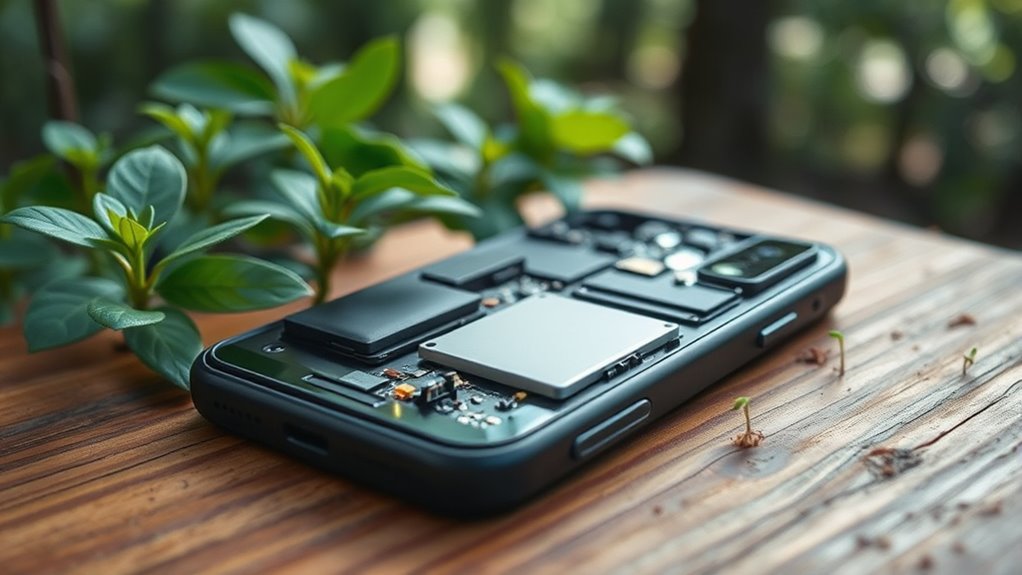
Fairphone’s modular design lets you easily repair or upgrade individual parts, extending the device’s lifespan and reducing e-waste. Its commitment to ethical material sourcing guarantees that recycled and fair-trade materials are prioritized, minimizing environmental and social impacts. By choosing Fairphone, you support a more sustainable and responsible approach to smartphone manufacturing. Additionally, its focus on high-quality home decor and gift ideas underscores a broader dedication to environmentally conscious products.
Modular Design Benefits
Because modular design allows you to easily repair and upgrade your device, it markedly extends its lifespan and reduces e-waste. You can replace or upgrade individual components like the camera, battery, or display instead of discarding the entire phone. This approach minimizes the need for frequent replacements, conserving resources and cutting down on electronic waste. You also benefit from cost savings, since fixing or upgrading parts is often cheaper than buying a new device. The design encourages a repair-friendly culture, making it easier for users to maintain their phones over years. By choosing a modular smartphone, you support sustainable practices, reduce your environmental impact, and promote a circular economy that values longevity and responsible resource use. Additionally, emphasizing Free Floating design principles in device architecture can further enhance the sustainability and adaptability of your smartphone.
Ethical Material Sourcing
Ethical material sourcing plays a crucial role in making smartphones more sustainable, and Fairphone leads the way by prioritizing responsibly obtained materials. You’ll find that over 50% of the materials used in Fairphone’s Gen. 6 are fair-traded or recycled, making it one of the highest percentages in the industry. They ensure their cobalt, gold, and silver come from fair-mined sources, supported by transparent credit systems. Fairphone also uses renewable energy in production and maintains e-waste neutrality through responsible collection and recycling programs. This approach reduces environmental harm while promoting social responsibility. By choosing a Fairphone, you support ethical practices from mine to market, helping to lessen the impact of smartphone manufacturing on the planet and communities. ONE2CRYPTO

Mophie Speedport 100 GAN USB-C Charger Block – 100W Fast Wall Charger, 2× USB‑C PD Ports, Compact Foldable Prongs, Made with Recycled Materials, for Smartphones, Tablets, Headphones
- Fast Charging Power: 100W shared output for quick charging
- Dual Device Charging: Charge phone and tablet simultaneously
- GaN Technology: Faster, cooler, more compact
As an affiliate, we earn on qualifying purchases.
As an affiliate, we earn on qualifying purchases.
Innovations in Eco-Friendly Materials

Have you ever wondered how smartphone manufacturers are pioneering new materials to reduce environmental impact? They’re turning to innovative options like bioplastics made from castor oil, which cut carbon emissions by over 60%. Recycled metals, including aluminum, cobalt, and tin, now feature prominently in device construction, reducing reliance on virgin resources. FSC-certified paper is used for packaging, minimizing deforestation. Some companies incorporate recycled plastics into internal components and casings, lowering waste and pollution. Others are exploring plant-based alternatives for components traditionally made from plastics or metals. Additionally, the adoption of advanced manufacturing techniques improves the durability and eco-friendliness of these materials. These advancements demonstrate a commitment to sustainability, not just by reducing harmful extraction processes but also by integrating eco-friendly materials into core device parts. Such innovations are paving the way for greener smartphones that lessen ecological footprints from production to disposal.
The Role of Circular Economy Strategies

You can extend your smartphone’s life by choosing devices with reusable components and repair-friendly designs. Recycling and recovering materials from old phones help reduce e-waste and conserve resources. Focusing on design for longevity encourages longer use, decreasing the need for frequent replacements. Implementing safe installation practices and understanding charging habits can also help maintain device health and prolong its usefulness.
Reusable Device Components
Circular economy strategies play a crucial role in promoting reusable device components, enabling manufacturers to extend product lifespans and reduce electronic waste. By designing smartphones with modular parts, you can easily replace or upgrade key components like batteries, screens, or cameras instead of discarding the entire device. This approach encourages repairability and minimizes resource consumption. Manufacturers adopting these strategies focus on creating devices that are durable, easy to disassemble, and compatible with future upgrades. When components are designed to be reused or swapped, you benefit from longer-lasting devices and less e-waste cluttering landfills. Plus, this approach helps conserve raw materials and reduces the environmental impact of manufacturing. Reusable components are essential for building a sustainable future in the smartphone industry. Designing for repairability ensures that devices can be maintained effectively over time, supporting a circular economy in electronics.
Recycling and Material Recovery
Recycling and material recovery are essential components of circular economy strategies that transform how smartphones are produced and discarded. They enable you to salvage valuable materials, reduce e-waste, and lessen environmental harm. Leading companies like Samsung and Fairphone prioritize recycling, incorporating recycled plastics, cobalt, and aluminum into new devices. Proper collection and recycling processes ensure precious metals like gold and silver are reused efficiently. To highlight this, consider the table below:
| Material | Source | Benefit |
|---|---|---|
| Recycled plastics | Post-consumer waste | Reduces plastic pollution |
| Recovered cobalt | E-waste recycling | Lowers mining impact |
| Reclaimed gold | Old electronics | Conserves natural resources |
| Recycled aluminum | Scrapped devices | Cuts energy consumption |
Effective recycling turns waste into resources, supporting sustainable smartphone production and promoting resource conservation.
Design for Longevity
Design for longevity plays an essential role in extending smartphone lifespan and reducing environmental impact. By focusing on durable, repairable, and upgradable designs, you can keep devices in use longer and minimize waste. Circular economy strategies encourage manufacturers to create modular phones that are easier to fix and upgrade, rather than replace. Consider these approaches:
- Incorporate modular components that allow easy replacement of parts like batteries or screens.
- Use durable materials resistant to everyday wear and tear, extending device usability.
- Provide software updates for several years to maintain security and functionality, encouraging repairs over disposal.
- Understanding material science can help in selecting components that balance durability with sustainability, ensuring the device remains functional over a longer period.
Extending Device Lifespan Through Software Support

Extending your smartphone’s lifespan through software support is one of the most effective ways to reduce electronic waste and promote sustainability. When your device receives regular security updates and major OS upgrades, you can keep it secure and functional for years longer. This reduces the need for frequent replacements, cutting down on e-waste and resource consumption. Companies like Samsung offer up to five years of security updates and four Android upgrades, encouraging repair and longevity. Apple’s long-term software support also helps devices stay relevant and useful, even after many years. By choosing phones with extended software support, you contribute to a more sustainable tech industry. This approach not only saves money but also lessens the environmental impact of manufacturing and disposing of smartphones.
Industry Recognition and Sustainability Rankings

Industry recognition and sustainability rankings highlight the leading efforts of smartphone manufacturers to prioritize environmental responsibility. These rankings reveal which brands are making genuine progress in eco-friendly practices. For example,
- Lenovo earned a Platinum medal from EcoVadis and an AAA ESG rating from MSCI, demonstrating top-tier environmental management.
- Alphabet aims for net-zero emissions across its entire value chain by 2030, setting an ambitious industry benchmark.
- Fairphone’s strong market entry and commitment to repairability have positioned it as a sustainability trailblazer.
Additionally, paint sprayer maintenance practices such as choosing the right oil and proper filtration are crucial for ensuring equipment longevity and performance. These recognitions serve as indicators of a company’s true commitment to eco-friendly innovation. They influence consumer choices and encourage industry-wide improvements. Ultimately, rankings like these help you identify brands advancing sustainability, fostering transparency, and inspiring accountability across the mobile industry.
Corporate Commitments to Carbon Neutrality

Many leading smartphone companies are making bold commitments to achieve carbon neutrality, reflecting a stronger focus on reducing their environmental footprint. They’re setting ambitious targets and implementing strategies to cut emissions across production, supply chains, and operations. For example, some pledge to use 100% recycled materials by 2050, while others aim for net-zero emissions within a decade. These efforts include shifting to renewable energy, improving product design, and supporting circular economy models. Here’s a snapshot of their commitments:
| Company | Carbon Neutral Goal |
|---|---|
| Samsung | Net-zero by 2050 |
| Apple | 100% renewable energy by 2030 |
| Achieved net-zero since 2007 |
Many companies are also investing in energy efficiency initiatives and transparent reporting to demonstrate accountability.
Consumer Impact and Responsible Recycling

Have you ever considered how your smartphone habits impact the environment? Your choices directly influence e-waste and resource conservation. To minimize your impact:
- Prioritize purchasing devices with eco-friendly features or recycled materials.
- Extend your phone’s lifespan through repairs and software updates.
- Properly recycle or donate old devices instead of discarding them.
- Educate yourself about responsible recycling options and programs available in your area.
Responsible recycling reduces pollution and recovers valuable materials like gold, cobalt, and aluminum. Many manufacturers now offer take-back programs or partner with certified recyclers, making it easier for you to dispose of devices responsibly. By staying informed and making conscious decisions, you help decrease e-waste and support sustainable practices. Small actions, when multiplied across millions of consumers, lead to meaningful environmental change. Your role in responsible recycling is vital for a greener, more sustainable smartphone industry.
Future Trends in Eco-Conscious Smartphone Development

Are eco-conscious innovations shaping the future of smartphones? You’ll see a shift toward even more sustainable materials, like bioplastics and recycled metals, becoming standard. Manufacturers are investing in circular economy models, designing phones that are easier to repair and upgrade, which extends their lifespan. Expect greater use of renewable energy in production processes, reducing carbon footprints. Companies will prioritize transparency, offering detailed supply chain info and environmental impact data. Advances in device modularity will allow consumers to replace only faulty parts instead of entire phones, cutting e-waste. Software updates will also last longer, encouraging reuse. Overall, the industry is moving toward smarter, greener designs that balance performance with environmental responsibility, helping you reduce your ecological footprint while staying connected. Understanding pool terminology, chemistry, hydraulics, surfaces, and codes can help consumers make more environmentally conscious choices when selecting and maintaining their devices.
Frequently Asked Questions
How Do Recycled Materials Affect Smartphone Durability and Performance?
Recycled materials can enhance your smartphone’s durability and performance when properly incorporated. They often undergo quality testing to guarantee they meet industry standards, so your device remains reliable. Using recycled metals, plastics, and other components helps maintain structural integrity and performance. Plus, eco-friendly materials can reduce environmental impact without sacrificing quality, giving you a sustainable choice that’s built to last and perform well over time.
What Are the Main Challenges in Achieving 100% Recyclable Smartphones?
You might find it surprising that nearly 1.5 billion smartphones are sold annually, yet achieving 100% recyclable devices faces major hurdles. You’ll struggle with sourcing eco-friendly materials that meet durability standards, as some recycled components can’t match new ones’ performance. Additionally, designing for full recyclability often conflicts with features like sleekness and advanced tech, making it tough to balance sustainability with user expectations and industry demands.
How Do Repairability Ratings Influence Consumer Purchasing Decisions?
You’re likely influenced by repairability ratings because they show how easy it is to fix your device, saving you money and time. When a smartphone scores high, you feel more confident choosing it, knowing it can last longer and be maintained easily. This encourages you to buy models with better repairability, reducing e-waste and supporting sustainability. Clear repairability ratings empower you to make smarter, eco-friendly purchasing decisions.
What Innovative Materials Are Emerging for Eco-Friendly Smartphone Manufacturing?
You’re witnessing a revolution in smartphone materials that’s changing the game entirely. Bioplastics derived from castor oil reduce carbon emissions by over 60%, making traditional plastics seem outdated. Recycled aluminum, cobalt, and tin are now standard, with brands like Huawei leading the charge. Modular, repairable designs and ethically sourced metals like Fairtrade gold further push eco-friendly innovation, transforming smartphones into symbols of sustainability and environmental responsibility.
How Can Consumers Easily Participate in Responsible E-Waste Recycling Programs?
You can participate in responsible e-waste recycling programs by checking if your local electronics stores or recycling centers accept old devices. Always erase your data before recycling, and use manufacturer or retailer take-back schemes, like Samsung’s or Fairphone’s recycling initiatives. You might also join community collection events or donate devices to certified e-waste recyclers. Your active participation helps reduce pollution, conserve resources, and support a sustainable tech future.
Conclusion
As you embrace eco-friendly smartphones, remember that each choice fuels change—like ripples in a pond, your actions inspire industry shifts. By supporting sustainable brands and recycling responsibly, you become part of a movement that’s shaping a greener future. It’s not just about gadgets; it’s about safeguarding the planet for generations to come. So, choose wisely, act consciously, and let your voice echo in the call for a more sustainable tech world.
Pool season Picks
robotic pool cleaners
As an affiliate, we earn on qualifying purchases.