
When comparing smartphone cameras, sensor size and technology usually matter more than megapixel counts. A larger sensor captures more light, resulting in brighter, clearer photos with better detail and less noise, especially in low-light conditions. Megapixels indicate resolution but don’t guarantee sharpness or quality. Advanced processing and features like pixel binning and computational photography help improve images regardless of megapixels. Keep exploring to discover how these factors work together for the best photos.
Key Takeaways
- Megapixels indicate resolution but don’t guarantee image quality; sensor size and technology are more critical.
- Larger sensors capture more light, improving detail, color accuracy, and low-light performance regardless of megapixel count.
- Advanced processing techniques like pixel binning and computational photography enhance images without increasing megapixels.
- Multiple camera setups (wide, ultrawide, telephoto) provide versatility, with sensor quality impacting overall photo sharpness.
- Video capabilities such as 8K recording and high frame rates complement photo specs, offering creative flexibility.
Why Sensor Size Matters More Than Megapixels

While megapixels often grab headlines, the size of the camera sensor plays a far more important role in determining image quality. A larger sensor captures more light, which results in brighter, clearer photos with better detail and less noise, especially in low-light conditions. Smaller sensors struggle to gather enough light, leading to grainier images and reduced dynamic range. Even with high megapixel counts, tiny sensors produce less impressive results because individual pixels are smaller and less efficient. Larger sensors also improve color accuracy and contrast. Sensor size directly influences the amount of light captured, making it a crucial factor for high-quality photography. So, instead of focusing solely on megapixel numbers, prioritize Sensor size when choosing a smartphone camera. It’s the bigger sensor that truly makes a difference in capturing high-quality images, regardless of the megapixel count.
Comparing Sensor Types and Their Impact on Image Quality
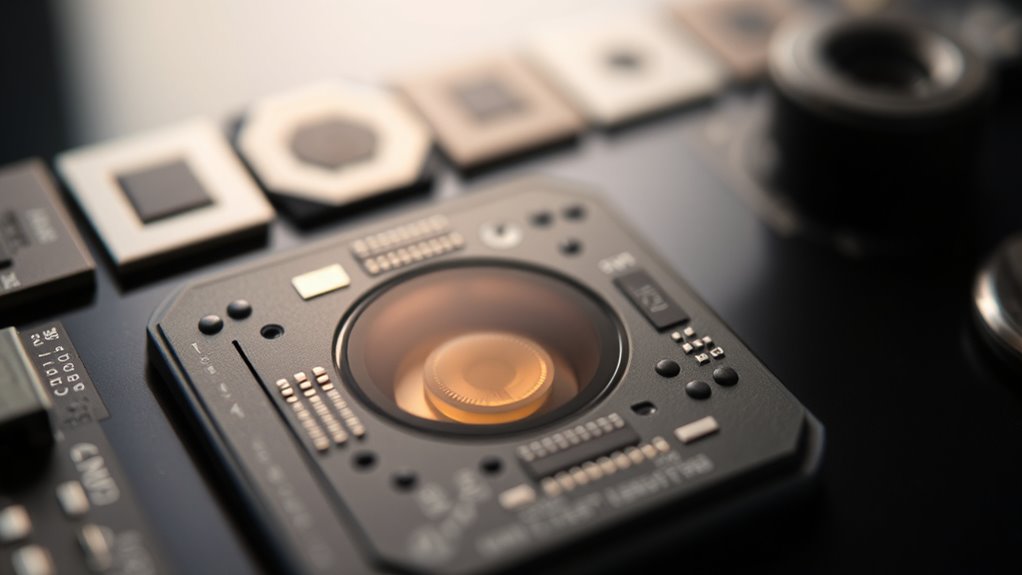
Sensor type markedly influences image quality beyond just sensor size. Different sensor technologies, like CMOS and CCD, affect how your camera captures light, color, and detail. CMOS sensors are more common today because they’re faster, more power-efficient, and better at handling high-speed data. They also excel in low-light conditions due to advanced noise reduction capabilities. Stacked sensors, a newer technology, incorporate processing layers that improve autofocus and speed, enhancing overall performance. Conversely, CCD sensors deliver excellent image quality but consume more power and are less common in smartphones. Your choice of sensor type impacts dynamic range, color accuracy, and how well your camera handles challenging lighting. Additionally, sensor technology advancements continue to shape the future of mobile photography, enabling more versatile and high-quality imaging options. Understanding these differences helps you choose a phone that best matches your photography needs.
Main Camera Setups in Flagship Smartphones

In 2025, flagship smartphones mainly feature multiple rear cameras, with triple and quadruple setups becoming the standard. These configurations give you versatile options for different scenarios, from wide landscapes to detailed portraits. Typically, you’ll find a primary wide lens, an ultrawide, and a telephoto or periscope zoom lens. Some models include additional sensors like monochrome or depth sensors to enhance image processing. The primary camera usually has a 48-50 MP sensor, while zoom lenses offer 3x to 10x optical zoom. This setup maximizes versatility without sacrificing quality. Here’s a quick overview:
| Camera Type | Megapixels | Focal Length/Zoom | Special Features |
|---|---|---|---|
| Primary Wide | 48-50 MP | Standard | Optical stabilization |
| Ultrawide | 48-50 MP | 115-120° FOV | Macro and night modes |
| Telephoto | 10-50 MP | 3x-10x optical | Periscope zoom, portrait shots |
Additionally, the sensor size and image processing capabilities play a crucial role in overall photo quality.
Low-Light Photography: The Role of Sensor Size and Technology

When it comes to low-light photos, sensor size plays a vital role in capturing more light and detail, outperforming megapixel count alone. Pixel binning technology helps high-resolution sensors boost sensitivity by combining pixels, making photos brighter and clearer in darkness. You’ll get better results in low-light conditions when your phone uses a larger sensor with advanced light-gathering tech. Additionally, smart home sensors can enhance low-light photography by providing supplementary illumination or adaptive lighting to improve image quality in challenging conditions.
Sensor Size and Light Capture
The size of a camera’s sensor plays a crucial role in low-light photography because larger sensors can gather more light, resulting in brighter and clearer images in dark conditions. When your sensor is bigger, each pixel can capture more photons, which reduces noise and improves detail. This means your photos in dim environments look sharper, with better contrast and color accuracy. Larger sensors also enhance dynamic range, helping you retain details in shadows and highlights. Even if two phones have the same megapixel count, the one with the bigger sensor will generally perform better in low light. So, instead of focusing solely on megapixels, consider the sensor size when aiming for better night photography. It’s a key factor that directly influences how well your camera handles challenging lighting. Additionally, sensor technology continues to evolve, further improving low-light performance and image quality.
Pixel Binning and Sensitivity
Pixel binning technology enhances low-light performance by combining multiple smaller pixels into one larger pixel, increasing light sensitivity without needing a bigger sensor. This process improves image brightness and reduces noise in dark conditions, helping you capture clearer photos at night or in dim environments. When shooting in low light, your camera’s high megapixel sensors often divide light across many tiny pixels, which can lead to grainy images. Binning merges these pixels, effectively acting like a larger sensor, so more light reaches each pixel. This results in brighter, cleaner images with better color accuracy. Many flagship phones use pixel binning to maximize low-light quality without sacrificing resolution during daylight shots. Overall, it’s a smart way to boost sensitivity and produce sharper, more detailed photos in challenging lighting. Additionally, advances in sensor technology continue to improve low-light photography, making it easier to capture high-quality images in various environments.
Video Recording Capabilities and Frame Rate Options

Many flagship smartphones now let you record in 8K at 30fps or 4K at up to 240fps, giving you options for high-quality videos and slow-motion effects. These frame rate choices impact both video clarity and cinematic look, depending on what you need. Understanding these capabilities helps you choose a phone that matches your filming style and desired resolution. Additionally, video recording features like stabilization and HDR can further enhance your footage quality.
8K and 4K Recording
Ever wondered how smartphone cameras capture ultra-high-definition videos? Many flagship models support 8K recording at 30 frames per second, delivering incredibly detailed footage. You can also record in 4K at various frame rates—60, 120, or even 240 fps—depending on the device. Higher frame rates enable smoother slow-motion effects, perfect for cinematic shots. Some phones, like Xiaomi 15 Ultra, offer consistent 4K/60 fps and 8K/30 fps options across multiple lenses, providing flexibility for different scenes. Advanced stabilization technology helps keep your videos steady, even in motion. The combination of high resolution and multiple frame rate options guarantees you can capture professional-quality videos directly from your smartphone, whether for casual sharing or serious filmmaking. For those looking to maximize their video quality, understanding video recording capabilities is essential to making the most of your device’s features.
High Frame Rate Options
High frame rate options substantially enhance your smartphone’s video recording capabilities by enabling smoother and more cinematic footage. With features like 120fps, 240fps, or even higher, you can create stunning slow-motion videos that reveal intricate details and motion effects. Many flagship phones support 4K recording at high frame rates, giving you versatile options for different scenes. For example, some models offer 4K at 120fps or 240fps, making action shots more dynamic. Certain phones also support 8K recording at standard frame rates, providing ultra-high-resolution footage. These high frame rate capabilities give you creative control, allowing you to capture fast-moving moments with clarity and fluidity. As a result, your videos look more professional, whether you’re filming sports, wildlife, or cinematic projects. Video recording capabilities are often optimized through specific hardware and software features that improve overall quality.
How Portrait and Macro Modes Function Beyond Megapixel Counts
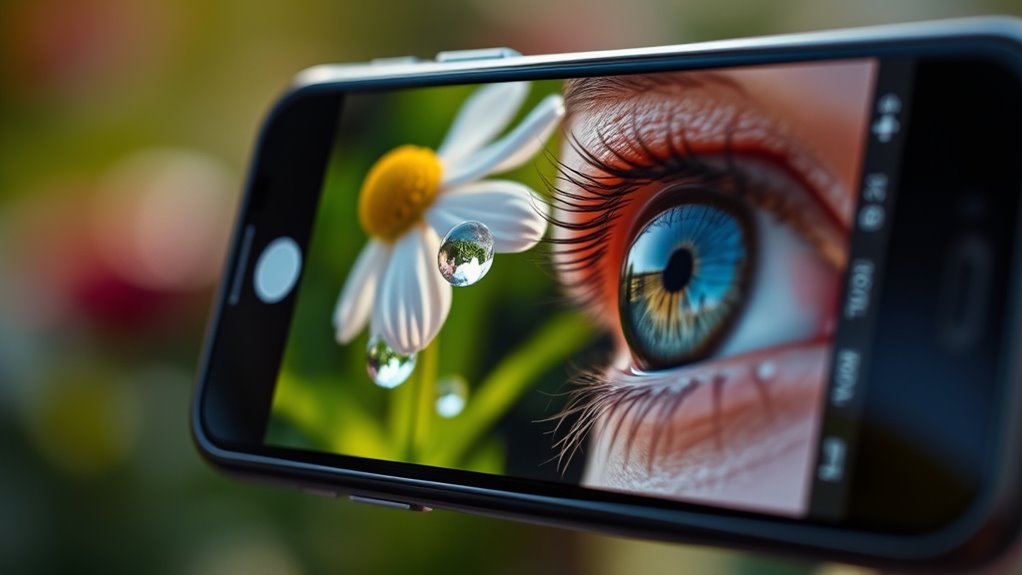
Portrait and macro modes rely heavily on computational photography and multi-lens setups to capture fine details and create appealing images, rather than just focusing on megapixel counts. These modes use software algorithms and multiple sensors to enhance depth, sharpness, and texture. Portrait mode isolates subjects from backgrounds, adjusting focus and applying bokeh effects for a professional look. Macro mode captures close-up details by combining data from dedicated lenses or sensors, sometimes utilizing pixel binning. The table below highlights key features:
| Mode | Main Technique | Focus Range |
|---|---|---|
| Portrait | Depth sensing + AI segmentation | 1–3 meters |
| Macro | Multi-lens + pixel binning | 1–10 centimeters |
| Computational | Software enhancement + AI processing | Variable |
| Multi-lens | Multiple sensors + image fusion | Varies |
Additionally, advancements in sensor technology continue to improve the quality and versatility of these modes.
The Importance of Pixel Binning and Computational Photography

Pixel binning and computational photography have become key tools in overcoming the limitations of small smartphone sensors and high megapixel counts. When sensors pack too many pixels into a tiny space, each pixel becomes smaller, reducing light sensitivity and image quality. Pixel binning combines adjacent pixels into larger, more sensitive units, improving low-light performance and reducing noise. Computational photography uses software algorithms to enhance images, balancing exposure, sharpening details, and reconstructing scenes beyond hardware limits. These techniques work together to produce clearer, brighter photos in challenging conditions, even with high-megapixel sensors. Instead of relying solely on hardware, you benefit from smarter processing that maximizes sensor capabilities, resulting in better images without needing larger, more expensive sensors. Sensor limitations are a fundamental challenge that these advanced techniques help to mitigate effectively.
Demystifying Megapixels: What Really Determines Photo Sharpness

Many people assume that more megapixels automatically mean sharper photos, but that’s a misconception. Megapixels measure resolution, not sharpness or image quality. What truly matters is the sensor size and how much light it captures. A larger sensor gathers more light, resulting in better detail, color, and low-light performance, regardless of megapixel count. Smaller sensors with high megapixels often produce smaller pixels, which can reduce image clarity and increase noise. Pixel density alone isn’t a reliable indicator of sharpness. Instead, focus on sensor size and quality—larger sensors with good optics deliver crisper, more detailed photos. So, don’t be fooled by high megapixel numbers; the sensor’s size and technology are what really determine photo sharpness. Additionally, sensor quality plays a significant role in overall image performance beyond just megapixel count.
Frequently Asked Questions
How Does Sensor Size Affect Overall Camera Performance?
Sensor size directly impacts your camera’s performance by capturing more light and detail, leading to better image quality, especially in low-light conditions. Larger sensors provide wider dynamic range and improved color accuracy, making your photos clearer and more vibrant. When choosing a smartphone, prioritize sensor size over megapixel count, as bigger sensors enhance overall photo quality, helping you get sharper images with richer detail, even in challenging lighting.
Why Do Some High-Megapixel Sensors Perform Worse in Low Light?
High-megapixel sensors often perform worse in low light because their smaller individual pixels can’t gather enough light, leading to noisier images. When sensors pack more pixels into the same space, each pixel gets less light, reducing clarity in darkness. To compensate, manufacturers use pixel binning—combining multiple pixels—to improve sensitivity. So, despite high megapixel counts, these sensors can struggle in low-light conditions without proper technology.
What Is Pixel Binning, and How Does It Improve Photo Quality?
Ever wonder how your phone captures better low-light images? Pixel binning is the secret. It combines multiple tiny pixels into one larger pixel, boosting light sensitivity and reducing noise. This process lets your camera perform better in darkness, producing clearer, more detailed photos. So, even with high-megapixel sensors, pixel binning guarantees you get sharp, well-exposed shots in challenging lighting conditions, making your photos look professional and vibrant.
How Do Different Lens Focal Lengths Impact Photo Versatility?
Different lens focal lengths considerably impact your photo versatility by offering various perspectives. A wide-angle lens captures expansive scenes perfect for landscapes, while a telephoto lens zooms in on distant subjects for detailed portraits or wildlife shots. Ultrawide lenses give you a broader field of view, ideal for group photos or tight spaces. By switching between these focal lengths, you can adapt to different shooting situations and achieve more creative, dynamic images.
Why Are Multiple Camera Setups Preferred in Flagship Smartphones?
You prefer multiple cameras because they offer versatility, yet often you overlook that quality depends more on sensor size than just more lenses. Flagship smartphones use various lenses to handle different scenes, but the real magic happens when larger sensors capture better light and detail. This setup lets you take sharper, clearer photos in low-light conditions and provides a broader creative range, making your images truly stand out.
Conclusion
Understanding camera specs helps you choose smarter. Focus on sensor size instead of just megapixels, compare sensor types for better clarity, and explore how different modes enhance your photos. Recognize the power of pixel binning and computational photography, and appreciate that sharpness depends more on technology than numbers. With this knowledge, you can capture brighter, clearer, and more stunning images, turning every shot into a story worth sharing.