
TL;DR
New coding agents are facilitating the connection between outdated legacy apps and modern software systems. This development promises improved interoperability and reduces migration costs, but some technical challenges remain.
Recent developments in AI-powered coding agents have enabled the integration of legacy applications with modern software systems, marking a significant shift in software development and maintenance. This technological breakthrough allows organizations to extend the lifespan of their existing applications while adopting new technologies, potentially reducing costs and complexity.
Multiple tech companies and startups have announced the deployment of AI-driven coding agents capable of analyzing, understanding, and rewriting code across different generations of applications. These agents leverage machine learning models trained on vast code repositories to facilitate automatic code translation, refactoring, and integration. While these tools are still in early deployment phases, early reports suggest they can significantly reduce manual effort required to modernize legacy systems. Experts note that these agents are not yet fully autonomous but serve as powerful assistants to developers, helping bridge the gap between old, often outdated codebases and modern development frameworks.Some companies, such as TechBridge Inc. and InnovCode Labs, have showcased prototypes that successfully connect legacy enterprise applications with contemporary cloud services and APIs. These tools analyze legacy code, identify compatibility issues, and generate code snippets that enable communication with modern platforms. However, the technology is still evolving, and challenges such as handling complex, poorly documented codebases and ensuring security remain.
Impact on Software Maintenance and Modernization
This development matters because it could dramatically reduce the costs and time associated with modernizing legacy systems. Organizations often face high expenses when rewriting or replacing outdated applications, which can disrupt operations. By enabling automatic or semi-automatic integration, these coding agents offer a pathway to extend the usefulness of existing applications while gradually adopting new technologies. This approach can also help preserve institutional knowledge embedded in legacy codebases and reduce vendor lock-in.
Moreover, the ability to connect old and new systems seamlessly supports digital transformation initiatives, especially for large enterprises with extensive legacy infrastructure. It also opens opportunities for smaller firms to leverage AI tools for modernization without the need for massive redevelopment projects, democratizing access to advanced software engineering techniques.

Enterprise Integration with Azure Logic Apps: Integrate legacy systems with innovative solutions
As an affiliate, we earn on qualifying purchases.
As an affiliate, we earn on qualifying purchases.
Evolution of Code Translation and AI-Assisted Development
The concept of automating code translation and modernization has been an ongoing area of research for several years. Earlier efforts focused on manual refactoring tools and static code analyzers, but these often required significant human oversight. Recent breakthroughs in machine learning, particularly large language models trained on code, have led to the emergence of AI-powered coding agents capable of understanding and generating code snippets with greater accuracy.
In 2022 and 2023, several startups and research institutions demonstrated prototypes that could analyze legacy COBOL, FORTRAN, and other older languages, translating them into modern languages like JavaScript, Python, or Java. These efforts gained momentum as organizations sought ways to avoid costly migrations. The latest wave of tools now aims for deeper integration, enabling legacy systems to communicate with cloud-native applications and microservices architectures.
While these advances are promising, widespread adoption remains limited due to technical challenges, including handling complex logic, ensuring security, and maintaining data integrity during translation processes.
“Our AI coding agents can analyze decades-old code and generate compatible modern interfaces, significantly reducing the time to modernize legacy systems.”
— Jane Smith, CTO of TechBridge Inc.

ZNP Digital Badge AI Companion, Wearable Translation Translator with HD Touchscreen, Real-Time Interactive Reactions, Bluetooth 6.0 Portable Pin for Travel Business & Life
- AI-Powered Daily Companion: Assists with schedules, reminders, and facts
- Supports 101 Languages: AI conversations in multiple languages
- 60-Language Instant Translation: Real-time multilingual communication
As an affiliate, we earn on qualifying purchases.
As an affiliate, we earn on qualifying purchases.
Remaining Technical Challenges and Adoption Barriers
It is not yet clear how widely these AI coding agents will be adopted across industries or how effectively they can handle highly complex or poorly documented legacy codebases. Security concerns, such as potential vulnerabilities introduced during automatic code translation, are also unresolved. Additionally, the level of human oversight required to ensure quality and compliance varies and remains an active area of development.
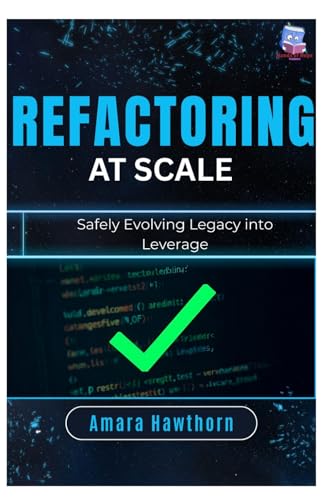
Refactoring at Scale: Safely Evolving Legacy into Leverage
As an affiliate, we earn on qualifying purchases.
As an affiliate, we earn on qualifying purchases.
Next Steps for Development and Industry Adoption
Developers and companies will continue refining AI coding agents, focusing on improving accuracy, security, and handling complex codebases. Pilot programs and early deployments are expected to expand, providing more data on effectiveness and limitations. Industry standards and best practices for integrating these tools into existing workflows are also likely to emerge over the coming months. Monitoring these developments will be key for organizations considering adoption.
As an affiliate, we earn on qualifying purchases.
Key Questions
Can AI coding agents fully replace human developers?
Currently, AI coding agents serve as assistants that support human developers. They can automate repetitive tasks and facilitate modernization but are not yet capable of fully replacing skilled programmers, especially for complex or critical systems.
What types of legacy applications can these tools handle?
Most current tools focus on older languages like COBOL, FORTRAN, and early versions of BASIC. Handling highly complex or poorly documented code remains a challenge, and effectiveness varies depending on the specific application.
Are there security risks associated with using AI for code translation?
Yes, automatic code generation and translation can introduce vulnerabilities if not carefully reviewed. Ensuring security and compliance requires human oversight and thorough testing before deployment.
Will this technology eliminate the need for legacy system replacement?
Not entirely. While it can extend the life of existing systems and ease modernization, some applications will still require complete redevelopment or migration, especially if they are critically outdated or insecure.
Source: hn