Apple switched to USB-C on iPhones to provide faster charging, better accessory compatibility, and to align with industry standards. This move lets you connect to a wider range of devices like laptops, external drives, and monitors, simplifying your setup. It also supports quicker power delivery, saving you time. By adopting USB-C, Apple aims for a more seamless and versatile user experience. If you want to understand the broader impacts of this shift, keep exploring.
Key Takeaways
- Apple switched to USB-C to improve device performance and align with industry standards for universal connectivity.
- The transition enables faster charging speeds and more efficient power delivery for users.
- USB-C enhances accessory compatibility with laptops, external drives, monitors, and other devices.
- It promotes industry-wide standardization, reducing fragmentation and increasing accessory reliability.
- The change simplifies user experience by minimizing the need for multiple cables and adapters.
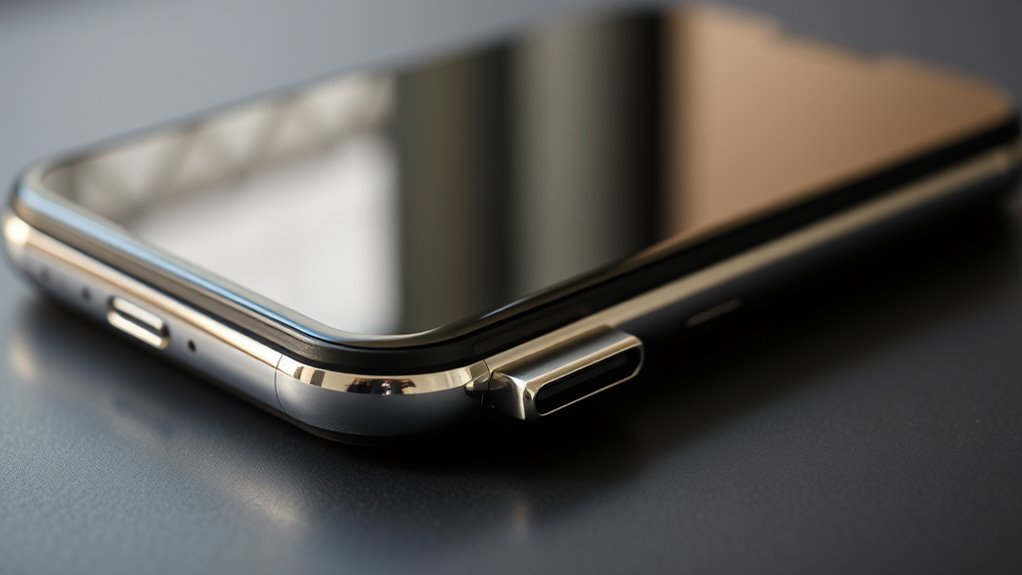
Many iPhone users have long awaited Apple’s switch from Lightning to USB-C, and recent rumors suggest that this change is finally happening. This shift isn’t just about updating ports; it’s about enabling better performance, more versatility, and aligning with industry standards. One of the most noticeable benefits of moving to USB-C is the increased charging speed. Unlike Lightning, USB-C supports faster power delivery, meaning you can top up your iPhone much quicker. Whether you’re in a rush or just want to save time, this upgrade allows for more rapid charging sessions, especially when paired with compatible fast chargers. You’ll find that your device charges more efficiently, which is especially handy if you rely on quick top-ups throughout the day.
Beyond charging speed, the switch to USB-C dramatically improves accessory compatibility. Many modern devices—laptops, tablets, external drives, and monitors—already utilize USB-C, so you’ll no longer need multiple different cables or adapters. Now, with a single port, you can connect your iPhone to a wider array of accessories without fuss. This not only simplifies your setup but also reduces clutter and the need to carry multiple cables. If you work with external displays or transfer large files, USB-C makes these tasks smoother and more seamless. The universal nature of USB-C means you’ll find more compatible accessories on the market, and established standards guarantee better quality and reliability. Additionally, adopting USB-C reflects a move towards standardized technology that benefits consumers and manufacturers alike.
Frequently Asked Questions
Will All Future Iphone Accessories Switch to USB-C?
Most future iPhone accessories will likely switch to USB-C to guarantee universal compatibility across devices. This change simplifies your setup, allowing you to use a single cable for multiple gadgets. Plus, USB-C offers better power efficiency, so your accessories can charge faster and consume less energy. As Apple and other manufacturers embrace USB-C, you’ll benefit from more streamlined, versatile, and eco-friendly accessories, making your tech life easier.
How Does USB-C Impact Iphone Charging Speed?
Imagine your iPhone charging in seconds instead of minutes. USB-C profoundly boosts charging efficiency, allowing faster power delivery. Plus, you’ll experience quicker data transfer, making file sharing seamless. With USB-C, your iPhone becomes more responsive and efficient, reducing wait times and enhancing overall performance. This upgrade transforms your everyday experience, giving you the power and speed you need—faster charging, quicker data, and smoother use.
Are There Compatibility Issues With Existing Lightning Accessories?
You might face some compatibility issues with existing Lightning accessories during the adapter shift, but most adapters are designed to guarantee smooth accessory transition. Using a high-quality USB-C to Lightning adapter can help you connect your older accessories seamlessly. Keep in mind, some specialized accessories may need updated versions for full compatibility. Overall, with the right adapter, you can continue using your favorite accessories without major problems.
What Are the Environmental Benefits of Switching to USB-C?
Switching to USB-C offers significant environmental benefits. You’ll contribute to recycling benefits, as USB-C cables and accessories are more universally compatible, reducing the need for multiple chargers. This switch also helps cut down e-waste, since fewer devices and accessories become obsolete or discarded. By choosing USB-C, you support a more sustainable future, minimizing your environmental impact and promoting the reuse and recycling of tech components.
Will Apple Still Support Lightning-Based Accessories in the Future?
Yes, Apple will still support legacy accessories through adapter compatibility. You can continue using your Lightning-based accessories by connecting them with the appropriate adapters, ensuring a smooth changeover. Apple’s commitment to compatibility means you won’t have to replace all your accessories immediately. Keep in mind, however, that in the future, some features may be limited or require newer adapters, so it’s worth considering upgrading your accessories gradually.
Conclusion
Switching to USB-C is like opening a new chapter in your iPhone experience, offering faster data transfer, broader compatibility, and future-proofing your device. Apple’s move isn’t just about a port; it’s about embracing a world of possibilities. As you connect, charge, and sync, you’ll find this change flowing seamlessly, like a river carving its path forward. Embrace the shift—your iPhone’s new port is the key to revealing a smarter, more connected future.